
カノン
Canon in D
パッヘルベル・c. 1680–1706
同じ8つの音が28回!なのに聴くたび胸がいっぱいになる曲。
カノンとジーグ ニ長調 より「カノン」のページへ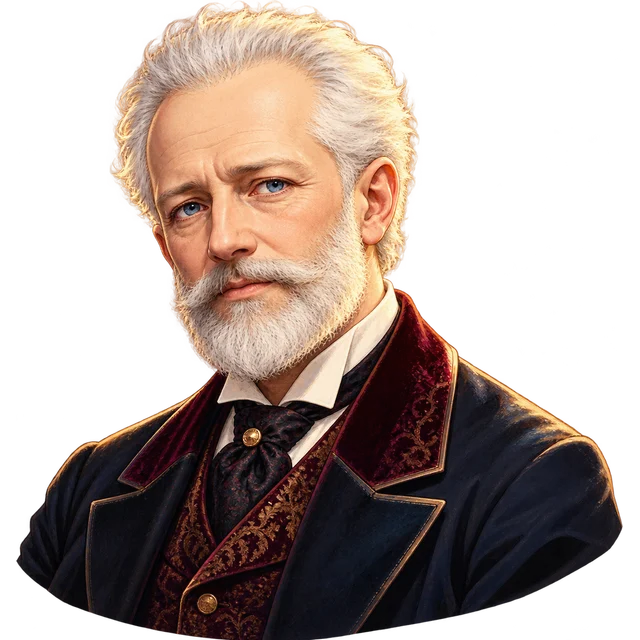
Concerto · Op. 33 · 1876–1877
ピョートル・イリイチ・チャイコフスキー(1840–1893)
モーツァルト時代の気分で!チェロが主題を次々に変身させる優雅な変奏曲。In the spirit of Mozart's time! A cello transforms one elegant theme again and again.
WATCH ON YOUTUBE
この曲は、権利の切れた高音質の録音がまだ見つからないため、YouTube の公式チャンネルなどの名演でお楽しみください(ダウンロードはできません)。YouTube でほかの演奏もさがす ↗
 Tchaikovsky Variations on a Rococo theme op. 33 | Oleksiy Shadrin - Queen Elisabeth Competition 2022
Queen Elisabeth Competition(YouTube) YouTube で開く ↗
P.Tchaikovsky. The Variations on a Rococo Theme for cello and orchestra
Russian Philharmonic - Moscow City Symphony(YouTube) YouTube で開く ↗
Tschaikowsky: Rokoko-Variationen ∙ hr-Sinfonieorchester ∙ Mischa Maisky ∙ Paavo Järvi
hr-Sinfonieorchester – Frankfurt Radio Symphony(YouTube) YouTube で開く ↗

ホー!この曲、初演したチェロ奏者が勝手に順番を入れかえちゃったんだ。
 この曲のおはなし The Story
「ロココ風の主題による変奏曲」は、チェロとオーケストラのための曲です。「ロココ」とは18世紀の、軽やかで優雅な芸術のスタイルのこと。チャイコフスキーは、大好きだったモーツァルトの時代を思わせる上品な主題(テーマ)を自分で作り、それをチェロがさまざまに姿を変えて弾いていく「変奏曲」にしました。チェロ奏者にとって大切な名曲です。Variations on a Rococo Theme is a piece for cello and orchestra. 'Rococo' is the light, elegant style of art from the 18th century. Tchaikovsky wrote his own graceful theme in the style of Mozart's time, a period he loved. Then he made it into a set of variations, in which the cello plays the theme in many different forms. It is an important piece for cellists.
この曲は、モスクワ音楽院でいっしょに教えていたドイツ出身のチェロ奏者、ヴィルヘルム・フィッツェンハーゲンのために、1876年から1877年にかけて書かれました。初演は1877年11月、モスクワで、フィッツェンハーゲンの独奏、ニコライ・ルビンシテインの指揮です。チャイコフスキーはそのころ外国にいて、初演を聴いていません。Tchaikovsky wrote the piece in 1876–1877 for Wilhelm Fitzenhagen, a German cellist who taught with him at the Moscow Conservatory. It was first performed in Moscow in November 1877, with Fitzenhagen as soloist and Nikolai Rubinstein conducting. Tchaikovsky was abroad at the time and did not hear the premiere.
ところがフィッツェンハーゲンは、変奏の順番を入れかえ、1つをけずるなど、楽譜を大きく書きかえてしまいました。出版されたのはこの書きかえ版で(チェロとピアノ用は1878年、オーケストラの総譜は1889年)、今でも多くのチェロ奏者がこちらを弾いています。チャイコフスキーが書いたもとの形の楽譜は、1950年代になってソ連で出版され、こちらで演奏する人もいます。However, Fitzenhagen changed the score a lot. He changed the order of the variations and cut one of them. His version was the one published, for cello and piano in 1878 and as a full score in 1889, and many cellists still play it today. Tchaikovsky's original version was finally published in the Soviet Union in the 1950s, and some cellists play that one.
This is music for cello and orchestra. First, the cello plays a nice, old-style melody. Then it plays the melody again and again in new ways. A cellist changed the order of the parts! Another cellist later said Tchaikovsky was unhappy, but he let it stay.これはチェロとオーケストラの曲です。まず、チェロが昔風のすてきなメロディーを弾きます。それから、そのメロディーを何度も新しい形で弾きます。あるチェロ奏者が、部分の順番を変えてしまいました!別のチェロ奏者によると、チャイコフスキーは不満でしたが、そのままにしたそうです。
 聴きどころ Listening Guide
 えっ!?ネタ Surprising Facts
 タップすると答えが開きます
初演したフィッツェンハーゲンは、変奏の順番を入れかえ、1つの変奏をまるごとけずってしまいました。出版されたのもこの形でした。チャイコフスキーは腹を立てながらも「もう、そのままにしておけ」と言った、とチェロ奏者ブランドゥコフが伝えています。
Fitzenhagen, who gave the premiere, changed the order of the variations and cut one completely. The piece was published that way. The cellist Anatoliy Brandukov later said that Tchaikovsky was angry, but told him, 'Let it stay as it is.'
チャイコフスキーが書いたとおりの形の楽譜は、作曲から約80年後の1950年代になって、ソ連の全集で出版されました。今では、書きかえ版ともとの版の両方が演奏されていて、聴きくらべると、同じ曲なのに印象がかなりちがうことがわかります。
The score as Tchaikovsky wrote it was published about 80 years later, in the 1950s, in a Soviet complete edition. Today both versions are played. If you compare them, you will find that the same piece can feel quite different.
フィッツェンハーゲンは1879年、ドイツのヴィースバーデンでこの曲を弾いて大成功をおさめました。そのとき、会場にいたリストが「これこそ本物の音楽だ」とほめた、とフィッツェンハーゲンはチャイコフスキーへの手紙で報告しています。
In 1879, Fitzenhagen played the piece in Wiesbaden, Germany, with great success. In a letter to Tchaikovsky, he reported that Liszt, who was there, praised it as 'real music'.
題名に「ロココ風の主題による」とあるので、昔の曲のメロディーを借りたように思えますが、じつは主題はチャイコフスキー自身が作ったものです。モーツァルトを心から尊敬していた彼が、18世紀風の上品さをまねて書いた、いわば「なりきり」のメロディーなのです。
The title makes it sound as if he borrowed an old tune, but the theme is actually Tchaikovsky's own. He deeply admired Mozart, and he wrote this melody by imitating the elegance of the 18th century, as if he were a composer of that time.
ENGLISH × MASTERPIECE
 許可なく自由にふるまう、ということ。文章や楽譜を勝手に書きかえるときに使います。
 この曲で覚える英単語 Words
 クイズに挑戦 Quiz
 著作権について Credits
MORE MASTERPIECES
パッヘルベル・c. 1680–1706
同じ8つの音が28回!なのに聴くたび胸がいっぱいになる曲。
カノンとジーグ ニ長調 より「カノン」のページへ
バッハ・c. 1703–1707 (?)
音楽の授業でおなじみ!4つの声が同じテーマで追いかけっこ。
小フーガ ト短調のページへ
ヴィヴァルディ・published 1711
2本のヴァイオリンが火花を散らす!バッハも編曲した熱い協奏曲。
協奏曲集『調和の霊感』第8番 イ短調(2つのヴァイオリンのための協奏曲)のページへバッハ・1713
2本のリコーダーがやさしく鳴る、のどかな牧場の歌。
カンタータ第208番より「羊は安らかに草を食み」のページへ
コレッリ・published 1714
聖なる夜のために。最後に羊飼いの笛のようなパストラーレが流れます。
合奏協奏曲 ト短調「クリスマス協奏曲」のページへ
クープラン・published 1717
題名の意味はだれも知らない!やわらかく波打つ、なぞの名曲。
神秘的なバリケードのページへ
マルチェッロ・published c. 1717
胸にしみるアダージョ!バッハも編曲したオーボエの名曲。
オーボエ協奏曲 ニ短調のページへバッハ・c. 1720
チェロ1本だけで、こんなに豊かな世界が広がる!
無伴奏チェロ組曲 第1番 ト長調のページへ
 MP3