
テ・デウム
Te Deum
シャルパンティエ・c. 1688–1698
パンパカパーン!ヨーロッパのテレビの幕開けを飾ってきた、ごうかな前奏曲。
テ・デウム ニ長調のページへ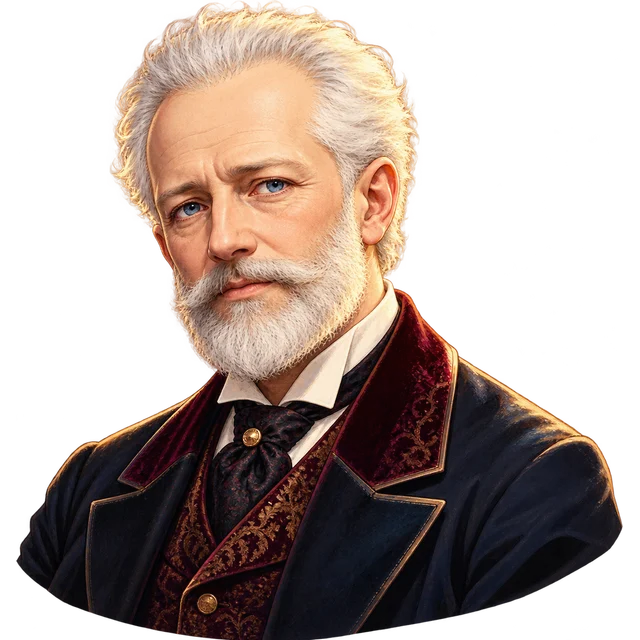
March · Op. 31 · 1876
ピョートル・イリイチ・チャイコフスキー(1840–1893)
暗く重い足どりから、最後は大勝利の大行進へ!From a dark, heavy tread to a blazing march of victory!
PUBLIC DOMAIN RECORDING
CC BY 4.0 無料でダウンロードOKWATCH ON YOUTUBE
 Tchaikovsky: Marche slave, Op. 31, TH 45 “Slavonic March”
Berliner Philharmoniker - Topic(YouTube) YouTube で開く ↗
Marche Slave, Op. 31.
London Symphony Orchestra - Topic(YouTube) YouTube で開く ↗
左の音源は権利が切れた録音なのでダウンロードできます。右の動画は YouTube の公式の埋め込みで見るもので、ダウンロードはできません(動画の権利は各チャンネルにあります)。
 もっと名演を観る YouTube で何百万回も再生された人気の演奏
Marche slave (Slavonic March) , Op. 31
Royal Philharmonic Orchestra - Topic(YouTube) YouTube で開く ↗
Tchaikovsky - Marche Slave
The Wicked North(YouTube) YouTube で開く ↗
Tchaikovsky: Marche Slave · César Iván Lara · Orquesta Sinfónica Juvenil de Caracas
Sinfónica Juvenil de Caracas(YouTube) YouTube で開く ↗
ホー!この曲、わずか5日ほどで書き上げたと言われているんだよ。
 この曲のおはなし The Story
「スラヴ行進曲」は、チャイコフスキーが1876年に書いたオーケストラのための行進曲です。暗く悲しげな短調(さびしい感じの音階)の行進で始まり、だんだん力強さを増して、最後は明るく堂々としたフィナーレで終わります。セルビアの民謡とロシアの国歌(当時)が使われているのが特徴です。Marche slave is a march for orchestra that Tchaikovsky wrote in 1876. It begins as a dark, sad march in a minor key, grows stronger and stronger, and ends with a bright and grand finale. It is special because it uses Serbian folk songs and the Russian national anthem of that time.
1876年、セルビアはオスマン帝国(トルコ)と戦争をしていて、同じスラヴ民族のロシアでは、セルビアを応援する気持ちが高まっていました。そこで、けがをしたセルビアの兵士を助けるための慈善演奏会が開かれることになり、チャイコフスキーはこの曲を頼まれました。はじめは「セルビア・ロシア行進曲」と呼ばれていました。In 1876, Serbia was at war with the Ottoman Empire, and many people in Russia, another Slavic nation, wanted to support the Serbs. A charity concert was planned to help wounded Serbian soldiers, and Tchaikovsky was asked to write a piece for it. At first, it was called the Serbo-Russian March.
初演は1876年11月、モスクワで、ニコライ・ルビンシテインの指揮で行われ、大成功をおさめました。ロシアの国歌「神よ、ツァーリを守りたまえ」が使われている点では、のちの「序曲1812年」と似ていて、2曲が同じ演奏会で取り上げられることもよくあります。迫力あるクライマックスで、今も人気の演奏会曲です。It was first performed in Moscow in November 1876, conducted by Nikolai Rubinstein, and it was a huge success. Like his later 1812 Overture, it uses the Russian anthem 'God Save the Tsar', and the two pieces are often played in the same concert. With its powerful climax, it is still a popular concert piece.
This is a march for a big orchestra. It starts slow and sad. Then it gets louder and stronger. At the end, it sounds bright and powerful. Tchaikovsky wrote it in only a few days!これは大きなオーケストラのための行進曲です。ゆっくりと悲しく始まります。それから、だんだん大きく強くなります。最後はとても明るく、迫力いっぱいです。チャイコフスキーはこれをわずか数日で書きました!
 聴きどころ Listening Guide
 えっ!?ネタ Surprising Facts
 タップすると答えが開きます
この曲は、セルビアとトルコの戦争でけがをしたセルビアの兵士を助けるための慈善演奏会のために作られました。演奏会の収益は、けが人の支援にあてられました。勇ましい行進曲ですが、もとは「人を助けたい」という思いから生まれた曲なのです。
This march was written for a charity concert to help Serbian soldiers wounded in the war with Turkey. The money from the concert went to support the wounded. It sounds brave and warlike, but it was born from a wish to help people.
演奏会までの時間が短く、チャイコフスキーはこの曲をわずか5日ほどで書き上げたと言われています。それでも、民謡とロシア国歌をたくみに組み合わせ、暗さから明るさへと劇的に変わっていく、見事な構成になっています。
The concert was coming soon, and Tchaikovsky is said to have written the piece in only about five days. Even so, it is beautifully built, cleverly mixing folk songs with the Russian anthem and moving dramatically from darkness to light.
冒頭のもの悲しいメロディーなど、曲の中にはセルビアの民謡が使われています。「明るいお日さま、あなたは同じようには照らさない」という意味の歌や、セルビア人が喜んで兵士になる、という内容の歌です。ロシアの作曲家が、セルビアの人々の歌で応援を表したのです。
Serbian folk songs are used in the piece, including the sad melody at the start. One song means 'Bright sun, you do not shine equally', and another is about Serbs happily joining the army. A Russian composer used the Serbian people's own songs to show his support.
当時のロシア国歌「神よ、ツァーリを守りたまえ」は、この曲のあと1880年に書かれた「序曲1812年」でも使われています。スラヴ行進曲は、国歌を使って最後を大きく盛り上げる手法を、チャイコフスキーが先に試していた曲とも言えます。
The old Russian anthem 'God Save the Tsar' was also used in the 1812 Overture, written later in 1880. So Marche slave is the piece where Tchaikovsky first tried using the anthem to build a huge ending.
ENGLISH × MASTERPIECE
 太鼓をたたいて人を集めるイメージから。「〜を熱く応援する」の意味です。
 この曲で覚える英単語 Words
 クイズに挑戦 Quiz
 この録音について(著作権・出典) Credits
MORE MASTERPIECES
シャルパンティエ・c. 1688–1698
パンパカパーン!ヨーロッパのテレビの幕開けを飾ってきた、ごうかな前奏曲。
テ・デウム ニ長調のページへ
パーセル・1695
ブリテンが「オーケストラ入門」のテーマに選んだ、かっこいいメロディー。
劇音楽「アブデラザール」より ロンドのページへ
バッハ・c. 1704 (?)
タラリ〜!一度聴いたら忘れない、オルガンの大迫力の幕開け。
トッカータとフーガ ニ短調のページへバッハ・c. 1706–1713
足が弾く低いテーマが21回!重くて壮大な、オルガンの大建築。
パッサカリアとフーガ ハ短調のページへバッハ・c. 1707–1710 (?)
キラキラの駆け上がりで幕開け!若きバッハのはなやかな鍵盤ショー。
トッカータ ニ長調のページへ
ヴィヴァルディ・published 1711
2本のヴァイオリンが火花を散らす!バッハも編曲した熱い協奏曲。
協奏曲集『調和の霊感』第8番 イ短調(2つのヴァイオリンのための協奏曲)のページへヴィヴァルディ・c. 1715
オクターブがぴょんぴょん跳ねる!喜びがはじける合唱の名曲。
グローリア ニ長調のページへ
テレマン・c. 1710–1720 (?)
バルブのないラッパで高音をきらり!バロックのトランペットの晴れ舞台。
トランペット協奏曲 ニ長調のページへ
 MP3