
カノン
Canon in D
パッヘルベル・c. 1680–1706
同じ8つの音が28回!なのに聴くたび胸がいっぱいになる曲。
カノンとジーグ ニ長調 より「カノン」のページへ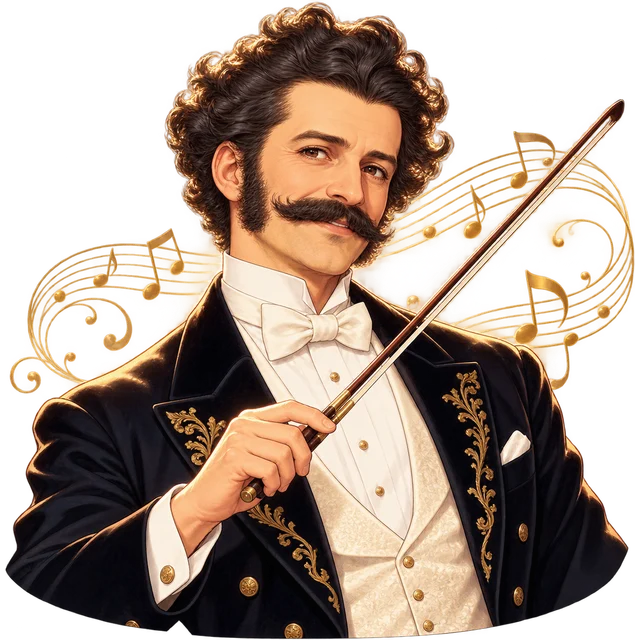
Dance · Op. 333 · 1869
ヨハン・シュトラウス2世(1825–1899)
人生を楽しまなきゃ損!男声合唱のために生まれた、陽気なワルツ。Enjoy life! A cheerful waltz first written for a men's choir.
WATCH ON YOUTUBE
この曲は、権利の切れた高音質の録音がまだ見つからないため、YouTube の公式チャンネルなどの名演でお楽しみください(ダウンロードはできません)。YouTube でほかの演奏もさがす ↗
 Wine, Women and Song, Op. 333
André Rieu - Topic(YouTube) YouTube で開く ↗
Johann Strauss II - Wine, Women and Song
The Wicked North(YouTube) YouTube で開く ↗
Whitesnake - Wine, Women An' Song
UnidiscMusic(YouTube) YouTube で開く ↗

ホー!このワルツは前置き(序奏)がとても長いんだ。じっくり待つのも楽しみだよ。
 この曲のおはなし The Story
「ワイン、女と歌」は、ヨハン・シュトラウス2世が1869年に作ったワルツです。もとはウィーン男声合唱協会のために書かれた、合唱つきのワルツでした。今ではオーケストラだけで演奏されることがほとんどです。ゆったりとした長い序奏のあと、のびやかで晴れやかなワルツのメロディーが次々にあらわれます。Wine, Women and Song is a waltz that Johann Strauss II wrote in 1869. It was first a choral waltz for the Vienna Men's Choral Association. Today it is almost always played by orchestra alone. After a long, relaxed introduction, bright and graceful waltz tunes appear one after another.
題名は、「ワインと女と歌を愛さない者は、一生おろか者のままだ」というドイツの古い言い回しから来ています。つまり「人生の楽しみを知らないのはもったいない」という意味です。この曲は、男声合唱協会がカーニバルの時期に開いた「おどけ者の夜」というお楽しみの会のために作られました。The title comes from an old German saying: 'Who does not love wine, women and song remains a fool his whole life long.' In other words, it is a waste not to enjoy the pleasures of life. The waltz was written for the association's 'Fools' Evening', a fun party held during the carnival season.
初演は1869年2月2日の「おどけ者の夜」でした。曲は、協会の名誉合唱指揮者だったヨハン・ヘルベックにささげられています。このワルツは多くの音楽家に愛され、ワーグナーもそのひとりだったと言われています。20世紀には、作曲家アルバン・ベルクが室内楽用に編曲したことでも知られています。It was first performed at the Fools' Evening on 2 February 1869. Strauss dedicated it to Johann Herbeck, the association's honorary choirmaster. Many musicians loved this waltz, and Wagner is said to have been one of them. In the 20th century, the composer Alban Berg also arranged it for a small group of instruments.
This is a happy waltz from Vienna. At first, it was for a men's choir. The title comes from an old German saying about enjoying life. The beginning is very long and slow. Then the bright waltz melodies start.これは、ウィーンの楽しいワルツです。最初は男声合唱のための曲でした。題名は、人生を楽しむことについてのドイツの古い言い回しから来ています。始まりの部分はとても長くて、ゆっくりです。そのあと、明るいワルツのメロディーが始まります。
 聴きどころ Listening Guide
 えっ!?ネタ Surprising Facts
 タップすると答えが開きます
題名のもとになった「ワインと女と歌を愛さない者は…」という言い回しは、昔から宗教改革で有名なマルティン・ルターの言葉だと言われてきました。しかしルターが本当にそう言ったという確かな証拠はなく、18世紀後半になって初めて文字の記録に出てくると考えられています。
The saying behind the title has long been credited to Martin Luther, the famous church reformer. But there is no solid proof that Luther ever said it, and it is thought to appear in writing for the first time only in the late 18th century.
1921年、シェーンベルクたちが開いていた演奏会のために、弟子のアルバン・ベルクがこのワルツを、ピアノ、ハーモニウム(足ぶみ式のオルガン)、弦楽四重奏用に編曲しました。シェーンベルクやウェーベルンも、シュトラウスのワルツを編曲しています。現代音楽の作曲家たちも、シュトラウスに一目置いていたのです。
In 1921, for a concert series run by Arnold Schoenberg's circle, his pupil Alban Berg arranged this waltz for piano, harmonium and string quartet. Schoenberg and Anton Webern also made arrangements of Strauss waltzes. Even composers of difficult modern music held Strauss in high regard.
このワルツは、ワルツが始まるまでの序奏がとても長いことで知られています。ゆったりとした序奏が、これから始まる楽しい時間への期待を少しずつふくらませていきます。いつワルツが始まるのか、わくわくしながら待ってみましょう。
This waltz is known for its very long introduction before the waltz itself begins. The relaxed opening slowly builds up our excitement for the fun to come. Wait and see when the waltz finally starts!
ウィーン男声合唱協会は、1867年にシュトラウスの「美しく青きドナウ」を初演した合唱団でもあります。「ドナウ」も、もとは合唱つきのワルツでした。その2年後、シュトラウスは同じ協会のために、このワルツを書いたのです。
The Vienna Men's Choral Association also gave the first performance of Strauss's The Blue Danube in 1867. The Blue Danube, too, was first a choral waltz. Two years later, Strauss wrote this waltz for the same group.
ENGLISH × MASTERPIECE
 聖書に由来する言い回し。「(先のことは気にせず)今を楽しもう」という意味で使われます。
 この曲で覚える英単語 Words
 クイズに挑戦 Quiz
 著作権について Credits
MORE MASTERPIECES
パッヘルベル・c. 1680–1706
同じ8つの音が28回!なのに聴くたび胸がいっぱいになる曲。
カノンとジーグ ニ長調 より「カノン」のページへシャルパンティエ・c. 1688–1698
パンパカパーン!ヨーロッパのテレビの幕開けを飾ってきた、ごうかな前奏曲。
テ・デウム ニ長調のページへクラーク・c. 1700
結婚式の大定番。でも作曲者は長いあいだ取りちがえられていた!
トランペット・ヴォランタリー(デンマーク王子の行進)のページへ
バッハ・1713
2本のリコーダーがやさしく鳴る、のどかな牧場の歌。
カンタータ第208番より「羊は安らかに草を食み」のページへ
コレッリ・published 1714
聖なる夜のために。最後に羊飼いの笛のようなパストラーレが流れます。
合奏協奏曲 ト短調「クリスマス協奏曲」のページへ
ヴィヴァルディ・c. 1715
オクターブがぴょんぴょん跳ねる!喜びがはじける合唱の名曲。
グローリア ニ長調のページへ
テレマン・c. 1710–1720 (?)
バルブのないラッパで高音をきらり!バロックのトランペットの晴れ舞台。
トランペット協奏曲 ニ長調のページへ
ヘンデル・1717
テムズ川の船の上で国王のために!夏の夜の水上コンサート。
水上の音楽のページへ
 MP3