
パッヘルベルのジーグ
Pachelbel's Gigue
パッヘルベル・c. 1680–1706
あの「カノン」には、はずむ相棒がいた!知られざる後半戦。
カノンとジーグ ニ長調 より「ジーグ」のページへ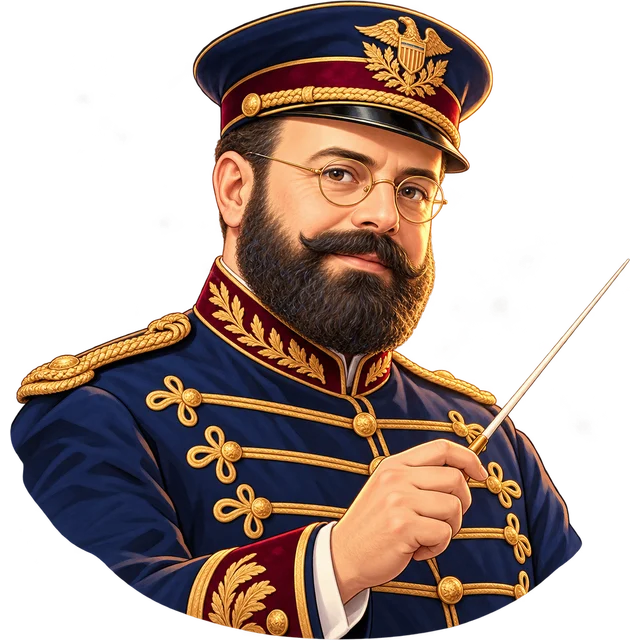
March · · 1896–1897
ジョン・フィリップ・スーザ(1854–1932)
アメリカの「国の行進曲」!ピッコロが空高くさえずる。America's official national march, with a piccolo soaring on top.
PUBLIC DOMAIN RECORDING
PD / CC0 無料でダウンロードOK 別の演奏で聴く 1:不明
ANOTHER RECORDING 1
PD / CC0 別の演奏で聴く 2:U.S. Army BandANOTHER RECORDING 2
PD / CC0WATCH ON YOUTUBE
 SOUSA The Stars and Stripes Forever - "The President's Own" U.S. Marine Band
United States Marine Band(YouTube) YouTube で開く ↗
Stars and Stripes Forever
United States Navy Band(YouTube) YouTube で開く ↗
左の音源は権利が切れた録音なのでダウンロードできます。右の動画は YouTube の公式の埋め込みで見るもので、ダウンロードはできません(動画の権利は各チャンネルにあります)。
 もっと名演を観る YouTube で何百万回も再生された人気の演奏
Vienna Philharmonic - Sousa: Stars and Stripes Forever (Summer Night Concert 2019)
Sony Classical(YouTube) YouTube で開く ↗
Stars and Stripes Forever | US Marine Corps Band | The Bands of HM Royal Marines
The Bands of HM Royal Marines(YouTube) YouTube で開く ↗
Stars and Stripes Forever - John Philip Sousa
SemperFiOorah1(YouTube) YouTube で開く ↗
The Stars and Stripes Forever
Navy Band - Topic(YouTube) YouTube で開く ↗

ホー!この曲は、アメリカの法律で「国の行進曲」に決められているんだよ。
 この曲のおはなし The Story
「星条旗よ永遠なれ」は、「マーチ王」と呼ばれるアメリカの作曲家スーザが書いた、もっとも有名な行進曲です。星条旗とはアメリカの国旗のこと。力強く明るいメロディーが次々と現れ、最後の部分では、ピッコロが高い音でさえずるようなかざりのメロディーを吹きます。聴く人をわくわくさせるような音楽です。The Stars and Stripes Forever is the most famous march by John Philip Sousa, the American composer known as 'The March King'. The Stars and Stripes is the American flag. Bright, powerful tunes come one after another, and in the last section a piccolo plays a high, bird-like melody on top. It is music that can fill listeners with excitement.
1896年の年末、スーザはヨーロッパでマネージャーが亡くなったという知らせを受け、急いでアメリカへ帰る船に乗っていました。その船の上で、頭の中でバンドが鳴りひびくのを感じたと、のちに自伝に書いています。自伝によると、船の上では楽譜に書かず、アメリカに着いてから、頭の中のバンドが演奏していたとおりに書きとめたそうです。At the end of 1896, Sousa was in Europe when he received news that his manager had died, and he took a ship home to America. On board, he later wrote in his autobiography, he felt a band playing in his head. According to his autobiography, he wrote nothing down on the ship; after arriving in America, he wrote out the music just as the band in his head had played it.
1897年に初演されると大人気となり、スーザのバンドの演奏会では、ほとんど毎回のように演奏されました。スーザは自分でこの曲に歌詞もつけています。そして1987年、アメリカの議会で法律が作られ、この曲は正式に「アメリカ合衆国の国の行進曲」となりました。When it was first performed in 1897, it became hugely popular, and Sousa's band played it at almost every concert. Sousa also wrote words for it himself. Then in 1987, the U.S. Congress passed a law making it the official National March of the United States.
This is a famous American march. The title is about the American flag. The composer was called 'The March King.' He said the music played in his head on a ship! At the end, a small flute called a piccolo plays very high notes.これはアメリカの有名な行進曲です。題名はアメリカの国旗のことです。作曲者は「マーチ王」と呼ばれました。船の上で、頭の中にこの音楽が聞こえたと彼は語りました!最後に、ピッコロという小さな笛がとても高い音を吹きます。
 聴きどころ Listening Guide
 えっ!?ネタ Surprising Facts
 タップすると答えが開きます
スーザは1896年のクリスマスのころ、大西洋を渡る船の上で、頭の中に行進曲が鳴りひびくのを感じたと書いています。船の上では楽譜に書かず、アメリカに着いてから、頭の中で完成していた曲をそのまま書きとめたそうです。
Sousa wrote that around Christmas 1896, on a ship crossing the Atlantic, he felt a march playing in his head. He did not write it down on board; after landing in America, he simply wrote out the music that was already complete in his mind.
1987年、アメリカでは法律によって、この曲が「国の行進曲(ナショナル・マーチ)」に定められました。国歌「星条旗」とは別の曲です。独立記念日のお祝いなどでは、花火とともにこの曲が演奏されることがよくあります。
In 1987, a U.S. law made this piece the National March. It is a different piece from the national anthem, 'The Star-Spangled Banner'. On the Fourth of July, it is often played along with fireworks.
「スーザ(Sousa)という名前は、S.O.という頭文字にUSAをつけたもの」といううわさが広まったことがあります。でもこれはでたらめな作り話で、スーザ本人もうそだと言っています。本当はポルトガル系の父から受けついだ名字です。
A rumor once spread that the name 'Sousa' was made from the initials S.O. plus 'USA'. But it was a made-up story, and Sousa himself said it was false. In fact, it was the family name he got from his father, who had Portuguese roots.
体に巻きつけるように持つ大きな金管楽器「スーザフォン」は、スーザの名前からつけられました。スーザは、低い音が上に向かってバンド全体に広がる楽器をほしがり、そのアイデアをもとに楽器メーカーのJ・W・ペッパーが最初のスーザフォンを作ったとされています。
The sousaphone, the large brass instrument that wraps around the player's body, is named after Sousa. Sousa wanted a bass instrument whose sound would rise up and spread over the whole band, and the maker J. W. Pepper is said to have built the first sousaphone from his idea.
ENGLISH × MASTERPIECE
 勝った船が旗(colors)をなびかせて帰ったことから。pass with flying colors で「見事合格」。
 この曲で覚える英単語 Words
 クイズに挑戦 Quiz
 この録音について(著作権・出典) Credits
MORE MASTERPIECES
パッヘルベル・c. 1680–1706
あの「カノン」には、はずむ相棒がいた!知られざる後半戦。
カノンとジーグ ニ長調 より「ジーグ」のページへシャルパンティエ・c. 1688–1698
パンパカパーン!ヨーロッパのテレビの幕開けを飾ってきた、ごうかな前奏曲。
テ・デウム ニ長調のページへ
パーセル・1695
ブリテンが「オーケストラ入門」のテーマに選んだ、かっこいいメロディー。
劇音楽「アブデラザール」より ロンドのページへクラーク・c. 1700
結婚式の大定番。でも作曲者は長いあいだ取りちがえられていた!
トランペット・ヴォランタリー(デンマーク王子の行進)のページへ
バッハ・c. 1707–1710 (?)
キラキラの駆け上がりで幕開け!若きバッハのはなやかな鍵盤ショー。
トッカータ ニ長調のページへ
ヴィヴァルディ・published 1711
2本のヴァイオリンが火花を散らす!バッハも編曲した熱い協奏曲。
協奏曲集『調和の霊感』第8番 イ短調(2つのヴァイオリンのための協奏曲)のページへヴィヴァルディ・c. 1715
オクターブがぴょんぴょん跳ねる!喜びがはじける合唱の名曲。
グローリア ニ長調のページへ
テレマン・c. 1710–1720 (?)
バルブのないラッパで高音をきらり!バロックのトランペットの晴れ舞台。
トランペット協奏曲 ニ長調のページへ
 MP3