
パッヘルベルのジーグ
Pachelbel's Gigue
パッヘルベル・c. 1680–1706
あの「カノン」には、はずむ相棒がいた!知られざる後半戦。
カノンとジーグ ニ長調 より「ジーグ」のページへ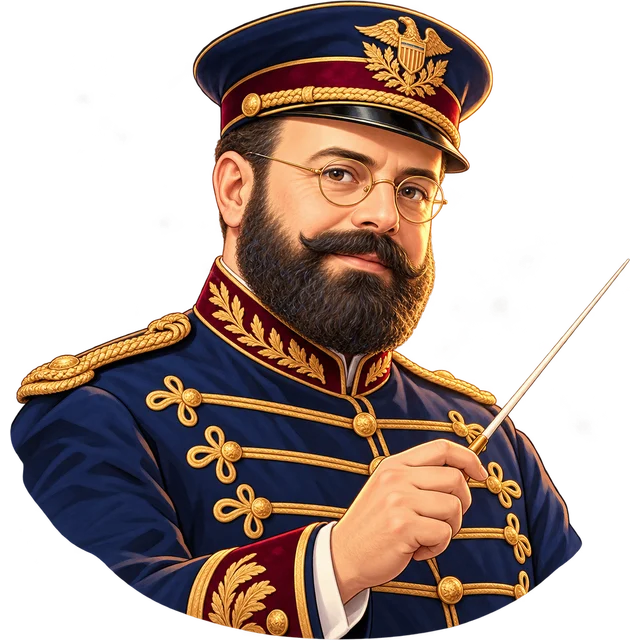
March · · 1890
ジョン・フィリップ・スーザ(1854–1932)
ワシントンの高校生の教練隊のために書かれた、きびきびしたマーチ。A brisk march written for a high-school cadet team in Washington.
WATCH ON YOUTUBE
この曲は、権利の切れた高音質の録音がまだ見つからないため、YouTube の公式チャンネルなどの名演でお楽しみください(ダウンロードはできません)。YouTube でほかの演奏もさがす ↗
 SOUSA The High School Cadets (1890) - "The President's Own" United States Marine Band
United States Marine Band(YouTube) YouTube で開く ↗
John Philip Sousa - High School Cadets (1890)
Bartje Bartmans(YouTube) YouTube で開く ↗
The High School Cadets(士官候補生):川崎吹奏楽団
kawasui1971(YouTube) YouTube で開く ↗

ホー!日本の題は「士官候補生」だけど、もとは高校生の教練隊のための曲なんだ。
 この曲のおはなし The Story
「士官候補生」は、スーザが1890年に作った行進曲です。英語の題名は「ザ・ハイスクール・カデッツ」。ワシントンD.C.の高校にあった、生徒たちの教練隊(行進や隊列の訓練をするチーム)のために書かれました。ワシントン生まれのスーザに、地元の生徒たちが作曲をたのんだのです。The High School Cadets is a march Sousa wrote in 1890. It was written for the cadet drill team of a high school in Washington, D.C., a group of students who practiced marching in formation. The students asked Sousa, who was born in Washington, to write a march for them.
このころスーザは、アメリカ海兵隊バンドの隊長として活躍していました。前の年には「ワシントン・ポスト」を書いており、次々にヒット・マーチを生み出していた時期です。この曲は2/2拍子(1小節を大きく2つに数える拍子)で、きびきびと進みます。同じ1890年に、フィラデルフィアの出版社ハリー・コールマンから楽譜が出版されました。At that time, Sousa was the leader of the U.S. Marine Band. He had written The Washington Post the year before, and he was creating one hit march after another. This piece is in brisk 2/2 time, or cut time, with two strong beats in each bar. In 1890, the Philadelphia publisher Harry Coleman published the music.
曲はたちまち人気になり、4年後の新聞ではスーザの「とくに有名なマーチ」の1つにあげられています。1899年ごろにはスーザの楽団が録音もしました。20世紀の名指揮者フレデリック・フェネルは、最後の部分を「わたしが知る中でもっとも開放的で、のびのびとスイングする吹奏楽の音楽の1つ」とほめています。The march quickly became popular. Four years later, a newspaper listed it among Sousa's 'most notable' marches. Sousa's band recorded it around 1899. The famous conductor Frederick Fennell later called the last strain 'some of the most wide-open, free-swinging band music I know.'
Sousa wrote this march for high school students. They had a team that practiced marching. Sousa was born in their city, Washington. The music is light and lively. It has a strong marching beat!スーザは高校生のためにこの行進曲を書きました。生徒たちには、行進の練習をするチームがありました。スーザは生徒たちと同じ町、ワシントンの生まれでした。音楽は軽くて元気です。行進にぴったりの力強いリズムがあります!
 聴きどころ Listening Guide
 えっ!?ネタ Surprising Facts
 タップすると答えが開きます
英語の題名「ハイスクール・カデッツ」は、高校の生徒たちの教練隊のことです。ところが日本では「士官候補生」という、軍の学校の生徒のような題名で知られています。もとは地元の高校生のために書かれた、もっと身近な曲だったのです。
The English title, The High School Cadets, refers to a high school students' drill team. But in Japan the piece is known by a title that sounds like 'officer candidates' at a military academy. It was really a friendly piece written for local high school students.
1939年のアメリカ映画『アンダー・パップ』では、この曲の後半が「ペンギンの行進」という歌に使われました。主演の少女歌手グロリア・ジーンは、翌年の映画『リトル・ビット・オブ・ヘヴン』でもこのメロディーを歌っています。軍隊ふうのマーチが、かわいい歌に変身したのです。
In the 1939 American film The Under-Pup, the last strains of this march were used for a song called 'The March of the Penguins.' The young singer Gloria Jean sang the tune again in the 1940 film A Little Bit of Heaven. A military-style march turned into a cute song.
スーザは、レコードなどの「機械の音楽」が広まると、人々が自分で演奏したり歌ったりしなくなると心配していました。自分の曲の録音はゆるしましたが、録音の場にはたいてい来ず、指揮はほかの人にまかせていたそうです。
Sousa worried that if 'mechanical music' such as records spread, people would stop playing and singing themselves. He allowed his works to be recorded, but he usually skipped the recording sessions and let others conduct.
スーザはこの曲の2年前、1888年にも、ワシントンの別の教練隊のために「ナショナル・フェンシブルズ」というマーチを書いています。地元ワシントンの人たちにとって、スーザは自分たちのための曲を書いてくれる、ほこらしい存在だったのです。
In 1888, two years before this march, Sousa also wrote 'The National Fencibles' for another drill team in Washington. For the people of his hometown, Sousa was a proud local hero who wrote music just for them.
ENGLISH × MASTERPIECE
 列に加わる意味から、「ルールや周りの考えにしたがう」という意味にも使います。
 この曲で覚える英単語 Words
 クイズに挑戦 Quiz
 著作権について Credits
MORE MASTERPIECES
パッヘルベル・c. 1680–1706
あの「カノン」には、はずむ相棒がいた!知られざる後半戦。
カノンとジーグ ニ長調 より「ジーグ」のページへシャルパンティエ・c. 1688–1698
パンパカパーン!ヨーロッパのテレビの幕開けを飾ってきた、ごうかな前奏曲。
テ・デウム ニ長調のページへ
パーセル・1695
ブリテンが「オーケストラ入門」のテーマに選んだ、かっこいいメロディー。
劇音楽「アブデラザール」より ロンドのページへクラーク・c. 1700
結婚式の大定番。でも作曲者は長いあいだ取りちがえられていた!
トランペット・ヴォランタリー(デンマーク王子の行進)のページへ
バッハ・c. 1707–1710 (?)
キラキラの駆け上がりで幕開け!若きバッハのはなやかな鍵盤ショー。
トッカータ ニ長調のページへ
ヴィヴァルディ・published 1711
2本のヴァイオリンが火花を散らす!バッハも編曲した熱い協奏曲。
協奏曲集『調和の霊感』第8番 イ短調(2つのヴァイオリンのための協奏曲)のページへヴィヴァルディ・c. 1715
オクターブがぴょんぴょん跳ねる!喜びがはじける合唱の名曲。
グローリア ニ長調のページへ
テレマン・c. 1710–1720 (?)
バルブのないラッパで高音をきらり!バロックのトランペットの晴れ舞台。
トランペット協奏曲 ニ長調のページへ
 MP3