
パッヘルベルのジーグ
Pachelbel's Gigue
パッヘルベル・c. 1680–1706
あの「カノン」には、はずむ相棒がいた!知られざる後半戦。
カノンとジーグ ニ長調 より「ジーグ」のページへ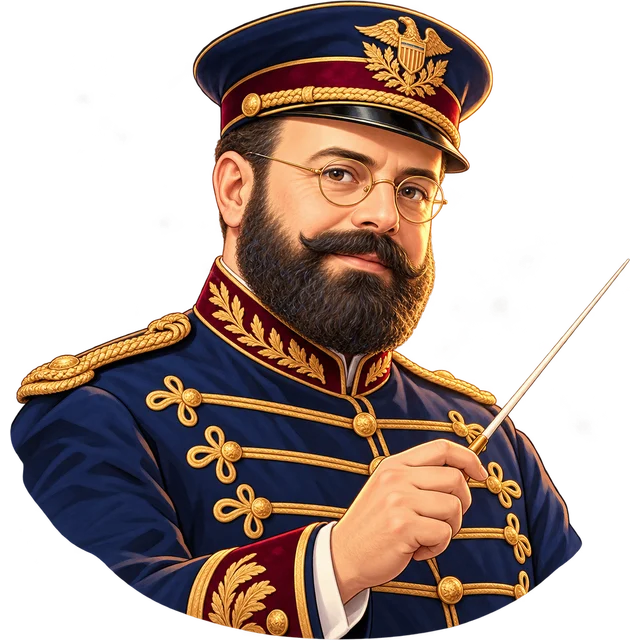
March · · 1899
ジョン・フィリップ・スーザ(1854–1932)
世界の友だちと握手しよう!海の向こうへ届ける友情のマーチ。Let's shake hands with the world! A march of friendship across the ocean.
PUBLIC DOMAIN RECORDING
PD / CC0 無料でダウンロードOK 別の演奏で聴く 1:United States Air Force Band, Concert Band; Recording: United States Air Force
ANOTHER RECORDING 1
PD / CC0 別の演奏で聴く 2:United States Air Force Band, Ceremonial Brass and Concert Band, Concert Band; Recording: United States Air ForceANOTHER RECORDING 2
PD / CC0WATCH ON YOUTUBE
 SOUSA Hands Across the Sea (1899) - "The President's Own" United States Marine Band
United States Marine Band(YouTube) YouTube で開く ↗
Olivia Newton-John - Hands Across The Sea (Clunk Click, February 16th 1974)
Olivia Newton-John(YouTube) YouTube で開く ↗
左の音源は権利が切れた録音なのでダウンロードできます。右の動画は YouTube の公式の埋め込みで見るもので、ダウンロードはできません(動画の権利は各チャンネルにあります)。
 もっと名演を観る YouTube で何百万回も再生された人気の演奏
Hands Across the Sea | Sousa | The Bands of HM Royal Marines
The Bands of HM Royal Marines(YouTube) YouTube で開く ↗

ホー!楽譜のはじめには「永遠の友情をちかおう」という言葉がそえられているんだ。
 この曲のおはなし The Story
「海を越える握手」は、アメリカの「マーチ王」ジョン・フィリップ・スーザが1899年に作った行進曲です。題名は、海をへだてた国の人どうしが手をとり合う、という意味。スーザは「特定の国にあてたものではなく、海外にいるアメリカのすべての友人にあてた曲だ」と語っています。力強いけれど、明るく晴れやかなマーチです。Hands Across the Sea is a march written in 1899 by John Philip Sousa, America's 'March King.' The title means people from countries far across the ocean joining hands. Sousa said the march was 'addressed to no particular nation, but to all of America's friends abroad.' It is strong, but it also feels bright and cheerful.
この曲が作られたのは、1898年の米西戦争(アメリカとスペインの戦争)が終わってまもないころです。戦争の直後に、あえて「友情」をテーマにしたところに、この曲の理想が表れています。スーザは楽譜の最初に、イギリスの外交官ジョン・フッカム・フリアの「ふと思いついた。永遠の友情をちかおう」という一節を書きそえました。Sousa wrote it soon after the Spanish–American War of 1898. Choosing friendship as the theme right after a war shows the ideal behind the music. At the top of the score, Sousa printed a line by the English diplomat John Hookham Frere: 'A sudden thought strikes me; let us swear an eternal friendship.'
初演は1899年4月21日、フィラデルフィアのアカデミー・オブ・ミュージックでした。客席は大よろこびで、アンコールを3回も求めたと伝えられています。翌1900年には、スーザの楽団がヨーロッパへ演奏旅行に出かけ、海の向こうの人々にもスーザのマーチを届けました。今でも世界中の吹奏楽団が演奏する人気曲です。It was first performed on April 21, 1899, at the Academy of Music in Philadelphia. The audience loved it and is said to have asked for three encores. The next year, in 1900, Sousa's band went on a concert tour of Europe and brought his marches to people across the sea. Today, bands all over the world still play this popular march.
This is a march by Sousa. The title means 'shaking hands across the ocean.' It is a piece about friendship between countries. Sousa wrote it right after a war. At the first concert, people asked to hear it three more times!これはスーザの行進曲です。題名は「海の向こうと握手する」という意味です。国と国との友情の曲です。スーザは戦争のすぐあとにこの曲を書きました。最初の演奏会では、お客さんがあと3回も聴きたがりました!
 聴きどころ Listening Guide
 えっ!?ネタ Surprising Facts
 タップすると答えが開きます
米西戦争が終わってまもない時期には、愛国的なマーチがたくさん作られました。そんな中でスーザは、相手の国をやっつける曲ではなく、海外の友人たちと手をとり合う曲を書いたのです。愛国心と理想の両方をもった、めずらしいタイプのマーチだと言われています。
Soon after the Spanish–American War, many patriotic marches were written. But Sousa wrote a march not about beating another country, but about joining hands with friends overseas. It is often described as both patriotic and idealistic.
スーザは楽譜に、イギリスの外交官で作家のジョン・フッカム・フリアの言葉「ふと思いついた。永遠の友情をちかおう」を引用しました。曲を聴く人に、まず「友だちになろう」と呼びかけているようです。題名の「握手」とぴったり重なる言葉ですね。
Sousa quoted a line by the English diplomat and writer John Hookham Frere on the score: 'A sudden thought strikes me; let us swear an eternal friendship.' It is as if the music first says to the listener, 'Let's be friends.' The words match the handshake in the title perfectly.
1899年4月21日、フィラデルフィアでの初演では、客席からアンコールを3回も求められたと伝えられています。つまり、同じマーチを4回続けて聴いたことになります。この新しいマーチが、どれほど温かく迎えられたかがよくわかる話です。
At the premiere in Philadelphia on April 21, 1899, the audience is said to have demanded three encores. That means they heard the same march four times in a row! It shows how warmly this new Sousa march was received.
1901年、ニューヨーク州バッファローのパンアメリカン博覧会で、スーザはバージニア工科大学の学生バンド(愛称「ハイティ・タイティーズ」)の演奏を聴きました。気に入ったスーザは、この曲の演奏をそのバンドにささげたそうです。マーチ王に認められた学生たちは、さぞ誇らしかったでしょう。
In 1901, at the Pan-American Exposition in Buffalo, New York, Sousa heard the Virginia Tech student band, nicknamed the 'Highty-Tighties.' He liked them so much that he dedicated a performance of this march to them. The students must have felt very proud.
ENGLISH × MASTERPIECE
 本物の橋ではなく、仲の悪い人や国どうしの関係をよくすることを言います。
 この曲で覚える英単語 Words
 クイズに挑戦 Quiz
 この録音について(著作権・出典) Credits
MORE MASTERPIECES
パッヘルベル・c. 1680–1706
あの「カノン」には、はずむ相棒がいた!知られざる後半戦。
カノンとジーグ ニ長調 より「ジーグ」のページへシャルパンティエ・c. 1688–1698
パンパカパーン!ヨーロッパのテレビの幕開けを飾ってきた、ごうかな前奏曲。
テ・デウム ニ長調のページへクラーク・c. 1700
結婚式の大定番。でも作曲者は長いあいだ取りちがえられていた!
トランペット・ヴォランタリー(デンマーク王子の行進)のページへ
バッハ・c. 1707–1710 (?)
キラキラの駆け上がりで幕開け!若きバッハのはなやかな鍵盤ショー。
トッカータ ニ長調のページへ
ヴィヴァルディ・published 1711
2本のヴァイオリンが火花を散らす!バッハも編曲した熱い協奏曲。
協奏曲集『調和の霊感』第8番 イ短調(2つのヴァイオリンのための協奏曲)のページへヴィヴァルディ・c. 1715
オクターブがぴょんぴょん跳ねる!喜びがはじける合唱の名曲。
グローリア ニ長調のページへ
テレマン・c. 1710–1720 (?)
バルブのないラッパで高音をきらり!バロックのトランペットの晴れ舞台。
トランペット協奏曲 ニ長調のページへ
ヘンデル・1717
テムズ川の船の上で国王のために!夏の夜の水上コンサート。
水上の音楽のページへ
 MP3