
パッヘルベルのジーグ
Pachelbel's Gigue
パッヘルベル・c. 1680–1706
あの「カノン」には、はずむ相棒がいた!知られざる後半戦。
カノンとジーグ ニ長調 より「ジーグ」のページへ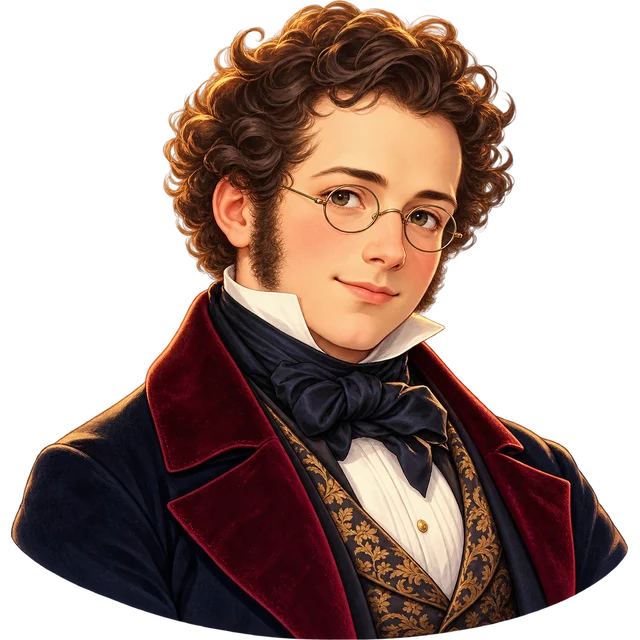
March · D. 733 No. 1 (Op. 51 No. 1) · 1818年ごろ?(出版1826年)
フランツ・シューベルト(1797–1828)
ピアノ1台を2人でひく!はずむリズムの元気な行進曲。One piano, four hands, and a march full of sunshine.
PUBLIC DOMAIN RECORDING
CC BY-SA 3.0 無料でダウンロードOKWATCH ON YOUTUBE
 Schubert: Marche Militaire, D.733,1
Wiener Philharmoniker - Topic(YouTube) YouTube で開く ↗
Franz Schubert - Marche Militaire
The Wicked North(YouTube) YouTube で開く ↗
左の音源は権利が切れた録音なのでダウンロードできます。右の動画は YouTube の公式の埋め込みで見るもので、ダウンロードはできません(動画の権利は各チャンネルにあります)。
 もっと名演を観る YouTube で何百万回も再生された人気の演奏
Schubert Marcha Militar. nº 1. Op. 51 - Lang Lang y Baremboin
Alejandro Cárdenas(YouTube) YouTube で開く ↗

ホー!この曲、もとはピアノ1台を2人でひく「連弾」の曲なんだよ。
 この曲のおはなし The Story
「軍隊行進曲」は、オーストリアの作曲家シューベルトの「3つの軍隊行進曲」の第1番です。もとはピアノ1台を2人でいっしょにひく「連弾」のための曲で、1826年にウィーンで出版されました。ラッパの合図のような始まりと、はずむリズムが楽しく、今ではオーケストラや吹奏楽でもよく演奏されます。The Marche Militaire No. 1 is the first of Schubert's Three Marches Militaires. It was written for piano four hands, which means two players share one piano. It was published in Vienna in 1826. With its trumpet-like opening and bouncy rhythm, it is now often played by orchestras and wind bands, too.
作られた年ははっきりしませんが、1818年ごろという説が有力です(1822年や1824年という説もあります)。シューベルトはエステルハージ伯爵家の夏の館(今のスロバキア)で、伯爵の娘たちに音楽を教えていました。この行進曲も、生徒たちのための練習曲として書かれたと考えられています。曲は「行進曲→やさしい中間部(トリオ)→行進曲」という、わかりやすい形です。No one knows exactly when Schubert wrote it. Many experts think it was around 1818, though some suggest 1822 or 1824. Schubert taught music to the daughters of Count Esterházy at the family's summer house, in what is now Slovakia. The marches were probably written as teaching pieces for them. The form is easy to follow: a march, a gentler middle section called the trio, and then the march again.
シューベルトが生きていたころ、彼の名前は大きな交響曲よりも、歌曲や家庭で楽しむピアノ曲で知られていました。のちにピアニストのタウジヒがピアノ1人用に編曲し、オーケストラ版もたくさん作られました。今ではシューベルトの作品の中でも、特に多くの人に親しまれている一曲です。In his own lifetime, Schubert was known more for his songs and his music for home players than for big symphonies. Later, the pianist Carl Tausig arranged this march for solo piano, and many orchestral versions followed. Today it is one of Schubert's best-loved pieces.
This is a happy march by Schubert. Two people play it on one piano. The music sounds like soldiers walking in a parade. He may have written it for the girls he taught piano. Many years later, another composer put this tune into music for dancing elephants!これはシューベルトの楽しい行進曲です。2人が1台のピアノでひきます。音楽は、パレードで歩く兵隊さんのように聞こえます。シューベルトがピアノを教えていた女の子たちのために書いたのかもしれません。何年もあとに、別の作曲家がこのメロディーを、ゾウがおどる音楽の中に入れました!
 聴きどころ Listening Guide
 えっ!?ネタ Surprising Facts
 タップすると答えが開きます
1942年、ストラヴィンスキーはアメリカのサーカス団のために、ゾウがおどるバレエの音楽『サーカス・ポルカ』を書きました(振付はバランシン)。その曲の最後に、シューベルトの軍隊行進曲のメロディーがユーモラスに顔を出します。
In 1942, Stravinsky wrote Circus Polka for an elephant ballet in the Ringling Brothers circus, with choreography by George Balanchine. Near the end, the tune of Schubert's Marche Militaire pops up as a funny quotation.
シューベルトは1818年と1824年の夏、エステルハージ伯爵家に住みこみ、娘のマリーとカロリーネに音楽を教えました。連弾は、先生と生徒や姉妹がいっしょにひくのにぴったり。この行進曲も、そんなレッスンのために書かれたと考えられています。
In the summers of 1818 and 1824, Schubert lived with the Esterházy family and taught music to the daughters, Marie and Karoline. Duets were perfect for a teacher and a pupil, or for two sisters, to play together. These marches were probably written for such lessons.
シューベルトは生涯に、とてもたくさんのピアノ連弾曲を残しました。大作曲家の中でも、連弾の名曲の多さはトップクラスです。当時のウィーンでは、家でピアノを楽しむ人が多く、連弾の楽譜はよく売れました。友だちと並んでひく楽しさが、曲からも伝わってきます。
Schubert wrote a huge amount of music for piano duet, more great duets than almost any other major composer. In Vienna at that time, many families played the piano at home, and duet music sold well. You can hear the fun of sitting side by side with a friend.
じつは「軍隊行進曲」は3曲セットで、第2番はト長調、第3番は変ホ長調です。でも、ふつう「シューベルトの軍隊行進曲」といえば第1番ニ長調のこと。3曲のうち1曲だけが、飛びぬけて有名になったのです。ほかの2曲も明るくて楽しい曲ですよ。
The Marches Militaires are a set of three: No. 2 is in G major and No. 3 is in E-flat major. But when people say 'Schubert's Marche Militaire', they almost always mean No. 1 in D major. Only one of the three became famous, though the other two are fun as well.
ENGLISH × MASTERPIECE
 本来は「けんかや問題は両方に責任がある」。2人いて成り立つことにも使います。
 この曲で覚える英単語 Words
 クイズに挑戦 Quiz
 この録音について(著作権・出典) Credits
MORE MASTERPIECES
パッヘルベル・c. 1680–1706
あの「カノン」には、はずむ相棒がいた!知られざる後半戦。
カノンとジーグ ニ長調 より「ジーグ」のページへシャルパンティエ・c. 1688–1698
パンパカパーン!ヨーロッパのテレビの幕開けを飾ってきた、ごうかな前奏曲。
テ・デウム ニ長調のページへ
パーセル・1695
ブリテンが「オーケストラ入門」のテーマに選んだ、かっこいいメロディー。
劇音楽「アブデラザール」より ロンドのページへクラーク・c. 1700
結婚式の大定番。でも作曲者は長いあいだ取りちがえられていた!
トランペット・ヴォランタリー(デンマーク王子の行進)のページへ
バッハ・c. 1707–1710 (?)
キラキラの駆け上がりで幕開け!若きバッハのはなやかな鍵盤ショー。
トッカータ ニ長調のページへ
ヴィヴァルディ・published 1711
2本のヴァイオリンが火花を散らす!バッハも編曲した熱い協奏曲。
協奏曲集『調和の霊感』第8番 イ短調(2つのヴァイオリンのための協奏曲)のページへヴィヴァルディ・c. 1715
オクターブがぴょんぴょん跳ねる!喜びがはじける合唱の名曲。
グローリア ニ長調のページへ
テレマン・c. 1710–1720 (?)
バルブのないラッパで高音をきらり!バロックのトランペットの晴れ舞台。
トランペット協奏曲 ニ長調のページへ
 MP3