
パッヘルベルのジーグ
Pachelbel's Gigue
パッヘルベル・c. 1680–1706
あの「カノン」には、はずむ相棒がいた!知られざる後半戦。
カノンとジーグ ニ長調 より「ジーグ」のページへ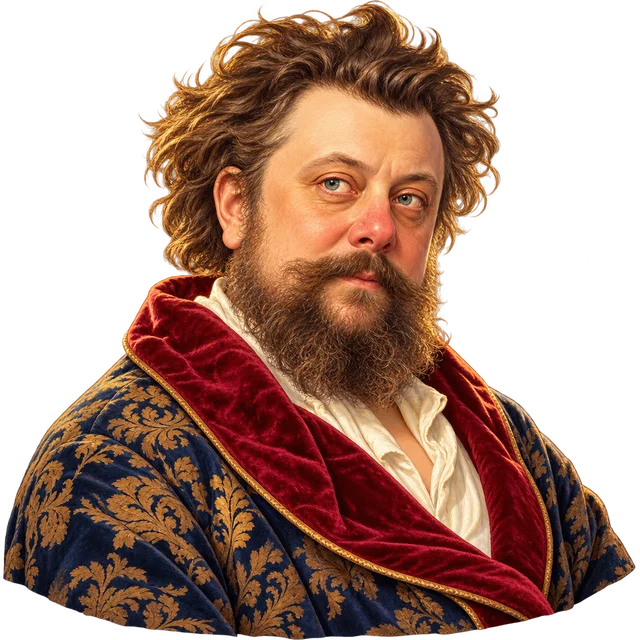
Piano · · 1874
モデスト・ムソルグスキー(1839–1881)
友の絵の中を歩こう!絵から音楽が飛び出す、ふしぎな美術館。Walk through a friend's paintings, where every picture turns into music.
PUBLIC DOMAIN RECORDING
PD / CC0 無料でダウンロードOK
WATCH ON YOUTUBE
 Mussorgsky - Pictures at an Exhibition (Kurt Masur & Leipzig Gewandhaus Orchestra)
EuroArtsChannel(YouTube) YouTube で開く ↗
Mussorgsky Pictures at an Exhibition . Valentina Lisitsa
Valentina Lisitsa QOR Records Official channel(YouTube) YouTube で開く ↗
左の音源は権利が切れた録音なのでダウンロードできます。右の動画は YouTube の公式の埋め込みで見るもので、ダウンロードはできません(動画の権利は各チャンネルにあります)。
 もっと名演を観る YouTube で何百万回も再生された人気の演奏
Pictures at an Exhibition (complete) / Modest Mussorgsky / Semyon Bychkov / Oslo Philharmonic
Oslo Philharmonic(YouTube) YouTube で開く ↗
Mussorgsky - Pictures at an Exhibition (Baba Yaga & The Great Gate of Kiev)
Rousseau(YouTube) YouTube で開く ↗
Mussorgsky - Pictures at an Exhibition
mahlerman77(YouTube) YouTube で開く ↗
Mussorgsky - Pictures at an Exhibition - Karajan
Meus_VHS(YouTube) YouTube で開く ↗

ホー!「プロムナード」は散歩という意味。絵から絵へ歩く作曲家の足どりだよ。
 この曲のおはなし The Story
ロシアの作曲家ムソルグスキーが1874年に書いたピアノ組曲です。亡くなった友人で画家・建築家のハルトマンの作品展を見て、その絵をもとに10曲の音楽を作りました。曲と曲のあいだには「プロムナード(散歩)」という音楽がはさまれ、絵から絵へ歩いていく様子を表しています。Russian composer Modest Mussorgsky wrote this piano suite in 1874. After visiting an exhibition of works by his late friend Viktor Hartmann, an artist and architect, he wrote ten pieces based on the pictures. Between them comes a 'Promenade,' which shows the visitor walking from one picture to the next.
ハルトマンは1873年に39歳の若さで急に亡くなり、翌年、彼の作品を集めた展覧会がサンクトペテルブルクで開かれました。ムソルグスキーはわずか数週間でこの曲を書き上げたと言われています。小人、古いお城、ひなの踊り、魔女バーバ・ヤガーの小屋、キーウ(キエフ)の大きな門など、絵の世界がつぎつぎに音になります。Hartmann died suddenly in 1873 at the age of 39, and the next year an exhibition of his work was held in St. Petersburg. Mussorgsky is said to have written the suite in just a few weeks. A gnome, an old castle, dancing chicks, the hut of the witch Baba Yaga, and a great gate for Kyiv (Kiev) all come to life in sound.
ムソルグスキーが生きているあいだ、この曲は出版されず、亡くなったあとの1886年に出版されました。のちに多くの人がオーケストラ用に編曲し、中でも1922年にラヴェルが作った編曲は大評判になりました。今ではピアノ版とオーケストラ版の両方が人気で、ロックやシンセサイザーの演奏まで生まれています。The suite was not published in Mussorgsky's lifetime. It appeared in 1886, after his death. Many musicians later arranged it for orchestra, and Maurice Ravel's version from 1922 became a huge success. Today both the piano and orchestra versions are popular, and there are even rock and synthesizer versions.
Mussorgsky had a friend who was a painter. The friend died young. Mussorgsky went to see his pictures. Then he wrote music about them. You can hear a little walk between the pictures.ムソルグスキーには画家の友だちがいました。その友だちは若くして亡くなりました。ムソルグスキーは友だちの絵を見に行きました。そして、その絵についての音楽を書きました。絵と絵のあいだには、小さな散歩の音楽が聞こえます。
 聴きどころ Listening Guide
 えっ!?ネタ Surprising Facts
 タップすると答えが開きます
曲のもとになったハルトマンの絵は、今では多くがどこにあるかわかっていません。残っている絵はごく一部です。音楽はこんなに有名なのに、もとの絵をほとんど見ることができないという、ふしぎな作品なのです。
Many of the Hartmann pictures behind the music are now lost. Only a few survive. The music is world-famous, yet we can hardly see the paintings that inspired it. What a strange story!
最後の曲「キーウの大門」のもとになったのは、ハルトマンが門のデザインコンテストのために描いた設計図です。でも、この門は実際には建てられませんでした。ムソルグスキーは、まぼろしの門を音楽の中で堂々と完成させたのです。
The final piece, 'The Great Gate of Kyiv,' is based on Hartmann's design for a city gate competition. The gate was never actually built. Mussorgsky finished that dream gate in music instead, in grand style.
最初の「プロムナード」は、5拍子と6拍子が入れかわる、めずらしいリズムで書かれています。ふつうの行進のように規則正しくないので、絵を見ながら立ち止まったり歩き出したりする、自然な足どりのように聞こえます。
The opening 'Promenade' switches between bars of five beats and six beats, which is unusual. Because it is not as regular as a march, it sounds like a real visitor stopping and starting while looking at the pictures.
ラヴェルのオーケストラ版では、「古城」のメロディーをサクソフォーンが演奏します。当時、サクソフォーンはオーケストラではめずらしい楽器でした。「ビドロ(牛車)」ではテューバの独奏が使われるなど、楽器の使い方がとても工夫されています。
In Ravel's orchestra version, a saxophone plays the melody of 'The Old Castle.' At the time, the saxophone was rare in orchestras. In 'Bydło' (the ox cart), a solo tuba plays. Ravel chose every instrument with great care.
ENGLISH × MASTERPIECE
 「百聞は一見にしかず」に近い言い方。絵は、ことばより多くを伝えるという意味です。
 この曲で覚える英単語 Words
 クイズに挑戦 Quiz
 この録音について(著作権・出典) Credits
MORE MASTERPIECES
パッヘルベル・c. 1680–1706
あの「カノン」には、はずむ相棒がいた!知られざる後半戦。
カノンとジーグ ニ長調 より「ジーグ」のページへ
パーセル・1695
ブリテンが「オーケストラ入門」のテーマに選んだ、かっこいいメロディー。
劇音楽「アブデラザール」より ロンドのページへ
バッハ・c. 1704 (?)
タラリ〜!一度聴いたら忘れない、オルガンの大迫力の幕開け。
トッカータとフーガ ニ短調のページへバッハ・c. 1703–1707 (?)
音楽の授業でおなじみ!4つの声が同じテーマで追いかけっこ。
小フーガ ト短調のページへバッハ・c. 1706–1713
足が弾く低いテーマが21回!重くて壮大な、オルガンの大建築。
パッサカリアとフーガ ハ短調のページへ
ヴィヴァルディ・published 1711
2本のヴァイオリンが火花を散らす!バッハも編曲した熱い協奏曲。
協奏曲集『調和の霊感』第8番 イ短調(2つのヴァイオリンのための協奏曲)のページへ
クープラン・published 1717
題名の意味はだれも知らない!やわらかく波打つ、なぞの名曲。
神秘的なバリケードのページへバッハ・c. 1720
チェロ1本だけで、こんなに豊かな世界が広がる!
無伴奏チェロ組曲 第1番 ト長調のページへ MP3