
アブデラザール
Abdelazer Rondeau
パーセル・1695
ブリテンが「オーケストラ入門」のテーマに選んだ、かっこいいメロディー。
劇音楽「アブデラザール」より ロンドのページへ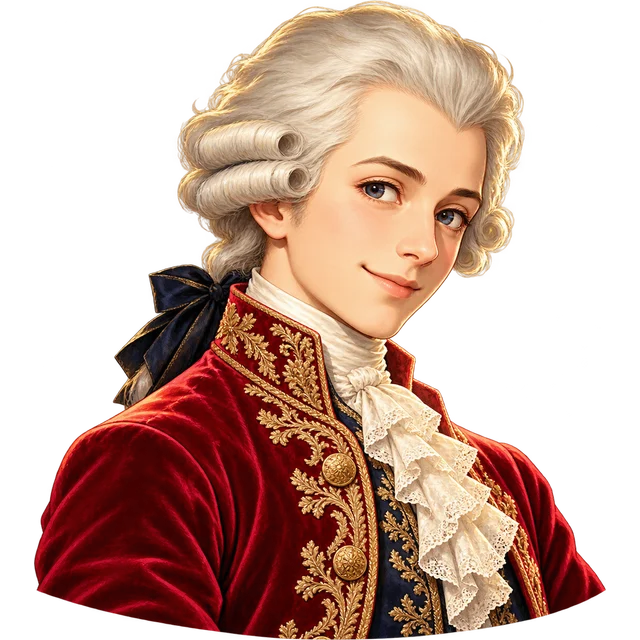
Chamber · K. 465 · 1785
ヴォルフガング・アマデウス・モーツァルト(1756–1791)
「楽譜のミス?」とまで言われた、ふしぎな響きの始まり。An opening so strange that some thought it was a mistake.
PUBLIC DOMAIN RECORDING
PD / CC0 無料でダウンロードOK
WATCH ON YOUTUBE
 Mozart - String Quartet No. 19 in C Major, K. 465 "Dissonance" (Gewandhaus Quartet)
EuroArtsChannel(YouTube) YouTube で開く ↗
Mozart: String Quartet No. 19, Dissonance | Gewandhaus Quartet
DW Classical Music(YouTube) YouTube で開く ↗
左の音源は権利が切れた録音なのでダウンロードできます。右の動画は YouTube の公式の埋め込みで見るもので、ダウンロードはできません(動画の権利は各チャンネルにあります)。
 もっと名演を観る YouTube で何百万回も再生された人気の演奏
Wolfgang Amadeus Mozart - String Quartet No. 19 "Dissonance", K. 465 [With score]
Damon J.H.K.(YouTube) YouTube で開く ↗

ホー!あやしい和音のあとに、ぱっと明るいハ長調。暗闇から光へのドラマだよ。
 この曲のおはなし The Story
この曲は、モーツァルトが1785年に完成させた弦楽四重奏曲(バイオリン2、ビオラ、チェロの4人で弾く曲)です。ゆっくりした序奏で、和音がぶつかり合うような、どこへ行くのかわからない響きが続くため、「不協和音」というニックネームがつきました。このあだ名はモーツァルト自身がつけたものではありません。This is a string quartet, a piece for two violins, viola, and cello, that Mozart finished in 1785. In its slow introduction, the chords seem to clash, and you cannot tell where the music is going. That is why it got the nickname 'Dissonance'. Mozart himself did not give it this name.
モーツァルトは、尊敬する先輩ハイドンにささげる6曲の弦楽四重奏曲を、数年かけて書きました。この曲はその6曲目で、1785年1月に完成しています。ハイドンの作品から学んだことを生かしながら、半音でじわじわ動く大胆な和音を序奏に使いました。不安な序奏のあと、明るいハ長調の主部が始まるコントラストが見事です。Mozart spent several years writing six string quartets to dedicate to Haydn, an older composer he deeply respected. This was the sixth, finished in January 1785. Using what he had learned from Haydn's music, he filled the introduction with bold chords that creep along in half steps. The contrast between the uneasy opening and the bright C major music that follows is wonderful.
ハイドンは1785年の1月と2月の集まりでこれらの四重奏曲を聴き、モーツァルトの父レオポルトに「あなたの息子さんは、私が知っているなかで最も偉大な作曲家です」と語りました。同じ年、6曲はハイドンにささげられて出版されます。一方で、序奏のふしぎな響きは当時の人をとまどわせ、批判する音楽家もいました。After hearing these quartets at gatherings in January and February 1785, Haydn told Mozart's father, Leopold, that his son was the greatest composer he knew. The six quartets were published the same year with a dedication to Haydn. But the strange sound of the introduction confused some people at the time, and some musicians criticized it.
Four people play this music. The beginning sounds strange and dark. Some notes seem to fight each other. Then the music becomes bright and happy. Mozart gave this music to his friend Haydn.4人でこの音楽を演奏します。始まりはふしぎで暗い感じです。音どうしがけんかしているように聞こえます。それから音楽は明るく楽しくなります。モーツァルトはこの曲を友人のハイドンにささげました。
 聴きどころ Listening Guide
 えっ!?ネタ Surprising Facts
 タップすると答えが開きます
1785年2月、モーツァルト家で新しい四重奏曲を聴いたハイドンは、父レオポルトに「神に誓って、正直な人間として申し上げます。あなたの息子さんは、私が直接、または名前で知っている中で最も偉大な作曲家です」と語りました。レオポルトが娘への手紙に書き残しています。
In February 1785, after hearing the new quartets at Mozart's home, Haydn said to Leopold: 'Before God and as an honest man, I tell you that your son is the greatest composer known to me either in person or by name.' Leopold wrote this down in a letter to his daughter.
序奏の和音はあまりに大胆だったため、当時の音楽家をとまどわせました。イタリアの作曲家サルティが、この曲の響きを批判する文章を書いたことが知られています。のちの時代には、楽譜の印刷のまちがいではと疑った人もいたと伝えられています。
The chords of the introduction were so bold that they puzzled some musicians at the time. The Italian composer Giuseppe Sarti is known to have written an essay criticizing its harmonies. Later, some people are said to have suspected printing mistakes in the score.
モーツァルトはハイドンへの献辞(ささげる言葉)の中で、6曲の四重奏曲を自分の「子どもたち」にたとえ、それが「長く骨の折れる努力の実り」だと書きました。すらすら書いたイメージのあるモーツァルトですが、この6曲の楽譜には、書き直したあとが多く残っています。
In his dedication to Haydn, Mozart called the six quartets his 'children' and said they were 'the fruit of a long and laborious effort'. Mozart is often imagined writing music easily, but the manuscripts of these quartets show many corrections.
序奏ではチェロが低い音をきざみ、ほかの楽器が一つずつ加わって半音ずつ動くため、調がわからないほどゆらぎます。それが晴れわたるように明るいハ長調のアレグロへ変わる瞬間は、この曲最大の聴きどころです。
In the introduction, the cello repeats low notes, while the other instruments enter one by one and move by half steps, so the key becomes unclear. The moment when it turns into a bright C major Allegro, like the sky clearing, is the highlight of the piece.
ENGLISH × MASTERPIECE
 決まった「箱」の外で考える、つまり常識にしばられない発想のことです。
 この曲で覚える英単語 Words
 クイズに挑戦 Quiz
 この録音について(著作権・出典) Credits
MORE MASTERPIECES
パーセル・1695
ブリテンが「オーケストラ入門」のテーマに選んだ、かっこいいメロディー。
劇音楽「アブデラザール」より ロンドのページへ
バッハ・c. 1703–1707 (?)
音楽の授業でおなじみ!4つの声が同じテーマで追いかけっこ。
小フーガ ト短調のページへバッハ・c. 1706–1713
足が弾く低いテーマが21回!重くて壮大な、オルガンの大建築。
パッサカリアとフーガ ハ短調のページへバッハ・c. 1707–1710 (?)
キラキラの駆け上がりで幕開け!若きバッハのはなやかな鍵盤ショー。
トッカータ ニ長調のページへ
ヴィヴァルディ・published 1711
2本のヴァイオリンが火花を散らす!バッハも編曲した熱い協奏曲。
協奏曲集『調和の霊感』第8番 イ短調(2つのヴァイオリンのための協奏曲)のページへ
クープラン・published 1717
題名の意味はだれも知らない!やわらかく波打つ、なぞの名曲。
神秘的なバリケードのページへバッハ・c. 1720
チェロ1本だけで、こんなに豊かな世界が広がる!
無伴奏チェロ組曲 第1番 ト長調のページへバッハ・c. 1720
ヴァイオリン1本で、宇宙のように大きな世界を描く傑作。
無伴奏ヴァイオリン・パルティータ第2番 ニ短調より「シャコンヌ」のページへ MP3