
パッヘルベルのジーグ
Pachelbel's Gigue
パッヘルベル・c. 1680–1706
あの「カノン」には、はずむ相棒がいた!知られざる後半戦。
カノンとジーグ ニ長調 より「ジーグ」のページへ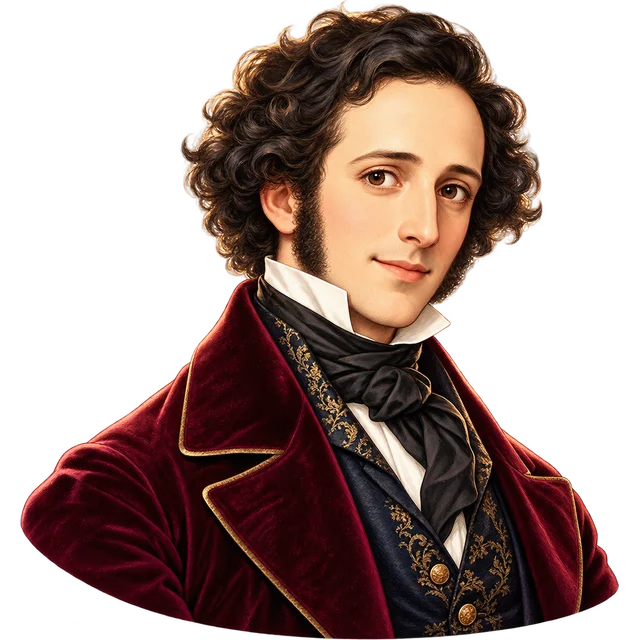
Piano · Op. 14 · 1828–1830
フェリックス・メンデルスゾーン(1809–1847)
静かな歌から一転、妖精が跳ねまわる!ピアノの指先マジック。A gentle song, then fairies leap out! Magic at the fingertips.
PUBLIC DOMAIN RECORDING
PD / CC0 無料でダウンロードOKWATCH ON YOUTUBE
 María Dueñas: Saint-Saëns - Introduction et rondo capriccioso, Op. 28
Deutsche Grammophon - DG(YouTube) YouTube で開く ↗
Saint-Saëns Introduction and Rondo Capriccioso, Op.28 - Bomsori Kim 김봄소리
Bomsori 김봄소리(YouTube) YouTube で開く ↗
左の音源は権利が切れた録音なのでダウンロードできます。右の動画は YouTube の公式の埋め込みで見るもので、ダウンロードはできません(動画の権利は各チャンネルにあります)。
 もっと名演を観る YouTube で何百万回も再生された人気の演奏
Augustin Hadelich plays Saint-Saëns Introduction and Rondo Capriccioso
Augustin Hadelich(YouTube) YouTube で開く ↗

ホー!「カプリチオーソ」はイタリア語で「気まぐれに」。気まぐれな妖精みたいな曲だね。
 この曲のおはなし The Story
「ロンド・カプリチオーソ」は、メンデルスゾーンのピアノ独奏曲の中で、とくに人気のある1曲です。前半はホ長調のゆったりした歌「アンダンテ」、後半はホ短調の速くて軽やかな「プレスト」。2つの部分が、とぎれずにつながっています。「ロンド」は同じメロディーが何度ももどってくる形、「カプリチオーソ」は「気まぐれに」という意味です。Rondo capriccioso is one of Mendelssohn's most popular works for solo piano. It begins with a slow, singing Andante in E major and then turns into a fast, feather-light Presto in E minor. The two parts are joined without a break. A 'rondo' is a form in which the main tune keeps coming back, and 'capriccioso' means 'in a whimsical way'.
もとになったのは、1828年に書かれたホ短調の「練習曲(エチュード)」でした。1830年、旅の途中でミュンヘンに立ち寄ったメンデルスゾーンは、そこで若いピアニストのデルフィーネ・フォン・シャウロートと親しくなります。彼女にたのまれて曲を手直しし、前にゆったりした序奏をつけ加えて、今の形が生まれました。後半のプレストは、彼の得意な「妖精の音楽」のスタイルで書かれています。It grew out of an étude in E minor that Mendelssohn wrote in 1828. In 1830, while traveling, he stopped in Munich, where he spent time with the young pianist Delphine von Schauroth. At her request, he revised the piece and added the slow introduction, creating the version we know today. The Presto is written in his famous 'fairy music' style, light and sparkling.
速いスタッカート(音を短く切る弾き方)と、よく回る指が必要なため、今ではピアノを学ぶ人にとって腕だめしの定番曲になっています。メンデルスゾーンが17歳で書いた『夏の夜の夢』序曲と同じような、軽くてキラキラした響きを、ピアノ1台で楽しめる曲です。Because it needs quick, crisp staccato (short, detached notes) and very nimble fingers, it has become a favorite test piece for piano students. On just one piano, it gives us the same kind of light, glittering sound as the overture to A Midsummer Night's Dream, which Mendelssohn wrote at seventeen.
This piano piece has two parts. First, it is slow and sweet. Then it becomes very fast and light. It sounds like little fairies dancing. Mendelssohn changed the piece for a young pianist he liked.このピアノ曲には2つの部分があります。はじめは、ゆっくりでやさしい音楽です。それから、とても速くて軽い音楽になります。小さな妖精たちがおどっているように聞こえます。メンデルスゾーンは、好きだった若いピアニストのために、この曲を書き直しました。
 聴きどころ Listening Guide
 えっ!?ネタ Surprising Facts
 タップすると答えが開きます
1830年6月、メンデルスゾーンは姉ファニーへの手紙で、ピアニストのシャウロートに心ひかれていることを打ち明けています。彼女はメンデルスゾーンのためにホ短調の小さなピアノ曲を書き、そのお返しに彼はこのロンドを彼女に書いたと伝えられています。でも、2人の恋が実ることはありませんでした。
In a letter to his sister Fanny in June 1830, Mendelssohn admitted that he was attracted to the pianist Delphine von Schauroth. She is said to have written a little piano piece in E minor for him, and he gave her this rondo in return. But their romance never went further.
メンデルスゾーンがシャウロートにささげたのは、このロンドだけではありません。ミュンヘンで初演された「ピアノ協奏曲第1番 ト短調」も、彼女に献呈されています。彼女の演奏を、それだけ高く評価していたのでしょう。
This rondo was not the only gift. His Piano Concerto No. 1 in G minor, first performed in Munich, was also dedicated to her. He must have thought very highly of her playing.
後半のプレストの部分は、もともと1828年に書かれた「練習曲」でした。伝記作家の中には、そのさらにもとになったホ短調の練習曲が1824年ごろにあったと考える人もいます。前にやさしい序奏をつけたことで、ただの練習曲が、物語のある1つの作品に生まれ変わりました。
The Presto was first written as an étude in 1828. Some biographers believe it goes back even further, to an E minor étude from around 1824. By adding a gentle introduction, Mendelssohn turned a simple study into a piece with a story.
小さな音で、速く、軽く、キラキラと駆けまわる音楽は、メンデルスゾーンの「名物」です。『夏の夜の夢』序曲や弦楽八重奏曲のスケルツォにも同じ魔法が使われています。この曲のプレストは、その魔法をピアノ1台で味わえる代表例です。
Soft, fast, light and sparkling music was Mendelssohn's specialty. The same magic appears in his overture to A Midsummer Night's Dream and in the scherzo of his Octet. The Presto of this rondo is a perfect example of that magic on a single piano.
ENGLISH × MASTERPIECE
 会ってすぐ、人を好きになったり気に入ったりするときの、くだけた言い方です。
 この曲で覚える英単語 Words
 クイズに挑戦 Quiz
 この録音について(著作権・出典) Credits
MORE MASTERPIECES
パッヘルベル・c. 1680–1706
あの「カノン」には、はずむ相棒がいた!知られざる後半戦。
カノンとジーグ ニ長調 より「ジーグ」のページへシャルパンティエ・c. 1688–1698
パンパカパーン!ヨーロッパのテレビの幕開けを飾ってきた、ごうかな前奏曲。
テ・デウム ニ長調のページへ
パーセル・1695
ブリテンが「オーケストラ入門」のテーマに選んだ、かっこいいメロディー。
劇音楽「アブデラザール」より ロンドのページへクラーク・c. 1700
結婚式の大定番。でも作曲者は長いあいだ取りちがえられていた!
トランペット・ヴォランタリー(デンマーク王子の行進)のページへ
バッハ・c. 1703–1707 (?)
音楽の授業でおなじみ!4つの声が同じテーマで追いかけっこ。
小フーガ ト短調のページへバッハ・c. 1706–1713
足が弾く低いテーマが21回!重くて壮大な、オルガンの大建築。
パッサカリアとフーガ ハ短調のページへバッハ・c. 1707–1710 (?)
キラキラの駆け上がりで幕開け!若きバッハのはなやかな鍵盤ショー。
トッカータ ニ長調のページへ
ヴィヴァルディ・published 1711
2本のヴァイオリンが火花を散らす!バッハも編曲した熱い協奏曲。
協奏曲集『調和の霊感』第8番 イ短調(2つのヴァイオリンのための協奏曲)のページへ
 MP3