
パッヘルベルのジーグ
Pachelbel's Gigue
パッヘルベル・c. 1680–1706
あの「カノン」には、はずむ相棒がいた!知られざる後半戦。
カノンとジーグ ニ長調 より「ジーグ」のページへ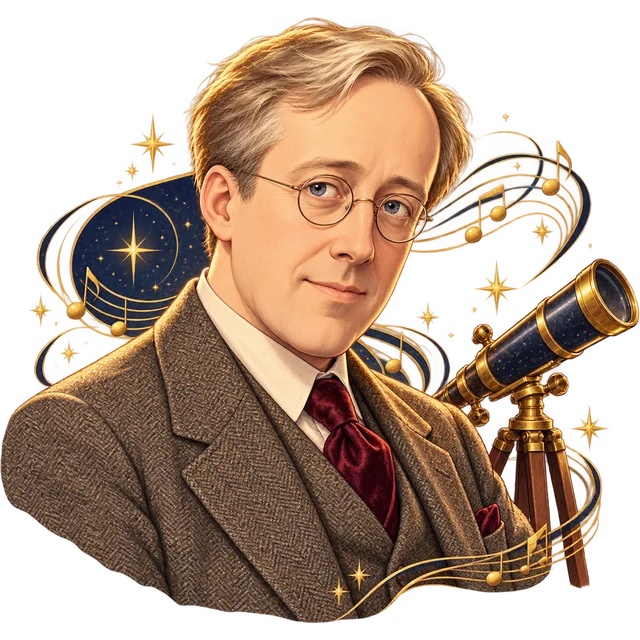
Orchestral · Op. 29 No. 2 · 1912–1913
グスターヴ・ホルスト(1874–1934)
音楽の先生ホルストが、女子校の生徒のために書いた弦楽の宝もの。A string treasure that music teacher Holst wrote for his students.
WATCH ON YOUTUBE
この曲は、権利の切れた高音質の録音がまだ見つからないため、YouTube の公式チャンネルなどの名演でお楽しみください(ダウンロードはできません)。YouTube でほかの演奏もさがす ↗
 Gustav Holst - St Paul's Suite (Complete version)
Akademia Filmu i Telewizji(YouTube) YouTube で開く ↗
Gustav Holst - St Paul's Suite
miljkmi(YouTube) YouTube で開く ↗
Holst - St. Paul's Suite Op. 29 (Complete Score)
AltoClef(YouTube) YouTube で開く ↗

ホー!ホルストは「惑星」で有名になってからも、ずっとこの学校の音楽の先生を続けたんだ。
 この曲のおはなし The Story
「セント・ポール組曲」は、ホルストがロンドンのハマースミスにあるセント・ポール女学校の生徒たちのために書いた、弦楽合奏のための組曲です。ホルストは1905年から亡くなる1934年まで、この学校で音楽の先生をつとめました。生徒たちが弾いて楽しめるように作られた、明るく生き生きとした曲です。St Paul's Suite is a suite for string orchestra that Holst wrote for the students of St Paul's Girls' School in Hammersmith, London. Holst was the school's music teacher from 1905 until his death in 1934. It is a bright and lively piece, made so that the students could enjoy playing it.
この曲は1912年から1913年にかけて書かれました。学校がホルストのために防音の作曲部屋を作ってくれたことへの、お礼の気持ちがこめられています。最初は「ハ調の組曲」という名前でした。「ジグ」「オスティナート」「間奏曲」「フィナーレ(ダーガソン)」の4つの楽章でできています。The suite was written in 1912 and 1913. It was Holst's way of thanking the school, which had built him a soundproof room for composing. At first it was called Suite in C. It has four movements: Jig, Ostinato, Intermezzo and Finale (The Dargason).
最後の楽章では、イギリスの古いおどりの曲「ダーガソン」と、有名な「グリーンスリーブス」という2つのメロディーが、同時に重ねて演奏されます。この楽章は、ホルストが吹奏楽のために書いた「第2組曲」の終楽章を弦楽用に書き直したものです。曲は手直しのあと1922年に出版され、今も世界中の弦楽合奏で愛されています。In the final movement, two melodies are played at the same time: Dargason, an old English dance tune, and the famous Greensleeves. Holst rearranged this movement for strings from the finale of his Second Suite for military band. After some revision, the suite was published in 1922, and it is still loved by string orchestras around the world.
This is a happy piece for strings. Holst was a music teacher at a girls' school. He wrote this piece for his students. In the last part, you can hear two famous tunes at the same time. One of them is Greensleeves.これは弦楽器のための明るい曲です。ホルストは女子校の音楽の先生でした。彼は生徒たちのためにこの曲を書きました。最後の部分では、2つの有名なメロディーが同時に流れます。そのうちの1つは「グリーンスリーブス」です。
 聴きどころ Listening Guide
 えっ!?ネタ Surprising Facts
 タップすると答えが開きます
セント・ポール女学校は、ホルストのために防音の部屋を作りました。ホルストはその部屋で週末や休みの日に作曲にはげみ、そのお礼の気持ちもこめてこの組曲を書いたのです。のちの大作「惑星」の多くも、この部屋で書かれたと言われています。
St Paul's Girls' School built a soundproof room for Holst. He worked on his music there on weekends and holidays, and he wrote this suite partly to thank the school. Much of his later masterpiece, The Planets, is also said to have been written in that room.
フィナーレでは、まず古いおどりの曲「ダーガソン」がくり返され、そこにチェロが「グリーンスリーブス」を重ねます。拍子の感じがちがう2つの曲がぴったりかみ合うのは、まるでパズルのよう。ホルストの見事な腕前がわかります。
In the Finale, the old dance tune Dargason repeats again and again, and then the cellos add Greensleeves on top. The two tunes feel different in rhythm, yet they fit together perfectly, like a puzzle. It shows Holst's great skill.
フィナーレは、ホルストが1911年に書いた「吹奏楽のための第2組曲」の終楽章「ダーガソンによる幻想曲」を、弦楽器用に書き直したものです。同じ音楽を、吹奏楽と弦楽合奏の両方で聴きくらべられます。
The Finale is a string version of the last movement of Holst's Second Suite in F for Military Band, written in 1911, called Fantasia on the Dargason. You can compare the same music played by a wind band and by strings.
ホルストは「惑星」で世界的に有名になったあとも、セント・ポール女学校の先生をやめませんでした。1905年から1934年まで、およそ30年間。生徒のために書いた曲もたくさんあり、この組曲はその代表作です。
Even after The Planets made him famous around the world, Holst did not stop teaching at St Paul's Girls' School. He taught there for almost 30 years, from 1905 to 1934. He wrote many pieces for his students, and this suite is the best known.
ENGLISH × MASTERPIECE
 2つのものの良いところを同時に楽しめること。have the best of both worlds の形でも使います。
 この曲で覚える英単語 Words
 クイズに挑戦 Quiz
 著作権について Credits
MORE MASTERPIECES
パッヘルベル・c. 1680–1706
あの「カノン」には、はずむ相棒がいた!知られざる後半戦。
カノンとジーグ ニ長調 より「ジーグ」のページへ
パーセル・1695
ブリテンが「オーケストラ入門」のテーマに選んだ、かっこいいメロディー。
劇音楽「アブデラザール」より ロンドのページへ
バッハ・c. 1703–1707 (?)
音楽の授業でおなじみ!4つの声が同じテーマで追いかけっこ。
小フーガ ト短調のページへ
ヴィヴァルディ・published 1711
2本のヴァイオリンが火花を散らす!バッハも編曲した熱い協奏曲。
協奏曲集『調和の霊感』第8番 イ短調(2つのヴァイオリンのための協奏曲)のページへ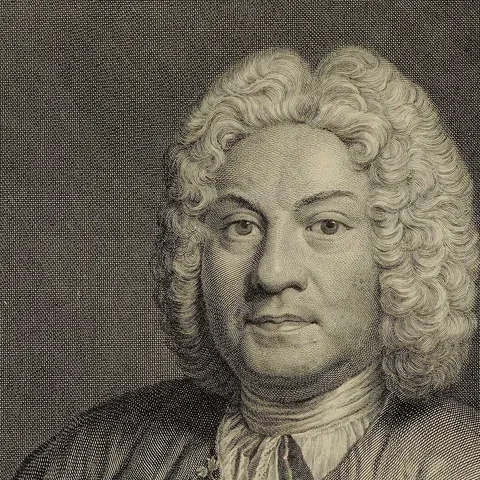
クープラン・published 1717
題名の意味はだれも知らない!やわらかく波打つ、なぞの名曲。
神秘的なバリケードのページへバッハ・c. 1720
チェロ1本だけで、こんなに豊かな世界が広がる!
無伴奏チェロ組曲 第1番 ト長調のページへバッハ・1720
止まらない!キラキラ走る、ヴァイオリン1本の大はしゃぎ。
無伴奏ヴァイオリン・パルティータ第3番 ホ長調より「プレリュード」のページへバッハ・c. 1720
チェロのいちばん低い「ド」がずしん!堂々とした明るい組曲。
無伴奏チェロ組曲第3番 ハ長調のページへ
 MP3