
テ・デウム
Te Deum
シャルパンティエ・c. 1688–1698
パンパカパーン!ヨーロッパのテレビの幕開けを飾ってきた、ごうかな前奏曲。
テ・デウム ニ長調のページへ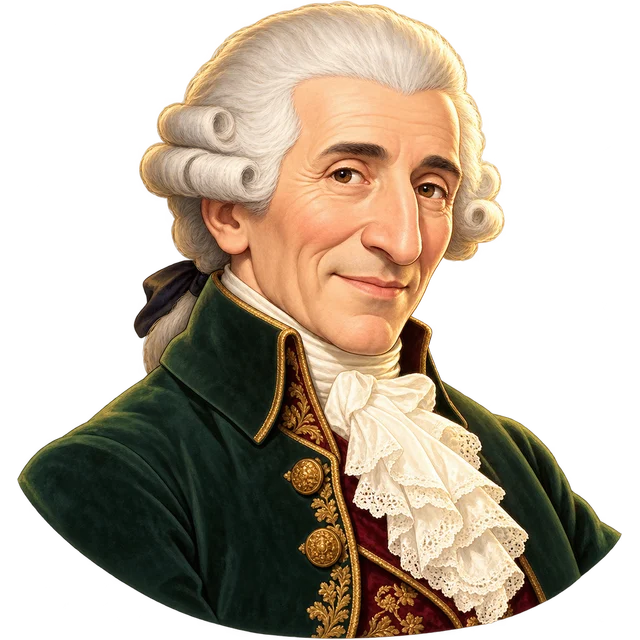
Symphony · Hob. I:104 · 1795
フランツ・ヨーゼフ・ハイドン(1732–1809)
「交響曲の父」が最後に書いた交響曲。堂々たる大団円!The very last symphony from the 'Father of the Symphony.'
PUBLIC DOMAIN RECORDING
CC BY 3.0 無料でダウンロードOK
 別の演奏で聴く 1:Paul De Bra
ANOTHER RECORDING 1
CC BY 4.0WATCH ON YOUTUBE
 Haydn Symphony No.104 'London' by Adam Fischer & Danish Chamber Orchestra (Live Performance)
Naxos Music(YouTube) YouTube で開く ↗
Haydn: Symphony No. 104 "London" | Paavo Järvi and The Deutsche Kammerphilharmonie Bremen
DW Classical Music(YouTube) YouTube で開く ↗
左の音源は権利が切れた録音なのでダウンロードできます。右の動画は YouTube の公式の埋め込みで見るもので、ダウンロードはできません(動画の権利は各チャンネルにあります)。
 もっと名演を観る YouTube で何百万回も再生された人気の演奏
Haydn - Symphony No. 104 - London (Proms 2012)
Mandetriens(YouTube) YouTube で開く ↗
ホー!この日の演奏会で、ハイドンは4000グルデンもかせいだと日記に書いたんだ。
 この曲のおはなし The Story
交響曲第104番は、ハイドンが書いた最後の交響曲で、1795年5月4日、ロンドンのキングズ劇場で、ハイドン自身の指揮によって初演されました。ロンドンのために書いた交響曲は全部で12曲あるのに、なぜかこの曲だけが「ロンドン」と呼ばれています。ドイツでは、ハイドンをロンドンに招いた興行主の名前から「ザロモン」と呼ばれることもあります。Symphony No. 104 is Haydn's last symphony. It was first performed on 4 May 1795 at the King's Theatre in London, with Haydn himself conducting. He wrote twelve symphonies for London, but for some reason only this one is called the 'London.' In Germany, it is sometimes called the 'Salomon' Symphony, after the concert manager who brought Haydn to London.
曲は、オーケストラ全体が力強く同じ音を鳴らす、重々しいニ短調の序奏で始まります。ところがそのあと、明るいニ長調の速い音楽が始まり、ぱっと視界が開けます。最後の楽章では、低い音が長く鳴り続ける上で、民謡のような親しみやすいメロディーが歌われます。60歳を過ぎたハイドンの、自信と経験がたっぷりつまった交響曲です。The symphony begins with a serious introduction in D minor, with the whole orchestra playing the same notes with great force. Then fast, bright music in D major begins, and suddenly everything opens up. In the last movement, a friendly, folk-like tune is sung over a long, held bass note. It is a symphony full of the confidence and experience of Haydn, then in his sixties.
ハイドンは日記に、この演奏会で4000グルデンをかせぎ、「こんなことはイギリスでしかありえない」と書きました。この曲を最後に、ハイドンは交響曲を書かなくなり、そのあとはオラトリオ「天地創造」やミサ曲など、声の音楽に力を注ぎます。ハイドンが育てた交響曲の形は、ウィーンで彼に習ったこともある若きベートーヴェンへと受けつがれていきました。In his diary, Haydn wrote that he made 4,000 gulden at this concert, and that such a thing was possible only in England. After this work, he never wrote another symphony. Instead, he turned to vocal music, such as the oratorio The Creation and his masses. The symphony form that Haydn developed was carried on by the young Beethoven, who had once studied with him in Vienna.
This is the last symphony by Haydn. He wrote it in London. It starts slowly and seriously. Then the music becomes bright and fast. After the concert, Haydn wrote in his diary that he made a lot of money that night.これはハイドンの最後の交響曲です。ハイドンはこの曲をロンドンで書きました。ゆっくり、重々しく始まります。それから音楽は明るく速くなります。演奏会のあと、ハイドンは、その夜にたくさんのお金をかせいだと日記に書きました。
 聴きどころ Listening Guide
 えっ!?ネタ Surprising Facts
 タップすると答えが開きます
ハイドンは長年、エステルハージ家の宮廷楽長として、決まったお給料で働いてきました。ところがロンドンでは、自分の作品だけの演奏会で、一晩に4000グルデンもかせいだのです。日記には「こんなことはイギリスでしかありえない」と書いています。人気作曲家の、うれしいおどろきが伝わってきます。
For many years, Haydn worked for the Esterházy family as music director, on a fixed salary. But in London, at a concert of only his own works, he made 4,000 gulden in one evening. In his diary he wrote that such a thing was possible only in England. You can feel the happy surprise of a famous composer.
ハイドンはロンドンのために12の交響曲(第93〜104番)を書きました。どれも「ロンドン交響曲」なのに、なぜか最後の第104番だけが「ロンドン」というあだ名で呼ばれています。かなり気まぐれな名前の付け方ですが、「最後の1曲」として特別あつかいされたのかもしれません。
Haydn wrote twelve symphonies for London (Nos. 93 to 104). They are all 'London symphonies,' yet only the last one, No. 104, has the nickname 'London.' The name is rather random, but perhaps the final symphony simply got special treatment.
交響曲の「第104番」という番号は、ハイドン本人ではなく、20世紀のはじめに研究者マンディチェフスキーがまとめたリストによるものです。だいたい作曲順にならんでいますが、完全に正しい順番ではありません。また、番号のない交響曲もあり、ハイドンの交響曲は104曲より少し多いのです。
The number '104' was not given by Haydn himself. It comes from a list made by the scholar Eusebius Mandyczewski in the early 20th century. The list is roughly in the order the works were written, but not perfectly. There are also a few symphonies without numbers, so Haydn actually wrote a little more than 104.
最後の楽章のメロディーは、民謡のような親しみやすさが特徴です。このメロディーはクロアチアの民謡がもとだという説や、ロンドンの物売りの呼び声がもとだという説がありますが、どちらもはっきりした証拠はありません。どちらにしても、一度聴いたら思わず口ずさみたくなるメロディーです。
The tune of the last movement sounds like a folk song. Some say it comes from a Croatian folk song, and others say it comes from the cry of a London street seller, but there is no clear proof for either idea. Either way, it is a tune you will want to hum after hearing it just once.
ENGLISH × MASTERPIECE
 お金を熊手(rake)でかき集めるイメージ。くだけた言い方です。
 この曲で覚える英単語 Words
 クイズに挑戦 Quiz
 この録音について(著作権・出典) Credits
MORE MASTERPIECES
シャルパンティエ・c. 1688–1698
パンパカパーン!ヨーロッパのテレビの幕開けを飾ってきた、ごうかな前奏曲。
テ・デウム ニ長調のページへ
パーセル・1695
ブリテンが「オーケストラ入門」のテーマに選んだ、かっこいいメロディー。
劇音楽「アブデラザール」より ロンドのページへ
バッハ・c. 1703–1707 (?)
音楽の授業でおなじみ!4つの声が同じテーマで追いかけっこ。
小フーガ ト短調のページへバッハ・c. 1706–1713
足が弾く低いテーマが21回!重くて壮大な、オルガンの大建築。
パッサカリアとフーガ ハ短調のページへバッハ・c. 1707–1710 (?)
キラキラの駆け上がりで幕開け!若きバッハのはなやかな鍵盤ショー。
トッカータ ニ長調のページへ
ヴィヴァルディ・published 1711
2本のヴァイオリンが火花を散らす!バッハも編曲した熱い協奏曲。
協奏曲集『調和の霊感』第8番 イ短調(2つのヴァイオリンのための協奏曲)のページへヴィヴァルディ・c. 1715
オクターブがぴょんぴょん跳ねる!喜びがはじける合唱の名曲。
グローリア ニ長調のページへ
テレマン・c. 1710–1720 (?)
バルブのないラッパで高音をきらり!バロックのトランペットの晴れ舞台。
トランペット協奏曲 ニ長調のページへ MP3