
パッヘルベルのジーグ
Pachelbel's Gigue
パッヘルベル・c. 1680–1706
あの「カノン」には、はずむ相棒がいた!知られざる後半戦。
カノンとジーグ ニ長調 より「ジーグ」のページへ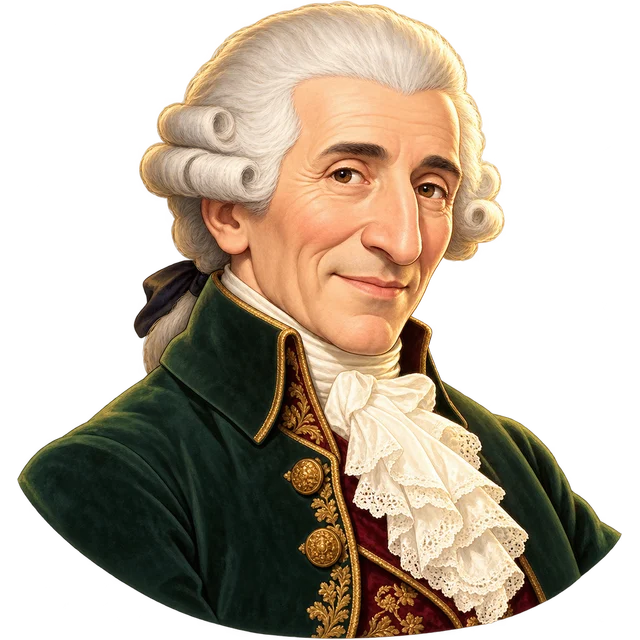
Concerto · Hob. VIIb:1 · c. 1761–1765
フランツ・ヨーゼフ・ハイドン(1732–1809)
200年近く行方不明だった名曲が、1961年にプラハで見つかった!Lost for about 200 years, found in Prague in 1961!
PUBLIC DOMAIN RECORDING
PD / CC0 無料でダウンロードOK
 別の演奏で聴く 1:The Metropolitan Chamber Orchestra
ANOTHER RECORDING 1
PD / CC0WATCH ON YOUTUBE
 Haydn: 1. Cellokonzert C-Dur ∙ hr-Sinfonieorchester ∙ Bruno Philippe ∙ Christoph Eschenbach
hr-Sinfonieorchester – Frankfurt Radio Symphony(YouTube) YouTube で開く ↗
Haydn: Cello Concerto No. 1 in C Major complete. Eva Lymenstull, cello, original. Voices of Music 8K
Voices of Music(YouTube) YouTube で開く ↗
左の音源は権利が切れた録音なのでダウンロードできます。右の動画は YouTube の公式の埋め込みで見るもので、ダウンロードはできません(動画の権利は各チャンネルにあります)。
 もっと名演を観る YouTube で何百万回も再生された人気の演奏
Cello Concerto No. 1 in C Major, Hob. VIIb:1: I. Moderato
Yo-Yo Ma - Topic(YouTube) YouTube で開く ↗
Mischa Maisky - Haydn - Cello Concerto No 1 in C major
Classical Vault 1(YouTube) YouTube で開く ↗

ホー!ハイドンが自分の作品メモに書きとめていたから、あるはずだとは知られていたんだ。
 この曲のおはなし The Story
チェロ協奏曲第1番は、ハイドンがエステルハージ家に仕え始めて間もない、1761年から1765年ごろに書いたと考えられる曲です。エステルハージ家のオーケストラで首席チェロ奏者をしていた友人、ヨーゼフ・フランツ・ヴァイグルのために作られたと考えられています。明るいハ長調で、独奏チェロが高い音から低い音まで、歌ったりかけ回ったりと大活躍します。Cello Concerto No. 1 is thought to have been written between about 1761 and 1765, soon after Haydn began working for the Esterházy family. It is thought to have been written for Haydn's friend Joseph Franz Weigl, the principal cellist of the Esterházy orchestra. It is in bright C major, and the solo cello is busy all the time, singing and racing from high notes to low notes.
そのころのエステルハージ家のオーケストラは人数こそ少なめでしたが、腕のいい演奏家がそろっていました。ハイドンは仲間たちが活躍できる曲をたくさん書いています。この協奏曲は3つの楽章でできていて、第1楽章は堂々とした明るい音楽、第2楽章はチェロがやさしく歌い、第3楽章は目もくらむような速さで弾きまくる、とても難しい音楽です。The Esterházy orchestra at that time was fairly small, but it had excellent players, and Haydn wrote many pieces to let his colleagues shine. This concerto has three movements. The first is bright and dignified, in the second the cello sings gently, and the third is extremely difficult, with the soloist playing at dazzling speed.
ところがこの曲は、長いあいだ行方不明になっていました。ハイドンが自分の作品の書き出しを書きとめた目録の下書きにのっていたので、あったことだけは知られていたのです。1961年、音楽学者オルドジフ・プルケルトがプラハの国立博物館で楽譜の写しを発見。1962年5月19日、チェロのミロシュ・サードロとマッケラス指揮のオーケストラにより、現代での初演が行われました。However, this concerto was lost for a long time. It was listed in a draft catalogue where Haydn wrote down the opening bars of his works, so people knew it had existed. In 1961, the musicologist Oldřich Pulkert found a copy at the National Museum in Prague. On 19 May 1962, it was performed again for modern audiences by the cellist Miloš Sádlo, with an orchestra conducted by Charles Mackerras.
This is a happy piece for cello and orchestra. Haydn wrote it for his friend. Then the music was lost for about 200 years! In 1961, a man found it in a museum in Prague. Now cello players all over the world play it.これはチェロとオーケストラのための明るい曲です。ハイドンは友だちのためにこの曲を書きました。その後、この曲は200年近くも行方不明になりました!1961年、ある人がプラハの博物館でこの曲を見つけました。今では世界中のチェロ奏者が弾いています。
 聴きどころ Listening Guide
 えっ!?ネタ Surprising Facts
 タップすると答えが開きます
この協奏曲は、ハイドンの死後ずっと行方不明でした。見つかったのは1961年。チェコの音楽学者プルケルトが、プラハの国立博物館で、古いパート譜の写しを発見したのです。作られてから200年近くたっての大発見に、世界中のチェロ奏者がよろこびました。
This concerto was missing for a very long time. It was finally found in 1961, when the Czech musicologist Oldřich Pulkert discovered an old copy of the parts at the National Museum in Prague. It was a great find, nearly 200 years after it was written, and cellists everywhere were delighted.
ハイドンは、自分の作品の書き出しの数小節を書きとめた目録の下書きを残していました。そこにこの協奏曲の書き出しものっていたため、「ハイドンはハ長調のチェロ協奏曲を書いたはず」と知られていたのです。見つかった楽譜がその書き出しと一致したことが、本物の証拠になりました。
Haydn kept a draft catalogue in which he wrote down the first few bars of his works. The opening of this concerto was in it, so experts knew Haydn had written a cello concerto in C major. When the newly found music matched those opening bars, it proved the concerto was genuine.
この曲は、エステルハージ家の首席チェロ奏者ヨーゼフ・フランツ・ヴァイグルのために書かれたと考えられています。ハイドンとヴァイグルは長いつきあいの友人で、ハイドンはヴァイグルの息子(のちに作曲家となるヨーゼフ・ヴァイグル)の名づけ親でもありました。仲間を輝かせるために書いた、友情の協奏曲です。
This piece is thought to have been written for Joseph Franz Weigl, the principal cellist of the Esterházy orchestra. Haydn and Weigl were longtime friends, and Haydn was also the godfather of Weigl's son, who later became a composer named Joseph Weigl, too. It is a concerto of friendship, written to let a colleague shine.
見つかってからまもなく、ロストロポーヴィチやジャクリーヌ・デュ・プレなど世界的なチェロ奏者がこの曲を録音し、あっというまに人気曲になりました。今ではチェロ協奏曲の大切なレパートリーで、コンクールやオーディションでもよく演奏されます。「新曲」として生まれ変わった古典の名作です。
Soon after its discovery, world-famous cellists such as Mstislav Rostropovich and Jacqueline du Pré recorded it, and it quickly became popular. Today it is an important part of the cello repertoire and is often played at competitions and auditions. It is an old masterpiece that was reborn like a brand-new work.
ENGLISH × MASTERPIECE
 light は「光」。かくれていたものが表に出てくるときに使います。
 この曲で覚える英単語 Words
 クイズに挑戦 Quiz
 この録音について(著作権・出典) Credits
MORE MASTERPIECES
パッヘルベル・c. 1680–1706
あの「カノン」には、はずむ相棒がいた!知られざる後半戦。
カノンとジーグ ニ長調 より「ジーグ」のページへシャルパンティエ・c. 1688–1698
パンパカパーン!ヨーロッパのテレビの幕開けを飾ってきた、ごうかな前奏曲。
テ・デウム ニ長調のページへクラーク・c. 1700
結婚式の大定番。でも作曲者は長いあいだ取りちがえられていた!
トランペット・ヴォランタリー(デンマーク王子の行進)のページへ
バッハ・c. 1703–1707 (?)
音楽の授業でおなじみ!4つの声が同じテーマで追いかけっこ。
小フーガ ト短調のページへバッハ・c. 1707–1710 (?)
キラキラの駆け上がりで幕開け!若きバッハのはなやかな鍵盤ショー。
トッカータ ニ長調のページへ
ヴィヴァルディ・published 1711
2本のヴァイオリンが火花を散らす!バッハも編曲した熱い協奏曲。
協奏曲集『調和の霊感』第8番 イ短調(2つのヴァイオリンのための協奏曲)のページへ
テレマン・c. 1710–1720 (?)
バルブのないラッパで高音をきらり!バロックのトランペットの晴れ舞台。
トランペット協奏曲 ニ長調のページへ
ヘンデル・1717
テムズ川の船の上で国王のために!夏の夜の水上コンサート。
水上の音楽のページへ MP3