
ダイドーの嘆き
Dido's Lament
パーセル・by 1689
「わたしを覚えていて」。くり返す低音にのせた、胸をうつ別れの歌。
歌劇「ダイドーとエネアス」より「ダイドーの嘆き」のページへ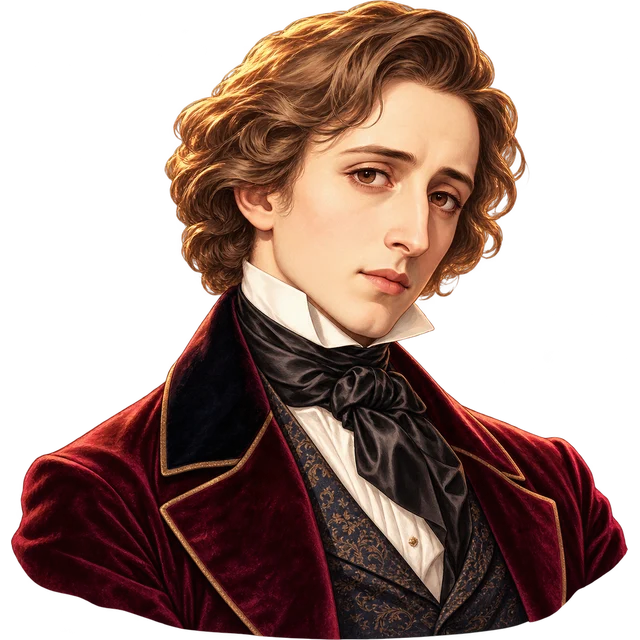
Piano · Op. 72 No. 1 · 1827(出版1855年)
フレデリック・ショパン(1810–1849)
17歳のショパンが書いた、いちばん古いノクターン。The earliest nocturne, written when Chopin was only seventeen.
PUBLIC DOMAIN RECORDING
PD / CC0 無料でダウンロードOKWATCH ON YOUTUBE
 Chopin: Nocturne in E Minor, Op. posth. 72/1
Jan Lisiecki - Topic(YouTube) YouTube で開く ↗
Chopin: Nocturne No. 19 in E Minor, Op. 72 No. 1
Daniel Barenboim - Topic(YouTube) YouTube で開く ↗
左の音源は権利が切れた録音なのでダウンロードできます。右の動画は YouTube の公式の埋め込みで見るもので、ダウンロードはできません(動画の権利は各チャンネルにあります)。
 もっと名演を観る YouTube で何百万回も再生された人気の演奏
Chopin - Nocturne Op. 72 No. 1 in E minor
Kassia(YouTube) YouTube で開く ↗

ホー!まだ音楽学校の学生だったショパンの作品。でも、もうショパンの声がしているね。
 この曲のおはなし The Story
この曲は、ショパンが書いたノクターンの中で、いちばん早い時期の作品と考えられています。1827年、ショパンが17歳のころ、ワルシャワで書かれました。ホ短調で、左手が3つずつの音で大きく波打つように広がり、その上で右手が、さびしげで美しいメロディーを歌います。This is thought to be the earliest of all the nocturnes Chopin wrote. It was composed in Warsaw in 1827, when Chopin was about seventeen. It is in E minor. The left hand spreads out in wide waves of three notes, and above it the right hand sings a lonely, beautiful melody.
このころショパンは、ワルシャワの音楽学校で、作曲家ユゼフ・エルスネルのもとで学んでいました。まだ学生でしたが、この曲にはすでに、右手が歌い左手が広い音域で支えるという、のちのショパンのノクターンの特徴がはっきり表れています。とちゅうで少し明るい色に変わる部分もあり、若い心のゆれ動きが感じられます。At that time, Chopin was studying at the music school in Warsaw under the composer Józef Elsner. He was still a student, but this piece already clearly shows the style of his later nocturnes: the right hand sings while the left hand supports it over a wide range. There is also a part where the color turns a little brighter, and you can feel a young heart moving back and forth.
ショパンはこの曲を生前に出版しませんでした。死後の1855年、友人フォンタナが「作品72」として出版します。このとき作品72には、このノクターンのほかに、ハ短調の葬送行進曲と、3つのエコセーズ(スコットランド風の速いおどり)がいっしょにまとめられました。番号は「第19番」ですが、書かれた順でいえば最初のノクターンです。Chopin did not publish this piece in his lifetime. In 1855, after his death, his friend Fontana published it as Op. 72. At that time, Op. 72 also included a Funeral March in C minor and three écossaises, fast Scottish-style dances. Its number is No. 19, but in the order of writing, it is his first nocturne.
Chopin wrote this nocturne when he was seventeen. It is thought to be his first nocturne. The music is sad and beautiful. The left hand moves like big waves. Chopin did not publish it. It was published after he died.ショパンは17歳のとき、このノクターンを書きました。これは彼の最初のノクターンだと考えられています。音楽は悲しく、美しいです。左手は大きな波のように動きます。ショパンはこの曲を出版せず、彼が亡くなったあとに出版されました。
 聴きどころ Listening Guide
 えっ!?ネタ Surprising Facts
 タップすると答えが開きます
この曲は「第19番」とよばれますが、書かれた時期はショパンのノクターンの中でいちばん早いと考えられています。番号は出版された順につけられたため、死後に出版されたこの曲は後ろの番号になったのです。生まれは長男、番号は末っ子に近い、というわけです。
This piece is called No. 19, but it is thought to be the earliest nocturne Chopin wrote. The numbers follow the order of publication, so this piece, published after his death, got a late number. It is like the oldest child being given one of the last numbers.
死後に出版された「作品72」には、このノクターンのほかに、ハ短調の葬送行進曲と、3つのエコセーズがまとめられています。エコセーズとは、スコットランド風の速くて楽しいおどりの曲です。性格のまったくちがう曲が、1つの作品番号にいっしょに入っているのです。
Op. 72, published after Chopin's death, contains this nocturne, a Funeral March in C minor, and three écossaises. An écossaise is a fast, cheerful dance in Scottish style. Pieces with completely different characters share a single opus number.
この曲を書いたころ、ショパンはワルシャワの音楽学校で、ユゼフ・エルスネルに作曲を学んでいました。エルスネルはショパンの才能をとても高く評価し、自由にのばした先生として知られています。まだ10代の学生の作品とは思えない完成度です。
When he wrote this piece, Chopin was studying composition with Józef Elsner at the music school in Warsaw. Elsner greatly valued Chopin's talent and is known as a teacher who let him grow freely. It is hard to believe this polished piece was written by a teenage student.
右手が歌い、左手が広い音域で波のように支える。このノクターンのスタイルは、のちの有名なノクターンでも使われていきます。ショパンは10代のうちに、もう自分らしい「夜の歌」の形を見つけていたのです。
The right hand sings, and the left hand supports it like waves over a wide range. This nocturne style would be used again in his later famous nocturnes. Even as a teenager, Chopin had already found his own kind of night song.
ENGLISH × MASTERPIECE
 後で大きく育つものの始まりをつくることです。よいことにも悪いことにも使います。
 この曲で覚える英単語 Words
 クイズに挑戦 Quiz
 この録音について(著作権・出典) Credits
MORE MASTERPIECES
パーセル・by 1689
「わたしを覚えていて」。くり返す低音にのせた、胸をうつ別れの歌。
歌劇「ダイドーとエネアス」より「ダイドーの嘆き」のページへ
バッハ・c. 1703–1707 (?)
音楽の授業でおなじみ!4つの声が同じテーマで追いかけっこ。
小フーガ ト短調のページへバッハ・c. 1706–1713
足が弾く低いテーマが21回!重くて壮大な、オルガンの大建築。
パッサカリアとフーガ ハ短調のページへ
ヘンデル・1711
「泣かせてください」と歌う、深い悲しみに満ちた名アリア。
私を泣かせてください(歌劇『リナルド』より)のページへ
クープラン・published 1717
題名の意味はだれも知らない!やわらかく波打つ、なぞの名曲。
神秘的なバリケードのページへ
マルチェッロ・published c. 1717
胸にしみるアダージョ!バッハも編曲したオーボエの名曲。
オーボエ協奏曲 ニ短調のページへバッハ・c. 1720
チェロ1本だけで、こんなに豊かな世界が広がる!
無伴奏チェロ組曲 第1番 ト長調のページへバッハ・c. 1720
ヴァイオリン1本で、宇宙のように大きな世界を描く傑作。
無伴奏ヴァイオリン・パルティータ第2番 ニ短調より「シャコンヌ」のページへ
 MP3