
パッヘルベルのジーグ
Pachelbel's Gigue
パッヘルベル・c. 1680–1706
あの「カノン」には、はずむ相棒がいた!知られざる後半戦。
カノンとジーグ ニ長調 より「ジーグ」のページへ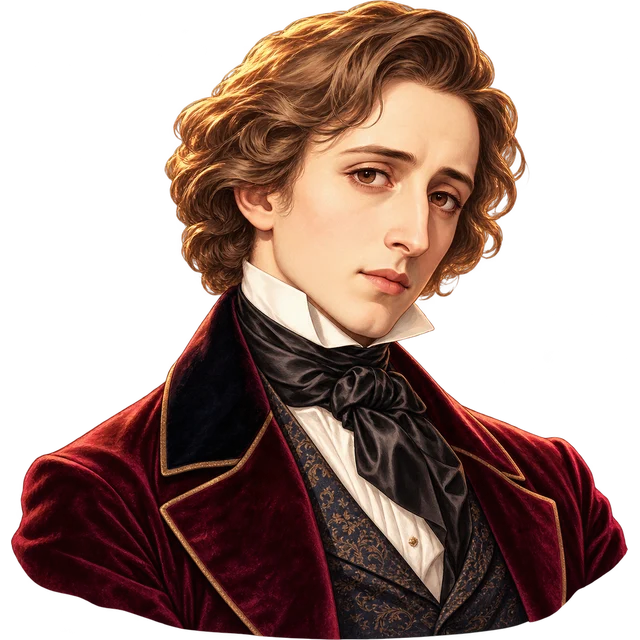
Piano · Op. 10 No. 5 · 1830(出版1833年)
フレデリック・ショパン(1810–1849)
右手はほぼ黒い鍵盤だけ!きらきら走る音の魔法。The right hand plays almost only black keys!
PUBLIC DOMAIN RECORDING
PD / CC0 無料でダウンロードOK 別の演奏で聴く 1:Chopin
ANOTHER RECORDING 1
CC BY-SA 4.0WATCH ON YOUTUBE
 Chopin - Etude Op. 10 No. 5 (Black Keys)
Rousseau(YouTube) YouTube で開く ↗
Lang Lang - Chopin, Etude Op. 10 No. 5
medici.tv(YouTube) YouTube で開く ↗
左の音源は権利が切れた録音なのでダウンロードできます。右の動画は YouTube の公式の埋め込みで見るもので、ダウンロードはできません(動画の権利は各チャンネルにあります)。
 もっと名演を観る YouTube で何百万回も再生された人気の演奏
Chopin Etude Op.10 No.5 - STUDENT TEMPO
Paul Barton(YouTube) YouTube で開く ↗
Vladimir Horowitz - Chopin - Etude Op.10 No.5 (Black Key)
edgelee84(YouTube) YouTube で開く ↗
Chopin Etude Op 10 No.5 Valentina Lisitsa
Valentina Lisitsa QOR Records Official channel(YouTube) YouTube で開く ↗
Kate Liu – Etude in G flat major Op. 10 No. 5 (first stage)
Chopin Institute(YouTube) YouTube で開く ↗

ホー!右手が白い鍵盤をひくのは、たった1回だけなんだ。
 この曲のおはなし The Story
ショパンの「12の練習曲 作品10」の第5曲です。右手は、ほとんど黒い鍵盤(黒鍵)だけを使って、きらきらと速い音をかけめぐらせます。左手はそれに合わせて、軽やかなリズムをきざみます。明るく楽しく、聴く人を笑顔にする一曲です。ピアニストの指がおどる姿も見どころです。This is the fifth of Chopin's Twelve Études, Op. 10. The right hand races through sparkling, fast notes almost entirely on the black keys. The left hand keeps a light, bouncy rhythm. It is bright and cheerful music that makes listeners smile. Watching a pianist's fingers dance is part of the fun.
変ト長調は、黒鍵をたくさん使う調です。ショパンはこの調の特徴を生かし、右手が黒鍵の上を軽やかにすべるように曲を作りました。右手が白い鍵盤をひくのは、終わり近くのたった1音だけです。ショパンは、黒鍵は指の形に自然に合うと考えていたようで、レッスンでも黒鍵の多い調から練習させることがありました。G-flat major is a key that uses many black keys. Chopin used this to let the right hand glide over the black keys. The right hand touches a white key only once, near the end. Chopin seems to have felt that black keys fit the natural shape of the hand, and in lessons he sometimes had pupils start with keys that use many black keys.
練習曲集作品10は1833年に出版され、友人のリストにささげられました。ショパンの練習曲は、指の練習のためだけでなく、演奏会でひける芸術作品として書かれた最初の例の一つです。のちにピアニストのゴドフスキーは、この曲をさらにむずかしく作り変えた版をいくつも作っています。The Op. 10 Études were published in 1833 and dedicated to his friend Liszt. Chopin's études were among the first to be not just finger exercises but true works of art for the concert stage. Later, the pianist Leopold Godowsky made several even harder versions of this piece.
This is a fast and happy piano piece. The right hand plays almost only the black keys. It plays a white key just one time! The notes sparkle like little stars. It is fun to watch a pianist play it.これは速くて楽しいピアノ曲です。右手はほとんど黒い鍵盤だけをひきます。白い鍵盤はたった1回だけ!音が小さな星のようにきらきら光ります。ピアニストがひくのを見るのも楽しいです。
 聴きどころ Listening Guide
 えっ!?ネタ Surprising Facts
 タップすると答えが開きます
右手のパートで白い鍵盤が出てくるのは、終わり近く(第66小節)の「ファ」の1音だけです。それ以外はすべて黒鍵の上で、速い音がかけめぐります。この見た目のおもしろさから「黒鍵」という愛称が付きました。
In the right-hand part, a white key appears only once: a single F near the end, in bar 66. Everything else races over the black keys. This fun feature gave the piece its nickname, 'Black Key'.
ショパンは、初心者にハ長調(白鍵だけ)ではなく、黒鍵を多く使うロ長調などの音階から練習させたと伝えられています。長い指が黒鍵に、短い親指が白鍵にくると、手が自然な形になるからです。この曲は、そんな考えにぴったりの練習曲です。
Chopin is reported to have started beginners not with C major, all white keys, but with scales like B major, which use many black keys. With the long fingers on black keys and the short thumb on white keys, the hand stays in a natural shape. This étude fits that idea perfectly.
19世紀の名ピアニスト・指揮者のハンス・フォン・ビューローは、自分が編集した楽譜の中で、この曲を「ご婦人のサロン向けの練習曲」と、見下すような言葉で呼んだと言われています。これは曲の中身より、当時のかたよった見方をよく表す言葉です。
The 19th-century pianist and conductor Hans von Bülow is said to have dismissively called this a 'ladies' salon étude' in his edition. The label says more about the stereotypes of his time than about the music itself.
20世紀初めのピアニスト、ゴドフスキーは、ショパンの練習曲をもとに50曲以上の作品を作りました。その中には、この「黒鍵」を左手だけでひく版や、別の練習曲と同時にひく版まであります。ピアノの限界に挑んだ、おどろきの作品です。
In the early 20th century, the pianist Leopold Godowsky wrote over fifty studies based on Chopin's études. They include a version of the Black Key Étude for the left hand alone, and even one that combines it with another étude. They push the piano to its limits.
ENGLISH × MASTERPIECE
 舞台のまん中に立つ=注目の中心になること。ニュースや話題にもよく使います。
 この曲で覚える英単語 Words
 クイズに挑戦 Quiz
 この録音について(著作権・出典) Credits
MORE MASTERPIECES
パッヘルベル・c. 1680–1706
あの「カノン」には、はずむ相棒がいた!知られざる後半戦。
カノンとジーグ ニ長調 より「ジーグ」のページへシャルパンティエ・c. 1688–1698
パンパカパーン!ヨーロッパのテレビの幕開けを飾ってきた、ごうかな前奏曲。
テ・デウム ニ長調のページへ
パーセル・1695
ブリテンが「オーケストラ入門」のテーマに選んだ、かっこいいメロディー。
劇音楽「アブデラザール」より ロンドのページへクラーク・c. 1700
結婚式の大定番。でも作曲者は長いあいだ取りちがえられていた!
トランペット・ヴォランタリー(デンマーク王子の行進)のページへ
バッハ・c. 1707–1710 (?)
キラキラの駆け上がりで幕開け!若きバッハのはなやかな鍵盤ショー。
トッカータ ニ長調のページへ
ヴィヴァルディ・published 1711
2本のヴァイオリンが火花を散らす!バッハも編曲した熱い協奏曲。
協奏曲集『調和の霊感』第8番 イ短調(2つのヴァイオリンのための協奏曲)のページへヴィヴァルディ・c. 1715
オクターブがぴょんぴょん跳ねる!喜びがはじける合唱の名曲。
グローリア ニ長調のページへ
テレマン・c. 1710–1720 (?)
バルブのないラッパで高音をきらり!バロックのトランペットの晴れ舞台。
トランペット協奏曲 ニ長調のページへ
 MP3