
テ・デウム
Te Deum
シャルパンティエ・c. 1688–1698
パンパカパーン!ヨーロッパのテレビの幕開けを飾ってきた、ごうかな前奏曲。
テ・デウム ニ長調のページへ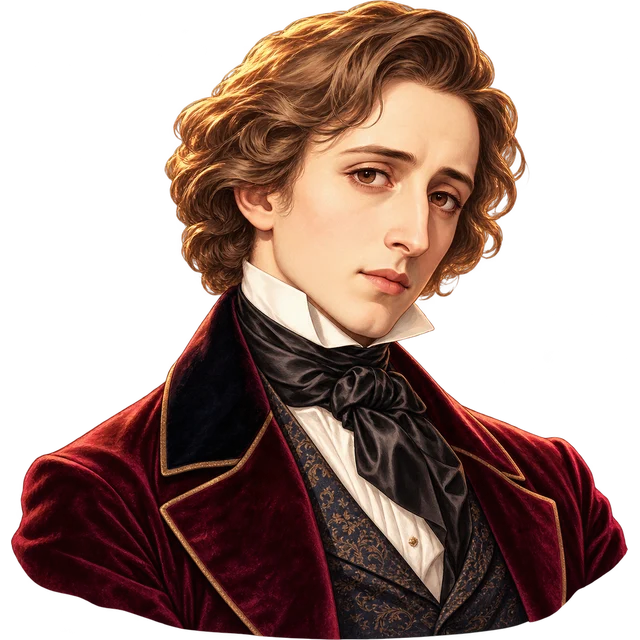
Concerto · Op. 22 · 1830–1834
フレデリック・ショパン(1810–1849)
静かな湖のような序奏から、きらびやかな大ポロネーズへ!From a calm lake of sound to a dazzling polonaise!
PUBLIC DOMAIN RECORDING
PD / CC0 無料でダウンロードOKWATCH ON YOUTUBE
 Kate Liu – Andante Spianato and Grande Polonaise Brillante in E flat major Op. 22 (second stage)
Chopin Institute(YouTube) YouTube で開く ↗
Chopin: Andante spianato et Grande Polonaise brillante in E-Flat Major, Op. 22
Martha Argerich - Topic(YouTube) YouTube で開く ↗
左の音源は権利が切れた録音なのでダウンロードできます。右の動画は YouTube の公式の埋め込みで見るもので、ダウンロードはできません(動画の権利は各チャンネルにあります)。
 もっと名演を観る YouTube で何百万回も再生された人気の演奏
Chopin - Andante Spianato & Grande Polonaise Brillante + Presentation (ref. record. : Claudio Arrau)
Classical Music/ /Reference Recording(YouTube) YouTube で開く ↗
ホー!ポロネーズが先にできて、静かな前半はあとからつけたされたんだ。
 この曲のおはなし The Story
この曲は、静かな「アンダンテ・スピアナート」と、華やかな「華麗なる大ポロネーズ」の2つの部分からできた、ピアノとオーケストラのための作品です。「スピアナート」はイタリア語で「なめらかな・平らな」という意味。ポロネーズは、ポーランドの堂々とした三拍子の踊りです。ピアノだけで演奏されることも多い曲です。This work for piano and orchestra has two parts: the calm Andante spianato and the brilliant Grande Polonaise. 'Spianato' is Italian for smooth or even. A polonaise is a proud Polish dance in three beats. The piece is also often played on piano alone.
ポロネーズの部分は、ショパンがポーランドを離れるころの1830年から1831年に書かれました。その後パリにうつったショパンは、1834年、その前に、ピアノだけで弾く静かなアンダンテ・スピアナートをつけ加えます。湖面のようにおだやかな前半と、きらびやかな後半の対比が、この曲の大きな魅力です。The polonaise was written in 1830 and 1831, around the time Chopin left Poland. After moving to Paris, in 1834 he added the calm Andante spianato, for piano alone, in front of it. The contrast between the first part, as calm as a lake, and the glittering second part is the great charm of this work.
1835年4月、ショパンはパリ音楽院の演奏会で、ハブネックの指揮のもと、オーケストラといっしょにこの曲を演奏しました。曲は1836年に出版されます。オーケストラの出番は少なく、のちにはピアノ独奏で弾かれることが多くなりました。2002年の映画「戦場のピアニスト」では、最後の場面でこのポロネーズが演奏されます。In April 1835, Chopin played this work with an orchestra at a concert at the Paris Conservatoire, conducted by Habeneck. It was published in 1836. The orchestra does not have much to do, so later the piece was more often played as a piano solo. In the 2002 film The Pianist, this polonaise is played in the final scene.
This piece has two parts. The first part is slow, smooth, and calm. The second part is a polonaise, a proud Polish dance. It is bright and sparkling. You can hear it at the end of the movie The Pianist.この曲は2つの部分でできています。前半はゆっくりで、なめらかで、おだやかです。後半はポロネーズという、ポーランドの堂々とした踊りです。明るくきらきらしています。映画「戦場のピアニスト」の最後で聴くことができます。
 聴きどころ Listening Guide
 えっ!?ネタ Surprising Facts
 タップすると答えが開きます
華やかなポロネーズが先に書かれ、静かなアンダンテ・スピアナートは数年後の1834年につけ加えられました。おだやかな序奏で聴き手の耳をととのえてから、一気にきらびやかな世界へ。あとから足したとは思えないほど、自然につながっています。
The brilliant polonaise was written first, and the calm Andante spianato was added a few years later, in 1834. The gentle opening prepares our ears, and then we jump into a glittering world. They connect so naturally that you would never guess one was added later.
2002年のロマン・ポランスキー監督の映画「戦場のピアニスト」の最後では、戦争を生きのびたピアニスト、シュピルマンが、オーケストラとともにこの大ポロネーズを演奏する場面が描かれます。苦しみのあとの、晴れやかな音楽として強く印象に残ります。
At the end of Roman Polanski's 2002 film The Pianist, Szpilman, a pianist who survived the war, plays this Grande Polonaise with an orchestra. It stays in your mind as bright, joyful music after great suffering.
ピアノとオーケストラのための曲ですが、前半のアンダンテはピアノだけで、後半もオーケストラは伴奏が中心です。そのため今では、ピアノ1台だけで演奏されることがとても多く、ピアノ独奏曲として知っている人も多い曲です。
It is a work for piano and orchestra, but the Andante is for piano alone, and in the polonaise the orchestra mainly accompanies. So today it is very often played on one piano, and many people know it as a piano solo.
1835年4月26日、ショパンはパリ音楽院の演奏会で、指揮者ハブネックのオーケストラとともにこの曲を弾きました。ショパンは大きな会場での演奏会があまり好きではなく、こうした舞台に立つことは多くありませんでした。
On April 26, 1835, Chopin played this work with Habeneck's orchestra at a Paris Conservatoire concert. Chopin did not much like big public concerts, and he did not often appear on stages like this.
ENGLISH × MASTERPIECE
 運動前の準備体操のほか、「会場を盛り上げておく」意味でも使います。
 この曲で覚える英単語 Words
 クイズに挑戦 Quiz
 この録音について(著作権・出典) Credits
MORE MASTERPIECES
シャルパンティエ・c. 1688–1698
パンパカパーン!ヨーロッパのテレビの幕開けを飾ってきた、ごうかな前奏曲。
テ・デウム ニ長調のページへ
パーセル・1695
ブリテンが「オーケストラ入門」のテーマに選んだ、かっこいいメロディー。
劇音楽「アブデラザール」より ロンドのページへクラーク・c. 1700
結婚式の大定番。でも作曲者は長いあいだ取りちがえられていた!
トランペット・ヴォランタリー(デンマーク王子の行進)のページへ
バッハ・c. 1704 (?)
タラリ〜!一度聴いたら忘れない、オルガンの大迫力の幕開け。
トッカータとフーガ ニ短調のページへバッハ・c. 1707–1710 (?)
キラキラの駆け上がりで幕開け!若きバッハのはなやかな鍵盤ショー。
トッカータ ニ長調のページへ
ヴィヴァルディ・published 1711
2本のヴァイオリンが火花を散らす!バッハも編曲した熱い協奏曲。
協奏曲集『調和の霊感』第8番 イ短調(2つのヴァイオリンのための協奏曲)のページへヴィヴァルディ・c. 1715
オクターブがぴょんぴょん跳ねる!喜びがはじける合唱の名曲。
グローリア ニ長調のページへ
テレマン・c. 1710–1720 (?)
バルブのないラッパで高音をきらり!バロックのトランペットの晴れ舞台。
トランペット協奏曲 ニ長調のページへ
 MP3