
パッヘルベルのジーグ
Pachelbel's Gigue
パッヘルベル・c. 1680–1706
あの「カノン」には、はずむ相棒がいた!知られざる後半戦。
カノンとジーグ ニ長調 より「ジーグ」のページへ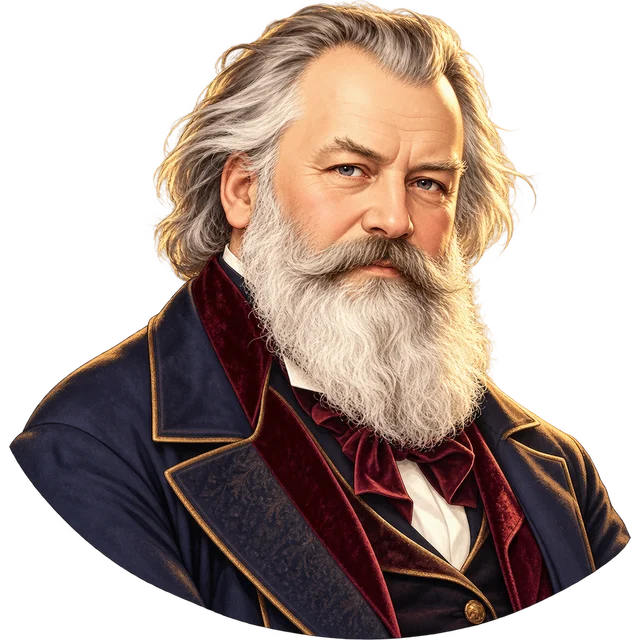
Dance · WoO 1 No. 1 · 1869(出版)
ヨハネス・ブラームス(1833–1897)
なげくように、はじけるように!作曲者本人の演奏が残る舞曲。Sighing and leaping: the Hungarian Dance Brahms himself recorded.
PUBLIC DOMAIN RECORDING
PD / CC0 無料でダウンロードOK 別の演奏で聴く 1:Sylvia Kind
ANOTHER RECORDING 1
CC BY-SA 2.0WATCH ON YOUTUBE
 Khatia Buniatishvili, Yuja Wang - Brahms, Hungarian Dance No. 1
medici.tv(YouTube) YouTube で開く ↗
Simon Rattle, Berliner Philharmoniker – Brahms: Hungarian Dance No. 1 in G Minor, WoO 1
Deutsche Grammophon - DG(YouTube) YouTube で開く ↗
左の音源は権利が切れた録音なのでダウンロードできます。右の動画は YouTube の公式の埋め込みで見るもので、ダウンロードはできません(動画の権利は各チャンネルにあります)。
 もっと名演を観る YouTube で何百万回も再生された人気の演奏
Brahms: 21 Hungarian Dances, WoO 1: No. 1 in G Minor. Allegro molto (Orch. Brahms)
NDR Elbphilharmonie Orchester - Topic(YouTube) YouTube で開く ↗
Brahms - Hungarian Dance No.1
Kassia(YouTube) YouTube で開く ↗
Johannes Brahms - 21 Hungarian dances FULL
zjanaz(YouTube) YouTube で開く ↗
Brahms Hungarian Dance No.1 - Evgeny Kissin
solti79(YouTube) YouTube で開く ↗

ホー!1889年にブラームス本人がこの曲を弾いた録音が、雑音まじりで残っているんだ。
 この曲のおはなし The Story
ハンガリー舞曲は、ブラームスがピアノ連弾(1台のピアノを2人で弾くこと)のために書いた、全21曲の曲集です。第1番はト短調の曲で、哀愁をおびた、なげくようなメロディーと、はじけるように速い部分が入れかわります。第5番とならんでとくに有名で、ブラームス自身がオーケストラ用に編曲もしました。The Hungarian Dances are a set of 21 pieces that Brahms wrote for piano duet, two players at one piano. No. 1 is in G minor. Its sad, sighing melody takes turns with parts that leap along at high speed. Along with No. 5, it is one of the most famous, and Brahms arranged it for orchestra himself.
きっかけは、ブラームスが20歳のころ、ハンガリー出身のヴァイオリニスト、エデ・レメーニと演奏旅行をしたことでした。レメーニが弾く「チャールダーシュ」と呼ばれる踊りの音楽に、ブラームスは夢中になります。チャールダーシュは、ゆっくりした部分と速い部分が交互に来るのが特徴です。第1番のメロディーも、当時人気だったチャールダーシュがもとになっていると考えられています。It all began when Brahms, at about 20, went on a concert tour with the Hungarian violinist Ede Reményi. Brahms fell in love with the csárdás, the dance music Reményi played. A csárdás usually switches between slow and fast sections. The melody of No. 1 is also thought to come from a popular csárdás of the time.
最初の10曲は1869年に2冊の曲集として出版され、家庭でピアノ連弾を楽しむ人びとの間で大ヒットしました。ブラームスがオーケストラ版を自分で作ったのは、第1番・第3番・第10番の3曲だけです。そのほかの曲は、ドヴォルザークなど別の作曲家たちがオーケストラ用に編曲しています。The first ten dances were published in two books in 1869 and became a huge hit with people who played piano duets at home. Brahms made his own orchestral versions of only three of them: Nos. 1, 3 and 10. The others were arranged for orchestra by other composers, including Dvořák.
This music was first for two people at one piano. It is a dance in the Hungarian style. Some parts are sad and slow, and some parts are fast and fun. Brahms himself played it for a recording in 1889! We can still hear it today.この曲は、もとは1台のピアノを2人で弾くための音楽です。ハンガリー風の踊りの曲です。悲しくてゆっくりな部分と、速くて楽しい部分があります。1889年には、ブラームス本人がこの曲を弾いて録音しました!今でもその音を聴くことができます。
 聴きどころ Listening Guide
 えっ!?ネタ Surprising Facts
 タップすると答えが開きます
1889年12月2日、エジソンの助手テオ・ヴァンゲマンが、ウィーンの知人の家でブラームスのピアノ演奏を録音しました。曲目は、ハンガリー舞曲第1番を短くしたもの。雑音が多くて聴きとりにくいものの、大作曲家が自分の曲を弾いた、とても貴重な記録です。
On 2 December 1889, Theo Wangemann, an assistant of Thomas Edison, recorded Brahms playing the piano at a friend's home in Vienna. He played a shortened version of Hungarian Dance No. 1. The sound is very noisy and hard to hear, but it is a priceless record of a great composer playing his own music.
この録音の最初には、「ブラームス博士、ヨハネス・ブラームスです」というような声が入っていると言われています。ただし音がとても悪いので、だれの声なのか、正確に何と言っているのかについては、いろいろな意見があります。
At the start of the recording, a voice is said to say something like 'Doctor Brahms, Johannes Brahms'. However, the sound is so poor that people disagree about whose voice it is and exactly what it says.
親友のヴァイオリニスト、ヨアヒムは、ハンガリー舞曲をヴァイオリンとピアノ用に編曲しました。ヨアヒム自身も当時のハンガリー王国の生まれです。この編曲は今もヴァイオリニストに人気で、ハンガリー舞曲が世界に広まる大きな力になりました。
Brahms's friend, the violinist Joseph Joachim, arranged the Hungarian Dances for violin and piano. Joachim himself was born in what was then the Kingdom of Hungary. His versions are still popular with violinists and helped the dances spread around the world.
第1番のメロディーは、1850年ごろに書かれたボルゾー・ミシュカの「神のチャールダーシュ」という曲がもとになっている、と考えられています。ブラームスは、街で演奏されていた人気のメロディーを集めて、連弾用に仕立て直したのです。
The melody of No. 1 is believed to come from the 'Divine Csárdás', written around 1850 by Miska Borzó. Brahms collected popular tunes that musicians were playing at the time and reworked them for piano duet.
ENGLISH × MASTERPIECE
 「公式の記録として」から。事実をはっきり言っておきたいときに使います。
 この曲で覚える英単語 Words
 クイズに挑戦 Quiz
 この録音について(著作権・出典) Credits
MORE MASTERPIECES
パッヘルベル・c. 1680–1706
あの「カノン」には、はずむ相棒がいた!知られざる後半戦。
カノンとジーグ ニ長調 より「ジーグ」のページへシャルパンティエ・c. 1688–1698
パンパカパーン!ヨーロッパのテレビの幕開けを飾ってきた、ごうかな前奏曲。
テ・デウム ニ長調のページへ
パーセル・1695
ブリテンが「オーケストラ入門」のテーマに選んだ、かっこいいメロディー。
劇音楽「アブデラザール」より ロンドのページへクラーク・c. 1700
結婚式の大定番。でも作曲者は長いあいだ取りちがえられていた!
トランペット・ヴォランタリー(デンマーク王子の行進)のページへ
バッハ・c. 1707–1710 (?)
キラキラの駆け上がりで幕開け!若きバッハのはなやかな鍵盤ショー。
トッカータ ニ長調のページへ
ヴィヴァルディ・published 1711
2本のヴァイオリンが火花を散らす!バッハも編曲した熱い協奏曲。
協奏曲集『調和の霊感』第8番 イ短調(2つのヴァイオリンのための協奏曲)のページへヴィヴァルディ・c. 1715
オクターブがぴょんぴょん跳ねる!喜びがはじける合唱の名曲。
グローリア ニ長調のページへ
テレマン・c. 1710–1720 (?)
バルブのないラッパで高音をきらり!バロックのトランペットの晴れ舞台。
トランペット協奏曲 ニ長調のページへ
 MP3