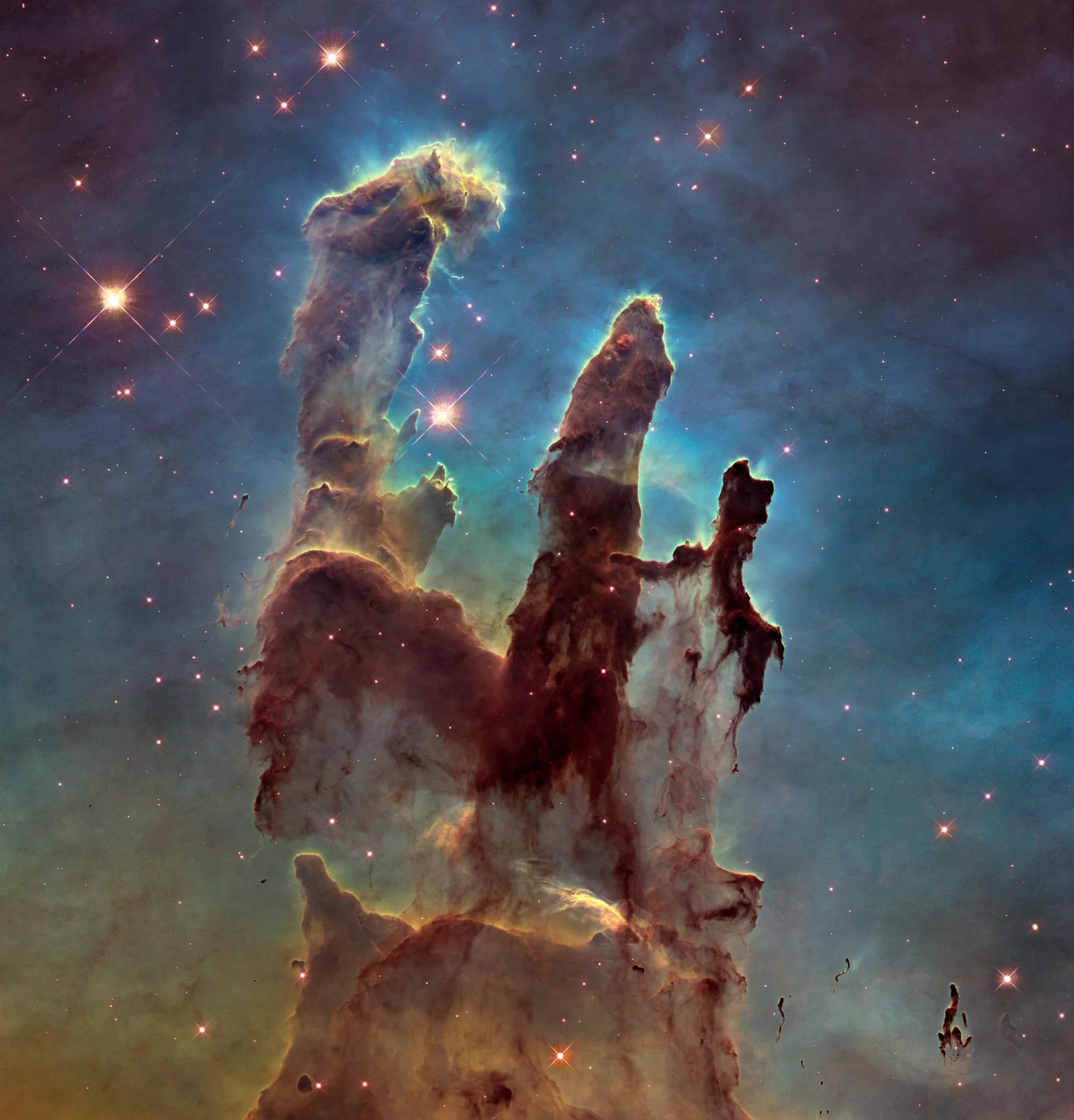
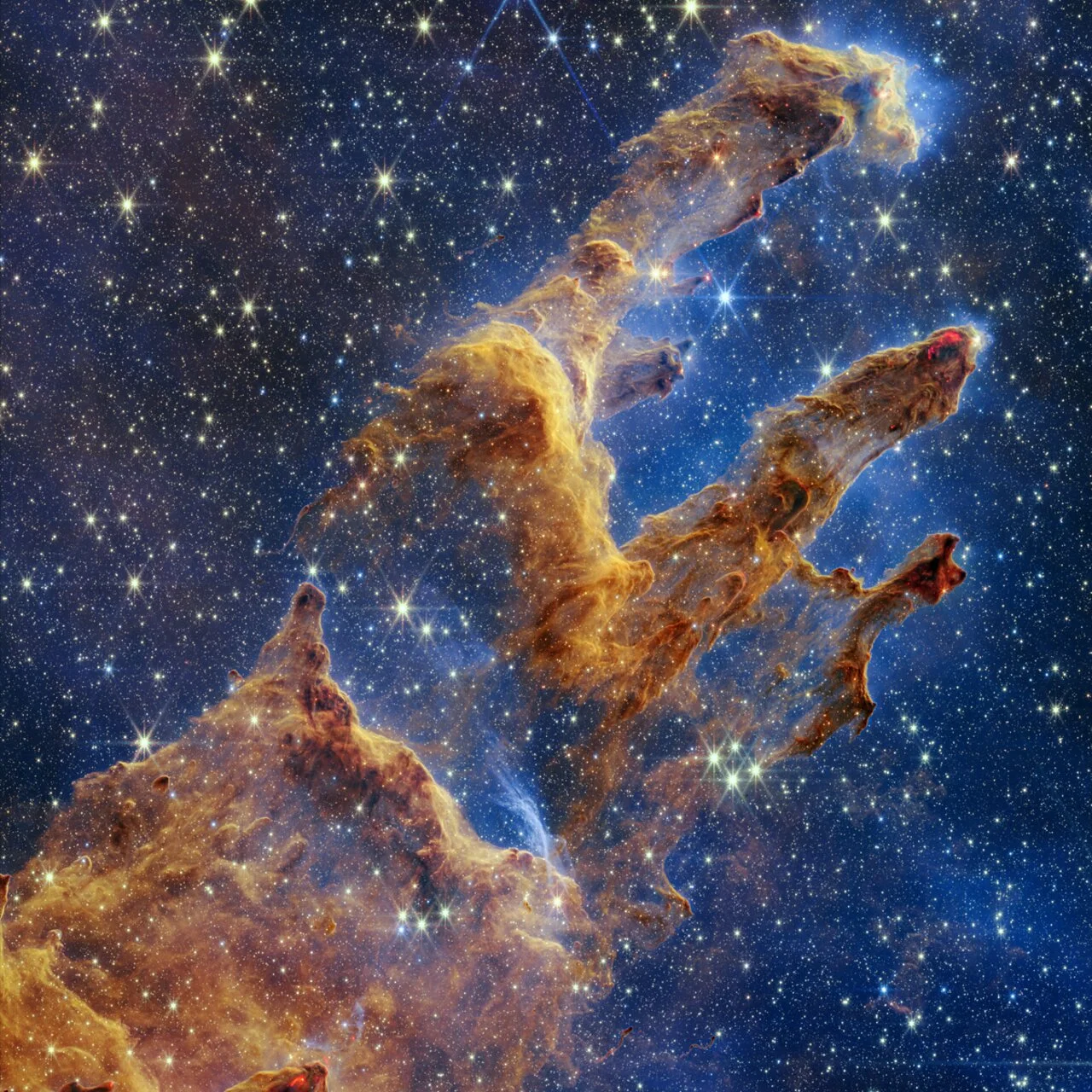
創造の柱(わし星雲 M16)
Pillars of Creation (Eagle Nebula, M16) ・ へび座・約6500光年
左:ハッブル(画像:NASA, ESA/Hubble and the Hubble Heritage Team)/右:ウェッブ(画像:NASA, ESA, CSA, STScI; J. DePasquale, A. Koekemoer, A. Pagan (STScI).)
These are huge clouds of gas and dust. Hubble shows the clouds. Webb sees through the dust and shows baby stars inside.These towering columns of gas and dust are several light-years tall. In Hubble's visible-light view they look like thick clouds. Webb's infrared eyes see through much of the dust, revealing newborn stars inside and at the tips of the pillars — the red blobs are places where stars are forming right now.ガスとちりでできた、高さ数光年の巨大な柱。ハッブルの「見える光」の写真では、柱は分厚い雲にしか見えません。ウェッブの赤外線は、ちりを通りぬけて、柱の中や先っぽで生まれたばかりの赤い星たちを見せてくれました。柱の先の赤いかたまりは、まさに星が生まれている場所です。
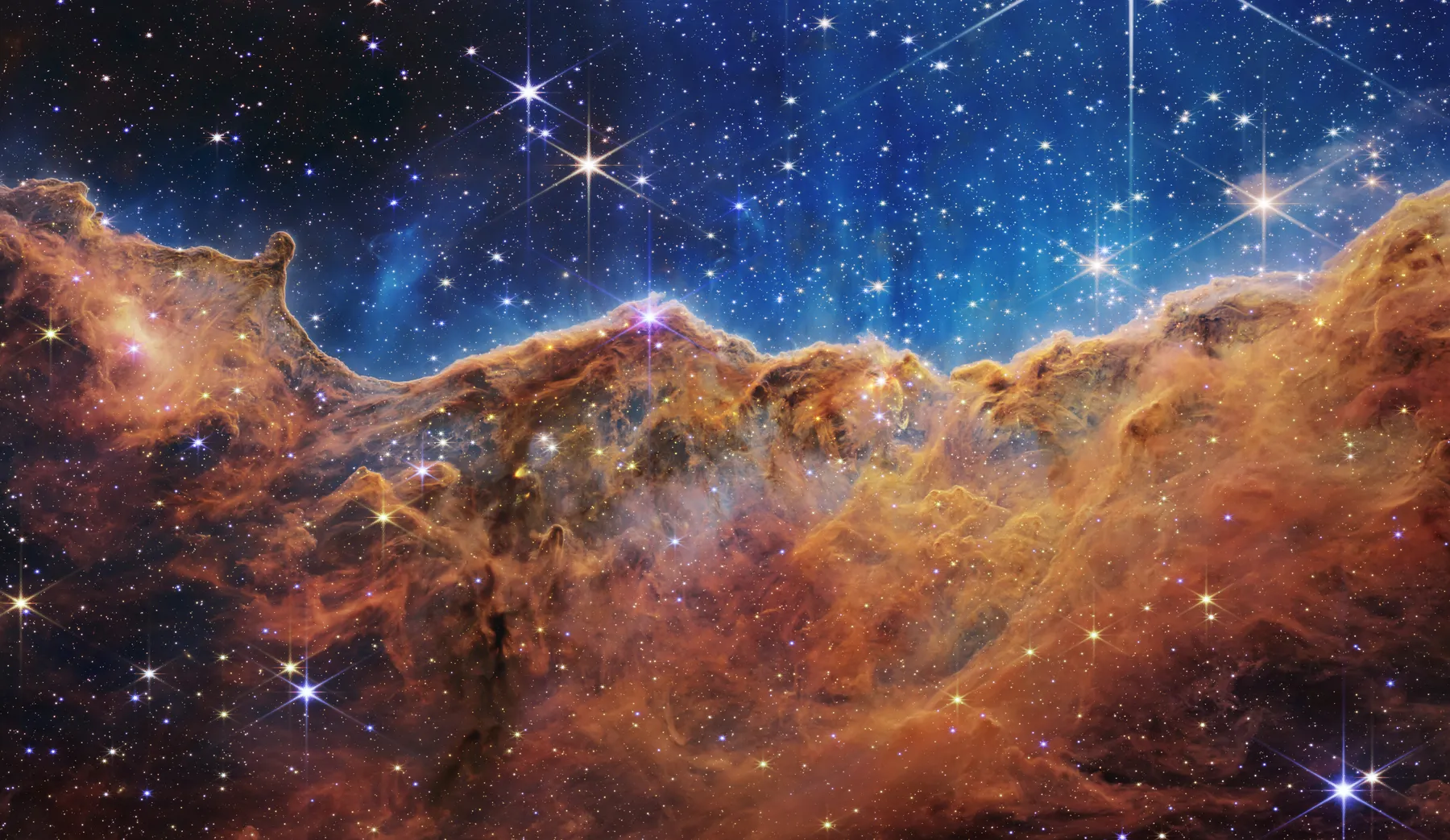
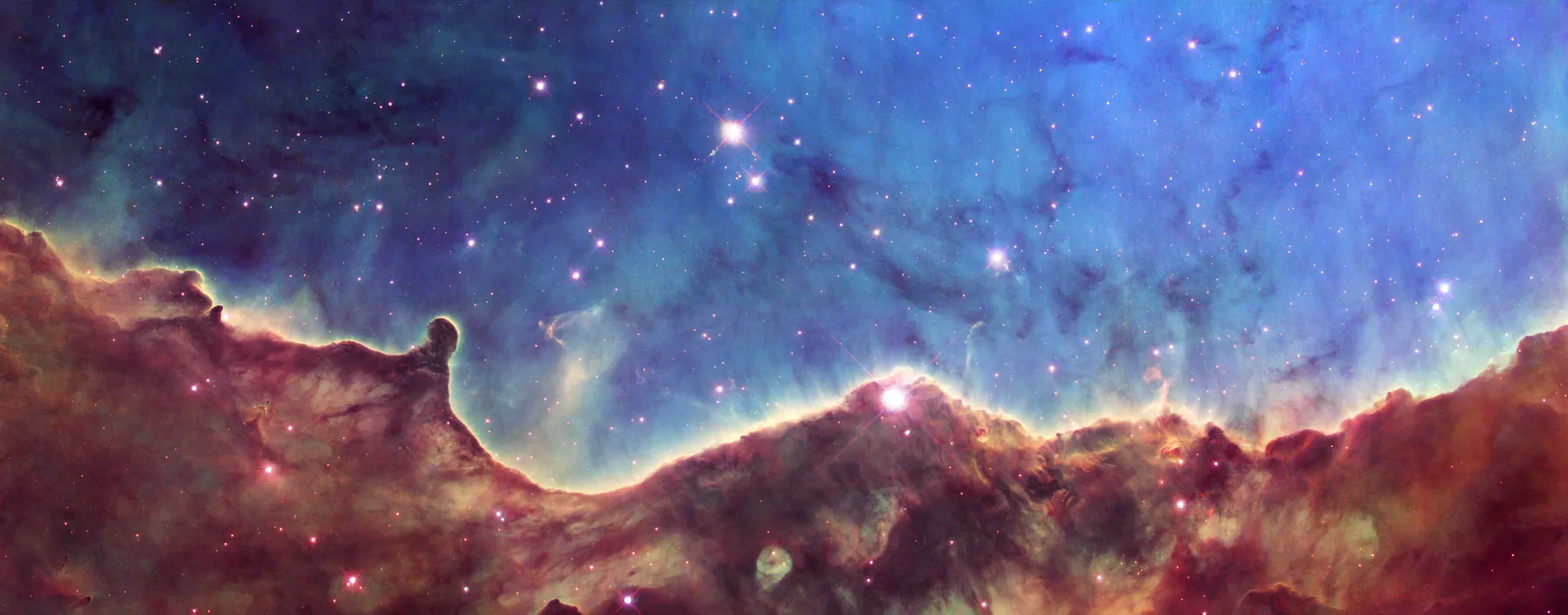
宇宙の崖(りゅうこつ座星雲 NGC 3324)
Cosmic Cliffs (Carina Nebula, NGC 3324) ・ りゅうこつ座・約7600光年
左:ハッブル(画像:NASA, ESA, and The Hubble Heritage Team (STScI/AURA))/右:ウェッブ(画像:NASA, ESA, CSA, and STScI)
This looks like mountains, but it is the edge of a gas cloud. Webb found hundreds of new baby stars here.Released in July 2022 as one of Webb's first images, the 'Cosmic Cliffs' are the edge of a star-forming cloud. Intense light and winds from hot young stars above are carving the cloud. Webb's image reveals hundreds of newborn stars that were hidden from Hubble.2022年7月、ウェッブの最初の写真のひとつとして発表された「宇宙の崖」。山脈のように見えるのは、星が生まれる雲のへりです。上の方にある若くて熱い星の強い光と風が、雲をけずっています。ハッブルでは見えなかった、何百もの生まれたての星が、ウェッブの写真にはうつっています。
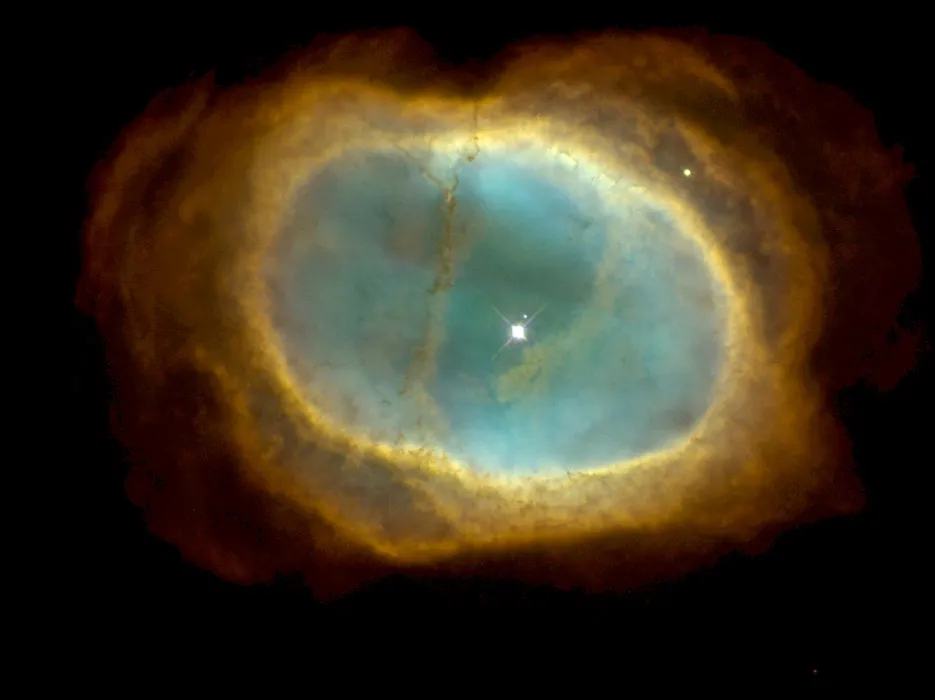
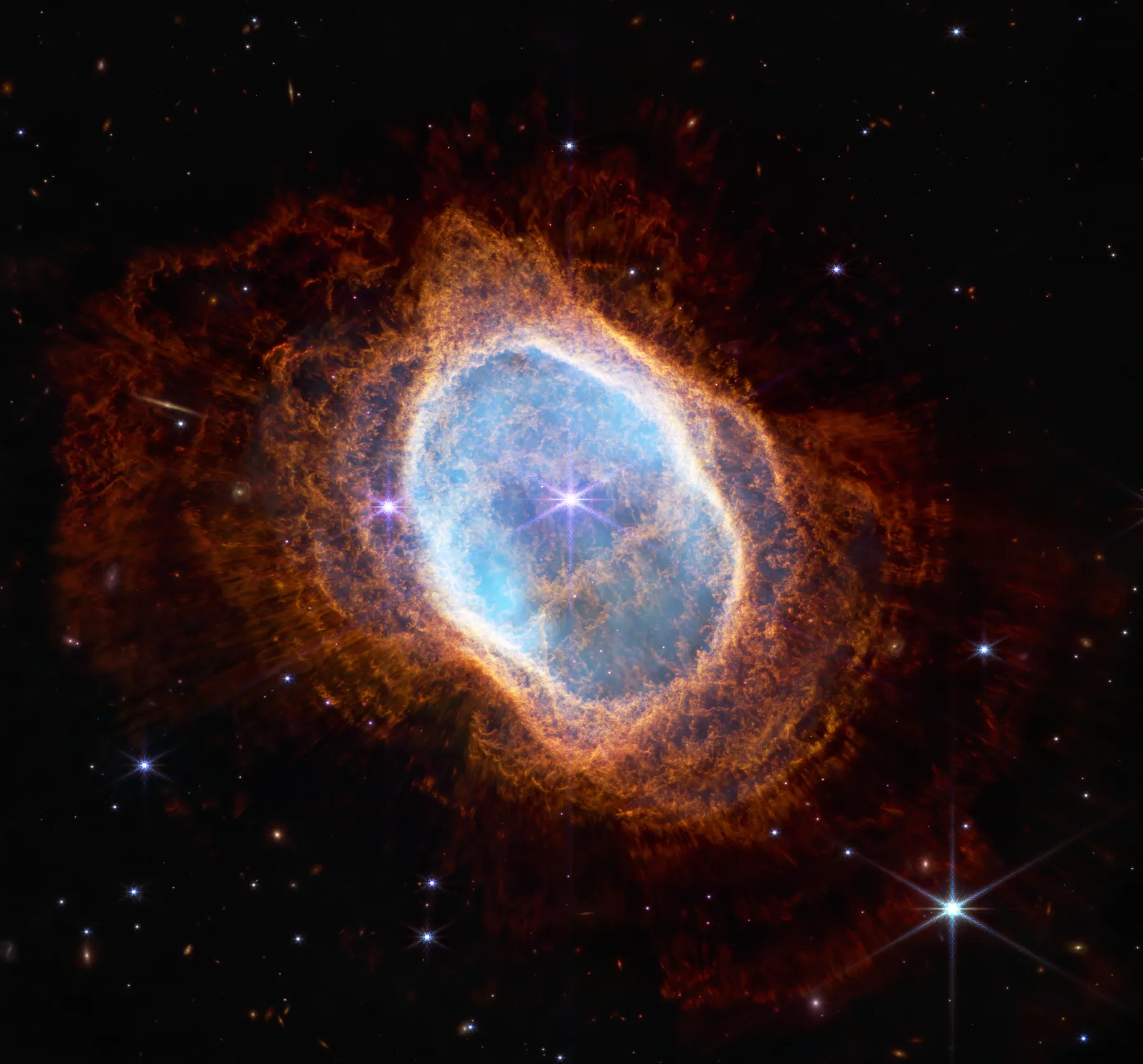
南のリング星雲(NGC 3132)
Southern Ring Nebula (NGC 3132) ・ ほ座・約2500光年
左:ハッブル(画像:Hubble Heritage Team (STScI/AURA/NASA/ESA))/右:ウェッブ(画像:NASA, ESA, CSA, STScI, and the Webb ERO Production Team)
An old star pushed out its gas and made this ring. Webb found a second star, hidden in dust, in the middle.An aging star threw off its outer layers of gas to make this nebula. Hubble shows one bright star in the middle, but Webb clearly revealed a second, dust-shrouded star beside it — the one that actually created the nebula. Our Sun may end up looking something like this in about 5 billion years.年をとった星が、外側のガスをふわっと宇宙に放り出してできた星雲です。ハッブルでは中心に明るい星がひとつ見えますが、ウェッブは、そのとなりに、ちりに包まれた「もうひとつの星」をはっきりとらえました。ガスを放り出したのは、このちりに包まれた方の星です。いつか太陽も、50億年ほどあとに似たすがたになると考えられています。
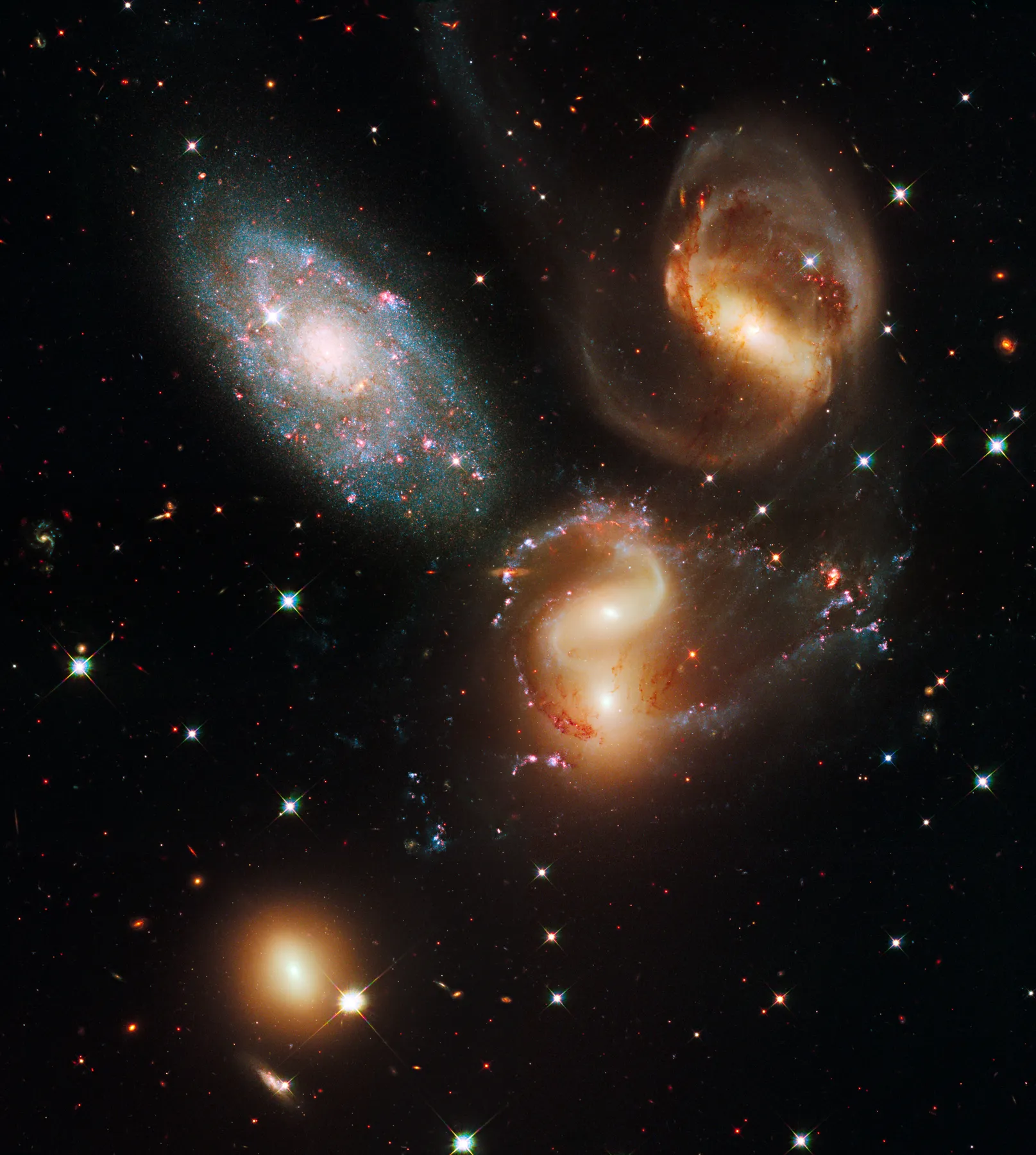
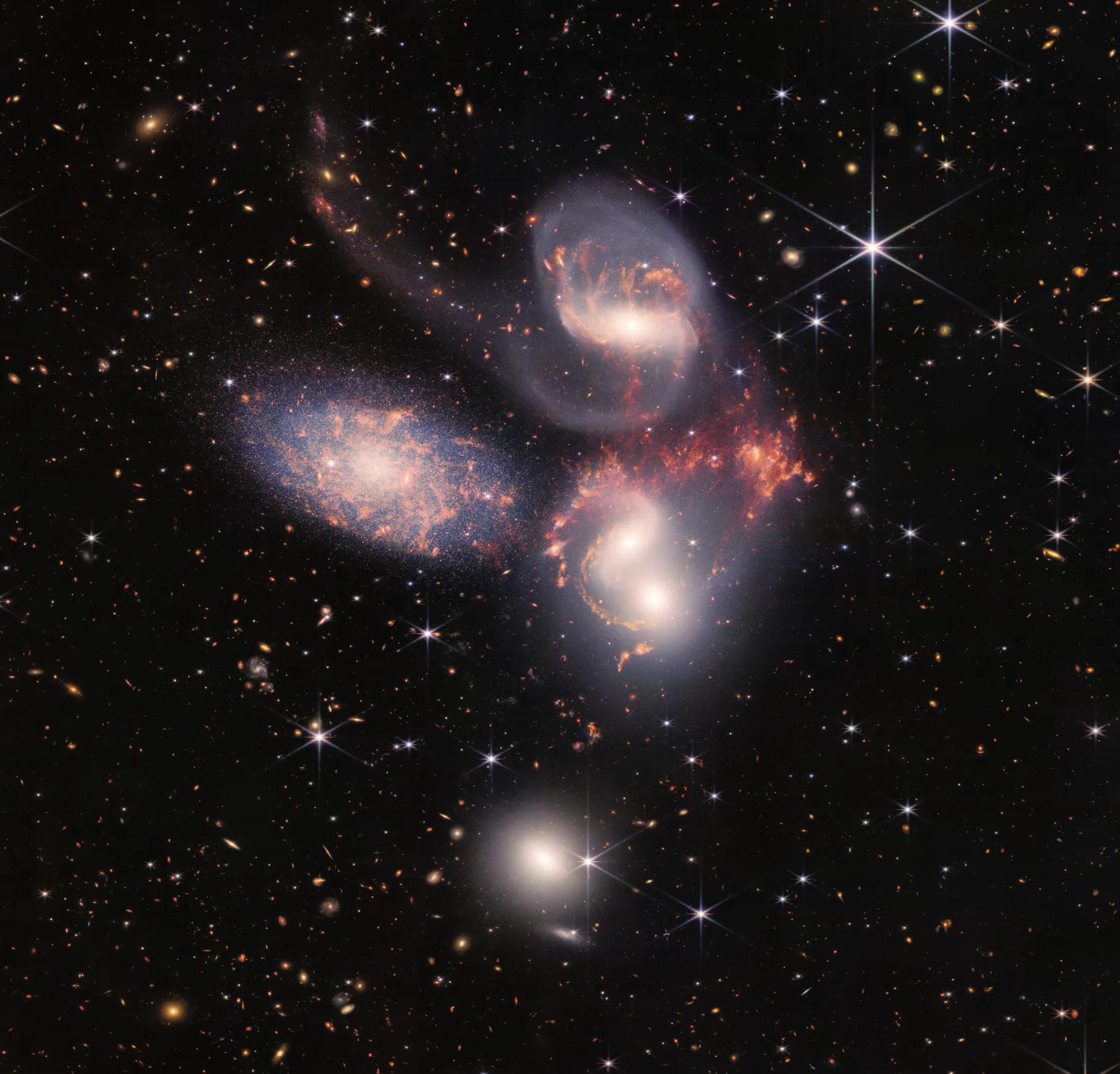
ステファンの五つ子銀河
Stephan's Quintet ・ ペガスス座・約2億9000万光年
左:ハッブル(画像:NASA, ESA and the Hubble SM4 ERO Team)/右:ウェッブ(画像:NASA, ESA, CSA, and STScI)
Five galaxies look close together. Some are crashing into each other. Webb shows the waves of gas they make.A group of five galaxies seen close together (one is actually much nearer to us). Four of them are tugging at and crashing into each other. Webb's image — made from about 1,000 separate files and more than 150 million pixels — shows shock waves rippling through gas and clusters of newborn stars.5つの銀河が集まって見えるグループ(そのうち1つは手前にある別の銀河)。銀河どうしが引っぱり合い、ぶつかり合っています。ウェッブの写真は1億5000万画素以上、約1000枚の画像をつなぎ合わせたもので、ぶつかった衝撃で広がるガスの波や、新しく生まれた星の集団まで見えます。
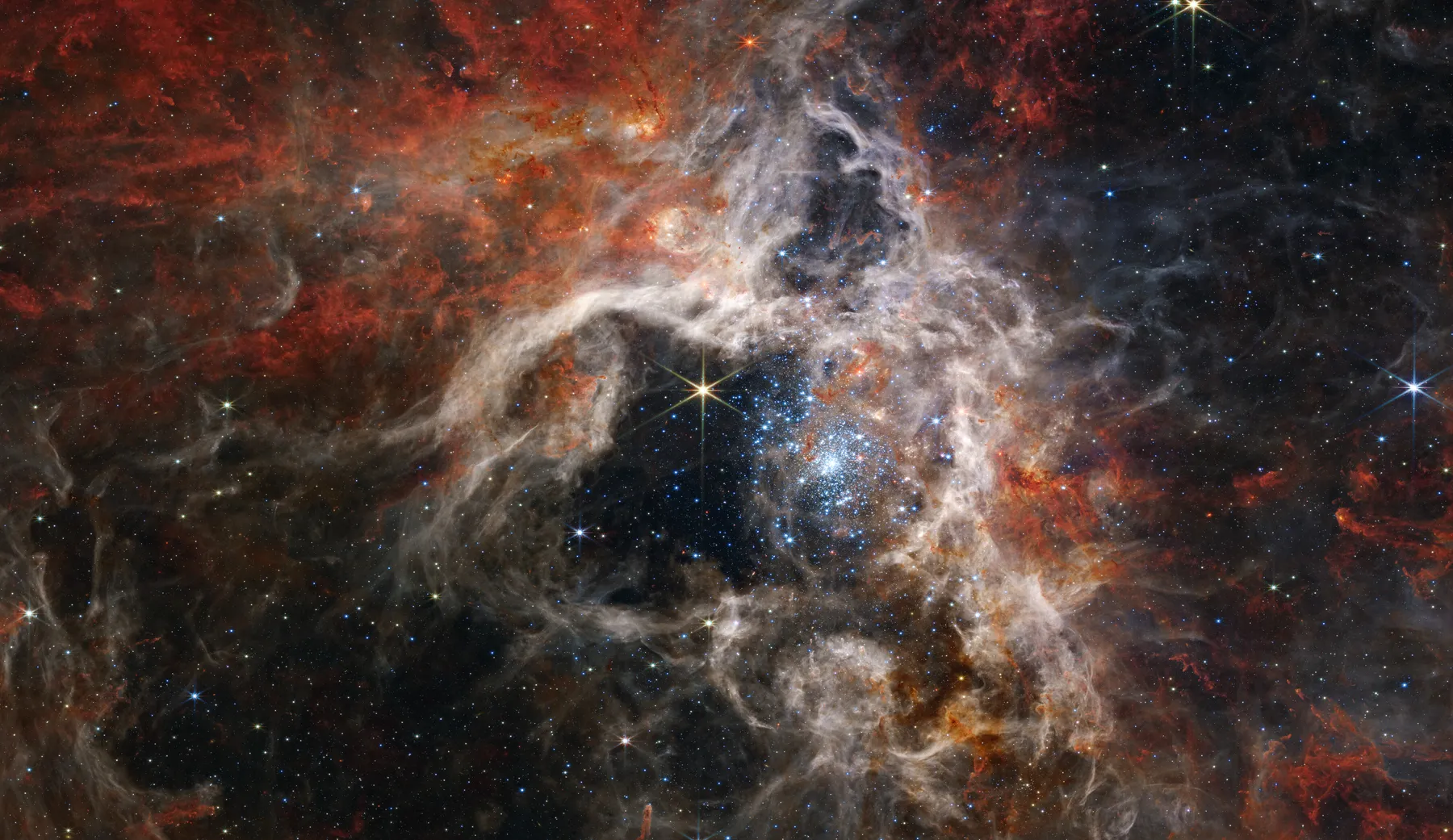
タランチュラ星雲
Tarantula Nebula (30 Doradus) ・ 大マゼラン雲・約16万1000光年
左:ハッブル(画像:NASA, ESA)/右:ウェッブ(画像:NASA, ESA, CSA, and STScI)
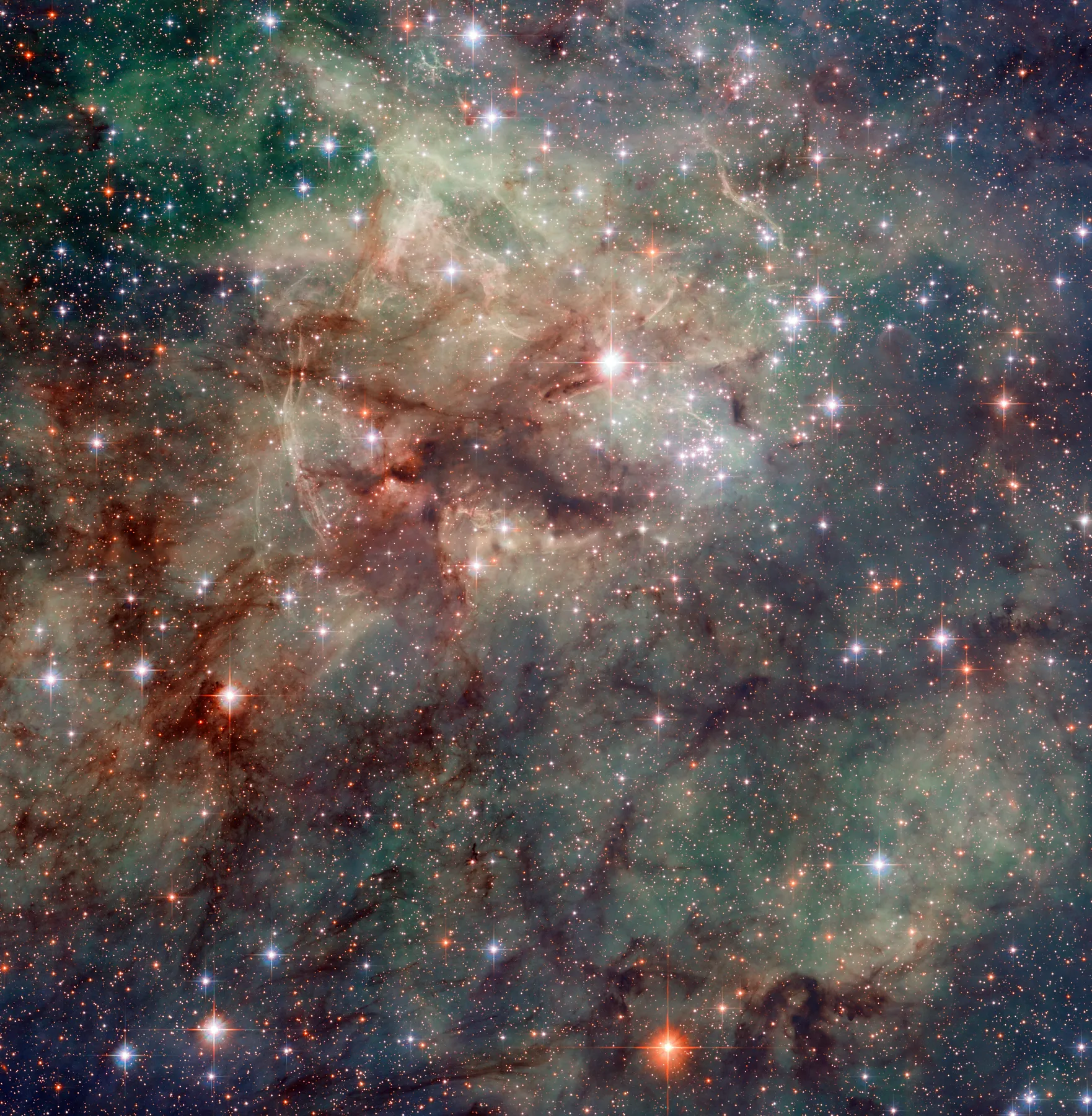
This star nursery is in a nearby galaxy. Its gas looks like spider legs. Webb found many young stars in the dust.Inside our neighboring galaxy, the Large Magellanic Cloud, this is the brightest and biggest star-forming region near us. Its filaments of gas look like spider legs, giving it its name. Webb found tens of thousands of young stars hidden in the dust. (The two images cover slightly different areas.)となりの銀河「大マゼラン雲」の中にある、近くの銀河の中で最も明るく大きな星の生まれる場所。ガスのすじがクモの足のように見えるので、タランチュラと呼ばれます。ウェッブは、まわりのちりの中にかくれていた何万もの若い星を見つけました。(2枚は写している範囲が少しちがいます)