

本文へ
はじめての人へ
ISS…

THE SCALE OF SPACE

宇宙の大きさ体感

スクロールすると、地球からどんどん遠くへ。月、太陽、巨大な星、太陽系、銀河…そして見える宇宙のはしまで、本当の大きさの比率でズームアウトします。

—画面のはばの大きさ

01 · EARTH

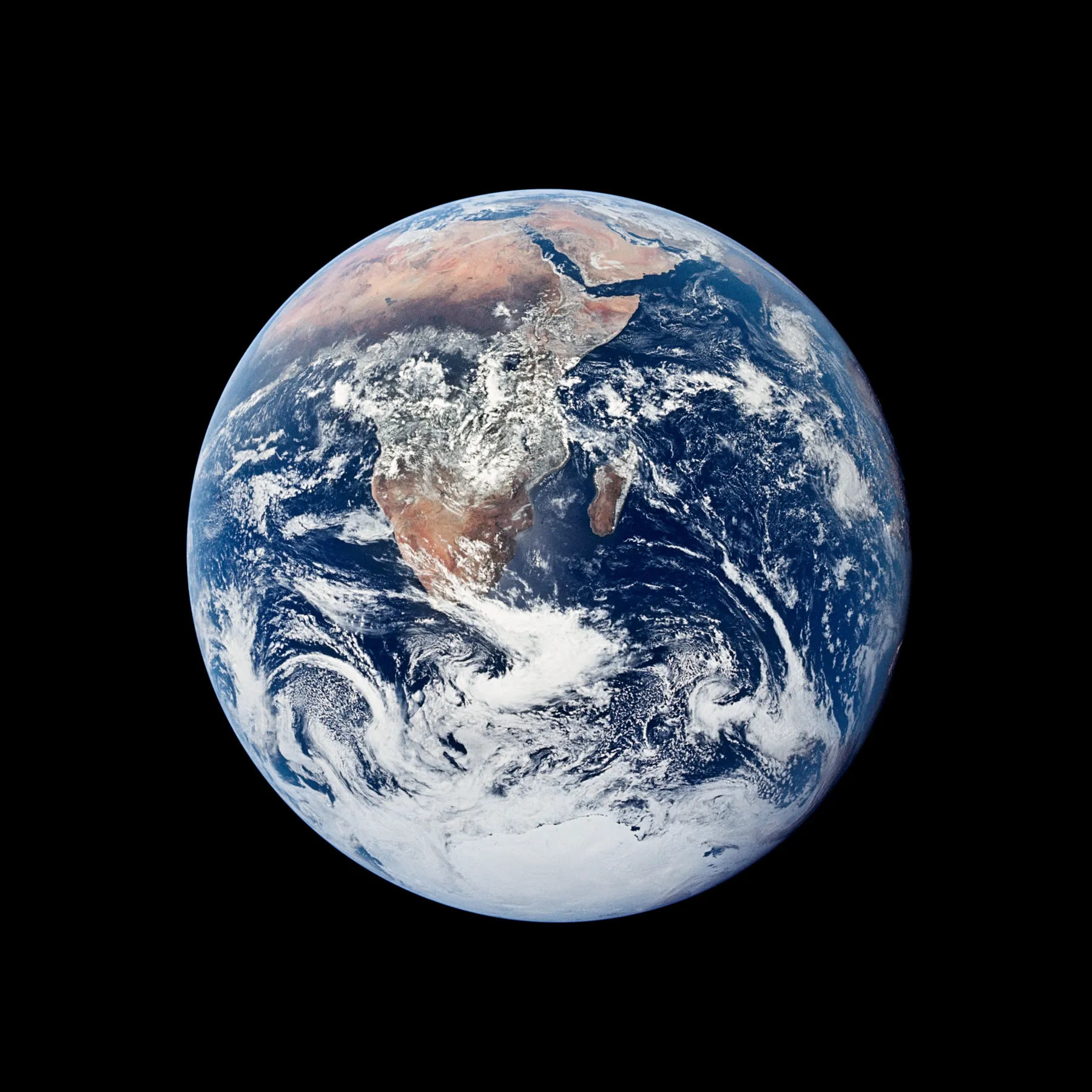
地球 12,742 km

This is Earth. It is about 12,742 km wide. The space station flies only about 400 km above it.Our home planet is about 12,742 km across. A bullet train at 300 km/h would need about 42 hours to cross it. The International Space Station orbits only about 400 km above the surface — at this scale, about the thickness of a peel.わたしたちの地球。直径は約1万2742km。新幹線(時速300km)でまっすぐ通りぬけると、約42時間かかります。国際宇宙ステーション(ISS)は、この地球の表面から約400km上を回っています。この絵の大きさだと、ISS はうすい皮くらいの高さです。

02 · THE MOON'S DISTANCE

月までの距離 384,400 km

The Moon is about 384,400 km away. About 30 Earths can fit between us. Light gets there in 1.3 seconds.The Moon is about 384,400 km away — you could line up about 30 Earths in between. Light takes about 1.3 seconds. Apollo astronauts took about three days to get there, and in April 2026 the Artemis II crew flew around the far side of the Moon.月は地球から約38万4400km。地球と月のあいだに、地球が約30個ならびます。光なら約1.3秒。アポロの宇宙飛行士は3日ほどかけて飛びました。2026年4月、アルテミス2号の4人も、この距離をこえて月の裏側をまわってきました。

03 · THE SUN

太陽 1,391,400 km

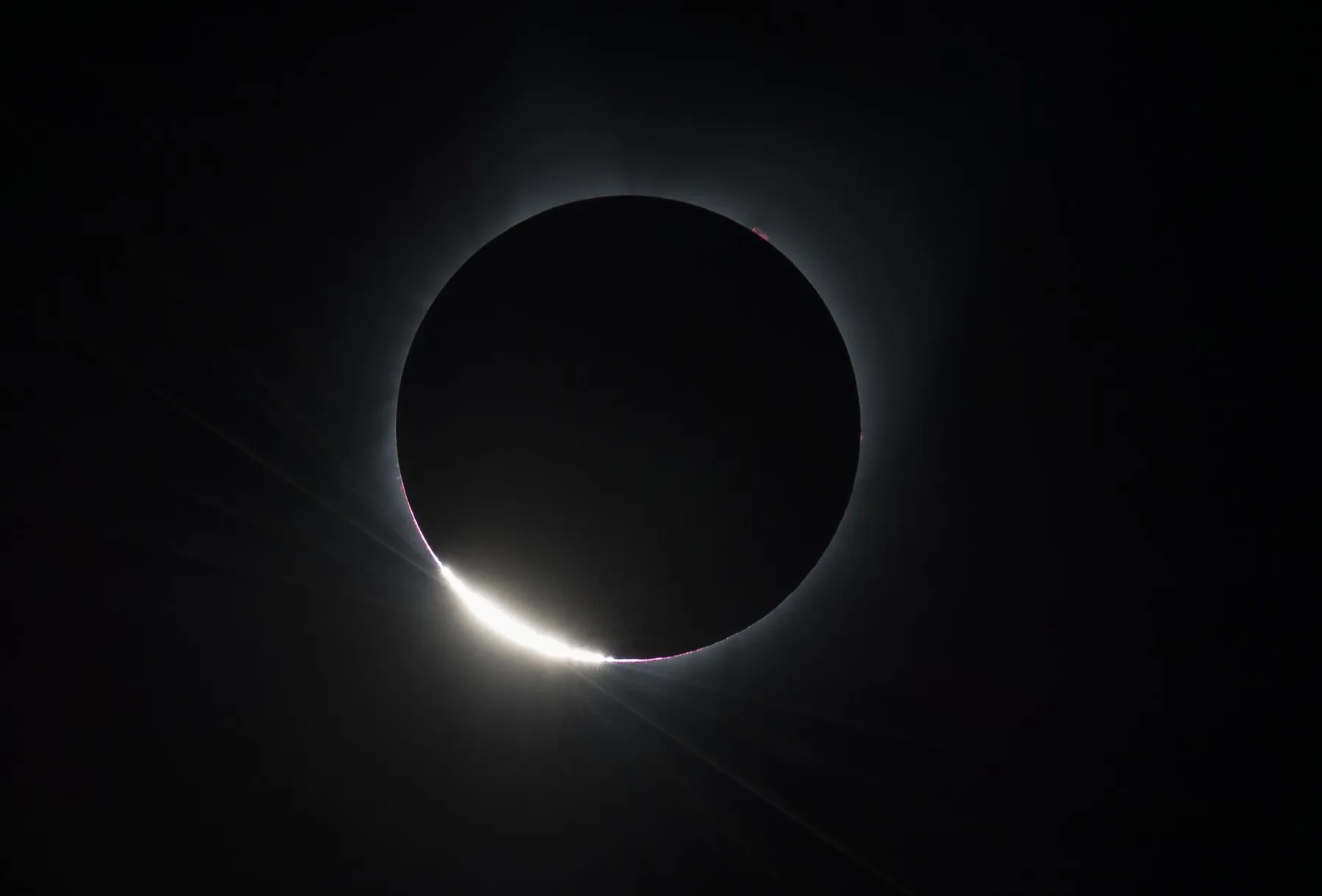
The Sun is very big. 109 Earths fit across it. The Moon's whole path around Earth fits inside the Sun!The Sun is about 1.39 million km across — 109 Earths side by side. Look: the whole orbit of the Moon around Earth would fit inside the Sun. About 1.3 million Earths could fit inside it. NASA's Solar Dynamics Observatory has watched the Sun every day since 2010.太陽の直径は約139万km。地球が109個横にならびます。そして見てください。月の通り道ぜんぶ(地球と月のセット)が、太陽の中にすっぽり入ってしまいます。太陽の中には地球が約130万個入ります。NASA の太陽観測衛星 SDO は、2010年から毎日この太陽を見はっています。

04 · BETELGEUSE

ベテルギウス 約10億 km

Betelgeuse is a giant red star. It is about 700 times wider than the Sun. If it were here, it would cover Earth's path and Mars's path too.Betelgeuse, the red star in Orion, is a red supergiant roughly 700 times wider than the Sun (estimates vary). Placed where the Sun is, it would swallow the orbits of Mercury, Venus, Earth and Mars and reach toward Jupiter. It is expected to explode as a supernova someday — perhaps tens of thousands of years from now.オリオン座の赤い星ベテルギウスは、太陽の約700倍の大きさの「赤色超巨星」(測り方で幅があります)。もし太陽のかわりに置いたら、水星・金星・地球・火星の軌道までのみこんで、木星の近くまでとどきます。いつか超新星爆発を起こすと考えられていますが、それは数万年〜10万年後かもしれません。

05 · THE PLANETS

太陽系の惑星たち 約90億 km

Neptune is the farthest planet. Light takes about 4 hours to get there. Only NASA's Voyager 2 has visited it.Neptune's orbit, the outermost planet's path, is about 9 billion km across; even light needs about four hours to get there from the Sun. NASA's Voyager 2 gave us our first close look at Neptune in 1989 — and it is still the only spacecraft to visit.いちばん外側の惑星、海王星の軌道の直径は約90億km。光でも片道約4時間かかります。1989年に海王星を初めて近くで見たのは、NASA の探査機ボイジャー2号です。いまのところ、海王星をおとずれた探査機はボイジャー2号だけです。

06 · VOYAGER 1

ボイジャー1号 約259億 km

Voyager 1 is the farthest thing people made. It left Earth in 1977. Now its radio message takes about one day to reach us.NASA's Voyager 1, launched in 1977, is the most distant human-made object. Around November 2026 it is expected to reach one light-day from Earth — about 25.9 billion km — so a radio signal takes about a day each way. It still talks to Earth while carrying the Golden Record toward the stars.1977年に打ち上げられた NASA のボイジャー1号は、人類がつくったもので最も遠くにあります。2026年11月ごろ、地球から「1光日」(光で1日かかる距離・約259億km)に届く見込みです。いまも地球と交信していて、電波が届くのに約1日かかります。ゴールデンレコードを積んで、星の世界へ旅を続けています。

関連コーナー →

07 · ONE LIGHT-YEAR

1光年 9.46兆 km

One light-year is how far light goes in one year. It is about 9.46 trillion km. Voyager is a tiny dot here.A light-year is the distance light travels in one year: about 9.46 trillion km. Voyager 1's distance is just a tiny dot inside this circle. From here on, we measure in light-years because kilometres get far too big.光が1年で進む距離が「1光年」。約9兆4600億kmです。ボイジャー1号の距離は、この円の中ではほんの小さな点。ここから先は、km ではなく「光年」で数えないと、数字が大きすぎて書ききれません。

08 · THE NEAREST STAR

いちばん近い星 4.24 光年

The closest star is Proxima Centauri. It is 4.24 light-years away. Voyager would need more than 70,000 years to get there.The nearest star after the Sun is Proxima Centauri, 4.24 light-years away. Even at Voyager 1's speed of about 17 km per second, the trip would take more than 70,000 years. Every other star in the night sky is farther still.太陽のつぎにいちばん近い星は、プロキシマ・ケンタウリ。4.24光年はなれています。ボイジャー1号の速さ(秒速約17km)でも、着くまでに約7万年以上かかります。夜空の星は、どれもこれより遠くにあります。

関連コーナー →

09 · THE MILKY WAY

天の川銀河 約10万 光年

The Sun is one star in the Milky Way galaxy. The galaxy has hundreds of billions of stars. It is about 100,000 light-years wide.Our Sun is one of hundreds of billions of stars in the Milky Way, a galaxy about 100,000 light-years across. The solar system sits about 26,000 light-years from the center and takes roughly 230 million years to go around once. The 4 light-years from the last step are far too small to see here.わたしたちの太陽は、天の川銀河にある数千億個の星のひとつ。銀河の直径は約10万光年です。太陽系は中心から約2万6000光年はなれたところを、約2億3000万年かけて1周しています。前の場面の4光年は、この絵ではもう見えません。

10 · THE ANDROMEDA GALAXY

アンドロメダ銀河 250万 光年

The Andromeda Galaxy is 2.5 million light-years away. You can see it with your eyes on a dark night. The light left it 2.5 million years ago.Our big neighbor, the Andromeda Galaxy, is about 2.5 million light-years away. On autumn nights you can see it as a faint smudge from a dark place — light that left 2.5 million years ago. Observations with NASA's Hubble Space Telescope suggest the Milky Way and Andromeda will meet in a few billion years.となりの大きな銀河、アンドロメダ銀河までは約250万光年。秋の夜、暗い場所なら肉眼でもぼんやり見えます。今夜見える光は、250万年前に出発した光です。NASA のハッブル宇宙望遠鏡の観測から、天の川銀河とアンドロメダ銀河は数十億年後に出会うと考えられています。

11 · THE OBSERVABLE UNIVERSE

観測できる宇宙 約930億 光年

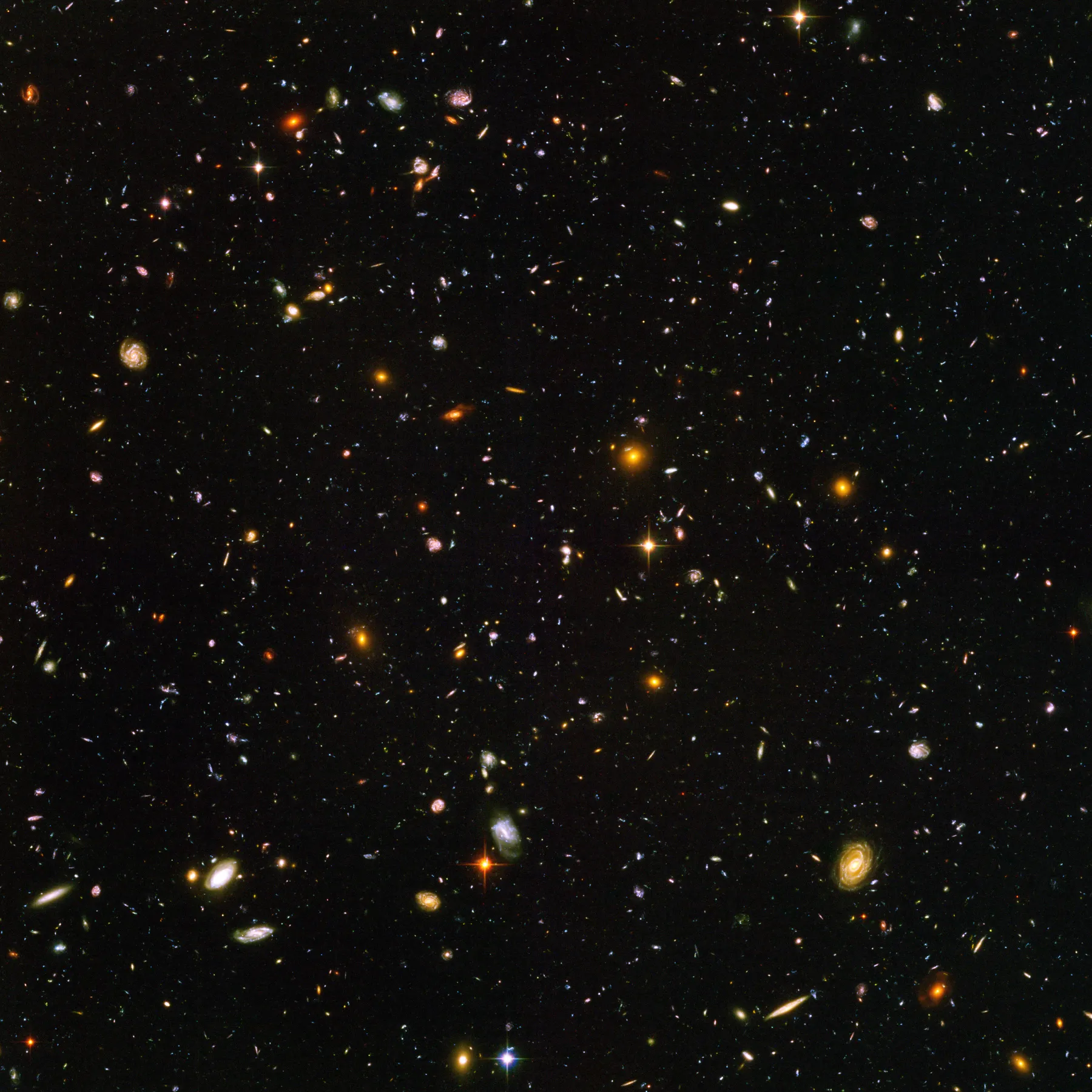
The universe we can see is about 93 billion light-years wide. It has billions and billions of galaxies. NASA's Webb telescope sees very old galaxies.The observable universe is about 93 billion light-years across. The universe began 13.8 billion years ago, but space kept expanding, so the region we can see is much larger than 13.8 billion light-years. It may hold hundreds of billions to two trillion galaxies. NASA's James Webb Space Telescope has spotted galaxies from just a few hundred million years after the beginning.わたしたちが観測できる宇宙の大きさは、直径約930億光年。宇宙は138億年前に始まりましたが、そのあいだにも広がり続けたので、こんなに大きいのです。この中に、銀河が数千億〜2兆個あるといわれます。NASA のジェイムズ・ウェッブ宇宙望遠鏡は、宇宙が生まれて数億年のころの銀河まで見つけています。

関連コーナー →

ここまで来たあなたは、宇宙の大きさマスター!

光の速さでも930億年かかる宇宙の中で、わたしたちの地球はほんの小さな点。でも、その点から人は月へ行き、何十億km先まで探査機を送りました。

MORE TO EXPLORE

ほかのコーナーも見てみよう