

本文へ
はじめての人へ
ISS…

JAPAN FROM SPACE

宇宙から見た日本

国際宇宙ステーションの宇宙飛行士たちは、地上約400kmから毎日のように日本を撮影しています。夜景、富士山、台風、オーロラ…。NASA が公開している「宇宙からの日本」を見てみよう。

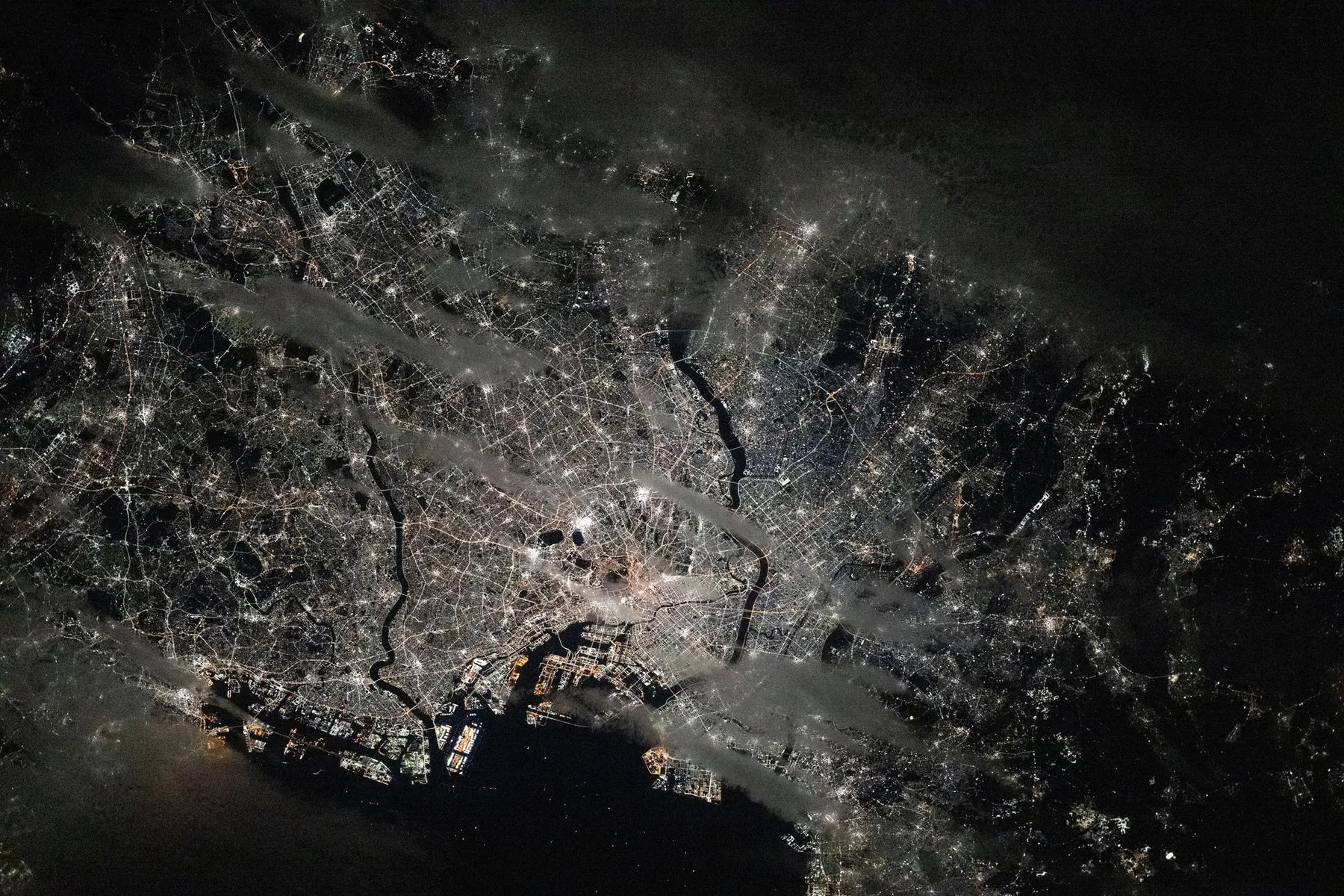
首都圏の夜(2025年)
画像:NASA

GREATER TOKYO AT NIGHT (2025)

首都圏の夜(2025年)

This is the Tokyo area at night. More than 39 million people live here. The lines of light are trains and roads.Greater Tokyo, home to more than 39 million people, is the world's most populous urban area. Taken around 4 a.m. local time, rail lines and roads sparkle like strings of pearls.3900万人以上が暮らす、世界でいちばん人の多い都市圏。現地時間の朝4時ごろに撮られました。光のすじになっているのは鉄道や道路。真珠のネックレスのように光っています。

夜の日本列島
画像:NASA/Scott Kelly

夜の日本列島

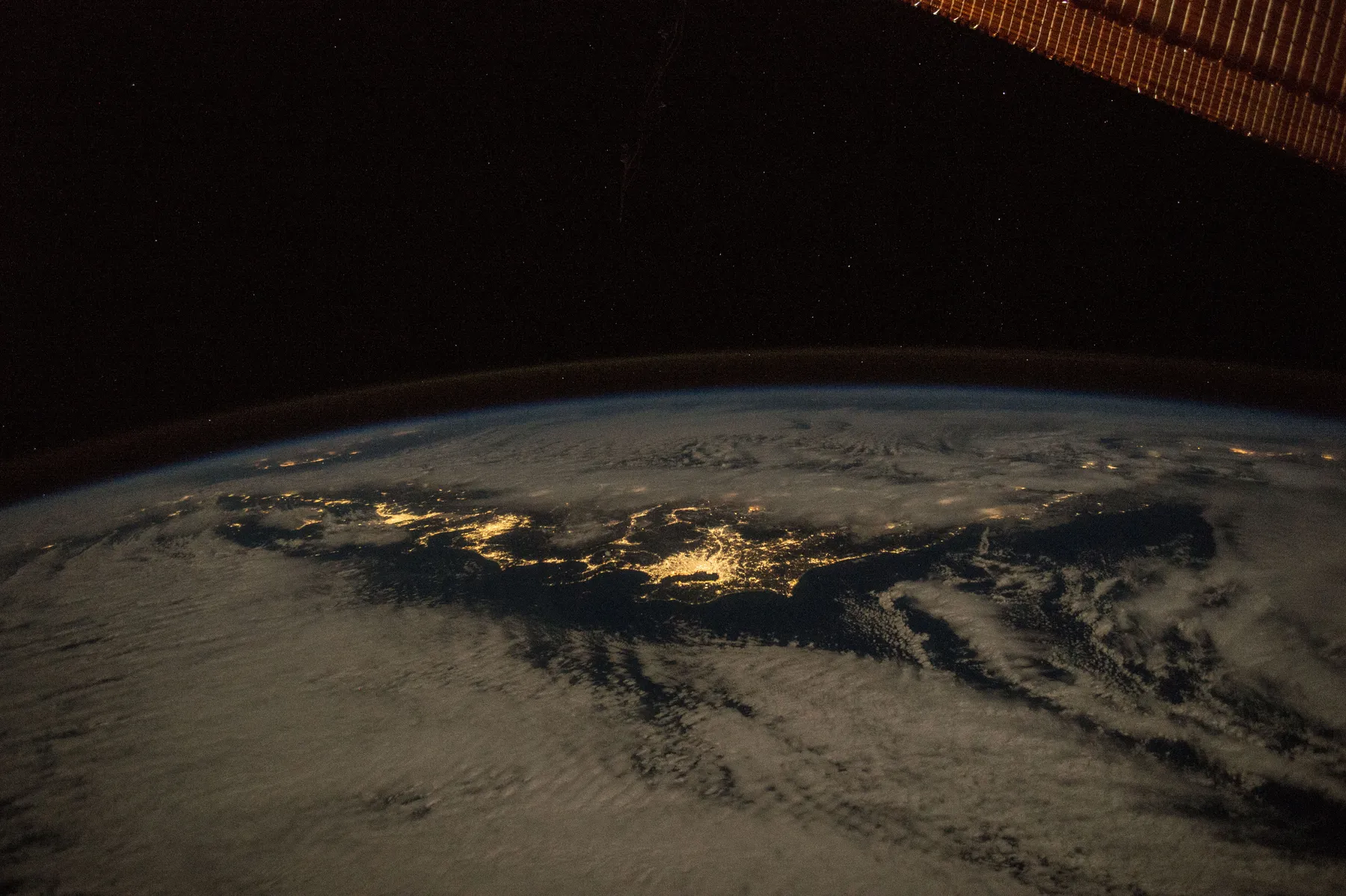
Japan at night

An astronaut took this in 2016. City lights show the shape of Japan. The brightest part is Tokyo.NASA astronaut Scott Kelly took this photo in January 2016 during his year in space. City lights trace the shape of Japan; the brightest patch is the Tokyo area.NASA のスコット・ケリー宇宙飛行士が、1年間の宇宙滞在中の2016年1月に撮影。日本の形が、街の明かりでうかび上がります。いちばん明るいかたまりが東京のあたりです。
東京湾をかこむ光
画像:NASA

東京湾をかこむ光

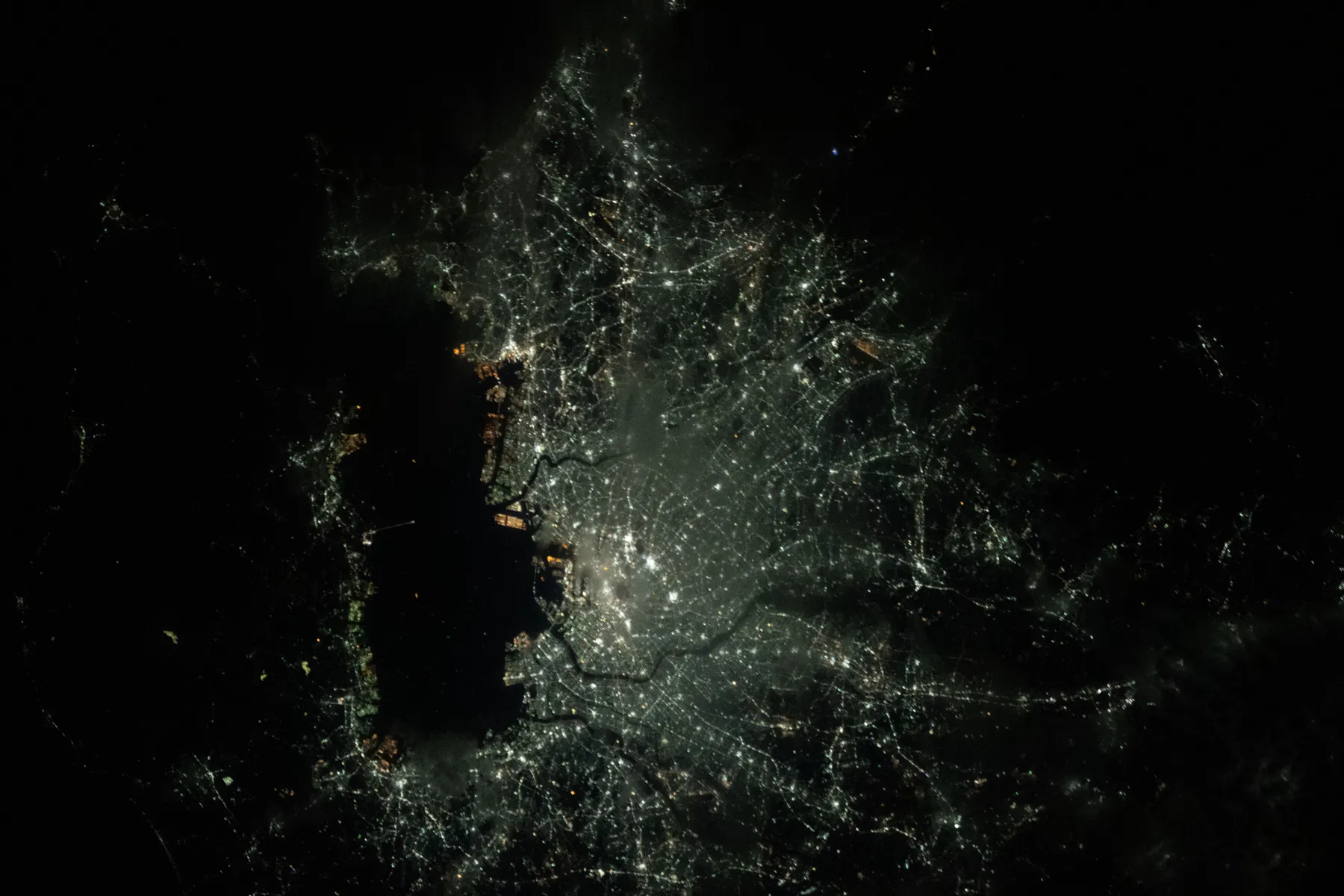
Lights around Tokyo Bay

Tokyo, Kawasaki and Yokohama light up around Tokyo Bay. The dark part is the sea.The lights of Tokyo, Kawasaki and Yokohama wrap around Tokyo Bay. The dark area is the sea — at night from space, coastlines stand out clearly.東京・川崎・横浜の明かりが、東京湾をぐるりとかこんでいます。黒く見えるのが海。夜の宇宙からは、海と陸の境目がよくわかります。

東京の夜景
画像:NASA

東京の夜景

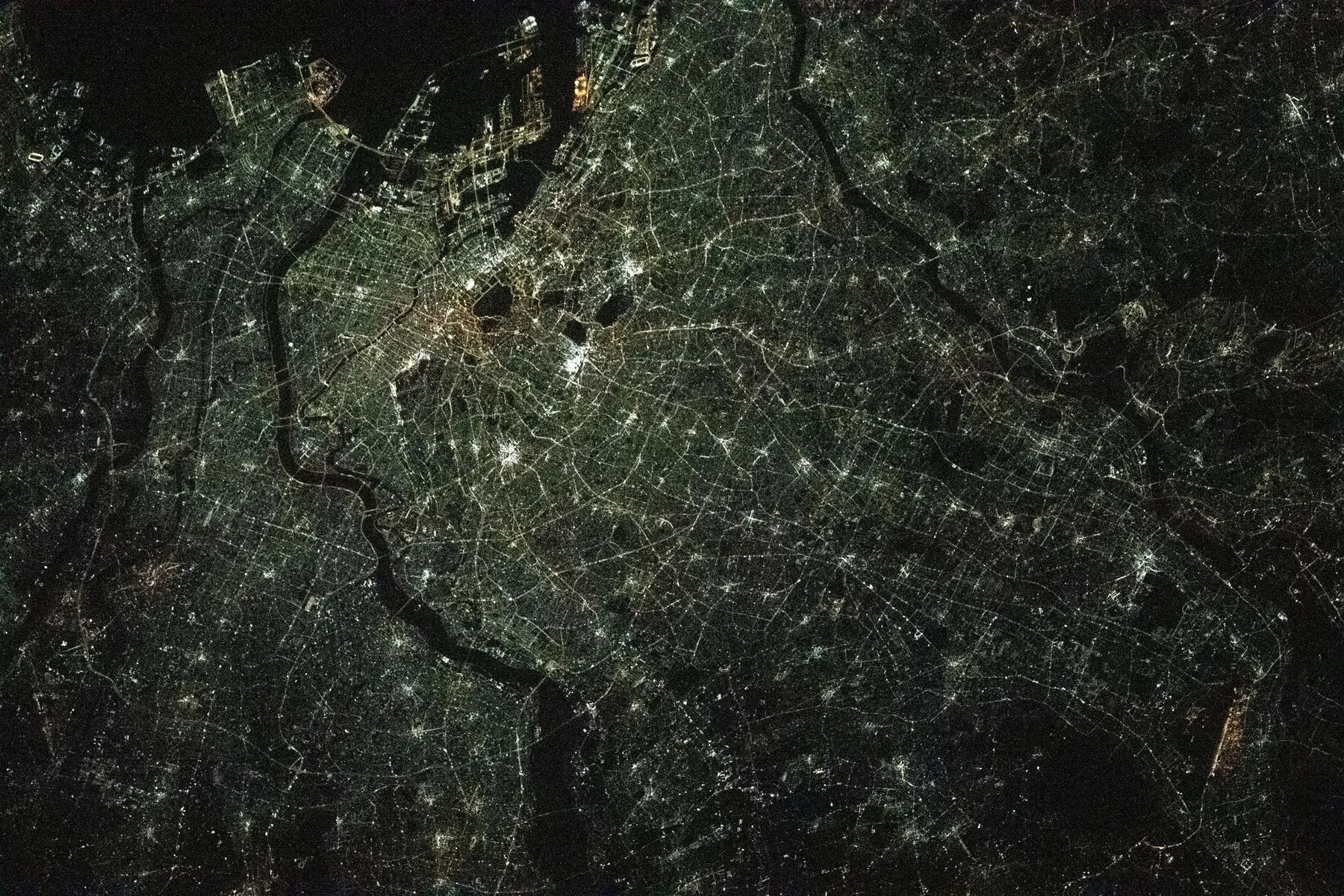
Tokyo at night

This is Tokyo at night from 420 km up. The roads look like a net of light.Tokyo at night from the International Space Station, about 420 km up. Roads spread like a net; orange and white lights come from different kinds of lamps.地上約420kmの国際宇宙ステーションから見た東京の夜。道路が網の目のように広がっています。オレンジ色の光と白い光のちがいは、照明の種類のちがいです。

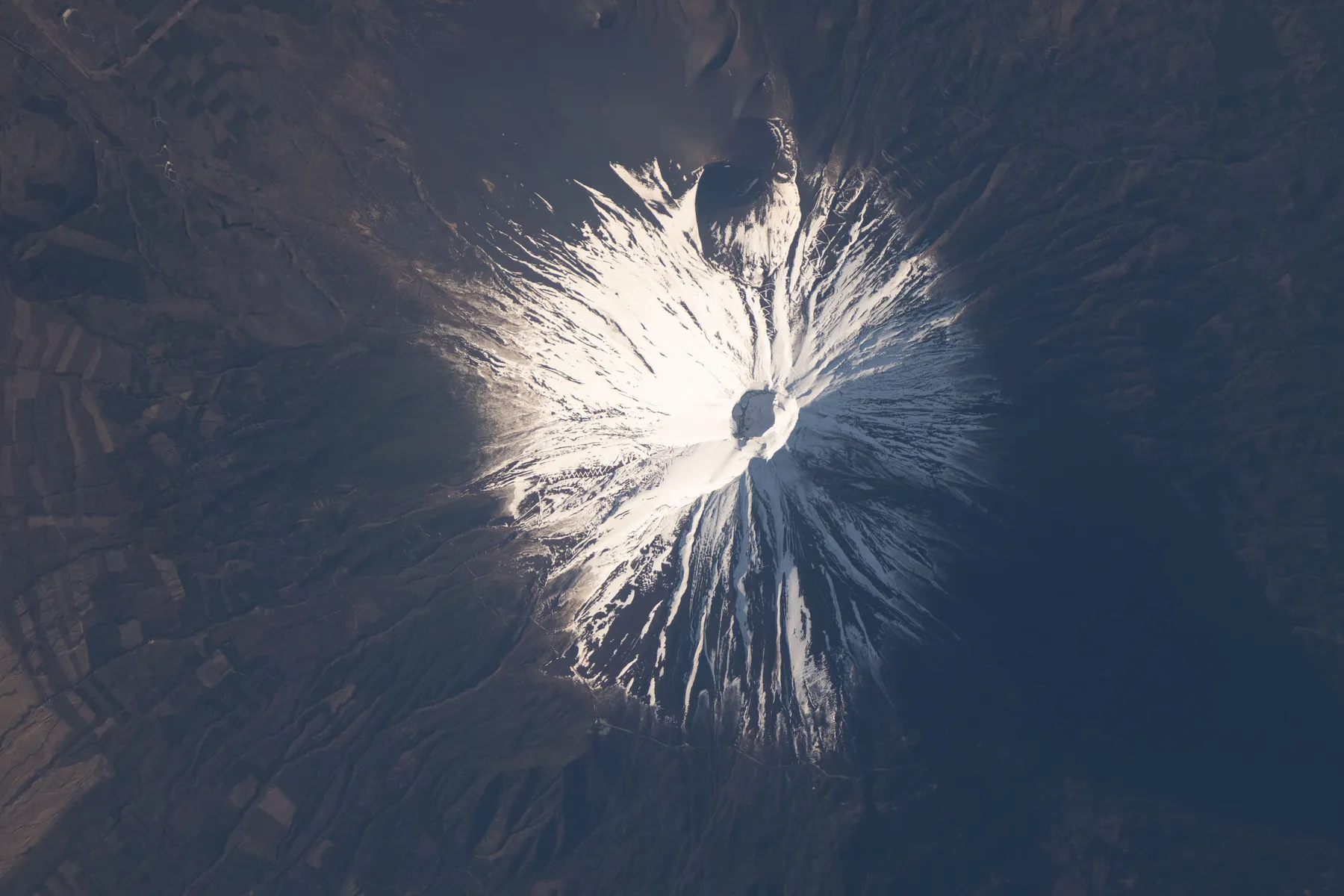
真上から見た富士山
画像:NASA/Chris Williams

真上から見た富士山

Mount Fuji from almost straight above

Mount Fuji from almost straight above. You can see the crater on the top. It has not erupted since 1707.A near-overhead view of Mount Fuji (April 2026). Even the summit crater of the 3,776 m mountain is clear from space. Fuji is an active volcano, but it has not had a major eruption since 1707.ほぼ真上から見た富士山(2026年4月)。高さ3776mの富士山も、宇宙からは山頂の火口まではっきり見えます。富士山は活火山ですが、1707年の宝永噴火のあと、大きな噴火は起きていません。

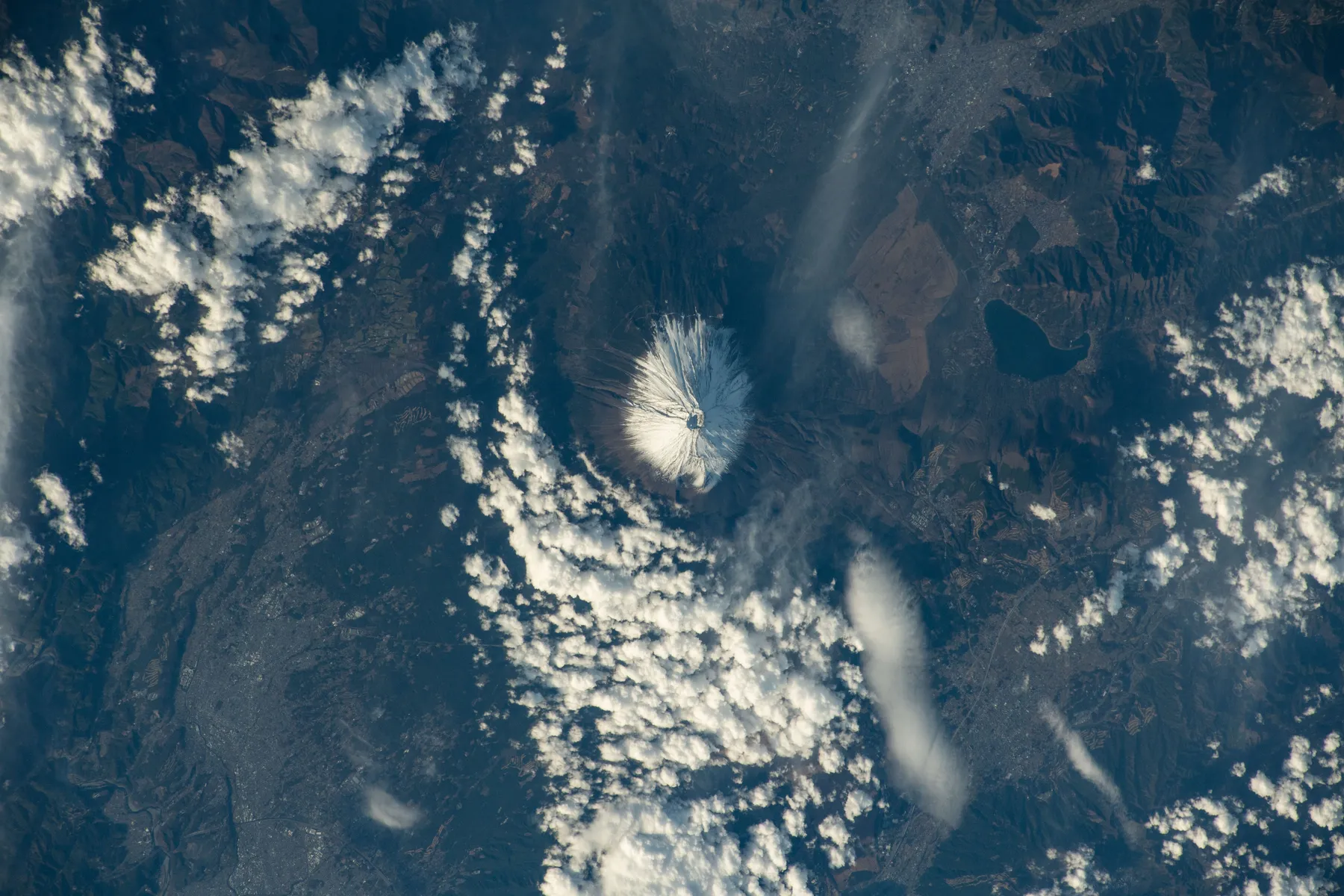
雪の富士山
画像:NASA

雪の富士山

Snowy Mount Fuji

Mount Fuji with snow on top. Astronauts love to take pictures of it.Snow-capped Mount Fuji rises between Yamanashi and Shizuoka prefectures, standing out above the surrounding mountains. It is a favorite target for astronauts' cameras.山梨県と静岡県のあいだにそびえる、雪をかぶった富士山。まわりの山々より、ひときわ大きいのがわかります。宇宙飛行士にも人気の撮影スポットです。

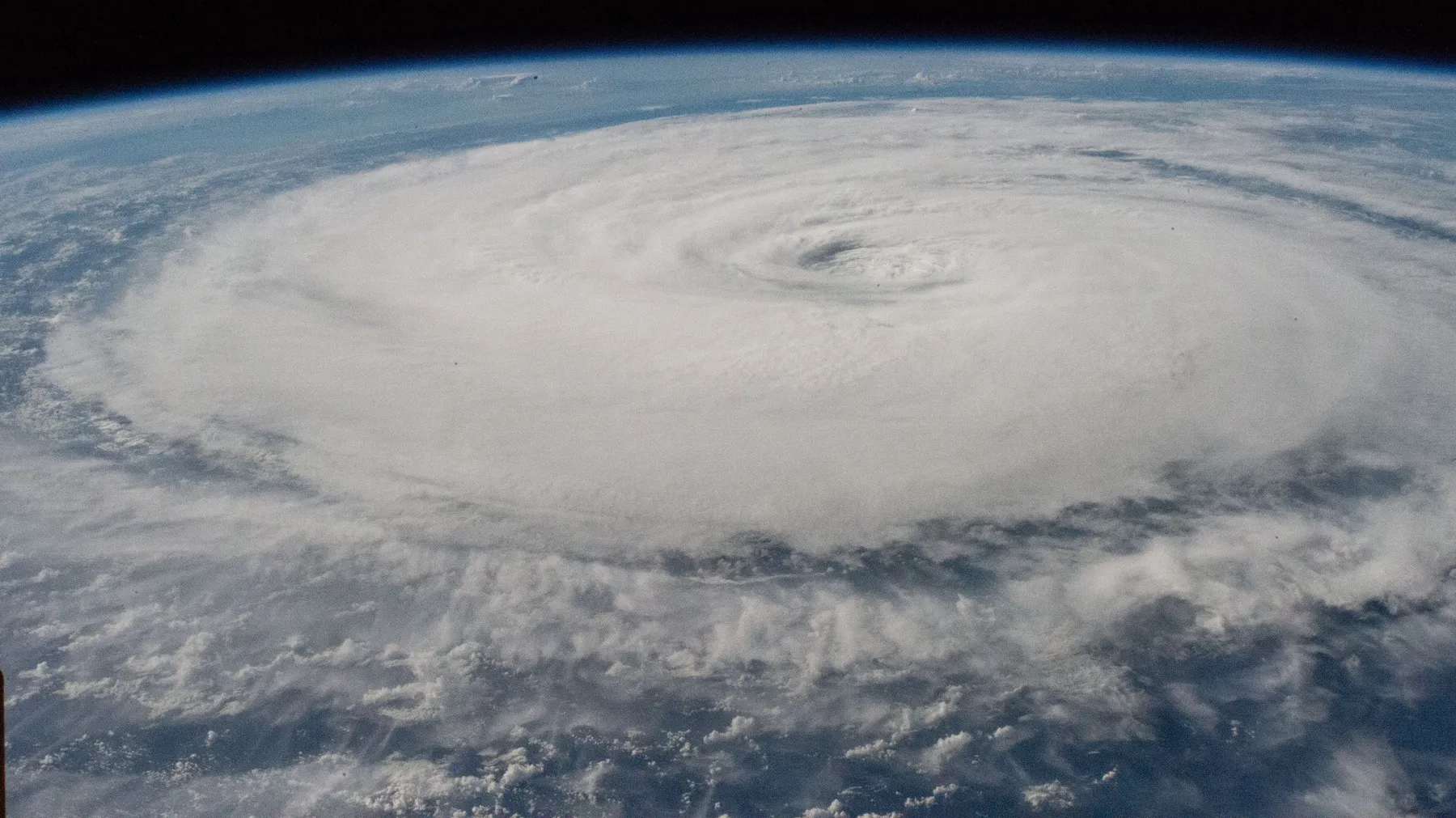
日本に近づく台風
画像:NASA

日本に近づく台風

A typhoon near Japan

A big typhoon in 2023. You can see the eye in the middle. Space pictures help us know where typhoons go.Typhoon Khanun (Typhoon No. 6) in August 2023. You can see all the way down to the eye in the middle of the swirl. Watching storms from space helps forecast their path and strength.2023年8月の台風6号(カーヌン)。うずまきの真ん中にある「台風の目」まで見えます。宇宙からの観測は、台風の進路や強さを知るのに役立っています。

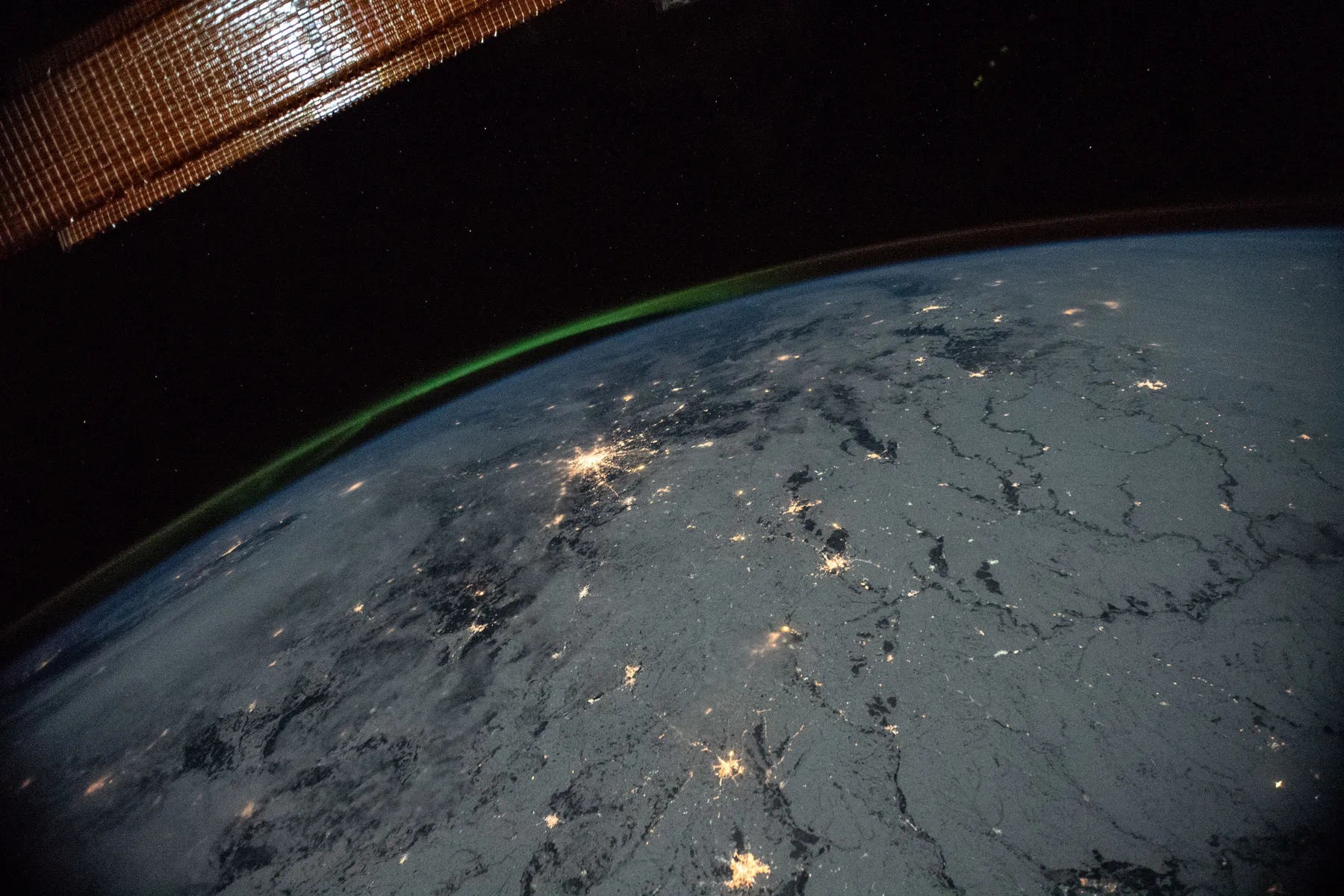
地平線のオーロラ
画像:NASA

地平線のオーロラ

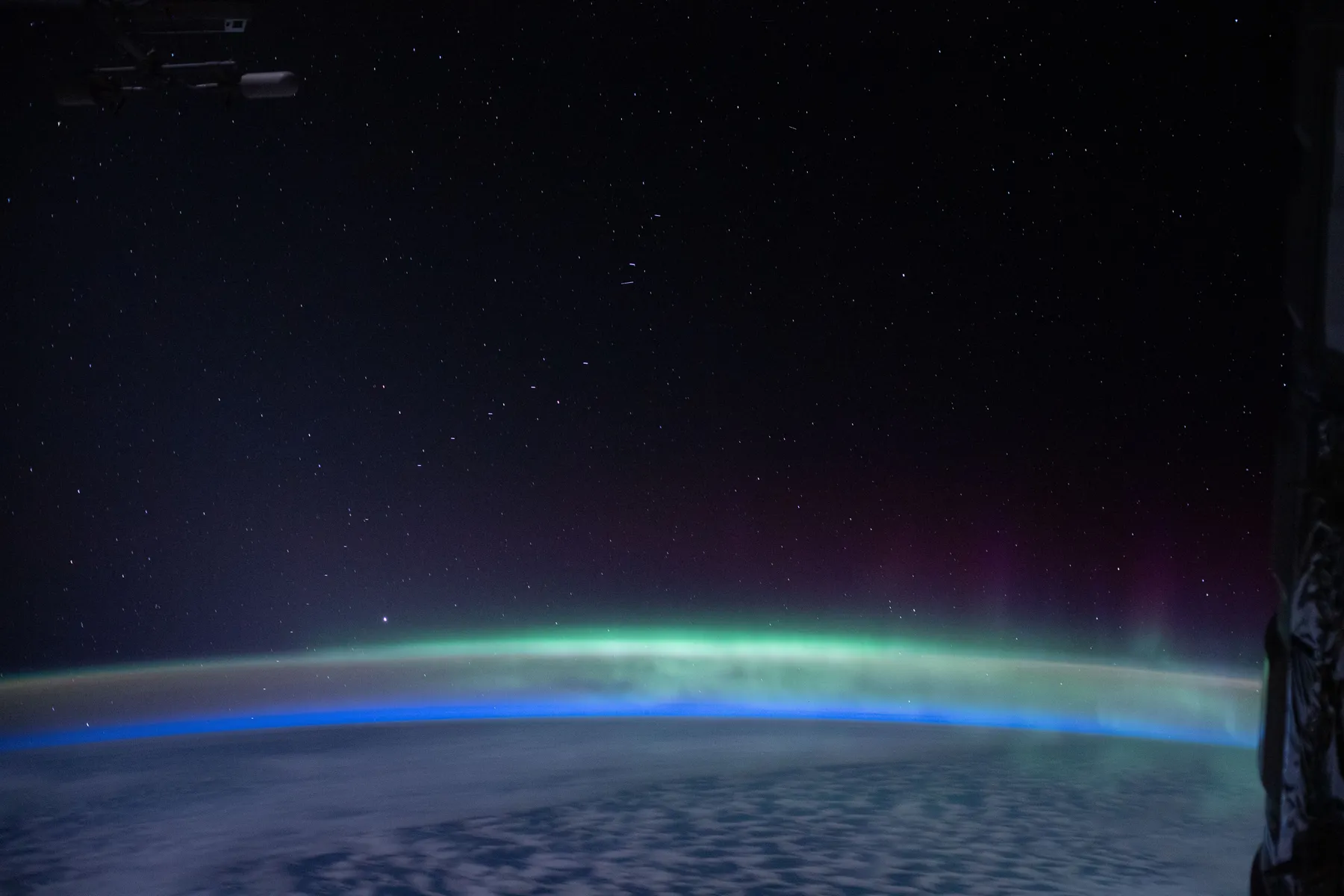
An aurora along the horizon

An aurora glows at the edge of Earth. The space station flies at the same height, so it sees auroras from the side.An aurora glows along the edge of the night-time Earth. The station flies at about the same height as auroras, so astronauts can see them from the side. They glow when particles from the Sun hit Earth's upper atmosphere.夜の地球のふちで光るオーロラ。宇宙ステーションはオーロラと同じくらいの高さを飛ぶので、オーロラを「横から」見られます。太陽から飛んでくる粒が、地球の空気にぶつかって光っています。

南のオーロラ
画像:NASA

南のオーロラ

Southern lights

Green southern lights over the Indian Ocean.The southern lights (aurora australis) over the Indian Ocean, mingling with the faint glow of Earth's atmosphere called airglow.インド洋の上空で見えた南極側のオーロラ(オーロラ・オーストラリス)。うっすら光る大気の層「大気光」と、緑のオーロラが重なっています。

キューポラから見る夕日
画像:NASA

キューポラから見る夕日

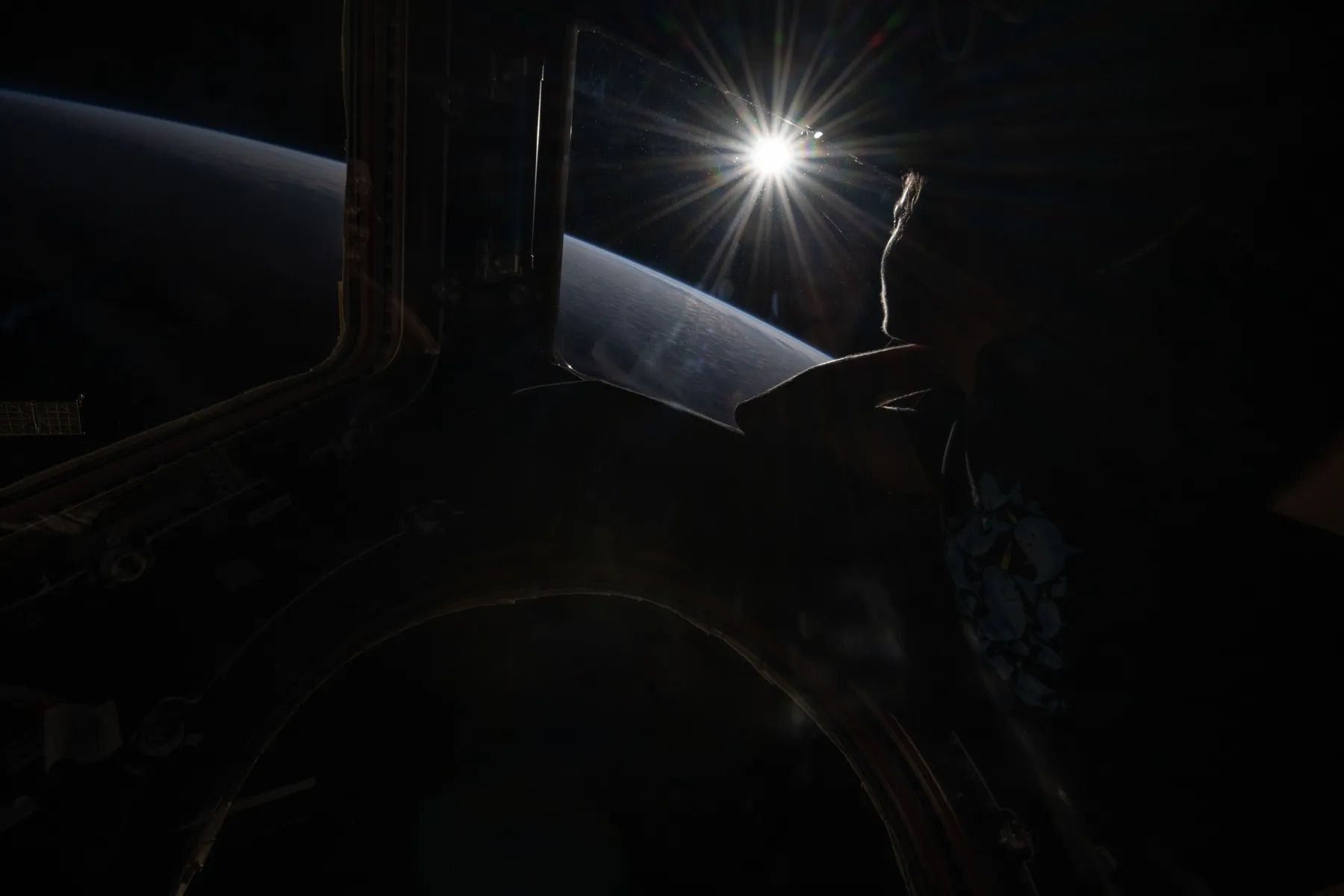
Sunset from the cupola

An astronaut watches the sunset from a big window. The station sees about 16 sunsets every day!An astronaut watches the sunset from the cupola, the station's seven-windowed lookout. Because the station circles Earth every 90 minutes, the crew sees about 16 sunrises and sunsets a day.7つの窓がある展望室「キューポラ」から、夕日に照らされた地球を見る宇宙飛行士。宇宙ステーションは90分で地球を1周するので、1日に約16回も日の出と日の入りを見られます。

宇宙から見ると…

約400km

The station is about 400 km up.Height of the space station — about the distance from Tokyo to Osaka.宇宙ステーションの高さ。東京から大阪くらいの距離です

約90分

It goes around Earth in about 90 minutes.Time for one trip around Earth. It crosses Japan in just a few minutes.地球を1周する時間。日本の上は数分で通りすぎます

約16回

16 sunrises every day!Sunrises the crew sees every day.1日に見る日の出の回数

約2300km

From the station, you can see about 2,300 km away.Distance to the horizon from the ISS — over central Japan, you could see from Hokkaido almost to Kyushu.ISS から見える地平線までの距離。日本の上にいると、北海道から九州までほとんど見わたせます

HOW FAR CAN YOU SEE?

高く上がると、どこまで見える?

国際宇宙ステーション(400km)

地平線まで 2,292km

地球を完全な球(半径6371km)として、空気による光の曲がりは考えない計算です。

MORE TO EXPLORE

ほかのコーナーも見てみよう