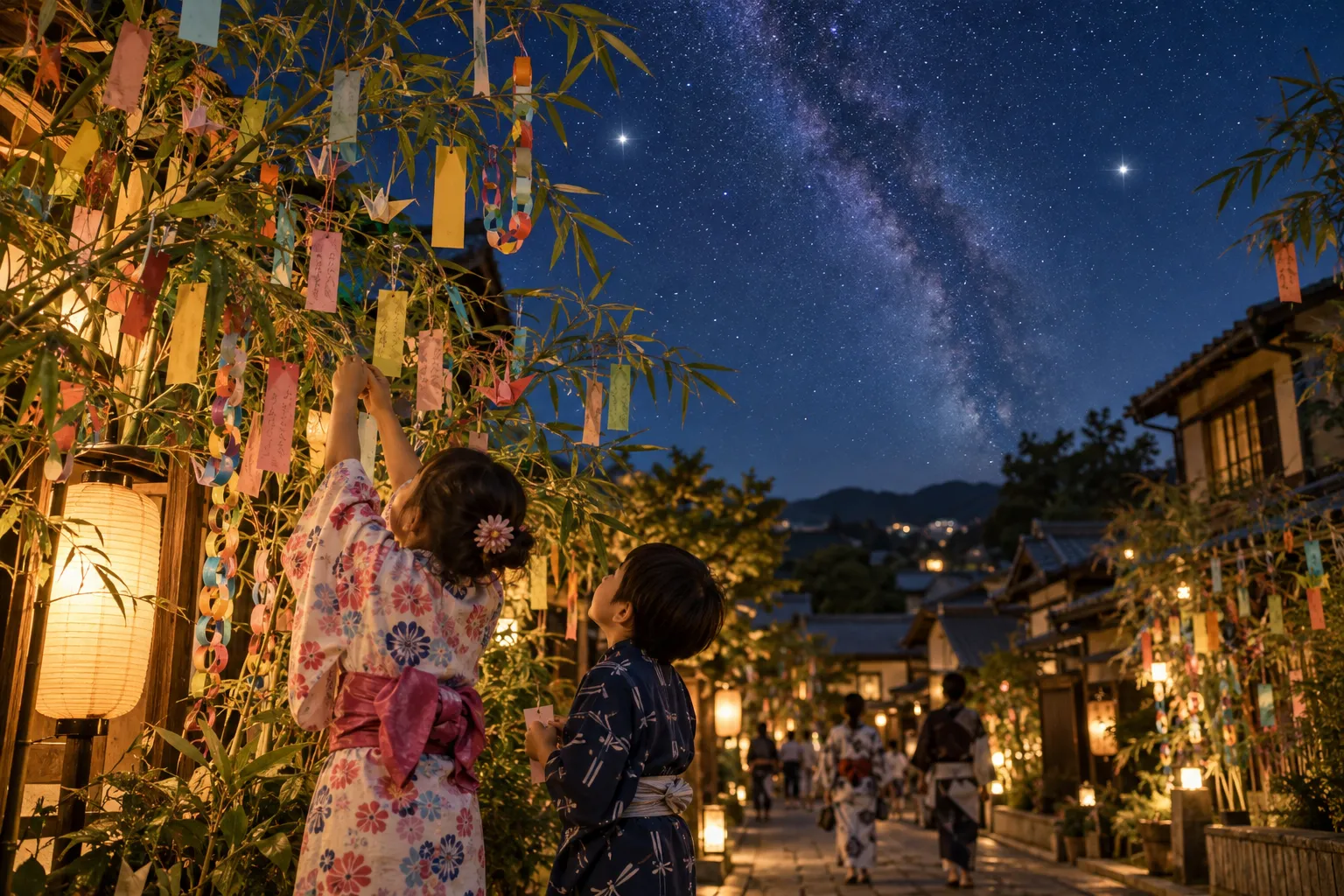
Tanabata (Star Festival)
七夕の英語の授業アイデアとワークシート
印刷してすぐ使えるワークシート(PDF・Word・解答つき)と、授業の手順書。
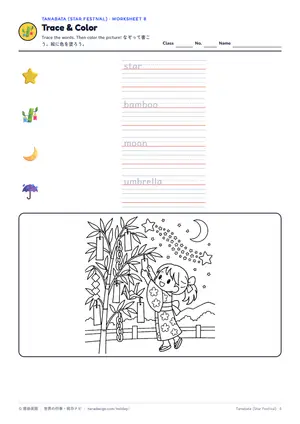
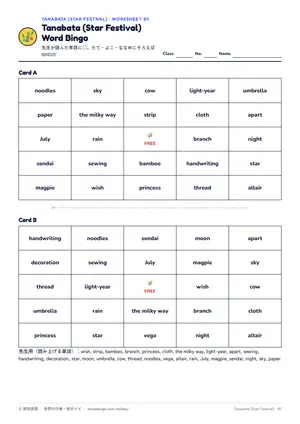
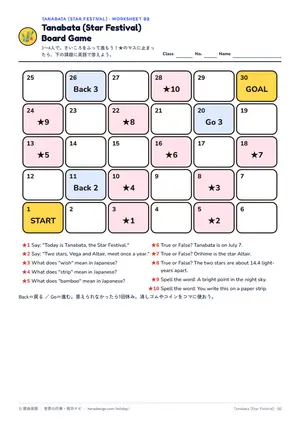
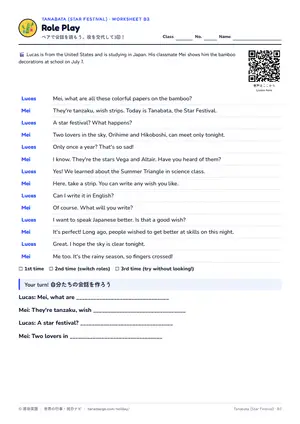
🖨️Worksheetsワークシート(無料・A4)
① 「中身を見る・印刷」で全ページを確認 → ② そのページ上の 🖨️ 印刷する でそのまま印刷できます。A4・無料。
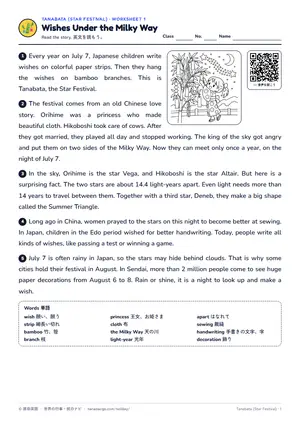
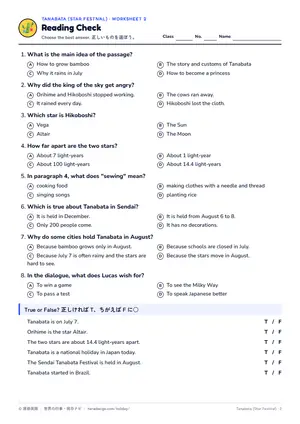
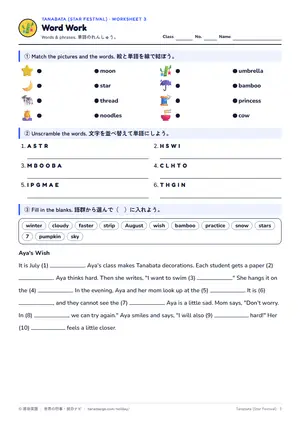
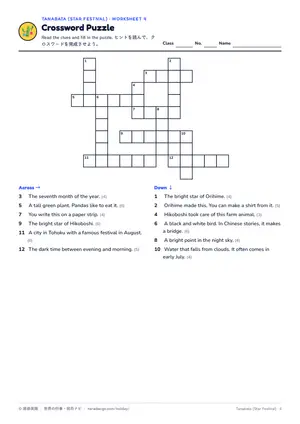
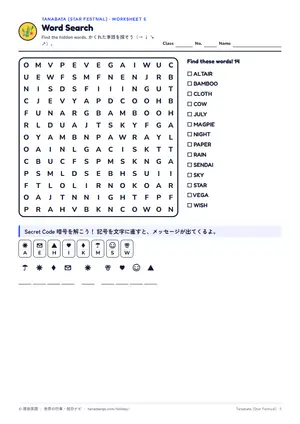
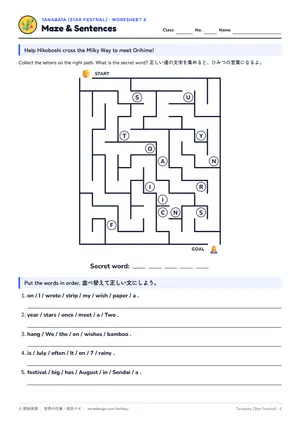
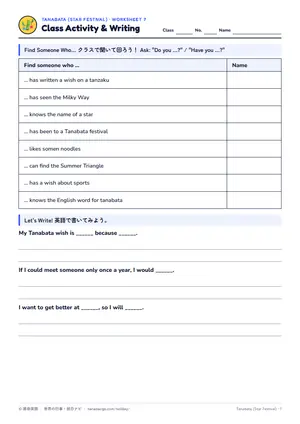
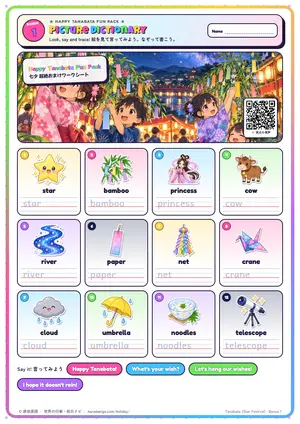
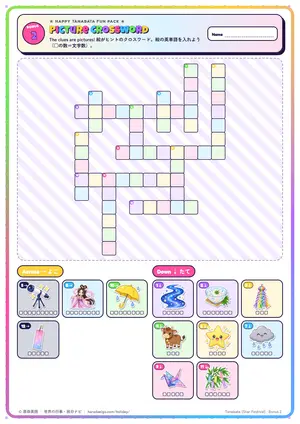
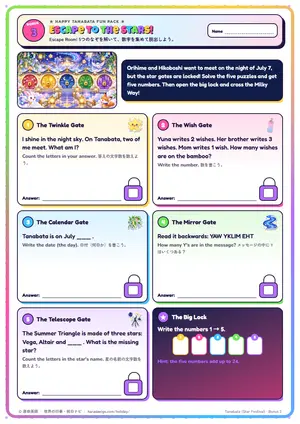
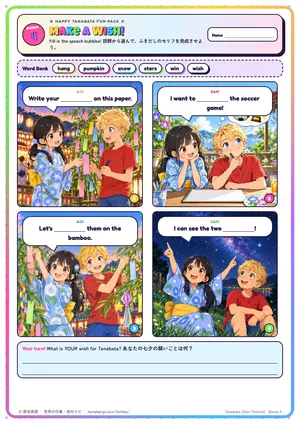
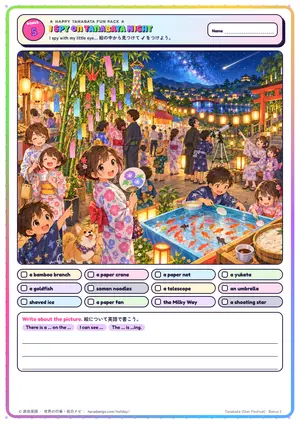
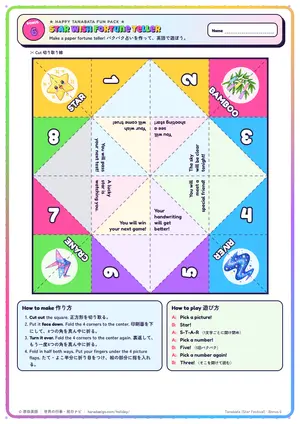
🍎Lesson Ideas七夕を使った英語の授業アイデア
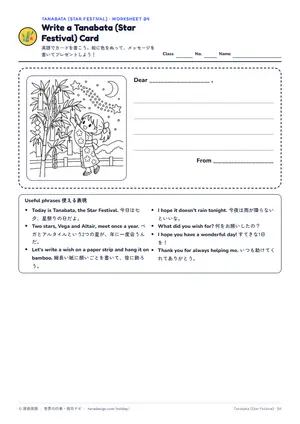
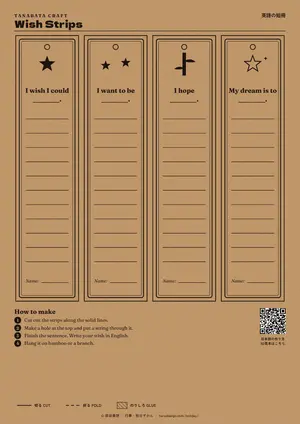
English Tanzaku:英語の短冊を書こう
🎯 I want to ... / I hope ... の形で願いごとを英語で書き、発表する。
- 織姫と彦星(ひこぼし)の話を絵で紹介する。
- I want to swim fast. などの例を見せ、自分の願いを考える。
- 色紙の短冊に英語で書き、教室の笹に飾る。
- 何人かが前で読み上げる。
詳細版を開く(時間配分・Teacher Talk・板書)
4場面の絵を見せながら、織姫と彦星の話をやさしい英語と日本語で紹介する。This is Orihime. She makes cloth. / This is Hikoboshi. He takes care of cows. のように1場面1文で話す。
🗣️ This is Orihime. She makes beautiful cloth. / This is Hikoboshi. He takes care of cows. / They can meet only once a year, on July 7.
先生の短冊の見本を見せる(I want to swim fast. / I hope my family is happy.)。I want to のあとに動作を続けることを示し、何人かに願いを日本語で言ってもらって、一緒に英語にする。
🗣️ Look at my wish. I want to swim fast. / What do you want to do? / Oh, you want to play soccer well. Let's say it in English.
短冊に英語で願いを書かせる。書けた子から教室の笹に飾らせる。スペルがわからない語は、先生が小さな紙に書いて渡す。
🗣️ Write your wish on the paper. / Start with "I want to" or "I hope." / Great! Hang it on the bamboo.
何人かが前に出て短冊を読み上げる。聞いている子は Good luck! と声をかける。
🗣️ Who wants to read your wish? / Everyone, say "Good luck!" / I hope all your wishes come true.
🎋 Tanabata(July 7)
⭐ Orihime(Vega)⭐ Hikoboshi(Altair)

I want to ___.
例:I want to swim fast.
I hope ___.
例:I hope my family is happy.

Good luck!
「乞巧奠(きっこうでん)」スタイルの願いごと:上達したいことを英語で
🎯 get better at ~ / be good at ~ を使い、技芸の上達を願う七夕の本来の意味を体験する。
- 七夕はもともと裁縫や字の上達を祈る行事だったことを紹介する。
- I want to get better at ... の文を3つ書く。
- そのために何をするかを I will ... で1文加える。
- ペアで読み合い、相手の願いに Good luck! と返す。
詳細版を開く(時間配分・Teacher Talk・板書)
五色の糸か針の写真を見せ、「七夕に針と糸?」と問いかける。英語ページ本文の第4段落を聞かせ、中国では女性が裁縫の上達を、江戸時代の日本では子どもが字の上達を願ったことを確認する。乞巧奠(技芸の上達を祈る行事)という名前を紹介する。
🗣️ Why a needle and thread on Tanabata? / Long ago in China, women prayed to become better at sewing. / In the Edo period, children wished for better handwriting.
get better at ~(〜が上達する)と be good at ~(〜が得意だ)のちがいを例文で示す(I'm good at drawing. / I want to get better at English.)。at のあとには名詞か -ing が来ることを確認する。
🗣️ I'm good at drawing. That means I can draw well now. / I want to get better at English. That means I want to improve. / After "at," use a noun or -ing. Get better at swimming.
I want to get better at ~. の文を3つ書かせ、そのうち1つについて、そのために何をするかを I will ~. で1文加えさせる(例:I want to get better at the piano. I will practice for 20 minutes every day.)。
🗣️ Write three things you want to get better at. / Choose one. What will you do? / I will practice for 20 minutes every day.
ペアで読み合い、相手の願いに Good luck! と返させる。何人かに全体の前で読ませる。ワークシートは笹に飾るか、教室に掲示する。
🗣️ Read your wishes to your partner. / Say "Good luck!" to your partner. / Let's put your wishes on the bamboo.
七夕のもともとの願い:上達(乞巧奠)
China:women → better at sewing
Edo Japan:children → better handwriting

I'm good at ___.(今、得意)
I want to get better at ___.(上達したい)
 at + 名詞 / -ing
I will ___.

例:I want to get better at the piano. I will practice for 20 minutes every day.
織姫と彦星の距離を計算しよう
🎯 数字と単位を英語で言い、光年のスケールを体感する。
- Vega and Altair are about 14.4 light-years apart. を読み、light-year の意味を確認する。
- 光が1秒で約30万キロ進むことから、14.4光年がどれほど遠いかを話し合う。
- If they sent an email at the speed of light, when would it arrive? を英語で答える。
詳細版を開く(時間配分・Teacher Talk・板書)
星図で夏の大三角を見せ、ベガが織姫、アルタイルが彦星であることを確認する。英語ページ本文の第3段落を聞かせ、Vega and Altair are about 14.4 light-years apart. を板書する。light-year は時間ではなく距離の単位(光が1年で進む距離)だと確認する。
🗣️ Orihime is Vega. Hikoboshi is Altair. / They are about 14.4 light-years apart. / A light-year is not time. It is distance.
光は1秒で約30万キロ進むことを示し、1年で進む距離をペアで電卓で計算させる(300,000 × 60 × 60 × 24 × 365 ≒ 9兆4600億キロ)。大きな数の読み方の表を使い、about 9.5 trillion kilometers と英語で言わせる。
🗣️ Light travels about 300,000 kilometers in one second. / How far does it go in one year? Use your calculator. / About 9.5 trillion kilometers. Say it with me.
If they sent an email at the speed of light, when would it arrive? を英語で問う。14.4年かかるので、2026年の七夕に送ると届くのは2040年の終わりごろになることを、ペアで考えさせて英語で答えさせる。
🗣️ Hikoboshi sends an email at the speed of light. / When will it arrive? / It will take about 14 years. It will arrive in 2040.
本文の Even light needs more than 14 years to travel between them. を全員で読む。「年に1回会う」のは、光の速さでも無理なほど遠いことを確認して終える。
🗣️ Even light needs more than 14 years. / Can they really meet once a year? / It's a beautiful story, but the stars are very far apart.
Vega(Orihime)⇔ Altair(Hikoboshi)
about 14.4 light-years apart

1 light-year = the distance light travels in one year
300,000 km × 60 × 60 × 24 × 365 ≒ 9,460,000,000,000 km
= about 9.5 trillion kilometers

An email at the speed of light:2026 → about 2040
Even light needs more than 14 years.
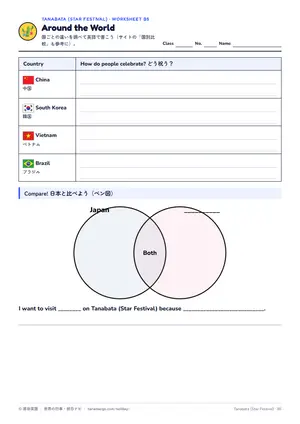
アジアの七夕比べ
🎯 中国・韓国・日本の七夕の違いを調べ、比較の表現で発表する。
- compare の表と advanced を読み、3か国の違いをまとめる。
- 雨の意味、日付、主な習慣の3点で表をつくる。
- In Korea, rain means ..., while in Japan ... のように比べる文を書く。
- 1班1分で発表する。
詳細版を開く(時間配分・Teacher Talk・板書)
「七夕に雨が降ったら、うれしい?悲しい?」と問う。日本では「会えない涙」と言われるが、韓国では雨が再会の「うれし涙」とされることを紹介し、同じ物語でも国によって意味がちがうことに気づかせる。
🗣️ If it rains on Tanabata, is it happy or sad? / In Korea, rain is welcomed as tears of joy. / One story, different meanings. Let's compare.
国比べ表と発展英文を読ませ、中国・韓国・日本の3か国を、雨の意味・日付・主な習慣の3点で表にまとめさせる。例:中国は旧暦7月7日で恋人たちの日、韓国は旧暦7月7日で雨はうれし涙、日本は7月7日・月遅れ・伝統的七夕があり、短冊に願いを書く。
🗣️ Read the table and the passage. / Compare three countries: the meaning of rain, the date, and the main custom. / Which countries still use the lunar calendar?
In Korea, rain means ~, while in Japan ~. の形で、比較文を3つ書かせる。雨の意味・日付・習慣のそれぞれで1文ずつ書くよう指示する。
🗣️ In Korea, rain means tears of joy, while in Japan it means sad tears. / Write one sentence for each point. / Check your facts with the table.
1班1分で発表させる。全班の発表が終わったら、発展英文の最後の文 One story, in other words, can produce many different holidays. を読み、なぜ同じ話がちがう行事になったのかを短く話し合う。
🗣️ Each group has one minute. / One story can produce many different holidays. / Why do you think that happened?
Tanabata in Asia
  | rain | date | main custom / story
China | — | 7th day of the 7th lunar month | a festival for couples
Korea | tears of joy | 7th day of the 7th lunar month | the magpies' bald heads
Japan | sad tears | July 7 / August / traditional date | wishes on tanzaku

In Korea, rain means ___, while in Japan ___.
One story → many different holidays
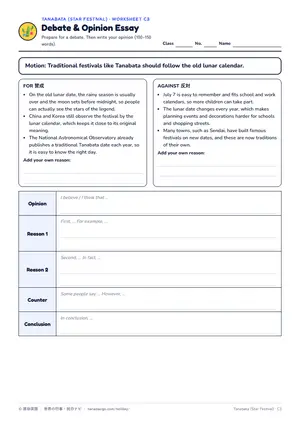
ディスカッション:行事は旧暦?新暦?
🎯 暦の改革と伝統行事の関係について、根拠を挙げて意見を述べる。
- advanced を読み、1873年の改暦が七夕に与えた影響を整理する。
- 7月7日・月遅れ・伝統的七夕のそれぞれの長所と短所を挙げる。
- グループで1つの立場を選び、3分で主張する。
- 最後に150語の意見文を書く。
詳細版を開く(時間配分・Teacher Talk・板書)
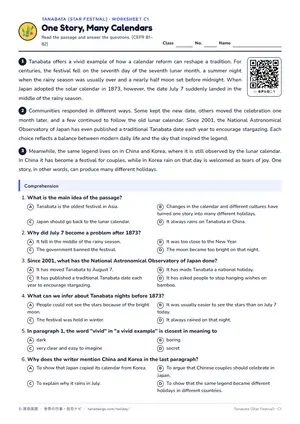
「七夕の夜、星は見えたことがある?」と聞く。7月7日は梅雨のさなかで星が見えにくいことを確認し、発展英文の第1段落から、もともとは旧暦7月7日で梅雨明けの夏の夜だったことを読み取らせる。
🗣️ Have you ever seen the stars on Tanabata night? / July 7 is in the middle of the rainy season. / What was the festival like before 1873?
発展英文の第1・第2段落を読み、1873年の改暦の影響と、各地の対応(新しい日付のまま・1か月遅らせる・旧暦を続ける)を整理させる。2001年から国立天文台が伝統的七夕の日を発表していることも確認する。
🗣️ What happened in 1873? / How did communities respond? / Why does the observatory publish a traditional Tanabata date?
グループで、7月7日・月遅れ・伝統的七夕のそれぞれの長所と短所を表に挙げさせる(例:7月7日は覚えやすいが雨が多い、伝統的七夕は星が見やすいが毎年日付が変わる)。
🗣️ List the pros and cons of each date. / July 7 is easy to remember, but it often rains. / What about the traditional date?
グループで1つの立場(7月7日/月遅れ/伝統的七夕)を選び、3分で主張させる。ほかのグループは主張のあとに質問を1つする。
🗣️ Choose one date for your group. / You have three minutes to make your case. / Other groups, ask one question.
議論をふまえ、Should old festivals follow the old calendar or the modern calendar? について150語の意見文を書かせる。8分で書き始め、残りは課題にする。
🗣️ Should old festivals follow the old calendar or the modern calendar? / Write about 150 words. / Use Tanabata as your main example.
One Story, Many Calendars
before 1873:7th day of the 7th lunar month(usually after the rainy season, a nearly half moon sets before midnight)
1873:solar calendar → July 7 in the rainy season

① July 7(new date)
② one month later(August, Sendai Aug. 6–8)
③ traditional date(lunar;2026 = August 19)← NAOJ since 2001

pros / cons

Q. Old calendar or modern calendar?