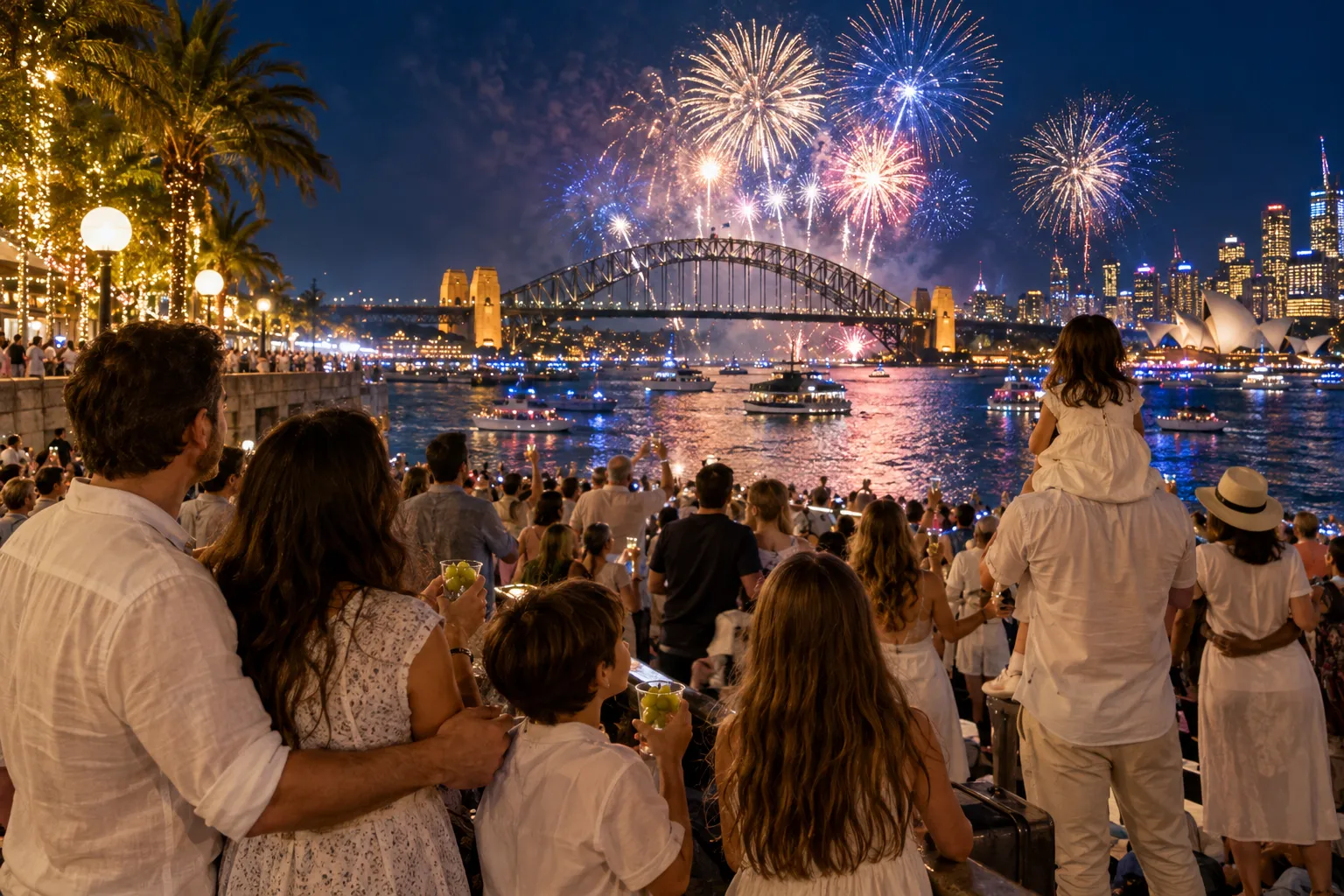
New Year's Eve
大みそか(世界のカウントダウン)の英語の授業アイデアとワークシート
印刷してすぐ使えるワークシート(PDF・Word・解答つき)と、授業の手順書。
🖨️Worksheetsワークシート(無料・A4)
① 「中身を見る・印刷」で全ページを確認 → ② そのページ上の 🖨️ 印刷する でそのまま印刷できます。A4・無料。
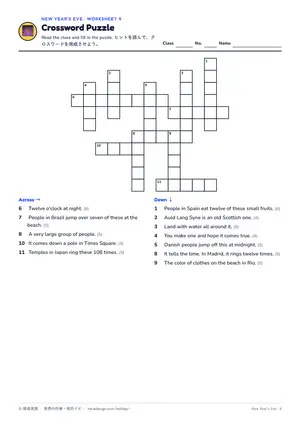
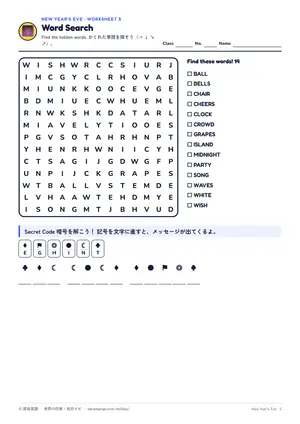
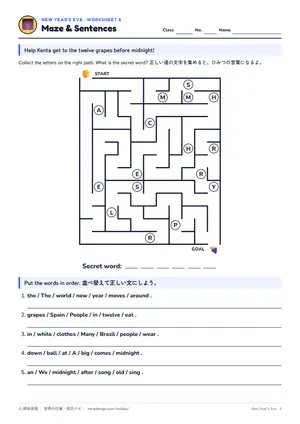
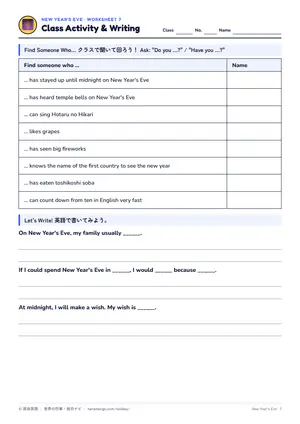
🍎Lesson Ideas大みそか(世界のカウントダウン)を使った英語の授業アイデア
時差リレー・カウントダウン
🎯 世界地図と時差を使い、国名と時刻の英語表現に慣れる。
- キリバス・シドニー・東京・マドリード・リオ・ニューヨーク・アメリカ領サモアのカードを配る。
- グループで「新年を迎える順」に並べかえ、地図に貼る。
- 日本が真夜中のとき各地は何時かを It's ~ p.m. in ~. の形で言い合う。
- 最後に全員で、各都市の順に Happy New Year! をリレーで言っていく。
詳細版を開く(時間配分・Teacher Talk・板書)
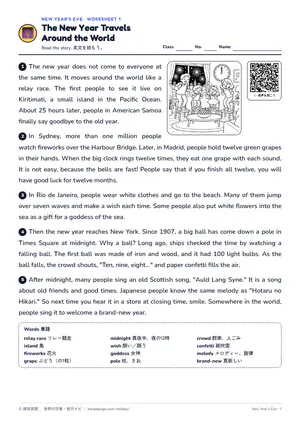
「新年は世界中で同時に来る?」と聞き、英語ページ本文の第1段落を音声で聞かせる。relay race・Kiritimati・American Samoa・About 25 hours later を聞き取らせ、新年が「リレー」のように地球を回ることを確認する。
🗣️ Does the new year come to everyone at the same time? / Listen to the story. Where does the new year start? / Yes, on Kiritimati, a small island in the Pacific. / About 25 hours later, American Samoa says goodbye to the old year.
4人グループに都市カード7枚を配り、新年を迎える順に並べかえさせる。並べたら代表者が黒板の地図に貼る。答えはキリティマティ→シドニー→東京→マドリード→リオ→ニューヨーク→アメリカ領サモア。東から西へ進むことに気づかせる。
🗣️ Put the seven cities in order. Which city sees the new year first? / Talk in English if you can. I think Sydney is first. No, I think ... / Now come and put your cards on the map. / Look. The new year moves from east to west.
カードを裏返させ、「日本が1月1日の0時のとき、各地は何時?」を確かめる。It's 5 a.m. in Kiritimati. / It's 10 a.m. in New York. の型で、ペアで交互に言わせる。ニューヨークやマドリードではまだ12月31日の昼間であることに注目させる。
🗣️ It's midnight in Tokyo. What time is it in New York? / It's 10 a.m. in New York. It's still December 31 there. / Take turns with your partner. It's ... in ... / Which cities are still in the old year?
7都市の担当を決め、キリティマティから順に Happy New Year from Kiritimati! とリレーで言っていく。最後のアメリカ領サモアの担当で全員が拍手して終わる。
🗣️ Let's do a New Year relay. Start with Kiritimati. / Say: Happy New Year from Sydney! / Last one, American Samoa. Everybody, clap!
The new year moves like a relay race. → east to west

日本が 1月1日 0:00 のとき
① Kiritimati(Kiribati)5 a.m. Jan 1
② Sydney 2 a.m. Jan 1
③ Tokyo 0:00(midnight)Jan 1
④ Madrid 4 p.m. Dec 31
⑤ Rio de Janeiro 12 p.m.(noon)Dec 31
⑥ New York 10 a.m. Dec 31
⑦ American Samoa 4 a.m. Dec 31

It's __ a.m. / p.m. in __.
12粒のぶどうチャレンジ(スピーキング版)
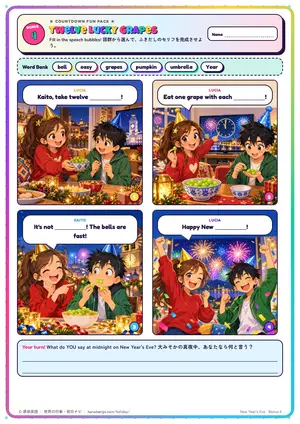
🎯 鐘の音に合わせて12か月の名前を言い、月名を楽しく覚える。
- スペインの12粒のぶどうの習慣を写真で紹介する。
- 鐘の音(約3秒ごとの手拍子でも可)に合わせて January から December までを1つずつ言う。
- 言えた月の数だけぶどうのカードをもらう。
- 最後に、いちばん好きな月を My favorite month is ~. で発表する。
詳細版を開く(時間配分・Teacher Talk・板書)
ぶどうの写真を見せ、「スペインでは大みそかの真夜中、時計の鐘が12回鳴るあいだに、鐘1回ごとにぶどうを1粒食べる」と紹介する。12粒は12か月を表し、全部食べると1年じゅう幸運になると言われていることを伝える。
🗣️ Look at these grapes. How many are there? / Yes, twelve! In Spain, people eat one grape with each bell at midnight. / One grape is one month. People say that if you eat all twelve, you will be lucky all year.
黒板に月名カードを順にはり、全員で January から December までゆっくり2回言う。次に先生の手拍子(約3秒ごと)に合わせて1つずつ言う練習をする。
🗣️ Let's say the months together. January, February, March ... / Now with my clap. One clap, one month. / Good! Let's try a little faster.
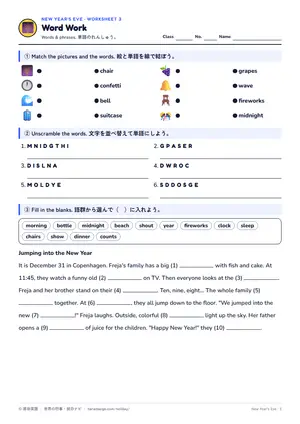
月名カードを裏返し、鐘の音(または手拍子)に合わせて1人で、またはペアで12か月を言うチャレンジをする。言えた月の数だけぶどうのカードを取らせる。2回チャレンジしてよい。
🗣️ Now I will hide the cards. Can you say all twelve months? / Listen to the bells. Ready? Go! / How many grapes did you get? Twelve? Great job! / You can try one more time.
My favorite month is 〜. を板書し、何人かに好きな月を発表させる。言えたら Why? と聞き、Because of my birthday. など一言で答えられた子をほめる。
🗣️ What is your favorite month? / My favorite month is December. Because of Christmas! / Who wants to try?
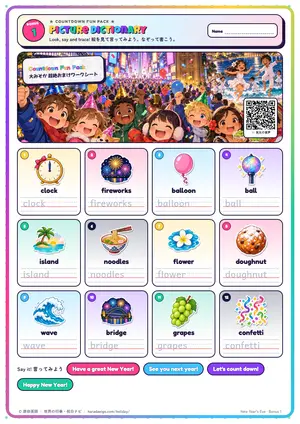
🍇 Spain:12 grapes, 12 bells, 12 months
One grape is one month.

January February March April
May June July August
September October November December

My favorite month is __.
世界の年越し風習・ナゾ解きカード
🎯 英文を読んで、どの国の風習かを推理する。
- 「People jump off chairs at midnight.」など、国名を伏せた英文カードを10枚用意する。
- グループで読み、国名カード(スペイン・デンマーク・ブラジル・フィリピンなど)と結びつける。
- 答え合わせで、なぜその行動が幸運を呼ぶとされるのか日本語で考える。
- 日本の年越しを1文の英語カードにして、ほかのグループにクイズを出す。
詳細版を開く(時間配分・Teacher Talk・板書)
1枚目のカード People jump off chairs at midnight. を読み上げ、動作をやって見せる(いすに乗って飛びおりるまねだけ)。「これはどこの国?」と聞き、予想を出させる。正解(デンマーク)は言わずに、活動につなげる。
🗣️ Listen. People jump off chairs at midnight. / Which country is this? Any ideas? / Today, you are detectives. Read the cards and find the country.
グループに英文カード10枚と国名カード10枚を配り、結びつけさせる。辞書は使ってよい。ヒントとして「white と seven waves はブラジルの海岸」「Times Square はニューヨーク」などのキーワードに注目するよう声をかける。
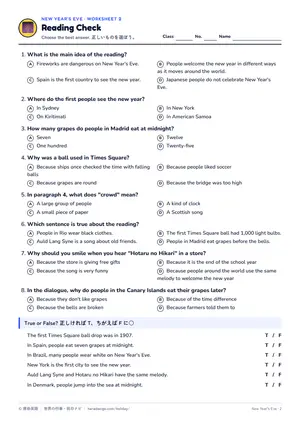
🗣️ Read each card and match it with a country. / Look for key words. Times Square is in New York. / Which country is in summer in December? / You have eight minutes. Work together.
答え合わせをする。1枚ずつ正解を示し、「なぜこの行動が幸運を呼ぶとされる?」を日本語で考えさせる(スーツケース→旅行に行けるように、ジャンプ→背がのびるように、人形を燃やす→悪いことを灰にする、など)。
🗣️ Card one. Chairs. Which country? / That's right, Denmark. They jump into the new year. / Why do people walk with a suitcase in Chile? They hope to travel. / Why do children in the Philippines jump?
白紙のカードに、国名を伏せて日本の年越しを1文の英語で書かせる(People listen to temple bells 108 times. / People eat long noodles. など)。ほかのグループにクイズとして出し、当ててもらう。
🗣️ Now make a card about Japan. Don't write the country. / For example: People listen to temple bells 108 times. / Give your card to another group. Can they guess?
Which country?

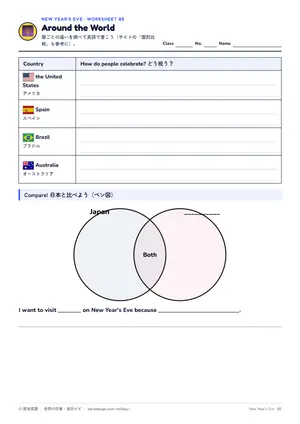
chairs → Denmark(新年へジャンプ)
12 grapes, 12 bells → Spain(12か月の幸運)
white, seven waves → Brazil(願いごと)
suitcase → Chile(旅行に行けるように)
jump to grow taller → the Philippines
burn dolls → Ecuador(悪いことを灰に)
ball drop → the United States
old comedy show → Germany
summer fireworks → Australia
Kremlin clock → Russia

Japan:People listen to temple bells 108 times.
「蛍の光」と「オールド・ラング・サイン」聞きくらべ
🎯 同じメロディーの歌詞を比べ、歌の意味と文化の受けとめ方のちがいを考える。
- 両方の曲を聞かせ、同じメロディーであることに気づかせる。
- Auld Lang Syne のコーラス部分のやさしい英訳を読み、何について歌っているか話し合う。
- 日本では卒業・閉店、英語圏では年越しに歌われる理由をグループで考える。
- 「もし自分が新年に歌うなら」という英語の短い歌詞を2行つくる。
詳細版を開く(時間配分・Teacher Talk・板書)
曲名を言わずに Auld Lang Syne を流し、「どこかで聞いたことがある?」と聞く。続けて「蛍の光」を流し、同じメロディーであることに気づかせる。店の閉店で流れる曲(「別れのワルツ」)は、これを3拍子にしたものだと補足する。
🗣️ Listen to this song. Have you heard it before? / Where did you hear it? At a graduation? In a store? / Now listen to the Japanese song. Same melody, right?
Auld Lang Syne のコーラスの原詞とやさしい英語訳を配る。auld lang syne はスコットランドの言葉で「なつかしい昔」、1788年に詩人ロバート・バーンズが古い歌を書きとめたことを伝える。ペアで「何について歌っているか」を英語で1文にまとめさせる。
🗣️ Auld lang syne is Scottish. It means the good old days. / In 1788, the poet Robert Burns wrote down an old song. / Read the easy version. What is the song about? / Make one sentence with your partner. The song is about ...
「蛍の光」の歌詞の内容(苦学して学んだ日々と別れ)と比べさせる。日本では卒業式・閉店、英語圏では年越しに歌われる理由をグループで考え、英語で2〜3文にまとめさせる。北アメリカではガイ・ロンバードの楽団が何十年も大みそかに演奏してきたことも紹介する。
🗣️ In Japan, when do people sing this song? / In English-speaking countries, people sing it at midnight on New Year's Eve. / Why are the situations different? Discuss in your group. / Both songs say goodbye to something. What do they say goodbye to?
「もし自分が新年に歌うなら」という英語の短い歌詞を2行つくらせる。韻をふむとよいことを例で示し、何人かにメロディーに合わせて読んでもらう。
🗣️ Now write two lines for a New Year song. / Try to rhyme. Old friends, new year, no more fear. / Who wants to read or sing your lines?
同じメロディー
Auld Lang Syne(Scotland, Robert Burns, 1788)
= the good old days(なつかしい昔)
→ 昔の友だちと、もう一度乾杯しよう
英語圏:New Year's Eve(after midnight)

蛍の光(1881 小学唱歌集)
→ 卒業式/閉店(別れのワルツ=3拍子)

The song is about __.
People sing it when __.
時間は誰のもの?日付変更線ディスカッション
🎯 advanced の英文をもとに、時間帯や暦の決定が経済・政治とどう結びつくかを議論する。
- advanced「The Race to Be First」を読み、キリバスとサモアの理由を表にまとめる。
- ほかの例(夏時間の導入・廃止、国内の時間帯の統一など)を調べて1つ持ち寄る。
- 「時間帯は経済のために変えてよい」に賛成・反対で意見を出し合う。
- 日本が時間帯を変えるとしたら何が起きるか、英語で3文まとめる。
詳細版を開く(時間配分・Teacher Talk・板書)
「1994年12月31日が来なかった島々がある」と言い、どこか予想させる。地図で日付変更線とキリバスの位置を確かめ、本文を読む目的を示す。
🗣️ On some islands, December 31, 1994 never happened. Where were they? / Look at the map. Here is the International Date Line. / Kiribati was cut in two by this line. What problems could that cause?
本文を個人で読ませ、キリバス(1994年)とサモア(2011年)の例を表にまとめさせる。ペアで答え合わせをし、キリバスの「価値ある副産物」(ミレニアム島)と、トンガ・ニュージーランド・フィジーが抗議した理由を確認する。
🗣️ Read the passage and fill in the table. / Why did Kiribati move the date line? Why did Samoa? / What was the valuable side effect for Kiribati? / Why did Tonga, New Zealand, and Fiji protest?
グループで、本文以外の例(夏時間の導入・廃止、国内の時間帯の統一など)を1つ調べさせ、だれが・なぜ決めたかを英語で2〜3文にまとめさせる。グループごとに30秒で共有する。
🗣️ Find one more example. Daylight saving time is one idea. / Who made the decision, and why? / Each group has thirty seconds to share.
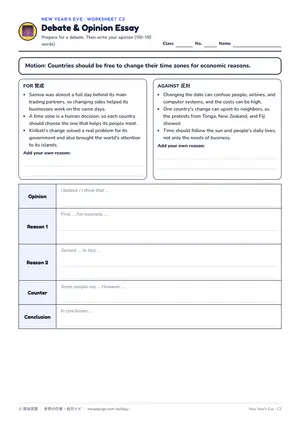
論題「Countries should be free to change their time zones for economic reasons.」で賛成・反対に分かれて意見を出し合う。立論(各2分)→ 自由討論(6分)→ 最終意見(各1分)。残りで先生が論点を整理する。本文の具体例を引用するよう促す。
🗣️ Here is the motion. Countries should be free to change their time zones for economic reasons. / Use examples from the passage. Samoa is a good one. / Who loses when a country changes its time zone? / Final statements, one minute each.
「もし日本が時間帯を変えるとしたら何が起きるか」を英語で3文にまとめさせる。本文最後の文 even midnight is, in part, a human invention を読み、筆者の主張に賛成かどうかを1文加えさせて提出させる。
🗣️ What would happen if Japan changed its time zone? Write three sentences. / Think about business, schools, and TV programs. / Read the last sentence again. Do you agree that midnight is a human invention?
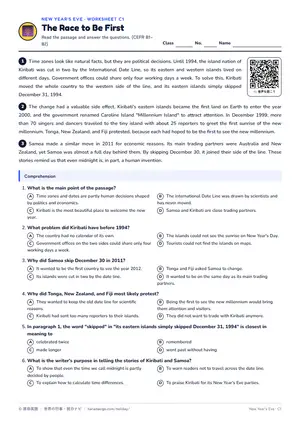
The Race to Be First

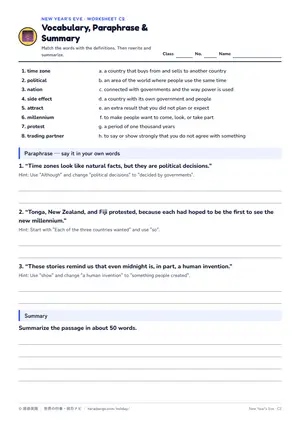
国 / 年 / 何をした / 理由 / 結果
Kiribati / 1994 / east islands skipped Dec 31 / offices shared only 4 working days a week / first land to enter 2000 → Millennium Island
Samoa / 2011 / skipped Dec 30 / trade with Australia & New Zealand / joined their side of the line

Tonga, New Zealand, Fiji → protested(1番になりたかった)

Motion: Countries should be free to change their time zones for economic reasons.