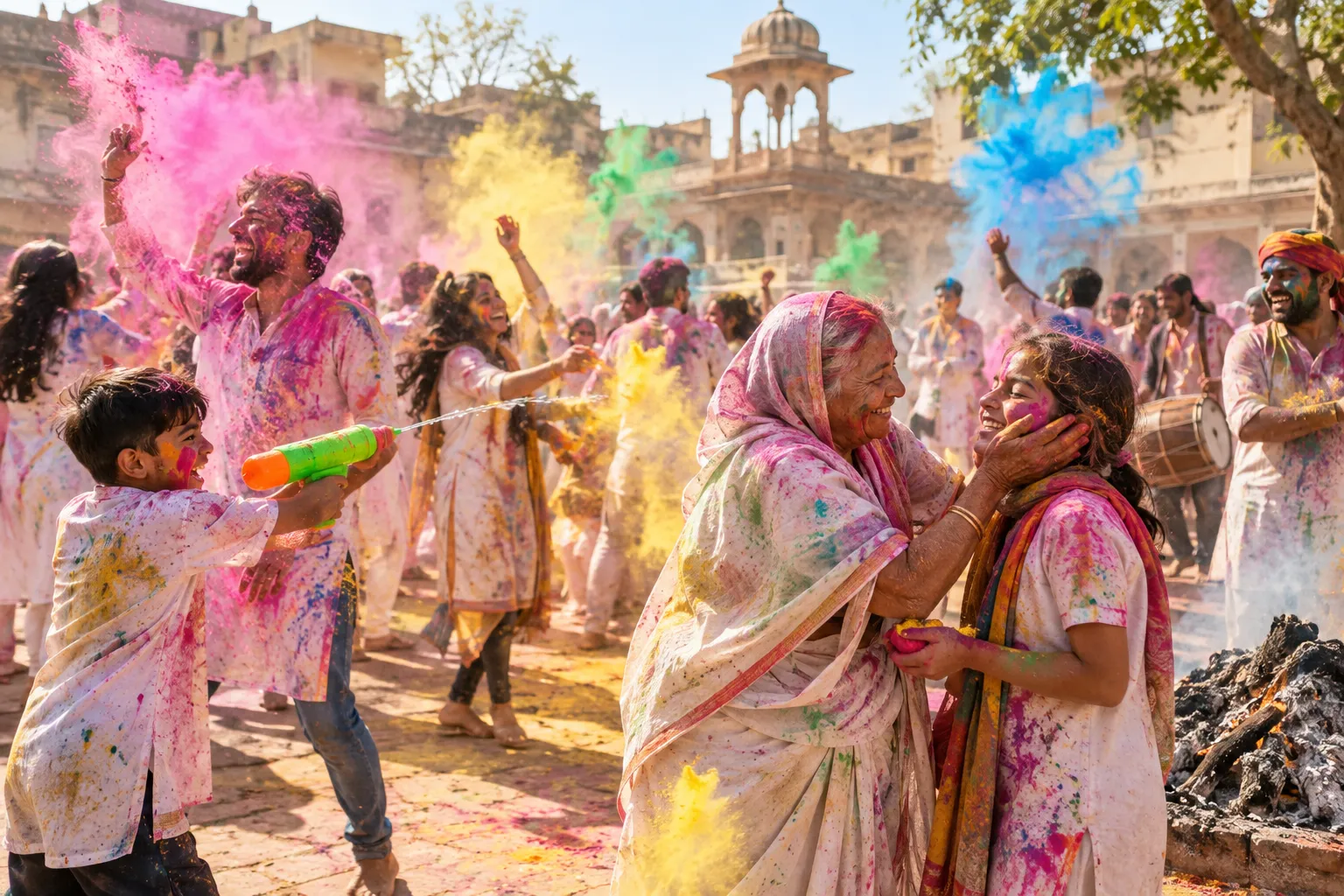
Holi
ホーリー(色の祭り)の英語の授業アイデアとワークシート
印刷してすぐ使えるワークシート(PDF・Word・解答つき)と、授業の手順書。
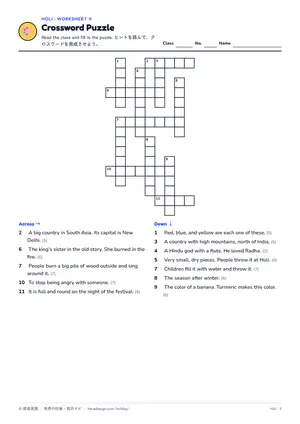
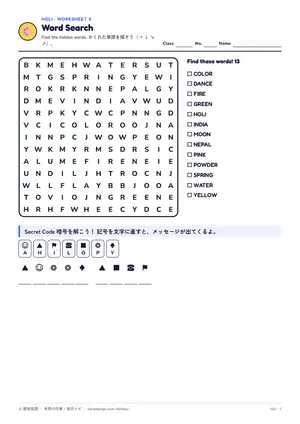
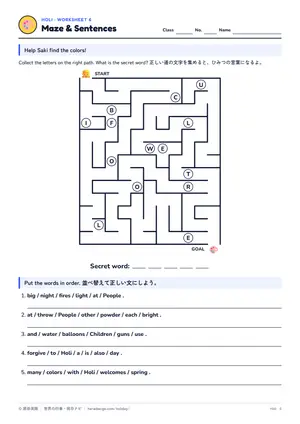
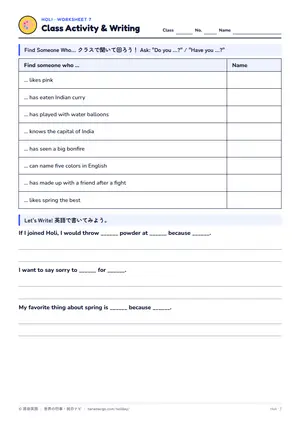
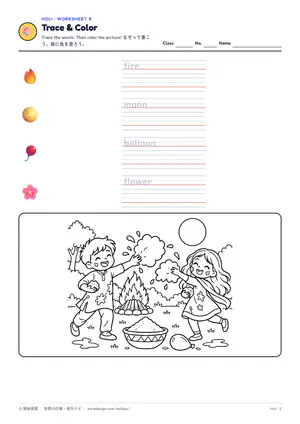
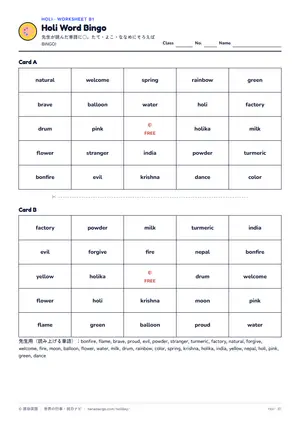
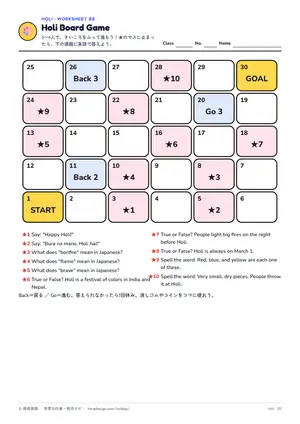
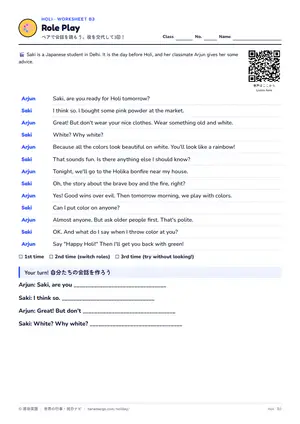
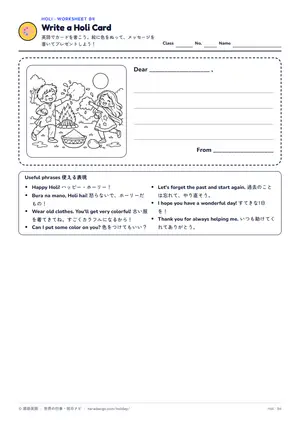
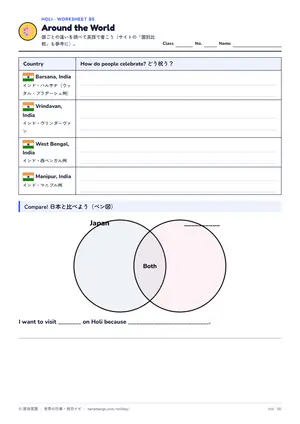
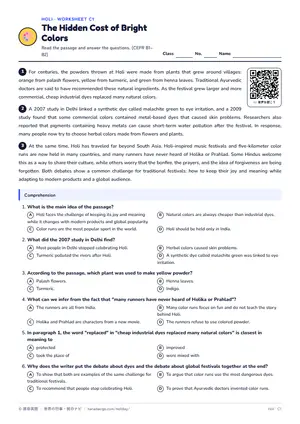
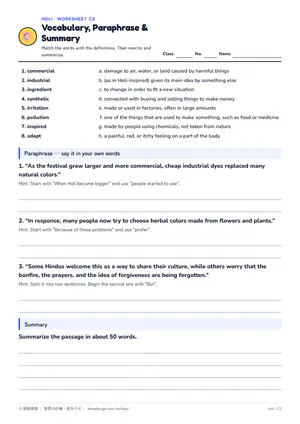
🖨️Worksheetsワークシート(無料・A4)
① 「中身を見る・印刷」で全ページを確認 → ② そのページ上の 🖨️ 印刷する でそのまま印刷できます。A4・無料。
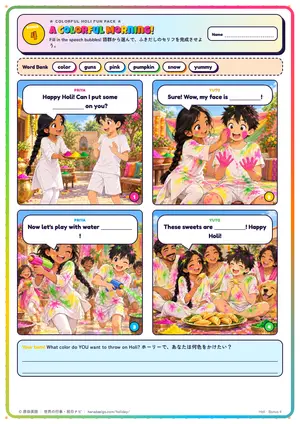
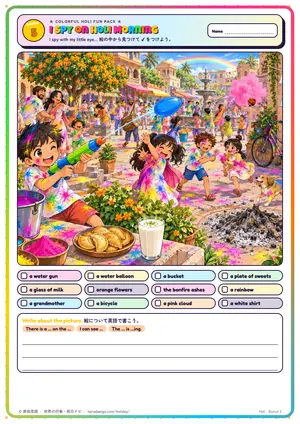
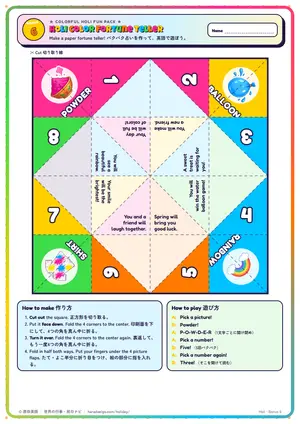
🍎Lesson Ideasホーリー(色の祭り)を使った英語の授業アイデア
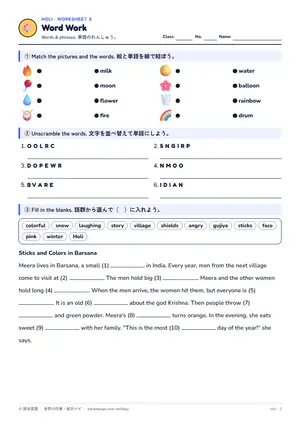
色と植物マッチング
🎯 色の英語と植物の名前を結びつけ、昔のホーリーの色の作り方を知る。
- red, orange, yellow, green, blue, pink の色カードを確認する。
- パラーシャの花・ターメリック・ヘンナの葉・藍・ビーツの写真カードを見せる。
- 班で「どの植物からどの色ができるか」を予想して線で結ぶ。
- 答え合わせのあと、Yellow comes from turmeric. と英語で言う。
詳細版を開く(時間配分・Teacher Talk・板書)
ホーリーの写真を見せ、「インドの春のお祭り。色の粉をかけ合う」と紹介する。写真の中の色を What color is this? と聞きながら、色カードを黒板に1枚ずつはり、全員で発音する。
🗣️ Look at this picture. This is Holi, a spring festival in India. / People throw color powder at each other! / What color is this? Yes, pink! And this one?
「昔、この色の粉は植物から作っていた」と伝え、植物の写真カードを見せる。名前を紹介し、班でワークシートの色と植物を線で結ばせる(予想でよい)。ターメリックの実物があれば、においをかがせて「カレーの色」に気づかせる。
🗣️ Long ago, all the colors came from plants. / This is turmeric. Smell it. Curry! / Which color comes from which plant? Guess with your group.
答え合わせをする。先生が Yellow comes from turmeric. と言い、全員でくり返す。パラーシャの花は「森の炎」と呼ばれることも紹介する。答えを確かめながら、黒板の色カードの下に植物の写真をはっていく。
🗣️ Let's check. Yellow comes from turmeric. / Orange and red come from palash flowers. People call the palash tree the flame of the forest. / Green comes from henna leaves. Blue comes from indigo. / Pink comes from beets. Did you get it right?
黒板の写真を1つ指さし、子どもたちに〜 comes from 〜. で言わせる。ペアで1人が色を言い、もう1人が植物を答えるクイズをして終わる。
🗣️ I point. You say the sentence. / Now quiz your partner. Say a color. Your partner says the plant. / Green? Green comes from henna leaves!
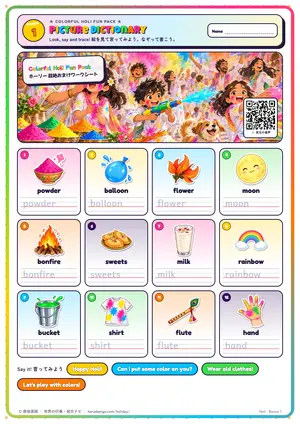
Holi colors 🌈

🔴🟠 red / orange ← palash flowers(flame of the forest)
🟡 yellow ← turmeric
🟢 green ← henna leaves
🔵 blue ← indigo
🩷 pink ← beets

__ comes from __.
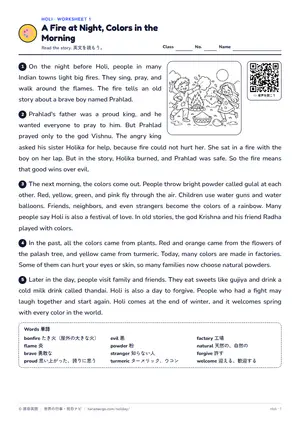
プラフラーダの紙芝居
🎯 過去形を使って物語を語り直し、行事の意味を英語で説明できる。
- 本文第2段落を読み、登場人物(king, Prahlad, Holika, Vishnu)を確認する。
- 班で4〜5枚の絵を描き、1枚に1文ずつ英語のセリフをつける。
- 紙芝居としてクラスで発表する。
- 最後に So the fire means ___. の文を全員で完成させる。
詳細版を開く(時間配分・Teacher Talk・板書)
英語ページ本文の第1・第2段落を音声で聞かせ、印刷を配る。登場人物カードを黒板にはり、king・Prahlad・Holika・Vishnu がそれぞれだれかを確かめる。物語のあらすじを、場面ごとに短く日本語でもまとめる。
🗣️ Listen to the story. Who are the people in it? / The king is Prahlad's father. He was very proud. / Holika is the king's sister. Fire could not hurt her. / Vishnu is a god. Prahlad prayed only to him.
班で物語を4〜5場面に分け、1枚に1場面の絵を描かせる。各場面に、本文を参考にした英語の文を1文ずつつけさせる(例:The angry king asked Holika for help.)。過去形の動詞に注意させる。
🗣️ Make four or five pictures. One scene on each paper. / Write one sentence for each picture. / Use the past form. The king asked, Holika sat, Prahlad was safe. / You have ten minutes.
各班が紙芝居としてクラスで発表する(1班1分半ほど)。読み手を交代しながら、絵を見せて英文を読む。聞き手は、どの場面がいちばんわかりやすかったかを考えながら聞く。
🗣️ Group one, please start your story. / Show the picture, then read your sentence. / Big voices, please. Everyone, listen.
「なぜホリカは燃えて、プラフラーダは無事だった?」と問い、So the fire means 〜. の文を全員で完成させる(good wins over evil)。日本の節分やどんど焼きとの共通点にもふれる。
🗣️ Holika burned, but Prahlad was safe. Why? / So the fire means ... good wins over evil! / Let's say it together.
A Fire at Night
king(Prahlad's father):proud → "Pray to me!"
Prahlad:prayed only to Vishnu
Holika(the king's sister):fire could not hurt her
→ She sat in a fire with Prahlad on her lap.
→ Holika burned. Prahlad was safe.

So the fire means __ __ over __.
(good wins over evil)

ask → asked / sit → sat / burn → burned / is → was
インド各地のホーリー・ジグソー読解
🎯 地域ごとのちがいを英語で読み取り、まとめて伝え合う。
- バルサナ・ヴリンダーヴァン・西ベンガル・マニプル・パンジャブの英文カードを1人1枚担当する。
- 同じカードの人どうしで内容を確認する(エキスパート班)。
- 元の班に戻り、自分の地域を英語で1分で説明する。
- 班で「いちばん行ってみたい地域」を決め、理由を英語で発表する。
詳細版を開く(時間配分・Teacher Talk・板書)
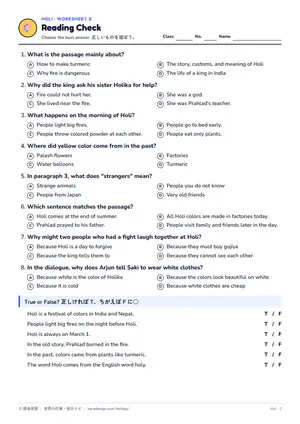
英語ページ本文の第3段落で、普通のホーリー(色粉・水鉄砲・だれにでも色をつける)を確かめる。「でも、インドは広い。場所によって全然違う」と言い、5人の班を作って1人1枚の地域カードを配る。
🗣️ This is a typical Holi morning. Colors, water guns, and friends. / But India is huge. Holi is very different in each region. / Each of you has one region. You will be the expert.
同じ地域カードの人どうしで集まり(エキスパート班)、内容を読み合ってメモシートを完成させる。1分で説明するための原稿を一緒に考えさせ、知らない語を確かめさせる。
🗣️ Find the people with the same card. / Read it together and fill in the memo. / Prepare a one-minute talk. Start with: In Barsana, people ...
元の班に戻り、1人1分ずつ自分の地域を英語で説明する。聞き手はメモシートに要点を書き、1つ質問をする。説明しながら地図にその地域の場所を記入させる。
🗣️ Go back to your home group. / Each person, one minute. Show the place on the map. / Listeners, take notes and ask one question.
班で「いちばん行ってみたい地域」を1つ決め、理由を英語で2〜3文にまとめさせる(We want to go to 〜 because 〜. It is different from 〜.)。
🗣️ Choose one region your group wants to visit. / Give two reasons. Compare it with another region. / We want to go to Vrindavan because ...
各班が理由を発表する。同じ祭りでも地域によって意味や形がちがうことをまとめ、日本の祭りにも同じことがないか問いかけて終わる。
🗣️ Which region did your group choose? Why? / One festival, many different faces. / Is it the same with festivals in Japan?
Holi in different regions
Barsana:Lathmar Holi → women hit men with sticks(laughing)
Vrindavan:flower petals at the temple
West Bengal:Basanta Utsav(since 1923, Tagore)→ spring songs
Manipur:Yaosang → five days, children collect money, dancing under the full moon
Punjab:Hola Mohalla → Sikh warriors, martial arts

In __, people __.
We want to go to __ because __.
天然の色 vs 工場の色:ミニディベート
🎯 健康・環境・費用の観点から、根拠を挙げて英語で意見を述べる。
- advanced の英文を読み、malachite green や pollution などの語を確認する。
- Only natural colors should be used at Holi. について賛成・反対に分かれる。
- 健康・環境・値段・楽しさの4つの観点で理由を準備する。
- ディベートのあと、自分の意見を英語で5文にまとめる。
詳細版を開く(時間配分・Teacher Talk・板書)
advanced の英文の第1・第2段落を読ませ、語句確認シートで malachite green・pollution などを確かめる。昔の色は植物から、今は工場の安い染料が多いこと、2007年と2009年の研究でわかった問題を確認する。
🗣️ Read paragraphs one and two. / Where did the colors come from in the past? / What did the 2007 study in Delhi find? / What happens to the water after the festival?
論題 Only natural colors should be used at Holi. を示し、賛成・反対に分ける。健康・環境・値段・楽しさの4つの観点で理由をメモさせ、それぞれ英語で1文にまとめさせる。値段と楽しさは本文にないので、自分たちで考えてよいと伝える。
🗣️ Here is the motion. Only natural colors should be used at Holi. / Think about health, the environment, cost, and fun. / Write one sentence for each point. / The passage doesn't talk about cost. Use your own ideas.
立論(各2分)→ 作戦タイム(2分)→ 反論(各2分)→ まとめ(各1分)の順でディベートを行う。残りの時間で、聞き手の生徒にどちらが説得力があったかを判定させる。
🗣️ For team, two minutes. Please begin. / Against team, your turn. / Rebuttals. Answer their strongest point. / Judges, which team was more convincing?
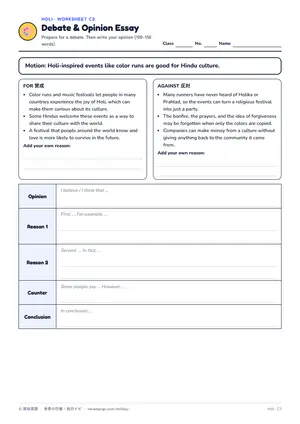
チームの立場とは別に、自分の本当の意見を英語で5文にまとめさせる(意見・理由2つ・反対意見への一言・結論)。何人かに発表してもらう。
🗣️ Now, what do you really think? / Write five sentences. Opinion, two reasons, the other side, and a conclusion. / Who wants to read?
The Hidden Cost of Bright Colors
昔:plants → orange(palash), yellow(turmeric), green(henna)
今:cheap industrial dyes
2007 Delhi:malachite green → eye irritation
2009:metal-based dyes → skin problems
heavy metals → short-term water pollution
→ herbal colors

Motion:Only natural colors should be used at Holi.
観点:health / environment / cost / fun
祭りのグローバル化を考える
🎯 宗教行事が商業イベントとして世界に広がる現象を、複数の事例から分析する。
- ホーリーとカラーラン、ハロウィン、クリスマスなどの例を挙げる。
- 班ごとに「元の意味」「広がった理由」「失われたもの」を表にまとめる。
- When a festival goes global, who benefits? について5分で発表する。
- 英語で250語の小論文を書く。
詳細版を開く(時間配分・Teacher Talk・板書)
色の粉をかけ合うランニングイベントの写真を見せ、「これはどこの、何の祭り?」と聞く。advanced の英文第3段落の many runners have never heard of Holika or Prahlad を示し、今日の問いにつなげる。
🗣️ Look at this photo. Where is this? What is it? / It is a color run. Many runners have never heard of Holika or Prahlad. / Today's question: When a festival goes global, who benefits?
advanced の英文全体を読ませ、第3段落の2つの立場(文化を共有する機会として歓迎/たき火・祈り・許しの意味が忘れられる心配)を整理させる。続けて班ごとに担当の事例(ハロウィン、クリスマスなど)を調べさせる。
🗣️ Read the passage. Find the two views in paragraph three. / Why do some Hindus welcome the global Holi? / What are others worried about? / Now research your festival. Halloween, Christmas, or your own choice.
分析表に「元の意味」「広がった理由」「失われたもの」「得たもの」をまとめさせ、問い(When a festival goes global, who benefits?)への班の答えを決めさせる。企業・観光客・元の信者・地域社会など、利益を得る人と失う人を具体的に挙げさせる。
🗣️ Fill in the table. Original meaning, why it spread, what was lost, what was gained. / Who benefits? Companies? Tourists? The original community? / Who loses something? / Decide your group's answer.
各班が5分で発表する(3班の場合)。ホーリーの例と自分たちの事例を比べて答えさせる。発表ごとに英語の質問を受ける。
🗣️ Group one, five minutes. Compare your festival with Holi. / Any questions? / Is there a way to share a festival without losing its meaning?
本文最後の文 how to keep their joy and meaning while adapting to modern products and a global audience を読み直し、各班の答えとの関係を確かめる。250語の小論文の構成メモと最初の段落を授業内で書かせ、残りは宿題にする。
🗣️ Read the last sentence again. Joy and meaning, products and a global audience. / Write a 250-word essay. Use Holi and one more example. / Start now, and finish it at home.
When a festival goes global, who benefits?

Holi:bonfire, prayers, forgiveness → color runs, music festivals
・welcome:a way to share culture
・worry:the bonfire, the prayers, the idea of forgiveness are forgotten

祭り / 元の意味 / 広がった理由 / 失われたもの / 得たもの
Holi / Halloween / Christmas / ...

Challenge:keep joy and meaning ⇔ adapt to modern products and a global audience