Hanukkah
ハヌカの英語の授業アイデアとワークシート
印刷してすぐ使えるワークシート(PDF・Word・解答つき)と、授業の手順書。
🖨️Worksheetsワークシート(無料・A4)
① 「中身を見る・印刷」で全ページを確認 → ② そのページ上の 🖨️ 印刷する でそのまま印刷できます。A4・無料。
🍎Lesson Ideasハヌカを使った英語の授業アイデア
ドレイドルで確率と英語の指示
🎯 Take all / Take half / Put in / Nothing の英語の指示を使いながら遊び、確率も体験する。
- 紙で4面のコマを作り、各面に NOTHING / ALL / HALF / PUT IN と書く(もとのドイツ語版と同じ意味だと紹介)。
- 1人10個のおはじきで、4人1組で遊ぶ。出た面を英語で言ってから動く。
- 20回回して、各面が何回出たかを記録し、4分の1に近づくかを確かめる。
- ヘブライ文字の意味が「大きな奇跡がそこで起きた」に変わった話を紹介し、感想を一言英語で書く。
詳細版を開く(時間配分・Teacher Talk・板書)
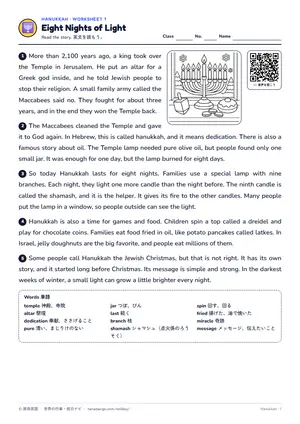
本物のドレイドルの写真を見せ、本文の第4段落を音声で聞かせる。子どもたちがチョコレートのコインをかけて遊ぶコマであることを確認する。「もとはドイツ語のゲームで、4つの面は『なし・全部・半分・出す』という意味だった」と紹介する。
🗣️ Look at this top. It's called a dreidel. / Listen. What do children play for? Yes, chocolate coins. / There are four sides. Long ago, they meant nothing, all, half, and put in.
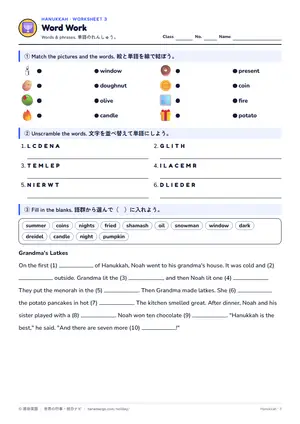
型紙を切って組み立てさせ、各面に NOTHING / ALL / HALF / PUT IN と書かせる。それぞれの面が出たときの動きを英語で確認する(Nothing=何もしない、All=まん中を全部取る、Half=半分取る、Put in=1つ出す)。
🗣️ Cut out the dreidel and write the four words. / Nothing means you do nothing. / All means take all. Half means take half. / Put in means put one in the middle.
4人1組でゲームをする。最初に全員が1個ずつまん中に出す。回して出た面を必ず英語で言ってから動くルールにする。記録係を1人決め、20回分を記録表に正の字で書かせる。
🗣️ Everyone, put one counter in the middle. / Spin the dreidel. Say the word first, then move. / The recorder writes the result every time. / Stop after twenty spins.
各班の記録を黒板に集め、クラス全体で合計する。各面が出る割合は4分の1(20回なら5回ずつ)に近づくかを確かめる。最後に、ユダヤ教徒がこの4面をヘブライ文字に置きかえ、あとから「大きな奇跡がそこで起きた」という意味をあてはめた話をして、感想を英語で1文書かせる。
🗣️ Let's add up all the groups. Which side came most? / Each side should come about one time in four. / Later, the letters got a new meaning: A great miracle happened there. / Write one sentence. I think the dreidel is ...
dreidel(4面のコマ)
NOTHING → do nothing
ALL → take all
HALF → take half
PUT IN → put one in

20 spins:1つの面はおよそ 20 × 1/4 = 5回?
班1 / 班2 / 班3 … → クラス合計

もとはドイツ語のゲーム N・G・H・S
→ ヘブライ文字に置きかえ → A great miracle happened there.(イスラエルでは here)
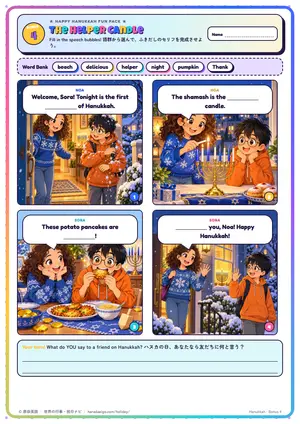
ろうそくは全部で何本?英語で算数パズル
🎯 数字と one more の表現に慣れ、ハヌカの仕組みを理解する。
- 燭台(しょくだい)の絵を見せ、Night 1: one candle. Night 2: two candles. と英語で言っていく。
- How many candles on Night 5? と問い、指で答えさせる。
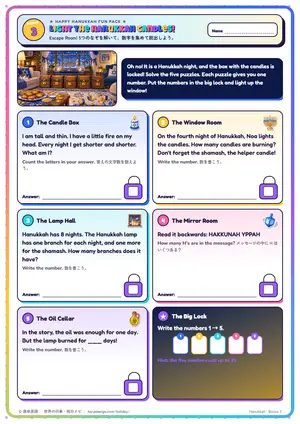
- シャマシュも入れると8日間で何本かをグループで計算する(答え44本)。
- 答えを英語で発表する:We need forty-four candles!
詳細版を開く(時間配分・Teacher Talk・板書)
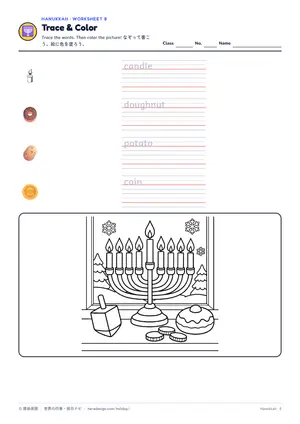
燭台の絵を見せ、枝の数を英語で数えさせる(nine)。「ハヌカは8日間の光のお祭りで、まん中の1本はほかのろうそくに火をつけるお手伝い係(シャマシュ)」と紹介する。
🗣️ Look at this lamp. How many branches? Let's count. / Nine! This is for Hanukkah, the Festival of Lights. / This one is the shamash. It is the helper.
ろうそくカードを1本ずつはりながら、Night 1: one candle. Night 2: two candles. と英語で言っていく。3日目からは子どもたちに言わせ、Night 5 のところで止めて How many candles on Night 5? と聞き、指で答えさせる。
🗣️ Night 1: one candle. Night 2: two candles. / Every night, one more candle. / How many candles on Night 5? Show me with your fingers.
グループで「8日間で全部で何本いる?」を考えさせる。まず8日目までの合計(1+2+…+8=36本)を出させ、次に「毎晩シャマシュも1本使う」ことを伝えて、もう一度計算させる。
🗣️ Eight nights. How many candles do we need in all? / Work with your group. / Don't forget the shamash. We need one every night, too!
答えを英語で発表させる。36本にシャマシュ8本を足して44本になることを、黒板で確かめる。全員で We need forty-four candles! と言って終わる。
🗣️ What is your answer? Say it in English. / Thirty-six plus eight. That makes forty-four! / Everyone, say it together. We need forty-four candles!
Hanukkah 🕎  8 nights
Night 1:one candle
Night 2:two candles
Night 3:three candles
…
Night 8:eight candles

1+2+3+4+5+6+7+8 = 36
shamash(お手伝い係)× 8 nights = 8
36 + 8 = 44
We need forty-four candles!
神話?ホント?ハヌカ・ファクトチェック
🎯 俗説と史料にもとづく事実を見分け、英語で根拠を説明する。
- 「ドレイドルは勉強を隠すために生まれた」「油の奇跡は最古の記録にある」など4つの文を配る。
- グループで Myth / Fact を予想し、理由を英語で一文書く。
- 本ページの「誤解とホント」や資料で確かめる。
- It is a myth because ... / The oldest record says ... の型で発表する。
詳細版を開く(時間配分・Teacher Talk・板書)
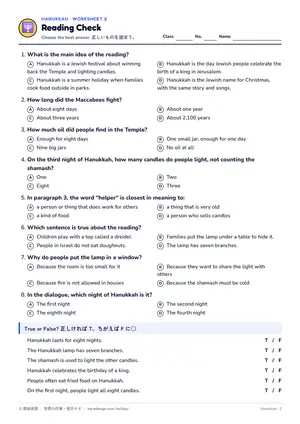
本文の第2段落を音声で聞かせ、1日分の油が8日間燃えたという話を確認する。「この話はいつ書かれたと思う?」と問い、よく知られた話でも記録をたどると意外なことがある、と伝える。
🗣️ Listen to the story about the oil. / One small jar, enough for one day. How long did it burn? / Eight days. But when was this story first written down? Guess.
4人グループに4つの文のカードを配り、Myth か Fact かを予想させる。それぞれに理由を英語で1文書かせる(I think it is a myth because ... / I think it is a fact because ...)。予想の段階では資料を見せない。
🗣️ Read the four sentences. Is each one a myth or a fact? / Talk with your group and decide. / Write one reason for each. I think it is a myth because ...
確認用資料を配り、答えを確かめさせる。A はそれを裏づける記録がなく、19世紀のラビが広めた説明とされること、B は最古の『マカバイ記』になく約600年後のタルムードに初めて出ること、C は仕事をしてよい日であること、D は紀元前164年の出来事にもとづくことを、資料の中から探させる。
🗣️ Now check with the handout. / Find the line that gives the answer. Underline it. / Was your group right? Count your points.
各グループに1つの文を担当させ、It is a myth because ... / It is a fact because ... / The oldest record says ... の型で発表させる。最後に「有名な話ほど、だれがいつ書いたかを確かめる」ことを確認し、ふり返りを1文書かせる。
🗣️ Group one, sentence A. Myth or fact? Why? / Use this pattern. It is a myth because there is no record. / The oldest record says ... Good. That's strong evidence. / Write one thing you learned today.
Myth or Fact?
A. dreidel → hide study from soldiers?  → MYTH(記録なし/19世紀のラビが広めた説明)
B. the oil miracle → the oldest record?  → MYTH(『マカバイ記』になし → 約600年後のタルムード)
C. work during Hanukkah?  → FACT(仕事をしてよい日)
D. 150+ years before Jesus?  → FACT(紀元前164年の神殿奉献)

It is a myth because __.
It is a fact because __.
The oldest record says __.
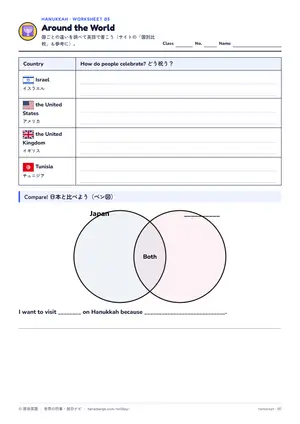
冬の光の行事比べプレゼン
🎯 ハヌカ・ディワリ・クリスマス・聖ルチア祭などを比べ、共通点を英語で伝える。
- 班ごとに1つの行事を担当し、When / Where / Why light? の3点を調べる。
- それぞれの行事の「光の意味」を1枚のカードにまとめる。
- 全体で表にまとめ、共通点を Both A and B use light to ... の形で言う。
- なぜ冬に光の行事が多いのか、クラスで意見を出し合う。
詳細版を開く(時間配分・Teacher Talk・板書)
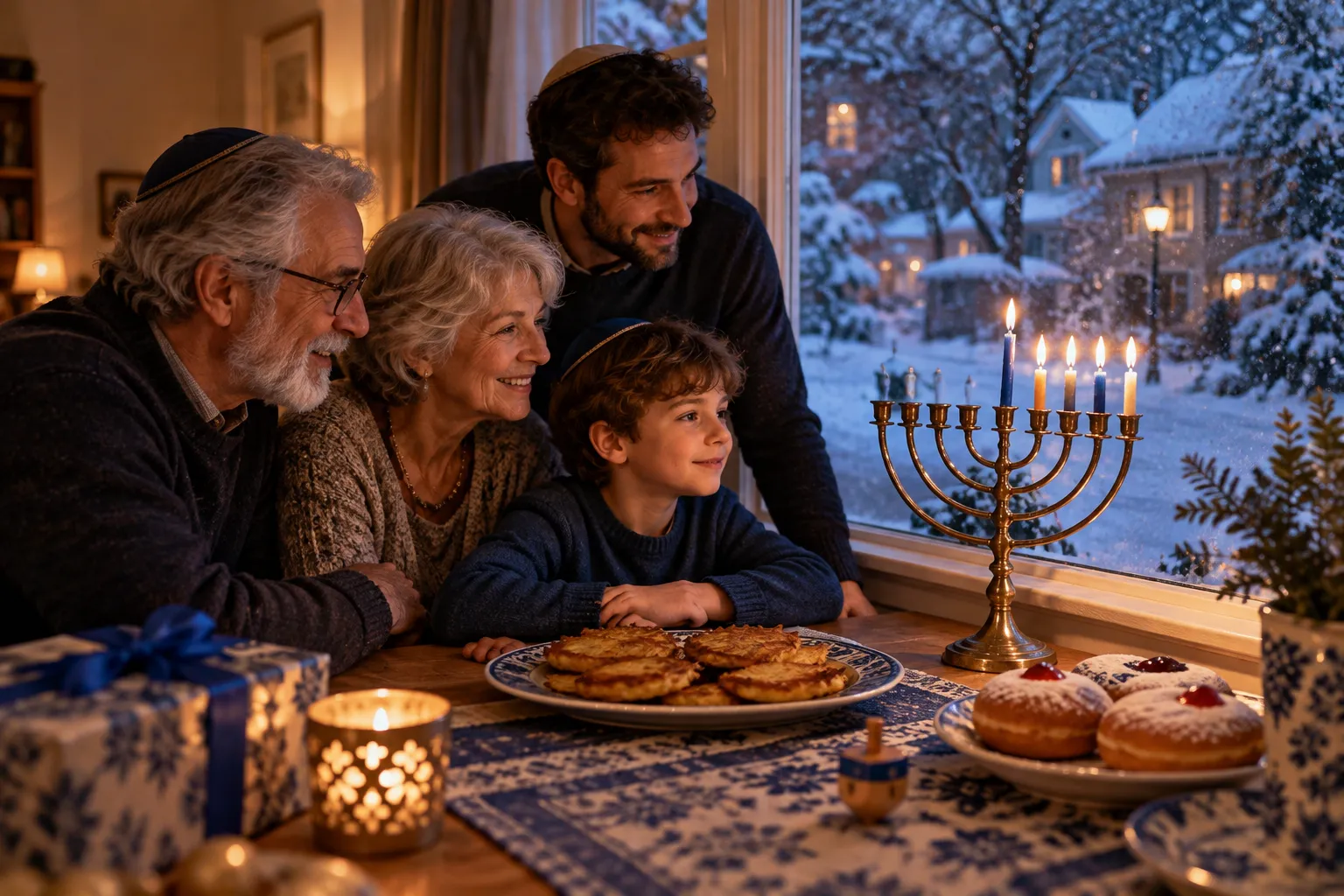
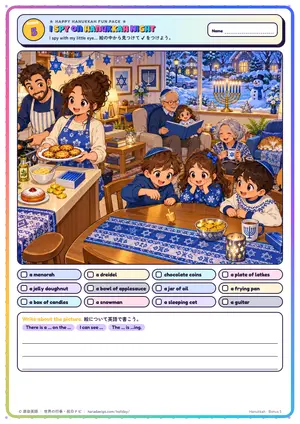
窓辺にハヌカの燭台がともる写真を見せ、本文の第3段落と第5段落を音声で聞かせる。「冬のいちばん暗い時期に、小さな光が毎晩少しずつ明るくなる」というメッセージを確認し、「世界には冬に光を使う行事がほかにもある」と伝える。
🗣️ Look at the candles in the window. Why are they there? / Listen. In the darkest weeks of winter, a small light grows brighter every night. / Many festivals in the world use light. Let's find out why.
班ごとに1つの行事を担当させ、このサイトの各ページから When / Where / Why light? の3点を調べて調べ学習カードにまとめさせる。Why light? は、その行事で光が何を表しているかを1文で書かせる。
🗣️ Each group has one festival. / Find three things. When is it? Where is it? Why do people use light? / Write one sentence for Why light. The light means ...
各班が1分ずつカードを見せて発表し、先生が黒板の比較表に書きこむ。聞く側は自分のワークシートの表を埋める。
🗣️ Group one, please tell us about your festival. / Listeners, fill in your table. / When is it? Where is it? What does the light mean?
表を見て、2つの行事の共通点を Both A and B use light to ... の形で書かせる(例:Both Hanukkah and St. Lucia Day use light in the dark days of winter.)。ペアで見せ合い、何人かに発表させる。
🗣️ Look at the table. What is the same? / Use this pattern. Both A and B use light to ... / Show your sentence to your partner. / Who wants to read?
「なぜ冬に光の行事が多いのか」をクラスで話し合う。日が短いこと、寒い時期に希望を持ちたいことなどの意見を英語の短い語句で板書する。日本の冬の光(街のイルミネーションなど)を思い浮かべさせて終わる。
🗣️ Why are there so many festivals of light in winter? / The days are short. The nights are long and dark. / What about Japan? Do we have winter lights, too?
Festivals of Light in Winter

行事 / When / Where / Why light?
Hanukkah / Nov–Dec, 8 nights / Jewish families / a small light grows brighter
Diwali / __ / __ / __
Christmas / __ / __ / __
St. Lucia Day / __ / __ / __

Both __ and __ use light to __.

Why winter? → short days, long nights, hope
公共の場の宗教シンボルを考えるディベート
🎯 宗教と公共空間の関係について、事例をもとに英語で論じる。
- 1974年以降の公共の燭台点灯と、1989年のアレゲニー郡裁判の概要を読む。
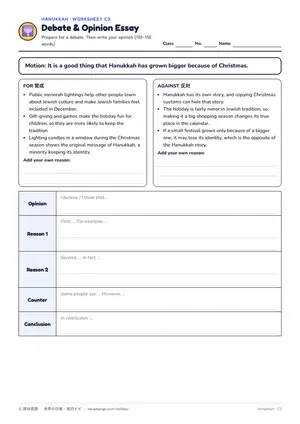
- 肯定側・否定側に分かれ、Religious symbols in public spaces should be allowed. を論題にする。
- 日本の例(駅のクリスマスツリー、門松など)も材料にして立論する。
- ディベート後、自分の考えを150語の英文にまとめる。
詳細版を開く(時間配分・Teacher Talk・板書)
駅のクリスマスツリーと役所の門松の写真を見せ、「これは宗教のシンボル? それとも季節の飾り?」と聞き、ペアで30秒話させる。ハヌカの燭台がアメリカの広場に立つ写真も見せ、今日の論題につなげる。
🗣️ Is this Christmas tree a religious symbol or just a decoration? / What about this kadomatsu at a city office? / In America, there are big Hanukkah lamps in public squares. Is that OK?
advanced の英文第2段落と事例資料、アレゲニー郡裁判の概要を読ませる。裁判で、降誕の場面と燭台の判断がなぜ分かれたのかを、置かれた場所と周りにあったものに注目して班で説明させる。
🗣️ Read paragraph two and the case summary. / In 1989, the court gave two different answers. What were they? / Why was the menorah OK but the nativity scene not? Look at where they stood. / Explain it to your group in English.
論題 Religious symbols in public spaces should be allowed. を示し、肯定側・否定側に分ける。各チームは、本文または裁判の例を1つ、日本の例を1つ必ず根拠に入れて立論メモを作る。
🗣️ Here is the motion. Religious symbols in public spaces should be allowed. / This side is affirmative. That side is negative. / Use one example from the reading and one from Japan. / You have ten minutes to prepare.
立論(各3分)→ 作戦タイム(2分)→ 反論(各3分)→ 最終弁論(各2分)の順で行う。残りの時間で、審判役の学生が勝敗と理由を英語で述べる。先生は、少数派の立場(本文第3段落)にふれた論点が出たら板書して全体に共有する。
🗣️ Affirmative team, you have three minutes. Please begin. / Negative team, please answer their main point. / What about minority groups? How do they feel? / Judges, who won and why?
ディベートの立場から離れて、自分自身の考えを150語の英文で書かせる。最初の段落で立場、次に理由2つと例、最後にまとめ、という構成を示す。書き終わらない分は次回までの課題にする。
🗣️ Now forget your team. What do you really think? / Write about 150 words. Give your opinion, two reasons, and examples. / Finish it for homework if you need more time.
Motion: Religious symbols in public spaces should be allowed.

1974 Philadelphia(Liberty Bell)public menorah lighting
1979 President Carter → White House
1989 Allegheny County case
  nativity scene(alone, inside the courthouse)→ not allowed
  menorah(outside, next to a Christmas tree)→ allowed

日本:駅のクリスマスツリー/役所の門松 → religious? seasonal?

Affirmative ⇔ Negative
Key idea:a small minority that kept its identity