
カノン
Canon in D
パッヘルベル・c. 1680–1706
同じ8つの音が28回!なのに聴くたび胸がいっぱいになる曲。
カノンとジーグ ニ長調 より「カノン」のページへ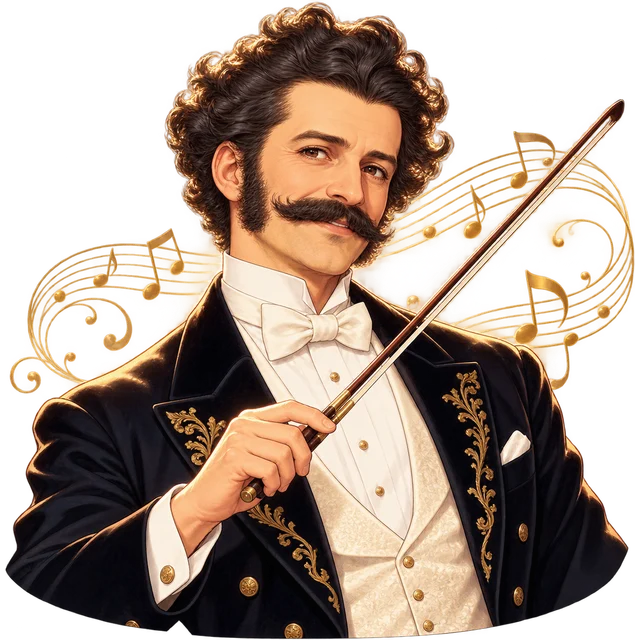
Dance · Op. 437 · 1889
ヨハン・シュトラウス2世(1825–1899)
行進曲のように始まる、ワルツ王の堂々たる晩年の名作。A waltz that begins like a march, fit for two emperors.
WATCH ON YOUTUBE
この曲は、権利の切れた高音質の録音がまだ見つからないため、YouTube の公式チャンネルなどの名演でお楽しみください(ダウンロードはできません)。YouTube でほかの演奏もさがす ↗
 J. Strauss II: Emperor Waltz, Op. 437
Berliner Philharmoniker - Topic(YouTube) YouTube で開く ↗
André Rieu - Emperor Waltz (Kaiser-Walzer)
André Rieu(YouTube) YouTube で開く ↗
Daniel Barenboim & Berliner Philharmoniker – J. Strauss II: Emperor Waltz (Kaiser-Walzer) (excerpt)
Deutsche Grammophon - DG(YouTube) YouTube で開く ↗
🎻 Johann Strauss (Sohn): Kaiser-Walzer op. 437 | Musikverein | #NYC2024 | #NewYearsConcert ♫♪
Wiener Johann Strauss Orchester | @WJSO_at(YouTube) YouTube で開く ↗
Johann Strauss:Emperor Waltz Op. 437
irie1948(YouTube) YouTube で開く ↗

ホー!最初の題名は「手に手をとって」。皇帝の名前は出版社のアイデアなんだ。
 この曲のおはなし The Story
皇帝円舞曲は、ヨハン・シュトラウス2世が1889年、60代のときに作曲したワルツです。ワルツなのに、最初は行進曲のようにしずしずと始まるのが特徴です。やがて優雅で堂々としたワルツが次々に流れ出し、「ワルツ王」の晩年を代表する傑作として知られています。The Emperor Waltz was written in 1889 by Johann Strauss II, when he was in his sixties. Although it is a waltz, it begins quietly like a march. Then elegant, majestic waltzes flow one after another. It is known as one of the greatest works of the Waltz King's later years.
この曲は、ドイツのベルリンに新しくできた演奏会場のこけら落としのために書かれました。その年にはオーストリア皇帝フランツ・ヨーゼフ1世がベルリンのドイツ皇帝ヴィルヘルム2世を訪問しており、両国の友好の雰囲気の中で作られました。そのため最初は「手に手をとって」という題名が考えられていました。It was written for the opening of a new concert hall in Berlin. That year, the Austrian Emperor Franz Joseph I had visited the German Emperor Wilhelm II in Berlin, and the piece was created in this mood of friendship between the two countries. At first, it was going to be called "Hand in Hand."
1889年10月にベルリンで初演されました。出版のとき、出版社のジムロックが「皇帝円舞曲」という題名を提案し、それが定着しました。オーストリアの皇帝にもドイツの皇帝にもあてはまる、うまい名前です。今もニューイヤー・コンサートなどでよく演奏される、ウィンナ・ワルツの代表曲です。It was first performed in Berlin in October 1889. When it was published, the publisher Simrock suggested the title "Emperor Waltz," and the name stuck. It was a clever choice, because it could refer to either the Austrian or the German emperor. Today it is often played at the New Year's Concert and is one of the best-known Viennese waltzes.
This waltz starts like a march. Then it turns into a beautiful dance. The composer wrote it for a new concert hall in Berlin. At first, its name was "Hand in Hand." Later, it became the Emperor Waltz.このワルツは行進曲のように始まります。それから美しい踊りの音楽に変わります。作曲家はベルリンの新しい演奏会場のためにこの曲を書きました。最初の名前は「手に手をとって」でした。あとで「皇帝円舞曲」になりました。
 聴きどころ Listening Guide
 えっ!?ネタ Surprising Facts
 タップすると答えが開きます
「皇帝円舞曲」の「皇帝」がオーストリアとドイツのどちらの皇帝を指すのかは、はっきりしません。出版社ジムロックは、どちらの国の人も自分の皇帝だと思える題名として、この名前をすすめたと言われています。商売上手なネーミングでした。
No one can say for sure which emperor the title means, the Austrian or the German one. It is said the publisher Simrock suggested the name because people in both countries could think it was about their own emperor. It was a smart business choice.
題名を考えた出版社ジムロックは、ブラームスの作品を数多く出版していたことでも知られています。シュトラウスとブラームスは親しい友人同士で、同じ出版社でつながっていたのです。
Simrock, the publisher who came up with the title, was also famous for publishing many of Brahms's works. Strauss and Brahms were good friends, and they were connected through the same publisher too.
ふつうワルツは「ズン・チャッ・チャッ」の3拍子ですが、この曲の序奏は2拍子の行進曲風です。皇帝たちが堂々と入場してくる様子を思わせます。3拍子のワルツに切りかわる瞬間が、この曲いちばんの聴きどころです。
A waltz is usually in three beats, but the introduction of this piece is in two, like a march. It sounds like emperors making a grand entrance. The moment it changes into a three-beat waltz is one of the best parts.
華やかなワルツが続いたあと、終わり近くでチェロが静かにメロディーを歌う場面があります。にぎやかに終わるだけでなく、ふと過去をなつかしむような味わいがあるのが、晩年のシュトラウスらしいところです。
After many bright waltzes, there is a moment near the end where a cello sings the melody quietly. Instead of just ending loudly, the music seems to look back fondly on the past. This is typical of Strauss's later style.
ENGLISH × MASTERPIECE
 もとの題名そのもの。「いっしょに」「切りはなせない関係で」の意味でも使います。
 この曲で覚える英単語 Words
 クイズに挑戦 Quiz
 著作権について Credits
MORE MASTERPIECES
パッヘルベル・c. 1680–1706
同じ8つの音が28回!なのに聴くたび胸がいっぱいになる曲。
カノンとジーグ ニ長調 より「カノン」のページへシャルパンティエ・c. 1688–1698
パンパカパーン!ヨーロッパのテレビの幕開けを飾ってきた、ごうかな前奏曲。
テ・デウム ニ長調のページへクラーク・c. 1700
結婚式の大定番。でも作曲者は長いあいだ取りちがえられていた!
トランペット・ヴォランタリー(デンマーク王子の行進)のページへ
バッハ・1713
2本のリコーダーがやさしく鳴る、のどかな牧場の歌。
カンタータ第208番より「羊は安らかに草を食み」のページへ
コレッリ・published 1714
聖なる夜のために。最後に羊飼いの笛のようなパストラーレが流れます。
合奏協奏曲 ト短調「クリスマス協奏曲」のページへ
ヴィヴァルディ・c. 1715
オクターブがぴょんぴょん跳ねる!喜びがはじける合唱の名曲。
グローリア ニ長調のページへ
テレマン・c. 1710–1720 (?)
バルブのないラッパで高音をきらり!バロックのトランペットの晴れ舞台。
トランペット協奏曲 ニ長調のページへ
ヘンデル・1717
テムズ川の船の上で国王のために!夏の夜の水上コンサート。
水上の音楽のページへ
 MP3