
アブデラザール
Abdelazer Rondeau
パーセル・1695
ブリテンが「オーケストラ入門」のテーマに選んだ、かっこいいメロディー。
劇音楽「アブデラザール」より ロンドのページへ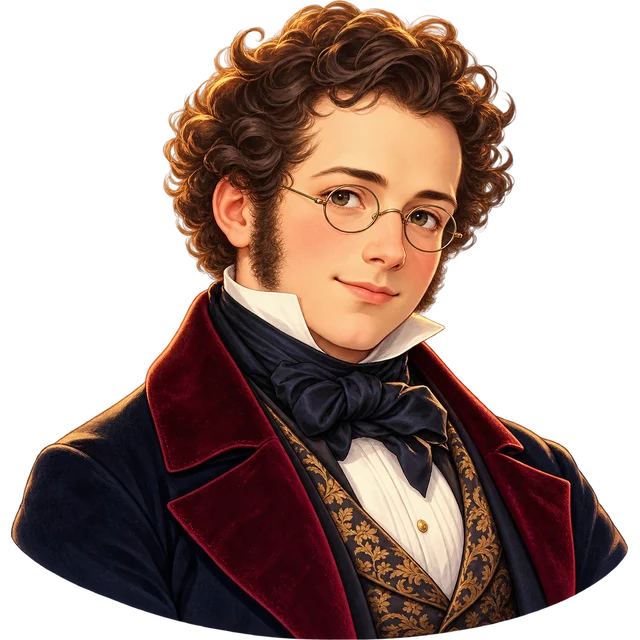
Song · D. 328 · 1815
フランツ・シューベルト(1797–1828)
馬を走らせる父と、おびえる子。ひとりで4役を歌う、こわい歌。A night ride, a frightened child, and one singer playing four roles.
PUBLIC DOMAIN RECORDING
PD / CC0 無料でダウンロードOK 別の演奏で聴く 1:Jonathan Sinclair
ANOTHER RECORDING 1
CC BY-SA 4.0 別の演奏で聴く 2:Michael Jackson (presumably not that one )ANOTHER RECORDING 2
CC BY 3.0WATCH ON YOUTUBE
 Schubert: Erlkönig, D. 328 (Op. 1): Wer reitet so spät
Evgeny Kissin - Topic(YouTube) YouTube で開く ↗
Schubert - Erlkönig
Kassia(YouTube) YouTube で開く ↗
左の音源は権利が切れた録音なのでダウンロードできます。右の動画は YouTube の公式の埋め込みで見るもので、ダウンロードはできません(動画の権利は各チャンネルにあります)。
 もっと名演を観る YouTube で何百万回も再生された人気の演奏
Franz Schubert: Erlkönig
OxfordSong(YouTube) YouTube で開く ↗
Schubert - Der Erlkönig [魔王] (complete version.)
MeetTheNeet(YouTube) YouTube で開く ↗

ホー!18歳のシューベルトが、詩を読んであっという間に書き上げたと言われているよ。
 この曲のおはなし The Story
「魔王」は、シューベルトが1815年、18歳のときに作った歌曲です。詩はゲーテ。暗く風の強い夜、父親が子どもを腕に抱いて馬を走らせていると、子どもにだけ「魔王」の姿が見え、声が聞こえます。歌手はひとりで、語り手・父・子・魔王の4つの役を歌い分けなければなりません。Schubert wrote "The Erl-King" in 1815, when he was 18. The poem is by Goethe. On a dark, windy night, a father rides on horseback, holding his son in his arms. Only the child can see the Erl-King and hear his voice. One singer must sing four roles: the narrator, the father, the son, and the Erl-King.
ピアノは曲のほとんどで、馬のひづめのように速い音を休まず打ち続けます。魔王はやさしく甘い声で子どもをさそい、子どもはおびえて「お父さん、お父さん!」と叫びます。その叫びはくり返されるたびに音が高くなり、恐怖が強まっていきます。最後に家に着いたとき、子どもは父の腕の中で息をひきとっていました。For most of the song, the piano pounds out fast notes without a break, like a galloping horse. The Erl-King tempts the child with a sweet, gentle voice, while the frightened boy cries, "My father, my father!" Each time he cries out, his voice goes higher, and the fear grows. When they finally reach home, the child in his father's arms is dead.
友人シュパウンによると、シューベルトは詩を読みながら興奮し、あっという間に楽譜に書きとめたそうです。1816年、友人たちはこの曲をふくむ歌曲の楽譜集をゲーテに送りましたが、返事はありませんでした。1821年、歌手フォーグルが演奏会で歌って大成功し、同じ年に友人たちの協力で「作品1」として出版されました。According to his friend Joseph von Spaun, Schubert became excited as he read the poem and wrote the music down very quickly. In 1816, his friends sent Goethe a volume of songs on his poems, including this one, but he never replied. In 1821, the singer Johann Michael Vogl performed it at a concert with great success, and that same year, with help from friends, it was published as Schubert's Opus 1.
This is a scary song. A father rides a horse at night with his son. The son sees the Erl-King, but the father does not. The piano sounds like a running horse. One singer uses four different voices!これはこわい歌です。父親が夜、息子をつれて馬に乗っています。息子には魔王が見えますが、父親には見えません。ピアノは走る馬のようにひびきます。ひとりの歌手が、4つの役を声で歌い分けるのです!
 聴きどころ Listening Guide
 えっ!?ネタ Surprising Facts
 タップすると答えが開きます
1816年、友人たちはこの曲をふくむ歌曲の楽譜集をゲーテに送りましたが、返事もないまま送り返されたと言われています。のちの1830年、ゲーテは名歌手シュレーダー=デフリーントの歌でこの曲を聴き、感動したと伝えられています。
In 1816, Schubert's friends sent Goethe a volume of songs that included this one, but it is said to have been sent back without a reply. Later, in 1830, Goethe is said to have heard it sung by the famous singer Wilhelmine Schröder-Devrient and been deeply moved.
右手がオクターヴで休みなく打ち続ける伴奏は、とても疲れることで有名です。シューベルト自身も弾くのに苦労した、という話も残っています。ピアニストにとっては、歌手と同じくらい大変な曲です。
The right-hand octaves that pound on without a rest are famously tiring. There is even a story that Schubert himself struggled to play them. For the pianist, this song is just as hard as it is for the singer.
出版社が引き受けてくれなかったため、友人たちがお金を出し合って「魔王」を出版しました。これがシューベルトの「作品1」。よく売れて、作曲家シューベルトの名を広めるきっかけになりました。
Because no publisher would take the risk, Schubert's friends paid to publish "The Erl-King" themselves. It became his Opus 1. It sold well and helped make Schubert's name known.
暗く緊張した短調が続く中、魔王が子どもをさそう場面では、明るく軽やかな長調のメロディーになります。でも最後に「力ずくでも連れていく」とおどすときには、不気味な響きにかわります。やさしい声だからこそ、かえってぞっとする――シューベルトの見事な工夫です。
While most of the song is dark and tense in a minor key, the Erl-King's first invitations are light and charming, in major keys. But when he finally threatens to take the child by force, the music turns dark again. His sweet voice makes him even creepier. It is a brilliant touch by Schubert.
ENGLISH × MASTERPIECE
 a race against time は『時間との競争』。しめきりに追われるときにも使います。
 この曲で覚える英単語 Words
 クイズに挑戦 Quiz
 この録音について(著作権・出典) Credits
MORE MASTERPIECES
パーセル・1695
ブリテンが「オーケストラ入門」のテーマに選んだ、かっこいいメロディー。
劇音楽「アブデラザール」より ロンドのページへ
バッハ・c. 1704 (?)
タラリ〜!一度聴いたら忘れない、オルガンの大迫力の幕開け。
トッカータとフーガ ニ短調のページへバッハ・c. 1706–1713
足が弾く低いテーマが21回!重くて壮大な、オルガンの大建築。
パッサカリアとフーガ ハ短調のページへバッハ・c. 1720
ヴァイオリン1本で、宇宙のように大きな世界を描く傑作。
無伴奏ヴァイオリン・パルティータ第2番 ニ短調より「シャコンヌ」のページへ
ヴィヴァルディ・1725
うだる暑さ、そして大嵐!ヴァイオリンが雷を鳴らす夏。
協奏曲集『四季』より「夏」のページへヴィヴァルディ・1725
歯がガチガチ、足ぶみドンドン!音で感じる真冬の寒さ。
協奏曲集『四季』より「冬」のページへ
ヘンデル・1727
ジワジワ高まって、ドカン!約300年、戴冠式で歌われる大合唱。
戴冠式アンセム「司祭ザドク」のページへバッハ・c. 1730
きりっと引きしまったイ短調。ヴァイオリンがオーケストラと渡り合う。
ヴァイオリン協奏曲第1番 イ短調のページへ
 MP3