
テ・デウム
Te Deum
シャルパンティエ・c. 1688–1698
パンパカパーン!ヨーロッパのテレビの幕開けを飾ってきた、ごうかな前奏曲。
テ・デウム ニ長調のページへ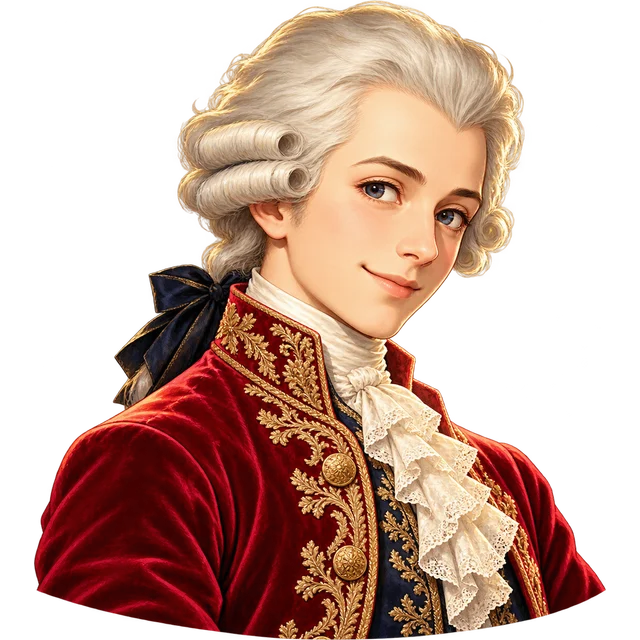
Symphony · K. 504 · 1786
ヴォルフガング・アマデウス・モーツァルト(1756–1791)
「フィガロ」に夢中の街プラハで初演された、晴れやかな交響曲。A bright symphony for Prague, the city crazy about Figaro.
PUBLIC DOMAIN RECORDING
CC BY 3.0 無料でダウンロードOKWATCH ON YOUTUBE
 Mozart - Symphony No. 38 in D major "Prague” K.504 | Mozart from Prague
EuroArtsChannel(YouTube) YouTube で開く ↗
MOZART "Symphony No.38 in D major K504" (Prague) BERNARD HAITINK (2017)
roger bridgland(YouTube) YouTube で開く ↗
左の音源は権利が切れた録音なのでダウンロードできます。右の動画は YouTube の公式の埋め込みで見るもので、ダウンロードはできません(動画の権利は各チャンネルにあります)。
 もっと名演を観る YouTube で何百万回も再生された人気の演奏
Mozart: Sinfonie Nr. 38 D-Dur KV 504 (»Prager«) ∙ hr-Sinfonieorchester ∙ Philippe Herreweghe
hr-Sinfonieorchester – Frankfurt Radio Symphony(YouTube) YouTube で開く ↗
ホー!この交響曲にはメヌエットがなくて、楽章が3つしかないんだよ。
 この曲のおはなし The Story
交響曲第38番は、1786年12月6日にウィーンで完成し、翌1787年1月19日、チェコのプラハで初演されました。そのため「プラハ」と呼ばれています。この時期のモーツァルトの交響曲としてはめずらしく、メヌエットのない3つの楽章でできています。第1楽章は、重々しくゆっくりした長い序奏から始まり、やがて明るく速い音楽へとかけだします。Symphony No. 38 was completed in Vienna on 6 December 1786 and first performed in Prague on 19 January 1787. That is why it is called the 'Prague.' Unusually for Mozart's symphonies of this period, it has only three movements, with no minuet. The first movement opens with a long, slow and serious introduction, and then breaks into bright, fast music.
このころ、モーツァルトのオペラ「フィガロの結婚」がプラハで大ヒットしていました。招かれてプラハを訪れたモーツァルトは、友人への手紙に「ここでは『フィガロ』の話しかしない。弾かれるのも、歌われるのも、口笛で吹かれるのも『フィガロ』ばかり」とうれしそうに書いています。この交響曲は、そんなプラハの人びとの前で演奏されました。At that time, Mozart's opera The Marriage of Figaro was a huge hit in Prague. Mozart was invited to visit, and he happily wrote to a friend that people there talked about nothing but Figaro, and that nothing was played, sung or whistled but Figaro. This symphony was performed for these Figaro-loving people of Prague.
演奏会は大成功で、プラハの人びとはモーツァルトを熱烈にむかえました。プラハでの「フィガロの結婚」の成功から、この街のための新しいオペラもたのまれ、生まれたのが「ドン・ジョヴァンニ」です。1787年10月、「ドン・ジョヴァンニ」はプラハで初演されました。ウィーン以上にプラハで愛されたモーツァルトの、幸せな時間を伝える交響曲です。The concert was a great success, and the people of Prague welcomed Mozart warmly. Thanks to the success of Figaro there, he was also asked to write a new opera for Prague, and the result was Don Giovanni, which premiered there in October 1787. This symphony captures a happy time for Mozart, who was loved even more in Prague than in Vienna.
This symphony is named after a city: Prague. People in Prague loved Mozart's opera Figaro. Everybody sang and whistled its songs! Mozart went there, and the new symphony was performed. The people loved it, too.この交響曲は、プラハという街の名前がついています。プラハの人びとは、モーツァルトのオペラ「フィガロ」が大好きでした。みんながその歌を歌ったり、口笛で吹いたりしていました!モーツァルトがプラハへ行くと、この新しい交響曲が演奏されました。人びとはこの曲も大好きになりました。
 聴きどころ Listening Guide
 えっ!?ネタ Surprising Facts
 タップすると答えが開きます
1787年1月、モーツァルトは友人ゴットフリート・フォン・ジャカンへの手紙に、プラハでは「フィガロ」の話しかせず、弾くのも歌うのも口笛も「フィガロ」ばかりだ、と書きました。ウィーンではそこそこの評判だったオペラが、プラハでは社会現象になっていたのです。
In January 1787, Mozart wrote to his friend Gottfried von Jacquin that in Prague, people talked about nothing but Figaro, and played, sang and whistled nothing but Figaro. The opera had been only a moderate success in Vienna, but in Prague it was a craze.
当時のウィーンの交響曲は、ふつう4つの楽章で、3つ目に踊りの曲「メヌエット」が入るのが定番でした。ところがこの曲にはメヌエットがありません。なぜ3楽章にしたのか、モーツァルトは理由を書き残していないため、はっきりしたことはわかっていません。
Viennese symphonies of the time usually had four movements, with a dance movement, the minuet, as the third. But this symphony has no minuet. Mozart did not write down why he made it in three movements, so nobody knows for sure.
最後の楽章の、せかせかと始まるテーマは、「フィガロの結婚」第2幕でスザンナとケルビーノが歌う、あわてた二重唱のメロディーに似ていると指摘されています。「フィガロ」に夢中のプラハの人びとが、にやりとしたかもしれませんね。
The busy theme at the start of the last movement has been said to resemble a hurried duet sung by Susanna and Cherubino in Act 2 of The Marriage of Figaro. Perhaps the Figaro-loving people of Prague smiled when they heard it!
この演奏会でモーツァルトはピアノの即興演奏も披露し、最後に客席から「フィガロ!」の声がかかると、「フィガロの結婚」のアリアをもとに即興で変奏を弾いた、と伝えられています。プラハの聴衆とモーツァルトの、息の合ったやりとりが目に浮かびます。
It is said that at this concert Mozart also improvised at the piano, and when someone in the audience called out 'Figaro!', he improvised variations on an aria from The Marriage of Figaro. You can almost see the happy connection between Mozart and the Prague audience.
ENGLISH × MASTERPIECE
 町じゅうで話題になっている人やもの。よい意味にも悪い意味にも使います。
 この曲で覚える英単語 Words
 クイズに挑戦 Quiz
 この録音について(著作権・出典) Credits
MORE MASTERPIECES
シャルパンティエ・c. 1688–1698
パンパカパーン!ヨーロッパのテレビの幕開けを飾ってきた、ごうかな前奏曲。
テ・デウム ニ長調のページへ
バッハ・c. 1707–1710 (?)
キラキラの駆け上がりで幕開け!若きバッハのはなやかな鍵盤ショー。
トッカータ ニ長調のページへ
ヴィヴァルディ・published 1711
2本のヴァイオリンが火花を散らす!バッハも編曲した熱い協奏曲。
協奏曲集『調和の霊感』第8番 イ短調(2つのヴァイオリンのための協奏曲)のページへヴィヴァルディ・c. 1715
オクターブがぴょんぴょん跳ねる!喜びがはじける合唱の名曲。
グローリア ニ長調のページへ
テレマン・c. 1710–1720 (?)
バルブのないラッパで高音をきらり!バロックのトランペットの晴れ舞台。
トランペット協奏曲 ニ長調のページへバッハ・1720
止まらない!キラキラ走る、ヴァイオリン1本の大はしゃぎ。
無伴奏ヴァイオリン・パルティータ第3番 ホ長調より「プレリュード」のページへバッハ・c. 1720
チェロのいちばん低い「ド」がずしん!堂々とした明るい組曲。
無伴奏チェロ組曲第3番 ハ長調のページへバッハ・1721
3・3・3!弦楽器だけで生き生きと走りだす、バッハの協奏曲。
ブランデンブルク協奏曲 第3番 ト長調のページへ
 MP3