
カノン
Canon in D
パッヘルベル・c. 1680–1706
同じ8つの音が28回!なのに聴くたび胸がいっぱいになる曲。
カノンとジーグ ニ長調 より「カノン」のページへ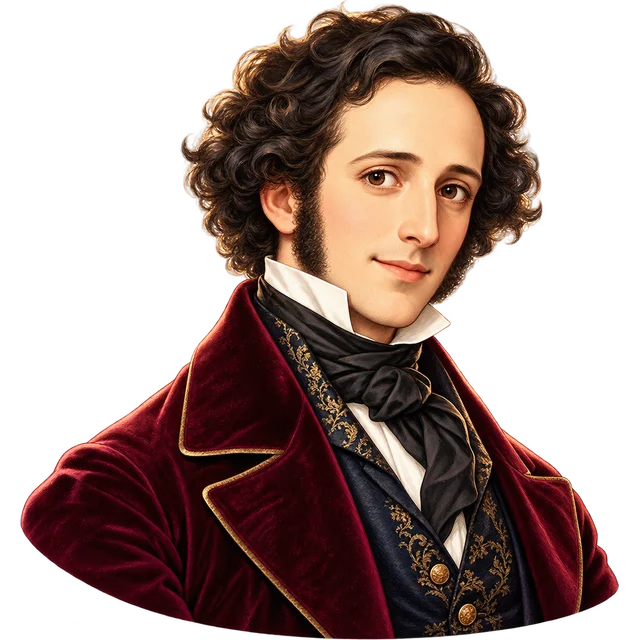
Orchestral · Op. 21 · 1826
フェリックス・メンデルスゾーン(1809–1847)
17歳の天才が書いた、妖精たちがかけまわる魔法の序曲。Written at 17: fairies, a donkey and pure magic.
WATCH ON YOUTUBE
この曲は、権利の切れた高音質の録音がまだ見つからないため、YouTube の公式チャンネルなどの名演でお楽しみください(ダウンロードはできません)。YouTube でほかの演奏もさがす ↗
 Mendelssohn: A Midsummer Night's Dream Overture, Op. 21, MWV P3
London Symphony Orchestra - Topic(YouTube) YouTube で開く ↗
Mendelssohn: Overture "A Midsummer Night's Dream", Op. 21
Boston Symphony Orchestra - Topic(YouTube) YouTube で開く ↗
Felix Mendelssohn - A Midsummer Night's Dream - Overture
The Wicked North(YouTube) YouTube で開く ↗

ホー!とちゅうでロバの「ヒーホー!」が聞こえるよ。探してみて!
 この曲のおはなし The Story
1826年、17歳のメンデルスゾーンが、シェイクスピアの喜劇「夏の夜の夢」を読んで書いた、演奏会用の序曲です。妖精の王と女王、恋人たちのすれちがい、ロバの頭にされてしまう職人など、劇のふしぎで楽しい世界が、わずか10数分の中にいきいきと描かれています。In 1826, the 17-year-old Mendelssohn read Shakespeare's comedy "A Midsummer Night's Dream" and wrote this concert overture. The fairy king and queen, mixed-up young lovers and a workman who is given a donkey's head all come to life in just over ten minutes of music.
メンデルスゾーンは、姉のファニーといっしょにドイツ語訳でシェイクスピアを読み、夢中になったと言われています。序曲は、まずファニーとのピアノ連弾で家族や友人に披露され、1827年にシュテッティン(今のポーランドのシュチェチン)でオーケストラによって初演されました。Mendelssohn is said to have read Shakespeare in German translation with his sister Fanny and fallen in love with it. The overture was first played as a piano duet with Fanny for family and friends. Its first orchestral performance took place in 1827 in Stettin, now Szczecin in Poland.
それから16年後の1842年、メンデルスゾーンはプロイセン国王の求めで、劇を上演するための音楽を新たに書き足しました。この中には、あの有名な「結婚行進曲」もふくまれ、劇は1843年に上演されました。17歳の序曲と33歳の音楽が、まるで同じ時に書いたかのように自然につながっているのは、おどろくべきことです。Sixteen years later, in 1842, the King of Prussia asked Mendelssohn for music to go with a stage production of the play, and he wrote many new pieces. They include the famous "Wedding March," and the play was staged in 1843. It is amazing that the overture he wrote at 17 and the music he wrote at 33 fit together as naturally as if they were written at the same time.
Mendelssohn wrote this music when he was 17. It is about a funny play by Shakespeare. You can hear fairies dancing very fast. You can also hear a donkey say "hee-haw"! Later, he wrote the famous "Wedding March" for the same play.メンデルスゾーンは17歳のときにこの音楽を書きました。シェイクスピアの楽しい劇のお話です。妖精たちがとても速く踊るのが聞こえます。ロバが「ヒーホー!」と鳴く声も聞こえます!のちに彼は、同じ劇のために有名な「結婚行進曲」を書きました。
 聴きどころ Listening Guide
 えっ!?ネタ Surprising Facts
 タップすると答えが開きます
劇の中で、職人のボトムは、いたずらな妖精にロバの頭にされてしまいます。序曲のとちゅうで、ヴァイオリンなどが高い音から低い音へとびおりる、「ヒーホー!」というロバの鳴き声のような音型が登場します。ユーモアたっぷりの描写です。
In the play, a workman named Bottom is given a donkey's head by a mischievous fairy. Partway through the overture, the violins and others leap from a high note to a low one, making a sound like a donkey's "hee-haw!" It is a very funny musical picture.
出版された楽譜には、オフィクレイドという、今ではほとんど見かけない低音の金管楽器が使われています(初めは「イングリッシュ・バスホルン」という楽器でした)。のっそりとした職人ボトムを表すのにぴったりだったと言われます。今の演奏では、テューバで代わりに吹くことも多いです。
The published score uses the ophicleide, a low brass instrument that is rarely seen today (the first version used an "English bass horn" instead). It is said to have been perfect for showing clumsy characters like Bottom. In modern performances, a tuba often plays the part instead.
曲は、フルートなど木管楽器のやわらかい4つの和音で始まります。この和音は曲の最後にももう一度現れ、魔法の世界の入り口と出口のような役目をはたしています。16年後に書かれた劇音楽の最後でも、この4つの和音が使われています。
The overture begins with four soft chords played by the flutes and other woodwinds. The same chords return at the very end, like the entrance and exit of a magical world. Sixteen years later, Mendelssohn used these four chords again to close his music for the play.
原題の「ミッドサマー」は、夏至(6月下旬)のころのことです。ヨーロッパでは、この時期の夜には妖精たちが出歩くと信じられていました。日本では「真夏の夜の夢」とも訳されますが、本当は、真夏の暑い夜というより、初夏の短い夜のお話なのです。
"Midsummer" in the title means the time of the summer solstice, in late June. In Europe, people believed that fairies came out on the nights around this time. In Japan the title is sometimes translated as "a dream on a hot midsummer night," but it is really a story of a short night in early summer.
ENGLISH × MASTERPIECE
 cast a spell on / over 〜 で「〜に魔法をかける」。心をうばうという意味でも使います。
 この曲で覚える英単語 Words
 クイズに挑戦 Quiz
 著作権について Credits
MORE MASTERPIECES
パッヘルベル・c. 1680–1706
同じ8つの音が28回!なのに聴くたび胸がいっぱいになる曲。
カノンとジーグ ニ長調 より「カノン」のページへパッヘルベル・c. 1680–1706
あの「カノン」には、はずむ相棒がいた!知られざる後半戦。
カノンとジーグ ニ長調 より「ジーグ」のページへ
パーセル・1695
ブリテンが「オーケストラ入門」のテーマに選んだ、かっこいいメロディー。
劇音楽「アブデラザール」より ロンドのページへ
バッハ・1713
2本のリコーダーがやさしく鳴る、のどかな牧場の歌。
カンタータ第208番より「羊は安らかに草を食み」のページへ
コレッリ・published 1714
聖なる夜のために。最後に羊飼いの笛のようなパストラーレが流れます。
合奏協奏曲 ト短調「クリスマス協奏曲」のページへ
ヘンデル・1717
テムズ川の船の上で国王のために!夏の夜の水上コンサート。
水上の音楽のページへ
クープラン・published 1717
題名の意味はだれも知らない!やわらかく波打つ、なぞの名曲。
神秘的なバリケードのページへ
マルチェッロ・published c. 1717
胸にしみるアダージョ!バッハも編曲したオーボエの名曲。
オーボエ協奏曲 ニ短調のページへ
 MP3