
テ・デウム
Te Deum
シャルパンティエ・c. 1688–1698
パンパカパーン!ヨーロッパのテレビの幕開けを飾ってきた、ごうかな前奏曲。
テ・デウム ニ長調のページへ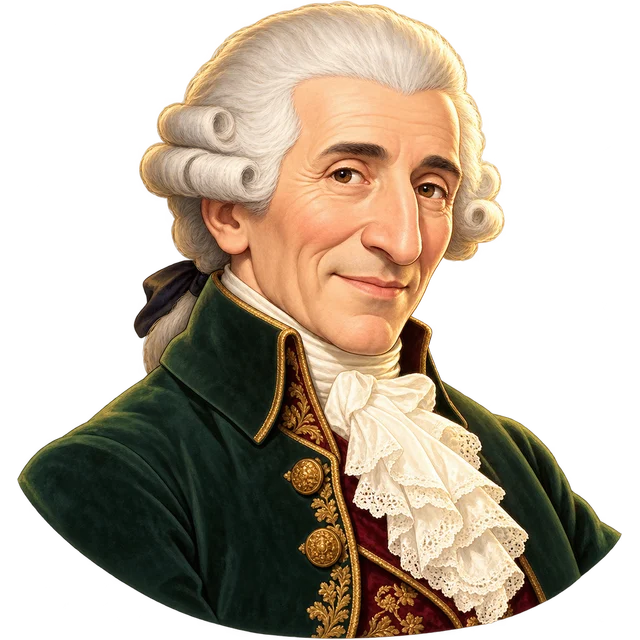
Symphony · Hob. I:100 · 1793–1794
フランツ・ヨーゼフ・ハイドン(1732–1809)
トライアングルにシンバル、大太鼓!ロンドンをわかせた交響曲。Triangle, cymbals and bass drum! The symphony that thrilled London.
WATCH ON YOUTUBE
この曲は、権利の切れた高音質の録音がまだ見つからないため、YouTube の公式チャンネルなどの名演でお楽しみください(ダウンロードはできません)。YouTube でほかの演奏もさがす ↗
 Haydn: Symphony No. 100 "Military" / Schiff - Berliner Philharmoniker
Berliner Philharmoniker(YouTube) YouTube で開く ↗
Haydn Symphony No.100 'Military' by Adam Fischer & Danish Chamber Orchestra (Live Performance)
Naxos Music(YouTube) YouTube で開く ↗
Haydn: Symphony No. 100 in G Major, London Symphonies "Military"
Brilliant Classics(YouTube) YouTube で開く ↗
ホー!第2楽章では、トランペットが軍隊の合図のようなラッパを吹くんだよ。
 この曲のおはなし The Story
交響曲第100番は、ハイドンの2度目のロンドン訪問のときに完成し、1794年3月31日にロンドンのハノーヴァー・スクエア・ルームズで初演されました。「軍隊」というあだ名は、第2楽章でトライアングル・シンバル・大太鼓が加わり、軍楽隊のようににぎやかになることから付きました。最後の楽章でも、これらの打楽器がふたたび登場します。Symphony No. 100 was completed during Haydn's second visit to London and first performed on 31 March 1794 at the Hanover Square Rooms. Its nickname, 'Military,' comes from the second movement, where a triangle, cymbals and bass drum join in and the music sounds like a military band. These percussion instruments come back again in the last movement.
当時のヨーロッパでは、トルコの軍楽隊をまねた「トルコ風」の音楽が流行していました。トライアングルやシンバル、大太鼓は、そのトルコ風の音を出す楽器として知られていました。第2楽章は、ハイドンが以前ナポリ王のために書いた、2台のリラ・オルガニザータのための協奏曲の音楽を作りかえたもので、終わり近くではトランペットが合図のラッパを吹き鳴らし、そのあとオーケストラ全体が大きくとどろきます。In Europe at that time, 'Turkish' music, inspired by Turkish military bands, was in fashion. The triangle, cymbals and bass drum were known as the instruments that made this Turkish sound. The second movement is a reworking of music from a concerto for two lire organizzate that Haydn had written earlier for the King of Naples. Near the end, a trumpet plays a military-style call, and then the whole orchestra roars.
初演は大成功でした。当時の新聞は、第2楽章について、戦争の恐ろしいとどろきが高まっていくようだ、という感想を書いたと伝えられています。この交響曲はハイドンが生きていたころからとても人気があり、くり返し演奏され、いろいろな楽器の組み合わせに編曲されました。今でも、ハイドンの交響曲のなかで特によく演奏される1曲です。The premiere was a big success. A newspaper of the time is said to have written that, in the second movement, the terrible roar of war seemed to grow and grow. The symphony was very popular in Haydn's lifetime. It was played again and again and arranged for many different groups of instruments. Today it is still one of Haydn's most often performed symphonies.
This symphony has a special sound. In the second part, a triangle, cymbals and a big drum play. It sounds like an army band! A trumpet plays a call, too. The people in London loved it.この交響曲には特別な音があります。第2楽章で、トライアングルとシンバルと大きな太鼓が鳴ります。軍楽隊みたいです!トランペットも合図を吹きます。ロンドンの人たちは、この曲が大好きになりました。
 聴きどころ Listening Guide
 えっ!?ネタ Surprising Facts
 タップすると答えが開きます
初演のあと、ロンドンの新聞は第2楽章について、戦争の恐ろしいとどろきがどんどん高まっていく、というような感想を書いたと伝えられています。打楽器が入ったオーケストラの迫力は、当時の聴衆にとってそれほど衝撃的だったのです。現代でいえば、映画館の大音響のようなものだったのかもしれません。
After the premiere, a London newspaper is said to have described the second movement as the terrible roar of war growing louder and louder. The power of an orchestra with these percussion instruments was a real shock to audiences of the time. It may have felt like the big sound of a movie theater does to us today.
第2楽章のもとは、ハイドンがナポリ王フェルディナンド4世のために書いた、2台の「リラ・オルガニザータ」のための協奏曲です。この楽器は、ハンドルを回して弦を鳴らすしくみに、小さなオルガンのパイプを組みこんだ、めずらしいもの。王さまはこの楽器が大好きだったのです。
The second movement comes from a concerto for two lire organizzate that Haydn wrote for King Ferdinand IV of Naples. The 'lira organizzata' was an unusual instrument with strings played by turning a handle, plus tiny organ pipes. The king loved playing it.
18世紀のウィーンやロンドンでは、オスマン帝国の軍楽隊の、にぎやかな打楽器の音が大人気でした。モーツァルトもオペラ「後宮からの誘拐」(1782年)で、同じような打楽器を使っています。ハイドンの「軍隊」も、このブームにのった「流行の音」だったのです。
In 18th-century Vienna and London, the noisy percussion of Ottoman military bands was very popular. Mozart also used similar instruments in his opera The Abduction from the Seraglio (1782). Haydn's 'Military' was riding the same wave of fashion.
第2楽章の終わり近く、音楽がいったん落ちつくと、トランペットが1本だけで、軍隊の合図のようなラッパのメロディーを吹きます。そのあとティンパニが大きく鳴り、オーケストラ全体がとどろきます。静かな部分とのギャップで、聴く人をドキッとさせるハイドンらしい演出です。
Near the end of the second movement, the music calms down, and then a single trumpet plays a melody like a military bugle call. After that, the timpani roll and the whole orchestra roars. The contrast with the quiet music makes listeners jump, a very Haydn-like touch.
ENGLISH × MASTERPIECE
 rage は「激しい熱中」。ある物がとても流行しているときに使います。
 この曲で覚える英単語 Words
 クイズに挑戦 Quiz
 著作権について Credits
MORE MASTERPIECES
シャルパンティエ・c. 1688–1698
パンパカパーン!ヨーロッパのテレビの幕開けを飾ってきた、ごうかな前奏曲。
テ・デウム ニ長調のページへ
バッハ・c. 1707–1710 (?)
キラキラの駆け上がりで幕開け!若きバッハのはなやかな鍵盤ショー。
トッカータ ニ長調のページへ
ヴィヴァルディ・published 1711
2本のヴァイオリンが火花を散らす!バッハも編曲した熱い協奏曲。
協奏曲集『調和の霊感』第8番 イ短調(2つのヴァイオリンのための協奏曲)のページへヴィヴァルディ・c. 1715
オクターブがぴょんぴょん跳ねる!喜びがはじける合唱の名曲。
グローリア ニ長調のページへ
テレマン・c. 1710–1720 (?)
バルブのないラッパで高音をきらり!バロックのトランペットの晴れ舞台。
トランペット協奏曲 ニ長調のページへバッハ・1720
止まらない!キラキラ走る、ヴァイオリン1本の大はしゃぎ。
無伴奏ヴァイオリン・パルティータ第3番 ホ長調より「プレリュード」のページへバッハ・1721
3・3・3!弦楽器だけで生き生きと走りだす、バッハの協奏曲。
ブランデンブルク協奏曲 第3番 ト長調のページへバッハ・1721
伴奏役のチェンバロがまさかの大独奏!鍵盤協奏曲の先がけ。
ブランデンブルク協奏曲第5番 ニ長調のページへ
 MP3