
パッヘルベルのジーグ
Pachelbel's Gigue
パッヘルベル・c. 1680–1706
あの「カノン」には、はずむ相棒がいた!知られざる後半戦。
カノンとジーグ ニ長調 より「ジーグ」のページへ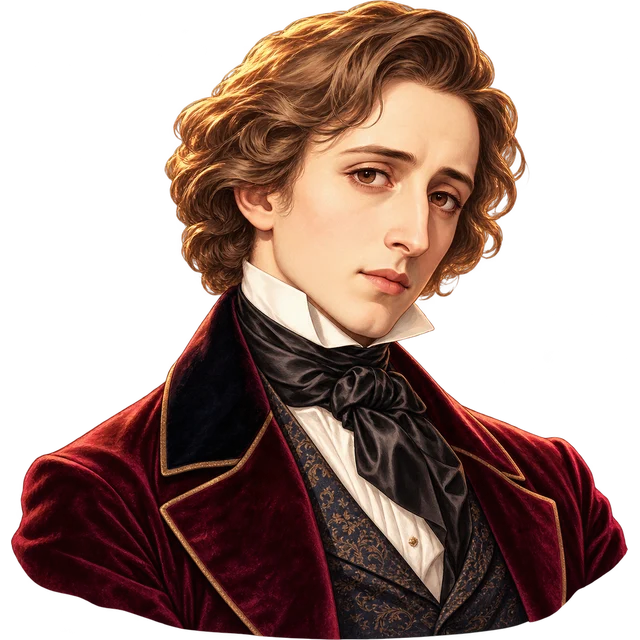
Piano · Op. 25 No. 5 · 1832–1836
フレデリック・ショパン(1810–1849)
わざと「ずれた音」をぶつける、ちょっといたずらなエチュード!A cheeky study full of notes that clash on purpose.
PUBLIC DOMAIN RECORDING
PD / CC0 無料でダウンロードOKWATCH ON YOUTUBE
 Chopin - Etude Op. 25 No. 5 (Wrong Note)
Rousseau(YouTube) YouTube で開く ↗
LEONORA ARMELLINI – Etude in E minor, Op. 25 No. 5 (18th Chopin Competition, first stage)
Chopin Institute(YouTube) YouTube で開く ↗
左の音源は権利が切れた録音なのでダウンロードできます。右の動画は YouTube の公式の埋め込みで見るもので、ダウンロードはできません(動画の権利は各チャンネルにあります)。
 もっと名演を観る YouTube で何百万回も再生された人気の演奏
Yunchan Lim - Wrong Note (Chopin: 12 Études, Op. 25: No. 5 in E Minor )
Yunchan Lim(YouTube) YouTube で開く ↗

ホー!まちがえたみたいに聞こえる音は、ちゃんと楽譜に書いてあるんだよ。
 この曲のおはなし The Story
この曲は「12の練習曲 Op.25」の5番目の曲です。はずむようなリズムの中に、メロディーのすぐ近くの音がわざとぶつけられていて、まるでまちがえて弾いたように聞こえます。そのため英語圏では「まちがい音のエチュード」というあだ名で知られていますが、ショパンが付けた名前ではありません。This is the fifth piece in the 12 Études, Op. 25. In its bouncing rhythm, notes right next to the melody clash on purpose, so it sounds as if someone hit a wrong note. That is why it is nicknamed the Wrong Note étude in English, but Chopin did not give it that name.
曲は3つの部分でできています。始めと終わりは、ぶつかる音がはずむ、ちょっとおどけたホ短調の部分です。まん中では少しゆっくりになり、明るいホ長調にかわります。ここでは左手が、チェロのような深い声でゆったりとしたメロディーを歌い、右手がその上で流れるように伴奏します。The piece has three parts. The first and last parts are in E minor, playful and full of bouncing clashes. In the middle, the music slows a little and turns to bright E major. Here the left hand sings a broad melody in a deep, cello-like voice, while the right hand flows above it.
Op.25は1837年に出版されました。最後は、もう一度ホ長調にかわり、ふるえるような音と大きく広がる和音で、明るくかがやかしく終わります。いたずらっぽい始まりから、堂々としたしめくくりまで、表情の変化を楽しめる1曲です。弾く人にとっては、リズムの切れのよさと歌う力の両方が試される曲です。Op. 25 was published in 1837. At the end, the music turns to E major again and finishes brightly, with trembling notes and wide, sweeping chords. From a cheeky start to a grand finish, the piece is full of changing expressions. For the pianist, it tests both a crisp sense of rhythm and the ability to sing.
This piano piece sounds a little funny. Some notes sound wrong, but the composer wrote them on purpose. In the middle, the music becomes slow and warm. The left hand sings like a cello. The end is bright and big.このピアノ曲は少しおもしろく聞こえます。まちがった音のように聞こえるところがありますが、作曲家がわざと書いたものです。まん中で、音楽はゆっくりで温かくなります。左手がチェロのように歌います。最後は明るく、大きく終わります。
 聴きどころ Listening Guide
 えっ!?ネタ Surprising Facts
 タップすると答えが開きます
ぶつかって聞こえるのは、メロディーの音のすぐとなりの音を、短くくっつけて弾くからです。ピアノの先生に「まちがえた?」と言われそうな響きですが、全部楽譜どおり。わざとずらした音で、リズムに楽しいひっかかりを作っているのです。
The clashes come from short notes placed right next to the melody notes. It sounds like something a teacher might call a mistake, but it is all in the score. The planned clashes give the rhythm a fun little catch.
「まちがい音」は後の時代に広まった英語のあだ名で、だれが最初に付けたかははっきりしません。ショパンは自分の練習曲に、こうした題名をほとんど付けませんでした。「黒鍵」「木枯らし」なども、後から広まった呼び名です。
Wrong Note is a later English nickname, and it is not clear who first used it. Chopin almost never gave titles to his études. Names like Black Key and Winter Wind also spread later.
まん中の部分では、左手が低い音域で、チェロのようにゆったりと歌います。右手はその上で、波のように流れる伴奏を受けもちます。おどけた外側の部分とはまるで別人のような、温かい歌が聴けます。
In the middle section, the left hand sings slowly in a low range, like a cello. Above it, the right hand flows like waves. This warm song sounds like a different person from the playful outer parts.
曲はホ短調で始まりますが、最後はホ長調にかわって、ふるえる音と大きな和音ではなやかに終わります。いたずらっ子が、最後は胸をはって舞台に立つような、すっきりした終わり方です。
The piece starts in E minor but ends in E major, with trembling notes and big chords. It is like a mischievous child who walks proudly onto the stage at the end.
ENGLISH × MASTERPIECE
 シェイクスピア『ハムレット』のせりふから。一見おかしな行動にも考えがある、という意味です。
 この曲で覚える英単語 Words
 クイズに挑戦 Quiz
 この録音について(著作権・出典) Credits
MORE MASTERPIECES
パッヘルベル・c. 1680–1706
あの「カノン」には、はずむ相棒がいた!知られざる後半戦。
カノンとジーグ ニ長調 より「ジーグ」のページへシャルパンティエ・c. 1688–1698
パンパカパーン!ヨーロッパのテレビの幕開けを飾ってきた、ごうかな前奏曲。
テ・デウム ニ長調のページへ
パーセル・1695
ブリテンが「オーケストラ入門」のテーマに選んだ、かっこいいメロディー。
劇音楽「アブデラザール」より ロンドのページへ
バッハ・c. 1707–1710 (?)
キラキラの駆け上がりで幕開け!若きバッハのはなやかな鍵盤ショー。
トッカータ ニ長調のページへ
ヴィヴァルディ・published 1711
2本のヴァイオリンが火花を散らす!バッハも編曲した熱い協奏曲。
協奏曲集『調和の霊感』第8番 イ短調(2つのヴァイオリンのための協奏曲)のページへヴィヴァルディ・c. 1715
オクターブがぴょんぴょん跳ねる!喜びがはじける合唱の名曲。
グローリア ニ長調のページへ
テレマン・c. 1710–1720 (?)
バルブのないラッパで高音をきらり!バロックのトランペットの晴れ舞台。
トランペット協奏曲 ニ長調のページへバッハ・1720
止まらない!キラキラ走る、ヴァイオリン1本の大はしゃぎ。
無伴奏ヴァイオリン・パルティータ第3番 ホ長調より「プレリュード」のページへ
 MP3