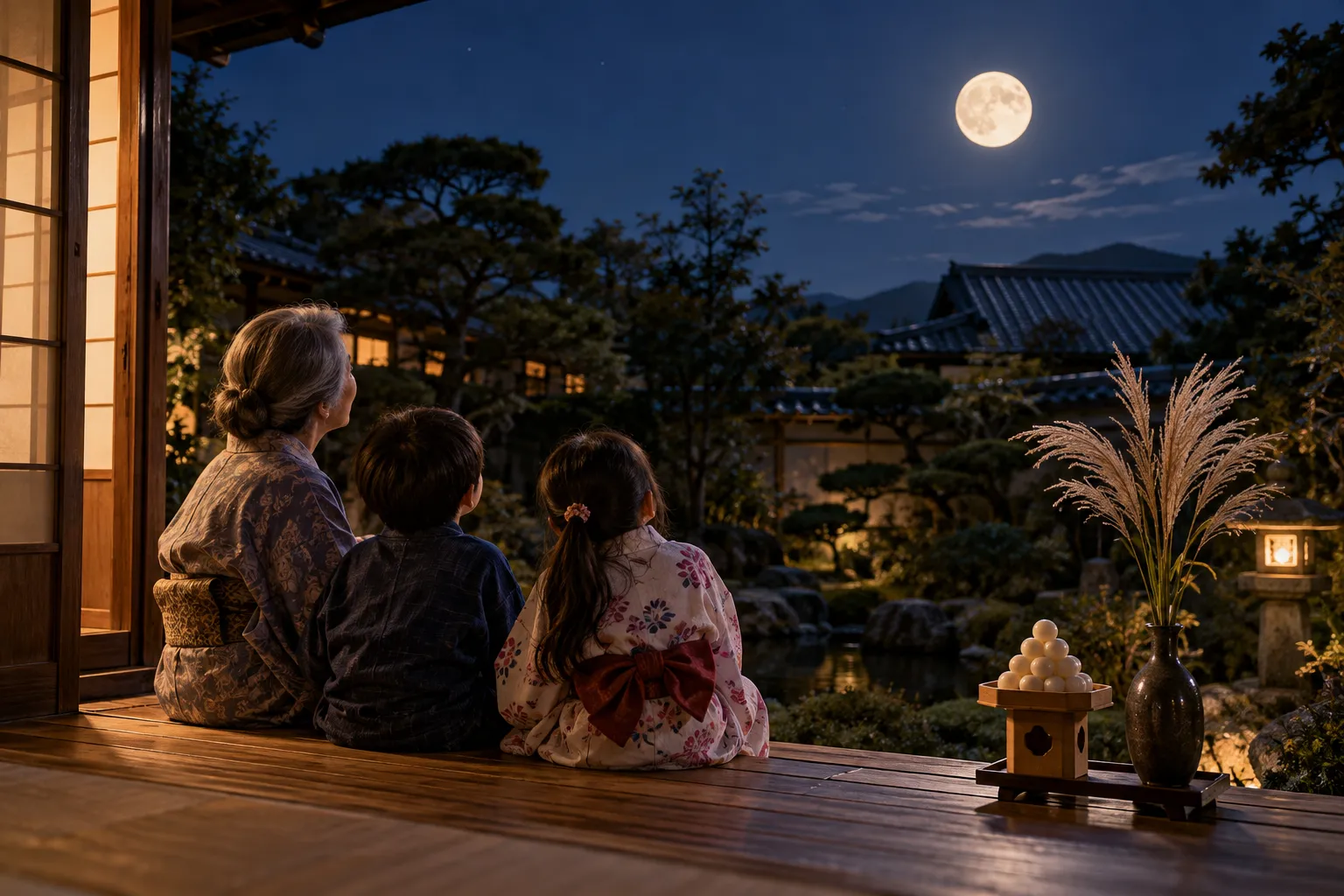
Tsukimi (Moon Viewing)
お月見(十五夜)の英語の授業アイデアとワークシート
印刷してすぐ使えるワークシート(PDF・Word・解答つき)と、授業の手順書。
🖨️Worksheetsワークシート(無料・A4)
① 「中身を見る・印刷」で全ページを確認 → ② そのページ上の 🖨️ 印刷する でそのまま印刷できます。A4・無料。
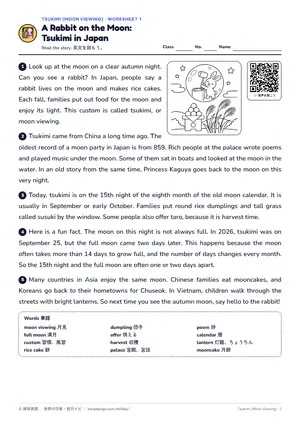
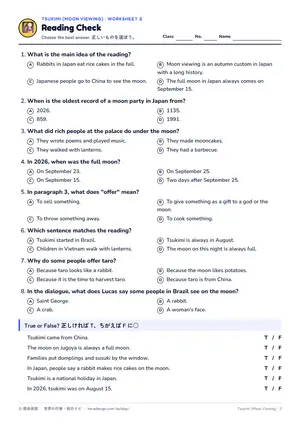
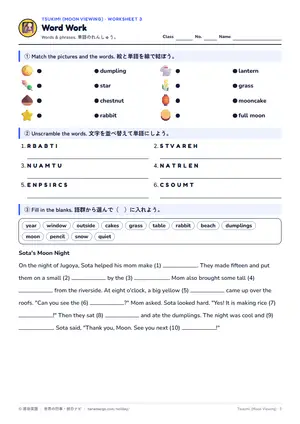
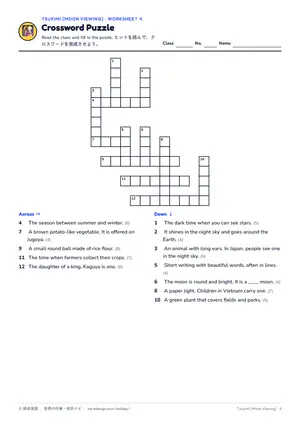
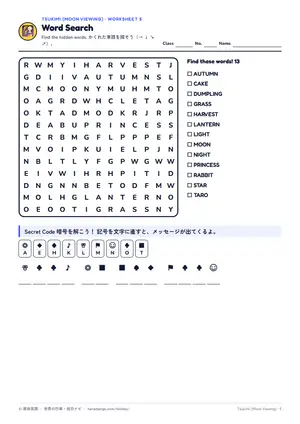
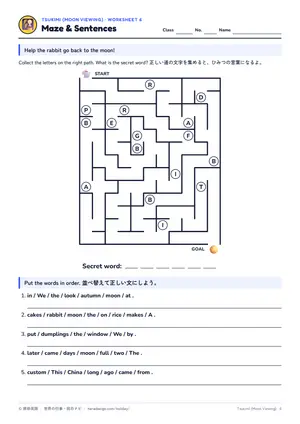
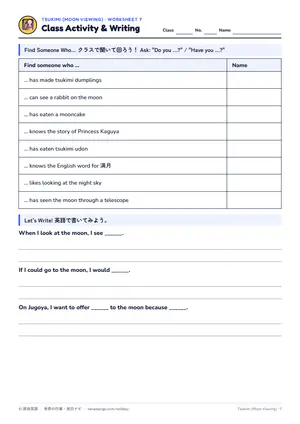
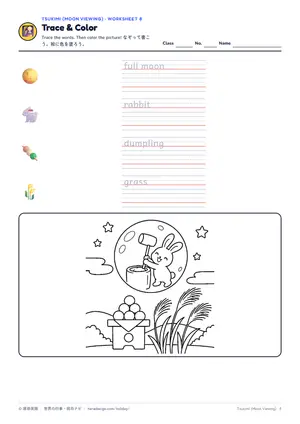
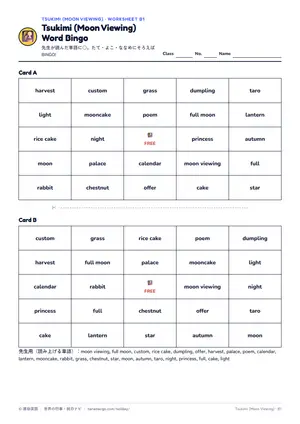
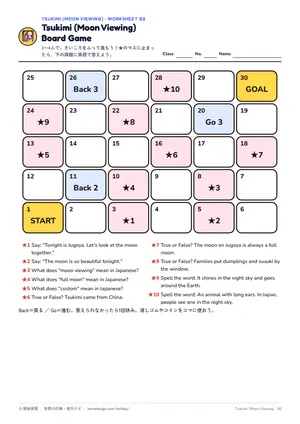
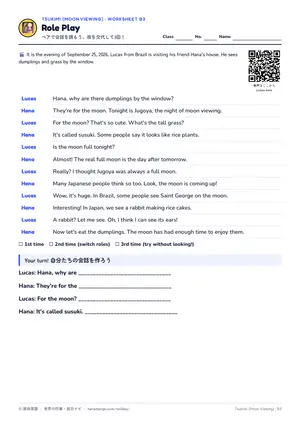
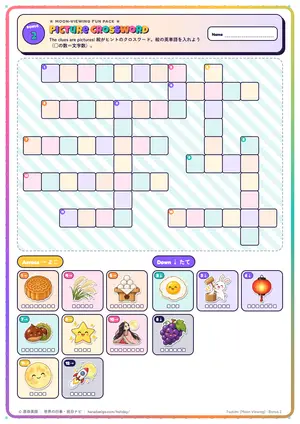
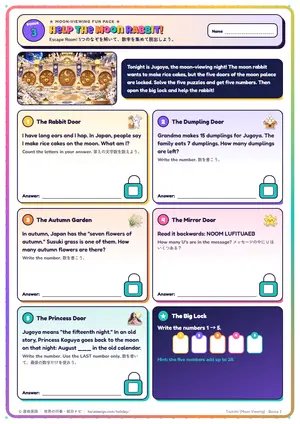
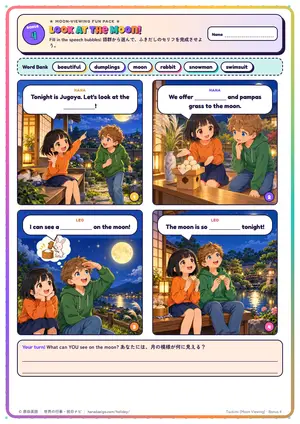
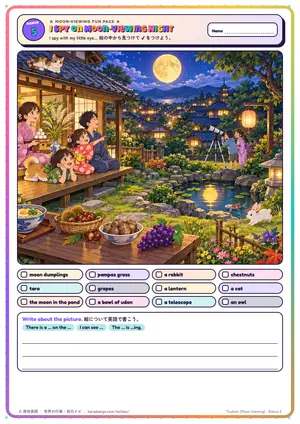
🍎Lesson Ideasお月見(十五夜)を使った英語の授業アイデア
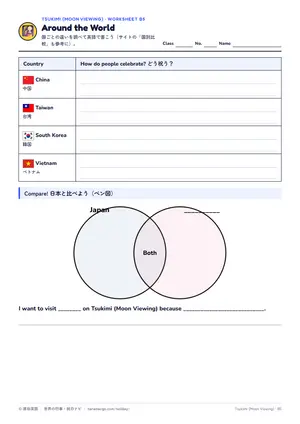
月の模様、何に見える?世界比べ
🎯 月の模様の見え方が国によって違うことを知り、英語で I see a ___. と言える。
- 満月の写真を配り、何に見えるか自由に描かせる。
- 日本のうさぎ、中国の薬をつくうさぎ、英語圏の the man in the moon を紹介する。
- I see a ___ on the moon. と英語で発表し合う。
詳細版を開く(時間配分・Teacher Talk・板書)
満月の写真を配り、「月の黒いところ、何に見える?」と聞く。正解はないと伝え、見えたものを鉛筆で自由になぞったり描き足したりさせる(2分)。
🗣️ Look at the moon. Do you see the dark parts? / What do you see? There is no wrong answer. / Draw on the picture. You have two minutes.
3枚の絵を順に見せる。日本では「うさぎが餅つきをしている」、中国では「うさぎが薬をついている」、英語の国では the man in the moon(人の顔)に見立てることを紹介する。英語ページの会話で、ブラジルのルーカスが「聖ジョージが見える人もいる」と話していることも伝える。それぞれ、写真の上で場所を指さして確かめる。
🗣️ In Japan, people see a rabbit. It is making rice cakes. / In China, the rabbit is making medicine. / In English, people say the man in the moon. Can you see a face? / Point to the rabbit's ears. Here they are!
I see a ___ on the moon. の型を練習する。絵カードで rabbit / face / crab などの言い方を確認したあと、自分が描いたものを見せながら、班やクラスで発表させる。聞いた子は Me, too! / Nice! と反応する。
🗣️ Say it with me. I see a rabbit on the moon. / Show your picture to your group. / What do you see? I see a dog on the moon! / Say Me, too! or Nice!
「同じ月なのに、国や人によって見えるものが違う」ことを確認する。今夜、空が晴れていたら月を見て、家の人に何が見えるか聞いてみるよう伝える。
🗣️ One moon, many pictures! / Look at the moon tonight. Ask your family, What do you see?
What do you see on the moon? 🌕 Japana rabbit making rice cakes(餅つき) China
a rabbit making medicine(薬) English the man in the moon(人の顔) Brazil
Saint George(と見る人もいる) I see a __ on the moon. 反応:Me, too! Nice!
十五夜と満月のずれを調べよう
🎯 国立天文台の暦から十五夜と満月の日付を調べ、英語の比較表現でまとめる。
- 2025〜2028年の十五夜の日付と、国立天文台のほしぞら情報にある満月の日付を表にする。
- 新月から満月までの日数が毎回違う理由を、図で確認する。
- The full moon was ___ day(s) after Jugoya in ___. の文で発表する。
詳細版を開く(時間配分・Teacher Talk・板書)
「十五夜の月は必ず満月?」と聞き、Yes / No で手を挙げさせる。英語ページ第4段落の音声を聞かせ、In 2026, tsukimi was on September 25, but the full moon came two days later. の文から答えを確かめる。
🗣️ Is the moon always full on Jugoya? Yes or no? / Listen to paragraph 4. / In 2026, Jugoya was on September 25. When was the full moon? / Two days later, on September 27!
2025〜2028年の十五夜の日付(2025年10月6日・2026年9月25日・2027年9月15日・2028年10月3日)を板書する。国立天文台のページで各年の満月の日付を調べさせ、表に書きこませる。ずれた日数を計算させる。記事によれば、2025〜2028年はどの年も満月が十五夜の1〜2日あとに来る。
🗣️ Here are the dates of Jugoya from 2025 to 2028. / Find the date of the full moon for each year. / How many days after Jugoya was the full moon? / Write the numbers in your table.
なぜずれるのかを図で説明する。旧暦では新月の日を1日とする。新月から満月までは平均で約14.8日で、しかも月はだ円をえがいて回るので速さが変わり、日数は毎回少しずつ違う。そのため満月が16日や17日になることがよくある。ペアで図を見ながら、日本語で理由を説明し合わせる。
🗣️ In the old calendar, day 1 is the new moon. / From the new moon to the full moon takes about 14.8 days. / The moon moves fast and slow, so the number of days changes. / Explain it to your partner in Japanese.
The full moon was ___ day(s) after Jugoya in ___. の型を板書し、表から1年を選んで発表させる。1日のときは day、2日のときは days になることに注意させる。
🗣️ Choose one year from your table. / The full moon was one day after Jugoya in 2025. / One day, two days. Be careful with the s! / Who wants to try?
十五夜と満月が同じ日になったのは2021〜2023年で、次に重なるのは2030年と計算されていることを紹介して終わる。
🗣️ Jugoya and the full moon were on the same day from 2021 to 2023. / The next time will be in 2030. How old will you be?
Is Jugoya always a full moon?  → No!

year   Jugoya    full moon   gap
2025   Oct 6     Oct 7       1 day
2026   Sep 25    Sep 27      2 days
2027   Sep 15    (調べる)
2028   Oct 3     (調べる)

The full moon was _ day(s) after Jugoya in __.

なぜ? new moon → full moon = 約14.8日(毎回違う)
次に重なるのは 2030年
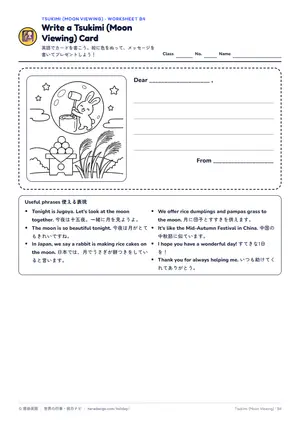
お月見を外国の友だちに紹介するミニポスター
🎯 日付・お供え・月のうさぎの3点を入れて、英語でお月見を紹介する。
- 本文の英語を読み、日付・お供え・うさぎの説明にあたる文を探す。
- 絵と英文3〜5文でポスターを作る。
- グループで発表し合い、いちばんわかりやすいポスターに投票する。
詳細版を開く(時間配分・Teacher Talk・板書)
英語ページの会話(ルーカスとハナ)を音声で聞かせ、ルーカスがおどろいたこと(窓辺の団子、すすき、満月は2日後)を聞き取らせる。「外国の友だちにお月見を紹介するポスターを作る」と目標を伝える。
🗣️ Lucas is visiting Hana's house. Listen. / What surprised Lucas? / Yes, dumplings by the window. They're for the moon! / Today, you will make a poster about tsukimi.
本文を音声のあとについて音読する。日付(the 15th night of the eighth month of the old moon calendar / usually in September or early October)を青、お供え(round rice dumplings / susuki / taro)を赤、うさぎ(a rabbit lives on the moon and makes rice cakes)を緑で線を引かせる。ペアで答え合わせをする。
🗣️ Let's read after the audio. / Blue for the date. Red for the offerings. Green for the rabbit. / Check with your partner.
画用紙に絵と英文3〜5文でポスターを作らせる。3点(日付・お供え・うさぎ)を必ず入れ、4文目以降に自分のこと(I like tsukimi dumplings.)や豆知識(The moon is not always full on Jugoya.)を加えるよう促す。タイトルは Tsukimi: Moon Viewing in Japan のように英語でつけさせる。
🗣️ Make your poster. Write three to five sentences. / Include the date, the offerings, and the rabbit. / Add a fun fact. The moon is not always full on Jugoya. / Don't forget a title and a picture.
4人グループでポスターを見せながら発表し合う(1人1分)。全員の発表が終わったら教室に掲示し、「いちばんわかりやすいポスター」にシールで投票させる(自分のもの以外)。
🗣️ Show your poster to your group. One minute each. / Now put your posters on the wall. / Vote for the clearest poster. Not your own!
票の多かったポスターを紹介し、どこがわかりやすかったか(絵と文が合っている・短い文など)を全体で確かめる。
🗣️ This poster got the most votes. / Why is it easy to understand? The picture and the words match.
Tsukimi: Moon Viewing in Japan 🌕

【日付】the 15th night of the eighth month of the old moon calendar
        usually in September or early October(2026年は9月25日)
【お供え】round rice dumplings / susuki(tall grass)/ taro
【うさぎ】A rabbit lives on the moon and makes rice cakes.

+ fun fact:The moon is not always full on Jugoya.
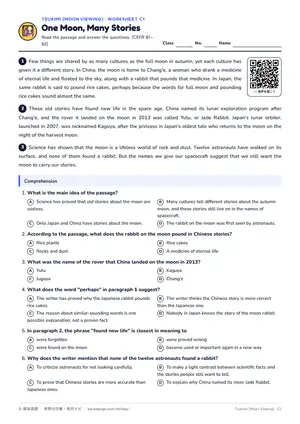
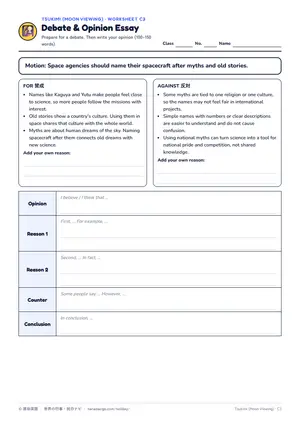
宇宙機の名前と神話(リサーチ発表)
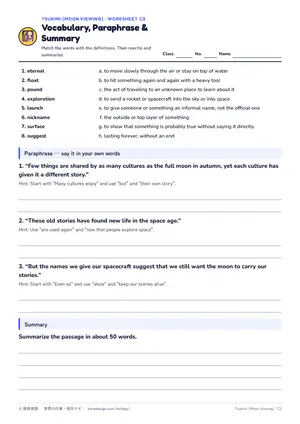
🎯 嫦娥(じょうが)・玉兎(ぎょくと)・かぐやなど、月の伝説にちなむ宇宙機の名前を調べ、文化と科学の関係を英語で論じる。
- advanced の英文を読み、例に挙がった名前の由来を確認する。
- ほかの国の宇宙機や星座の名前から、神話にちなむものを1つ調べる。
- Why do we name spacecraft after myths? をテーマに3分の英語プレゼンをする。
- 質疑応答で、命名の意味について意見を交わす。
詳細版を開く(時間配分・Teacher Talk・板書)
中国の月探査車「玉兎」と日本の月探査機「かぐや」の写真(またはイラスト)を見せ、「この名前の由来は?」と聞く。月のうさぎやかぐや姫を知っているか確かめ、今日のテーマ Why do we name spacecraft after myths? を示す。
🗣️ This is Yutu, a Chinese lunar rover. This is Kaguya, a Japanese lunar orbiter. / Where do these names come from? / Today's question is this: Why do we name spacecraft after myths?
発展セットの英文を読ませ、例に挙がった名前(Chang'e=薬を飲んで月へのぼった女性、Yutu=Jade Rabbit・2013年に着陸、Kaguya=2007年に打ち上げ・日本最古の物語の姫)の由来をペアで確認させる。日本のうさぎが餅をつく理由として本文が挙げる説(望月と餅つきの音が似ている)にも触れる。
🗣️ Read the passage. Find three names and their stories. / Who was Chang'e? Why is the rover called Jade Rabbit? / When was Kaguya launched? / Check your answers with your partner.
ほかの国の宇宙機・宇宙計画や星座の名前から、神話にちなむものを1つ選んで調べさせる(例:NASA の Apollo 計画・Artemis 計画はギリシャ神話の神々、木星探査機 Juno はローマ神話の女神)。名前・神話の内容・名づけた機関と年・その名前を選んだ理由(公式の説明があれば)を構成メモにまとめ、3分のプレゼンを準備させる。出典を必ず書かせる。
🗣️ Choose one more spacecraft or program named after a myth. / For example, Apollo and Artemis come from Greek myths. / Find the myth, the agency, the year, and why they chose the name. / Prepare a three-minute talk. Write your sources.
4〜5人のグループで、1人3分ずつプレゼンし、1人1分ずつ質疑応答をする。聞き手には、名前の選び方について質問するよう促す(Is the name a good choice? / Who might not like this name?)。先生はグループを回り、よい問いを拾う。
🗣️ Each speaker has three minutes. Then one minute for questions. / Listeners, ask about the name. Is it a good choice? / Who might not like this name? Why? / Next speaker, please.
全体で、グループで出た意見を共有させる(国の文化を世界に示す・人々の関心を集める・神話が持つ意味をめぐる議論など)。最後に発展セット第3段落の、月は生命のない世界で、12人の宇宙飛行士の誰もうさぎを見つけなかったが、名前は今も月に物語を託しているという結びを読み、各自が英語で2〜3文の感想を書く。
🗣️ Share one idea from your group. / Twelve astronauts walked on the moon. None of them found a rabbit. / But we still give our spacecraft names from old stories. / Write two or three sentences. What do you think about this?
Why do we name spacecraft after myths?

Chang'e  China's lunar program:a woman who drank a medicine of eternal life
Yutu     rover, landed 2013:Jade Rabbit
Kaguya   Japan's orbiter, launched 2007:the princess who returns to the moon

例:Apollo / Artemis(Greek myths), Juno(Roman myth)

プレゼン:name → myth → agency & year → why this name? → my opinion
質問:Is it a good choice? / Who might not like it?
月見団子づくり&英語レシピ
🎯 命令文と順序の表現(first, next, then)を使って、手を動かしながら英語のレシピを作る。
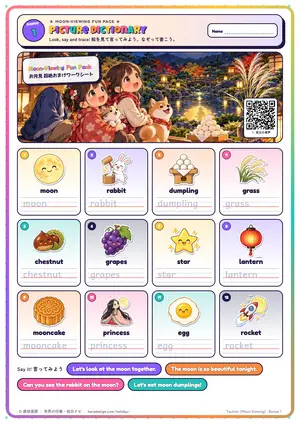
- 白玉粉・水など材料の英語を確認する(rice flour, water, bowl)。
- 先生の英語の指示(Mix, Roll, Boil)に合わせて団子を作る。
- first / next / then / finally を使って、自分たちの英語レシピを書く。
- 完成した団子を15個積み、すすきと一緒に写真を撮って紹介文をつける。
詳細版を開く(時間配分・Teacher Talk・板書)
材料と道具を並べ、英語カードと合わせながら名前を発音させる(rice flour, water, bowl, pot)。月見団子の写真を見せ、十五夜に団子を15個積んで月に供える家が多いことを伝える。
🗣️ This is rice flour. This is water. / This is a bowl, and this is a pot. / Today, we will make tsukimi dumplings. / Many families put fifteen dumplings out for the moon.
先生が英語で指示を出し、生徒は手を動かす。Put the rice flour in the bowl. / Add water little by little. / Mix it with your hands. / Roll it into small balls. と進め、ゆでる工程は先生が行う(Boil the balls. / When they float, take them out. / Put them in cold water.)。手を動かしながら、動詞をくり返し言わせる。
🗣️ Put the rice flour in the bowl. / Add water little by little. Mix it with your hands. / Roll it into small balls, like this. / I will boil them. Look! When they float, they're ready.
団子を冷ましているあいだに、ペアで英語のレシピを書かせる。First / Next / Then / Finally の順序の表現と、さっき聞いた命令文を使うよう伝える。材料の欄(Ingredients)も書かせる。書けたらペアで読み合い、抜けている工程がないか確かめる。
🗣️ While the dumplings cool, write the recipe. / First, put the rice flour in a bowl. / Use next, then, and finally. / Read it to your partner. Is any step missing?
冷ました団子を15個積ませる(下から9個・4個・2個がよく見られる積み方)。すすきと一緒に写真を撮り、写真に英語の紹介文を1〜2文つけさせる(These are tsukimi dumplings. We made fifteen for the moon.)。
🗣️ Let's stack fifteen dumplings. Nine on the bottom. / Then four, and two on the top. / Take a picture with the susuki. / Write one or two sentences for your photo.
各ペアにレシピを読み上げさせる。団子を食べながら、すすきには魔よけの意味や稲穂の代わりという説があることを英語で一言紹介して終わる。
🗣️ Read your recipe to everyone. / Some people say susuki looks like rice plants. / Now, let's eat! Thank you, moon!
Tsukimi Dumplings 🍡

Ingredients:rice flour, water

First, put the rice flour in a bowl.
Next, add water and mix it.
Then, roll it into small balls.
Then, boil the balls. When they float, put them in cold water.
Finally, stack fifteen dumplings.(9 → 4 → 2)

These are tsukimi dumplings. We made fifteen for the moon.