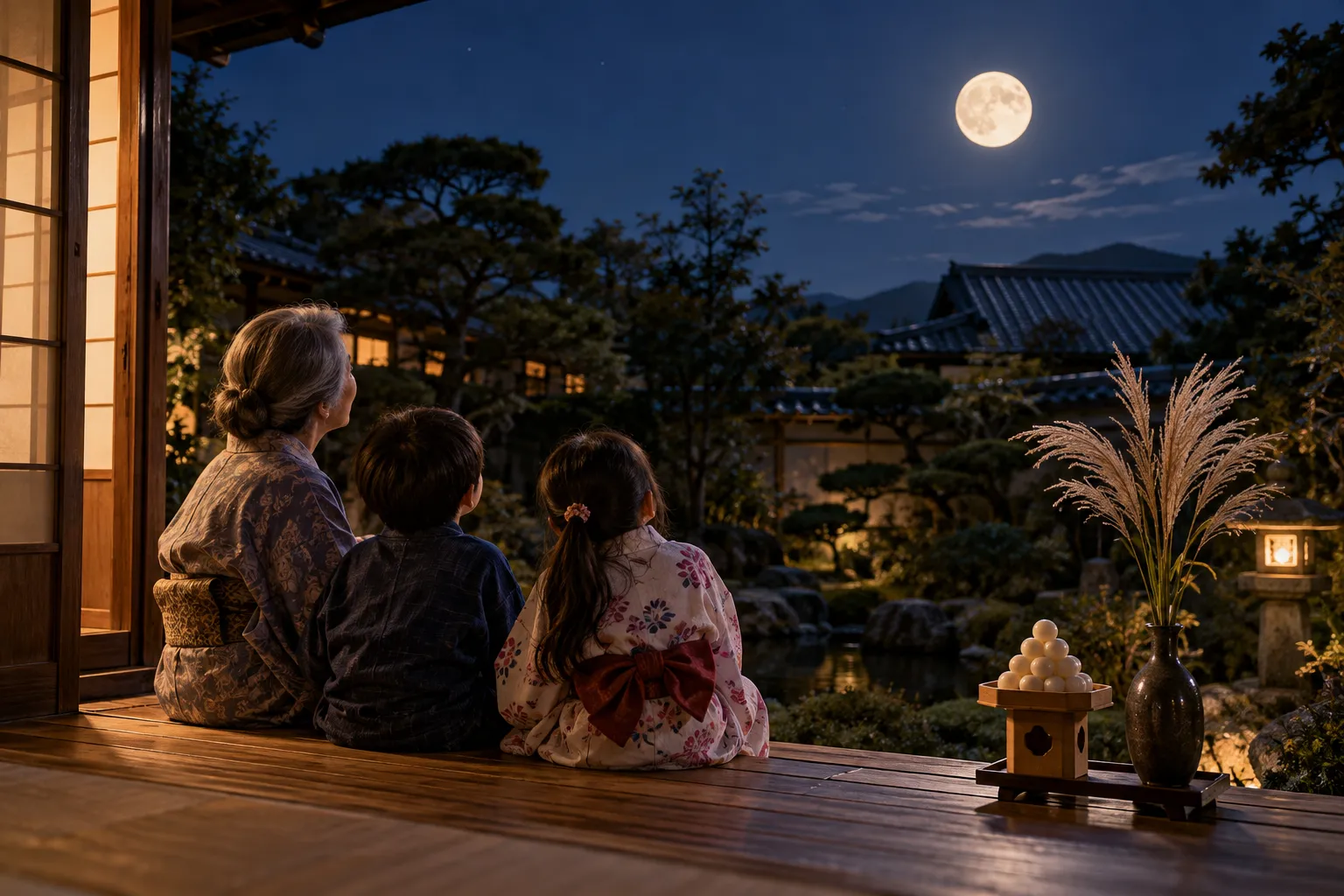
Tsukimi (Moon Viewing)

お月見(十五夜)を英語で:読む・聞く・話す・遊ぶ

やさしい英語(CEFR A2)の読み物に音声つき。会話・単語カード・クイズ8問・ゲームで、お月見(十五夜)の英語をまるごと。

🔊Read in Englishお月見(十五夜)を英語で読もう(CEFR A2・音声つき)

お月見(十五夜)を、やさしい英語で紹介する読み物です。▶で英文をタイトルから通して聞けます(アメリカ英語)。「和訳」ボタンで日本語訳の表示・非表示を切りかえられます。下線の語は下の単語カードにあります。

A Rabbit on the Moon: Tsukimi in Japan

CEFR A2
0:00
273 words

Look up at the moon on a clear autumn night. Can you see a rabbit? In Japan, people say a rabbit lives on the moon and makes rice cakes. Each fall, families put out food for the moon and enjoy its light. This custom is called tsukimi, or moon viewing.

晴れた秋の夜に、月を見上げてみてください。うさぎが見えますか。日本では、月にうさぎが住んでいて、餅をついていると言います。毎年秋、家族は月にお供えをして、その光を楽しみます。この習わしは「月見」と呼ばれます。

Tsukimi came from China a long time ago. The oldest record of a moon party in Japan is from 859. Rich people at the palace wrote poems and played music under the moon. Some of them sat in boats and looked at the moon in the water. In an old story from the same time, Princess Kaguya goes back to the moon on this very night.

月見はずっと昔に中国から伝わりました。日本で最も古い月の宴の記録は859年のものです。宮廷の貴族たちは、月の下で詩を作り、音楽を奏でました。舟に乗って、水に映る月を眺める人もいました。同じころの古い物語では、かぐや姫がまさにこの夜に月へ帰っていきます。

Today, tsukimi is on the 15th night of the eighth month of the old moon calendar. It is usually in September or early October. Families put round rice dumplings and tall grass called susuki by the window. Some people also offer taro, because it is harvest time.

今、月見は昔の月の暦で8月15日の夜に行われます。たいてい9月か10月の初めです。家族は丸い団子と、すすきという背の高い草を窓辺に置きます。収穫の時期なので、里芋を供える人もいます。

Here is a fun fact. The moon on this night is not always full. In 2026, tsukimi was on September 25, but the full moon came two days later. This happens because the moon often takes more than 14 days to grow full, and the number of days changes every month. So the 15th night and the full moon are often one or two days apart.

ここでおもしろい事実を一つ。この夜の月は、いつも満月とはかぎりません。2026年、月見は9月25日でしたが、満月は2日後に来ました。これは、月が満ちるまでに14日より長くかかることが多く、その日数も毎月変わるために起こります。だから十五夜と満月は、1〜2日ずれることがよくあるのです。

Many countries in Asia enjoy the same moon. Chinese families eat mooncakes, and Koreans go back to their hometowns for Chuseok. In Vietnam, children walk through the streets with bright lanterns. So next time you see the autumn moon, say hello to the rabbit!

アジアの多くの国が同じ月を楽しみます。中国の家族は月餅を食べ、韓国の人々はチュソクのために故郷へ帰ります。ベトナムでは、子どもたちが明るい灯籠を持って通りを歩きます。だから次に秋の月を見たら、うさぎにあいさつしてくださいね!

💬Dialogue英語の会話でお月見(十五夜)

🎬 2026年9月25日の夜。ブラジルから来たルーカスが、友だちのハナの家を訪ねています。窓辺に団子とすすきが置いてあるのに気づきます。

0:00
Lucas

Hana, why are there dumplings by the window?

ハナ、どうして窓のそばに団子があるの?

Hana

They're for the moon. Tonight is Jugoya, the night of moon viewing.

お月さまへのお供えなの。今夜は十五夜、お月見の夜なんだ。

Lucas

For the moon? That's so cute. What's the tall grass?

月のために?かわいいね。あの背の高い草は?

Hana

It's called susuki. Some people say it looks like rice plants.

すすきっていうの。稲穂に似ているって言う人もいるよ。

Lucas

Is the moon full tonight?

今夜は満月なの?

Hana

Almost! The real full moon is the day after tomorrow.

ほぼね!本当の満月はあさってなんだ。

Lucas

Really? I thought Jugoya was always a full moon.

ほんとに?十五夜はいつも満月だと思ってた。

Hana

Many Japanese people think so too. Look, the moon is coming up!

日本人でもそう思っている人が多いよ。見て、月が出てきた!

Lucas

Wow, it's huge. In Brazil, some people see Saint George on the moon.

わあ、大きい。ブラジルでは、月に聖ジョージが見えるって言う人もいるよ。

Hana

Interesting! In Japan, we see a rabbit making rice cakes.

おもしろい!日本では、うさぎが餅つきをしているように見えるの。

Lucas

A rabbit? Let me see. Oh, I think I can see its ears!

うさぎ?見せて。あ、耳が見える気がする!

Hana

Now let's eat the dumplings. The moon has had enough time to enjoy them.

じゃあ団子を食べよう。お月さまはもう十分楽しんだよ。

🃏Word Cardsお月見(十五夜)の英単語カード(12語)

カードをタップすると裏返って、意味と例文が出ます。

moon viewing名詞
月見Moon viewing is an old custom in Japan.月見は日本の古い習わしです。💡 view は「眺める」。cherry blossom viewing(花見)も同じ形。
full moon名詞
満月The full moon came two days later.満月は2日後にやってきました。💡 new moon(新月)、half moon(半月)も一緒に覚えよう。
custom名詞
習慣、風習This custom came from China.この風習は中国から来ました。💡 customs(複数)は「税関」の意味にもなる。
rice cake名詞
餅The rabbit is making rice cakes.うさぎは餅をついています。💡 日本の餅は mochi でも通じる。make rice cakes で「餅をつく」。
dumpling名詞
団子We put fifteen dumplings by the window.私たちは窓辺に団子を15個置きました。💡 中に具が入った「ぎょうざ」なども dumpling と呼ぶ。
offer動詞
供えるSome people offer taro to the moon.月に里芋を供える人もいます。💡 offering(名詞)は「お供え物」。
harvest名詞
収穫It is harvest time in the fall.秋は収穫の時期です。💡 harvest moon は秋分に近い満月。
palace名詞
宮殿、宮廷People at the palace wrote poems.宮廷の人々は詩を作りました。💡 Buckingham Palace(バッキンガム宮殿)の palace。
poem名詞
詩She wrote a poem about the moon.彼女は月についての詩を書きました。💡 poet(詩人)、poetry(詩全般)。
calendar名詞
暦Tsukimi follows the old moon calendar.月見は昔の月の暦に従います。💡 旧暦は the lunar calendar とも言う。
lantern名詞
灯籠、ちょうちんChildren walk with bright lanterns.子どもたちは明るい灯籠を持って歩きます。💡 paper lantern で「ちょうちん」。
mooncake名詞
月餅Chinese families eat mooncakes together.中国の家族は一緒に月餅を食べます。💡 moon + cake。丸い形が満月と家族の円満を表す。

✅Quizお月見(十五夜)の英語クイズ(8問)

上の英文を読んでから答えてみよう。答えを選ぶとすぐに解説が出ます。全問正解でスタンプが金色に!

Q1. What is the main idea of the reading?

この文章の主旨は何ですか。

本文全体で、月見が中国から伝わり859年の記録があり、今も秋に行われる習わしだと説明しています。満月の日は毎年変わります。

Q2. When is the oldest record of a moon party in Japan from?

日本で最も古い月の宴の記録はいつのものですか。

第2段落に The oldest record of a moon party in Japan is from 859. とあります。

Q3. What did rich people at the palace do under the moon?

宮廷の貴族たちは月の下で何をしましたか。

第2段落に wrote poems and played music under the moon とあります。灯籠はベトナムの子ども、月餅は中国の話です。

Q4. In 2026, when was the full moon?

2026年、満月はいつでしたか。

第4段落に tsukimi was on September 25, but the full moon came two days later とあります。

Q5. In paragraph 3, what does "offer" mean?

第3段落の offer はどういう意味ですか。

Some people also offer taro は「月に里芋を供える」という意味です。

Q6. Which sentence matches the reading?

本文の内容に合うものはどれですか。

第5段落に In Vietnam, children walk through the streets with bright lanterns. とあります。月見は中国から伝わり、新暦では9月か10月初め、満月とはかぎりません。

Q7. Why do some people offer taro?

なぜ里芋を供える人がいるのですか。

第3段落に because it is harvest time とあり、とれたての作物を供えていることがわかります。

Q8. In the dialogue, what does Lucas say some people in Brazil see on the moon?

会話で、ルーカスはブラジルの人が月に何を見ると言っていますか。

ルーカスは In Brazil, some people see Saint George on the moon. と言っています。うさぎは日本の見方です。

🎮Gamesお月見(十五夜)の英語ゲーム

タブを切りかえて遊べます。授業ではプロジェクターに映して、クラス対抗戦にしても盛り上がります。

📖Read Moreもっと読む:One Moon, Many Stories

少し難しめ(B1〜B2)の英文で、お月見(十五夜)を違う角度から。

One Moon, Many Stories

B1–B2
0:00
188 words

Few things are shared by as many cultures as the full moon in autumn, yet each culture has given it a different story. In China, the moon is home to Chang'e, a woman who drank a medicine of eternal life and floated to the sky, along with a rabbit that pounds that medicine. In Japan, the same rabbit is said to pound rice cakes, perhaps because the words for full moon and pounding rice cakes sound almost the same.

秋の満月ほど多くの文化に共有されているものは少ないですが、それぞれの文化はそこに違う物語を与えてきました。中国では、月は不老不死の薬を飲んで空へのぼった女性・嫦娥(じょうが)と、その薬をつくうさぎのすみかです。日本では、同じうさぎが餅をついているとされます。満月と餅つきを表す言葉の音がほとんど同じだからかもしれません。

These old stories have found new life in the space age. China named its lunar exploration program after Chang'e, and the rover it landed on the moon in 2013 was called Yutu, or Jade Rabbit. Japan's lunar orbiter, launched in 2007, was nicknamed Kaguya, after the princess in Japan's oldest tale who returns to the moon on the night of the harvest moon.

こうした古い物語は、宇宙時代に新しい命を得ています。中国は月探査計画を嫦娥にちなんで名づけ、2013年に月に降ろした探査車は玉兎(ぎょくと)、つまり翡翠のうさぎと呼ばれました。2007年に打ち上げられた日本の月周回機は、十五夜に月へ帰る日本最古の物語の姫にちなみ、「かぐや」という愛称がつけられました。

Science has shown that the moon is a lifeless world of rock and dust. Twelve astronauts have walked on its surface, and none of them found a rabbit. But the names we give our spacecraft suggest that we still want the moon to carry our stories.

科学は、月が岩とちりでできた生命のない世界であることを明らかにしました。12人の宇宙飛行士が月面を歩きましたが、だれもうさぎを見つけませんでした。それでも私たちが宇宙機につける名前は、今も月に物語を託したいと願っていることを示しています。

👋Useful Phrasesお月見(十五夜)に使える英語フレーズ

Tonight is Jugoya. Let's look at the moon together.今夜は十五夜。一緒に月を見ようよ。お月見に誘う一言。
The moon is so beautiful tonight.今夜は月がとてもきれいですね。そのまま使える感想の一言。
In Japan, we say a rabbit is making rice cakes on the moon.日本では、月でうさぎが餅つきをしていると言います。外国の人がいちばん喜ぶ話題の一つ。
We offer rice dumplings and pampas grass to the moon.月に団子とすすきを供えます。offer で「供える」。
It's like the Mid-Autumn Festival in China.中国の中秋節に似ています。アジア出身の人にはこれで一気に伝わる。

🗣️ 話し合ってみよう(Discussion)

  1. What do you see on the moon: a rabbit, a face, or something else?

    月に何が見えますか。うさぎ、顔、それとも別のもの?
  2. What food would you offer to the moon? Why?

    月にどんな食べ物を供えたいですか。それはなぜですか。
  3. Many people think Jugoya is always a full moon. Why do you think this mistake is so common?

    十五夜はいつも満月だと思う人が多いのはなぜだと思いますか。
  4. Should Japan make tsukimi a national holiday like China? Why or why not?

    日本も中国のように月見を祝日にすべきだと思いますか。理由も述べましょう。
  5. Why do space agencies use names from old stories for their spacecraft? Is it a good idea?

    宇宙機関はなぜ宇宙機に昔話の名前をつけるのでしょうか。よい考えだと思いますか。

🗾Explain Japan in Englishお月見(十五夜)を海外の人に英語で説明するなら

姉妹サイト「日本文化ナビ」に、英語でかんたんに説明する例文(ひと言・30秒・スピーチ)と、外国の人によく聞かれる質問がまとまっています。日本語のページと、英語だけのページ(そのまま海外の人に見せられます)があります。

お月見を英語で説明する(otsukimi)お月見(otsukimi)を英語で説明するには。一言/30秒/スピーチの3段階の英文と和訳、外国人によく聞かれる質問と答え、そのまま使えるフレーズ、音声つき。JP 日本語で読むGB English page

団子を英語で説明する(dango)団子(dango)を英語で説明するには。一言/30秒/スピーチの3段階の英文と和訳、外国人によく聞かれる質問と答え、そのまま使えるフレーズ、音声つき。JP 日本語で読むGB English page
🎑
Tsukimi (Moon View
スタンプ帳にお月見(十五夜)のスタンプを押しました!
クイズで全問正解すると金のスタンプに。世界一周めざして集めよう。 スタンプ帳を見る →

授業アイデアとワークシートを見る →