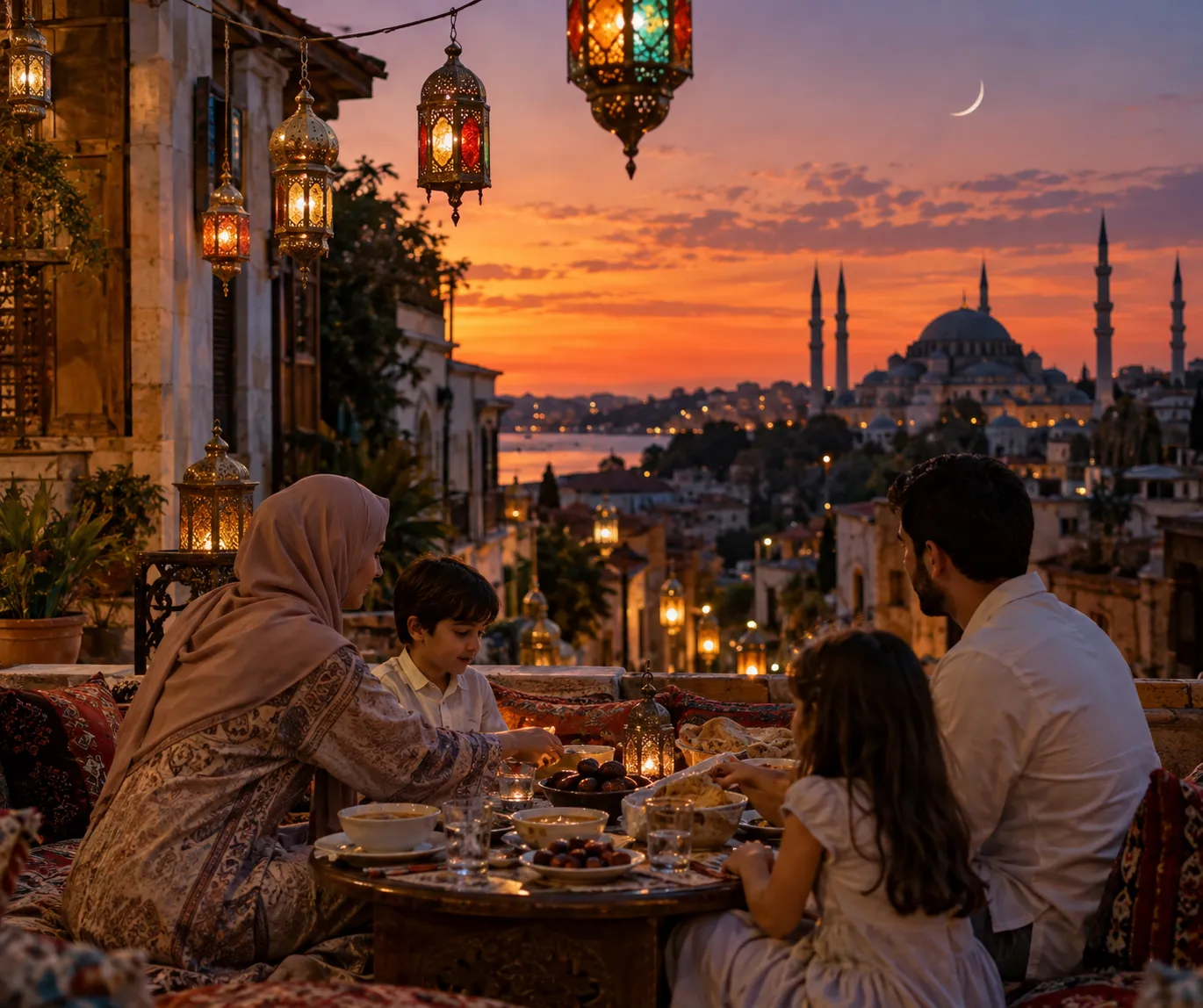
Ramadan & Eid al-Fitr
ラマダンとイードの英語の授業アイデアとワークシート
印刷してすぐ使えるワークシート(PDF・Word・解答つき)と、授業の手順書。
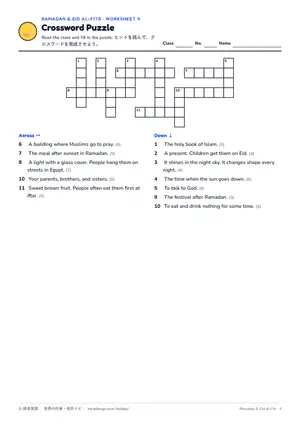
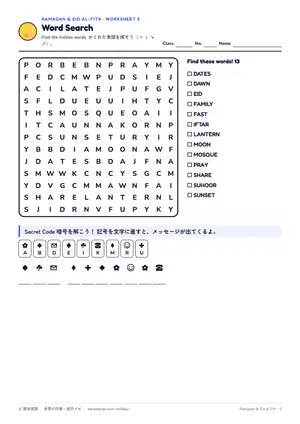
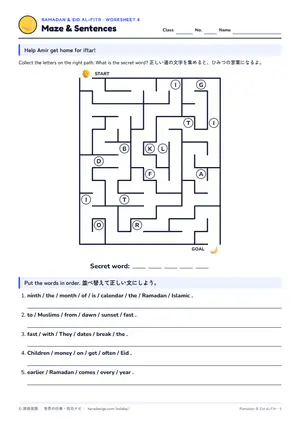
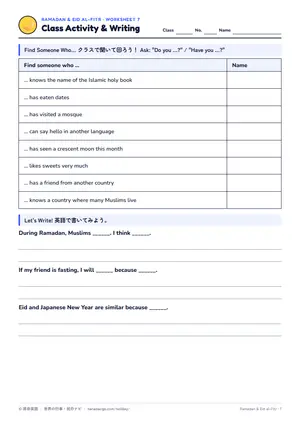
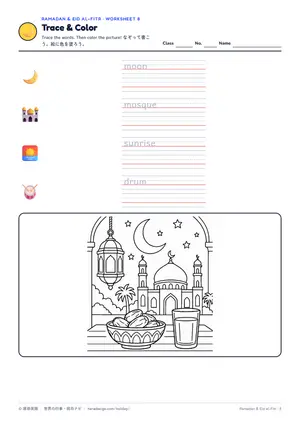
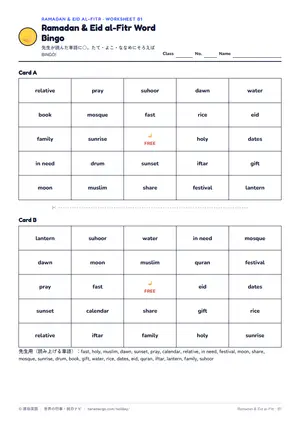
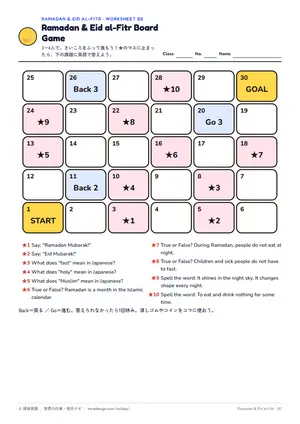
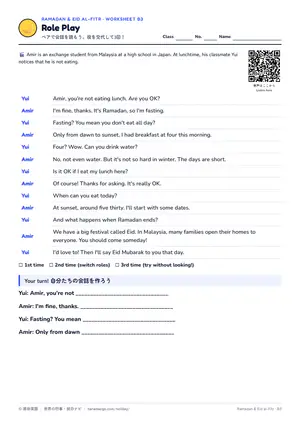
🖨️Worksheetsワークシート(無料・A4)
① 「中身を見る・印刷」で全ページを確認 → ② そのページ上の 🖨️ 印刷する でそのまま印刷できます。A4・無料。
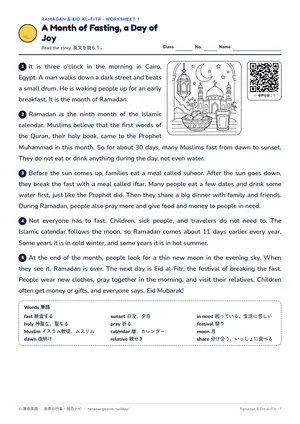
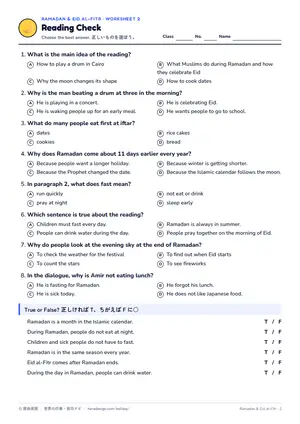
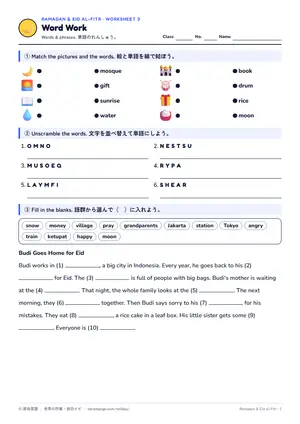
🍎Lesson Ideasラマダンとイードを使った英語の授業アイデア
断食時間を計算しよう:東京・ジャカルタ・オスロ
🎯 時刻の英語表現と数字を使い、場所と季節で断食の長さがちがうことを体験的に理解する。
- 3都市の日の出・日の入り時刻の表(夏と冬)を配る。
- ペアで The sun rises at ___ and sets at ___. と読み合う。
- 各都市の断食時間を計算し、In Oslo, people fast for ___ hours. と英語で書く。
- なぜちがうのかを英語の一言(because the days are long / short)で発表する。
詳細版を開く(時間配分・Teacher Talk・板書)
ラマダンはイスラム暦の9月で、ムスリムが夜明けから日没まで食べ物も水も口にしない月だと説明する。夜はスフール(夜明け前)とイフタール(日没後)の食事があることも伝える。「どこに住んでいても断食の長さは同じ?」と問いかける。
🗣️ During Ramadan, Muslims fast from dawn to sunset. / They don't eat or drink during the day. / They eat before dawn and after sunset. / Is the fast the same length everywhere?
表を配り、ペアで The sun rises at ___ and sets at ___. と読み合わせる。時刻の読み方(4:25 = four twenty-five)を確認する。
🗣️ Look at Tokyo in June. / The sun rises at four twenty-five. / It sets at seven o'clock. / Now read Jakarta and Oslo with your partner.
各都市・各季節の昼の長さを計算させ、In Oslo, people fast for about ___ hours. と英語で書かせる。オスロの6月は約19時間、12月は約6時間になることに気づかせる。最後に、実際の断食は夜明けからなので、これより長いことを伝える。
🗣️ How long is the day in Oslo in June? / About nineteen hours! / Write: In Oslo, people fast for about ___ hours. / Remember, the fast starts at dawn, so it's even longer.
なぜちがうのかを英語の一言で発表させる(because the days are long / short in summer / winter)。ラマダンは毎年約11日ずつ早まるので、同じ場所でも年によって夏になったり冬になったりすることにもふれる。
🗣️ Why is the fast so long in Oslo in June? / Because the days are very long in summer. / Why is Jakarta almost the same all year? / Ramadan moves every year, so the season changes, too.
Ramadan:fast from dawn to sunset
The sun rises at ___ and sets at ___.

     June    December
Tokyo  about 14.5 h about 10 h
Jakarta about 12 h  about 12.5 h
Oslo  about 19 h  about 6 h

In ___, people fast for about ___ hours.
because the days are long / short
※実際は夜明けから → もっと長い
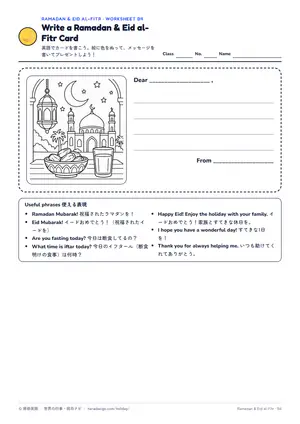
イード・ムバラク!お祝いカードを作ろう
🎯 Eid Mubarak などのあいさつを覚え、ほかの文化のお祝いに敬意をもって参加する。
- イードの写真(礼拝のあとの家族、ランタン、お菓子)を見せ、気づいたことを話す。
- Eid Mubarak! / Happy Eid! を発音練習する。
- 三日月や星、ランタンの形のカードに英語のメッセージを書く。
- 可能なら、地域のムスリムの方や留学生に届ける。
詳細版を開く(時間配分・Teacher Talk・板書)
イードの写真を見せ、気づいたことを言わせる。ラマダンという1か月の断食のあとに、イードというお祝いの日があることを伝える。新しい服を着て、親せきを訪ね、子どもはお金をもらうこともあると紹介する。
🗣️ Look at these pictures. What do you see? / This is Eid. It's a big celebration. / People wear new clothes and visit their families. / Children sometimes get money. Like otoshidama!
Eid Mubarak! と Happy Eid! を発音練習させる。Mubarak は「祝福された」という意味だと説明する。
🗣️ Repeat after me. Eid Mubarak! / Mubarak means blessed. / You can also say, Happy Eid! / Say it to your friend.
三日月や星、ランタンの形のカードに英語のメッセージを書かせ、絵で飾らせる。例を見て写してよい。
🗣️ Choose a moon, a star, or a lantern. / Write Eid Mubarak! on it. / Add a picture. / Make it colorful.
カードを見せ合い、全員で Eid Mubarak! と言う。届けられる場合は、地域のムスリムの方や留学生に届けることを伝える。
🗣️ Show your card to your friends. / Let's say it together. Eid Mubarak! / We will send these cards to our friends in the community. / Great job!
Ramadan(1 month)→ Eid 🌙
Eid Mubarak!(祝福されたイードを)
Happy Eid!

new clothes / visit family / money for children
クラスのガイドブック:ラマダン中の友だちのために
🎯 本文や FAQ の情報をもとに、相手に配慮した提案を英語で書けるようになる。
- 本文と myth(誤解とホント)を読み、正しい知識を英語で3つまとめる。
- グループで、給食・体育・部活・行事で困りそうな場面を出し合う。
- We can ___. / It is a good idea to ask ___. の形で提案を書く。
- ポスターにまとめて発表し、最後に「本人に聞くこと」の大切さを確認する。
詳細版を開く(時間配分・Teacher Talk・板書)
会話の音声を聞かせ、昼休みに食べていない留学生のアミールにユイが気づく場面を確認する。日本に住むムスリムは2025年に約42万人と推計され、身近な話題であることを伝える。
🗣️ Listen to Amir and Yui. / Why isn't Amir eating lunch? / About 420,000 Muslims live in Japan. / You may have a classmate who fasts.
本文と誤解とホントを読ませ、正しい知識を英語で3つまとめさせる。例:Muslims fast only during the day. / They don't drink water, either. / Children and sick people don't have to fast.
🗣️ Read the text and the myths. / Do Muslims eat nothing for a whole month? / No. They fast only during the day. / Write three true facts in English.
グループに場面カードを配り、給食・体育・部活・行事で困りそうな場面を出し合わせる。考えがちがうので本人に聞くのがいちばん、という記事の考え方を思い出させる。
🗣️ Look at your scene card. / What could be hard for a fasting student? / What can the class do? / Remember, every person is different.
We can ___. / It is a good idea to ask ___. の形で提案を書かせ、ポスターにまとめさせる。押しつけにならない表現になっているかを確認する。
🗣️ Write your ideas on the poster. / We can ... / It is a good idea to ask ... / Is your idea kind and respectful?
各グループのポスターを発表させる。最後に、いちばん大切なのは「本人に聞くこと」であり、イフタールに誘われたら大きな歓迎のしるしだという記事の内容を確認する。
🗣️ Please present your poster. / What is the most important idea? / Ask the person. Don't guess. / If you're invited to iftar, it's a big welcome!
Facts
・fast only from dawn to sunset
・no water during the day
・children, sick people, travelers → don't have to fast

Scenes:school lunch / P.E. / club / trips
We can ___.
It is a good idea to ask ___.

→ Ask the person!
月の暦を体験:ラマダンはなぜ動く?
🎯 太陰暦と太陽暦の差を数字で確かめ、英語で説明できるようになる。
- 2025〜2028年のラマダンの開始日を英語で読み上げ、カレンダーに印をつける。
- 毎年何日ずつ早くなるかを計算する(約11日)。
- その調子で2030年まで延ばし、1年に2回始まる年を見つける。
- The Islamic calendar follows the moon, so ___. の文を完成させて説明する。
詳細版を開く(時間配分・Teacher Talk・板書)
4つの開始日を英語で読み上げ、カレンダーに印をつけさせる。毎年少しずつ早くなっていることに気づかせる。
🗣️ Ramadan started on March 1 in 2025. / In 2026, it started on February 18. / Mark the dates on your calendar. / What do you notice?
毎年何日ずつ早くなるかを計算させる。月の満ち欠け12回で約354日、太陽の暦は365日なので、差は約11日になることを確認する。
🗣️ How many days earlier is it each year? / About eleven days. / Twelve moons are about 354 days. / Our year is 365 days. What's the difference?
11日ずつ早めて2030年まで延ばし、1年に2回ラマダンが始まる年を見つけさせる。2030年は1月と12月の2回になる。計算はおよその値なので、実際の日付は1〜2日ずれることがあると伝える。
🗣️ Keep going. Take away eleven days each time. / When does Ramadan start in 2029? / Look at 2030. How many times does it start? / Twice! In January and in December.
The Islamic calendar follows the moon, so ___. の文を完成させて発表させる。例:so Ramadan comes about eleven days earlier every year. ラマダンは30年あまりですべての季節をめぐることも伝える。
🗣️ Complete this sentence. / The Islamic calendar follows the moon, so ... / Ramadan comes about eleven days earlier every year. / In a little over 30 years, it goes through all the seasons.
Ramadan starts
2025:March 1
2026:February 18
2027:February 8(ごろ)
2028:January 28(ごろ)
→ about 11 days earlier every year

12 moons ≒ 354 days vs 365 days
2030:twice(January and December)

The Islamic calendar follows the moon, so ___.
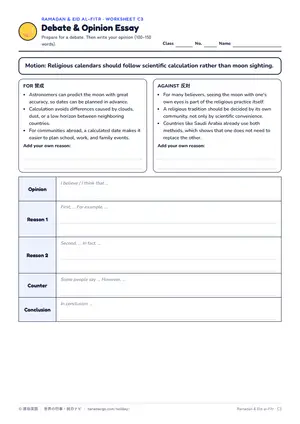
ディスカッション:目で見る月か、計算か
🎯 advanced の英文を読み、伝統と科学の関係について根拠をあげて議論する。
- advanced(Watching the Sky or Doing the Math?)を読み、両方の立場の理由を表にする。
- ほかの宗教や文化の暦(旧暦の行事、イースターなど)と比べる。
- 少人数で、日本に住むムスリムの立場からどの方法が便利かを話し合う。
- 自分の意見を英語100語程度で書いて提出する。
詳細版を開く(時間配分・Teacher Talk・板書)
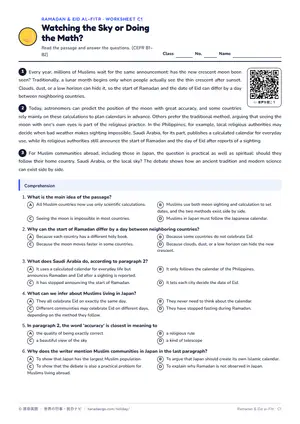
毎年、何百万人ものムスリムが「新しい三日月が見えたか」という発表を待つことを紹介する。天文学で月の位置を正確に予測できる今も、目で見ることを大切にする人が多い理由を考えさせる。
🗣️ Every year, millions of Muslims wait for one announcement. / Has the new crescent moon been seen? / Scientists can predict the moon very accurately. / So why do many people still want to see it?
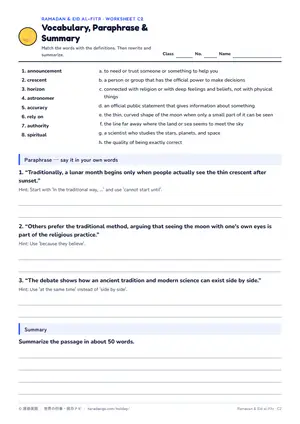
advanced の英文を読ませ、quiz で確認する。比較表に、観測と計算それぞれの理由・長所・短所・例(フィリピン、サウジアラビア)を書きこませる。
🗣️ Read the passage and answer the quiz. / Fill in the table. / Why do some people prefer seeing the moon? / What does Saudi Arabia do?
ほかの宗教や文化の暦(日本の旧暦で行う行事、イースターの日付の決め方など)と比べさせる。宗教の暦では「計算」と「実践」の両方が大切にされる例が多いことに気づかせる。
🗣️ Compare this with another calendar. / Easter uses a table, not the real sky. / Some Japanese events still follow the old lunar calendar. / What is similar? What is different?
少人数で、日本に住むムスリムの立場から、自分の出身国に合わせる・サウジアラビアに合わせる・日本の空を見る、のどれが便利かを話し合わせる。信仰の問題なので、外から正解を決めるのではなく、それぞれの理由を理解する話し合いにするよう伝える。
🗣️ Think from the view of a Muslim living in Japan. / Follow your home country, Saudi Arabia, or the local sky? / What are the good points of each? / We are not deciding for them. We are trying to understand.
本文の最後の文(an ancient tradition and modern science can exist side by side)をふまえて、自分の意見を英語100語程度で書かせ、提出させる。
🗣️ Write about 100 words. / Can tradition and science exist side by side? / Give one example. / Please hand it in at the end of class.
Sighting:see the crescent after sunset / part of religious practice / clouds, dust → 1 day difference
Calculation:astronomers / plan in advance
Philippines:authorities decide when weather is bad
Saudi Arabia:calculated calendar for daily life + sighting for Ramadan and Eid

Muslims in Japan:home country? Saudi Arabia? local sky?
'an ancient tradition and modern science can exist side by side'