Ramadan & Eid al-Fitr · Worksheet 1
A Month of Fasting, a Day of Joy
Read the story. 英文を読もう。
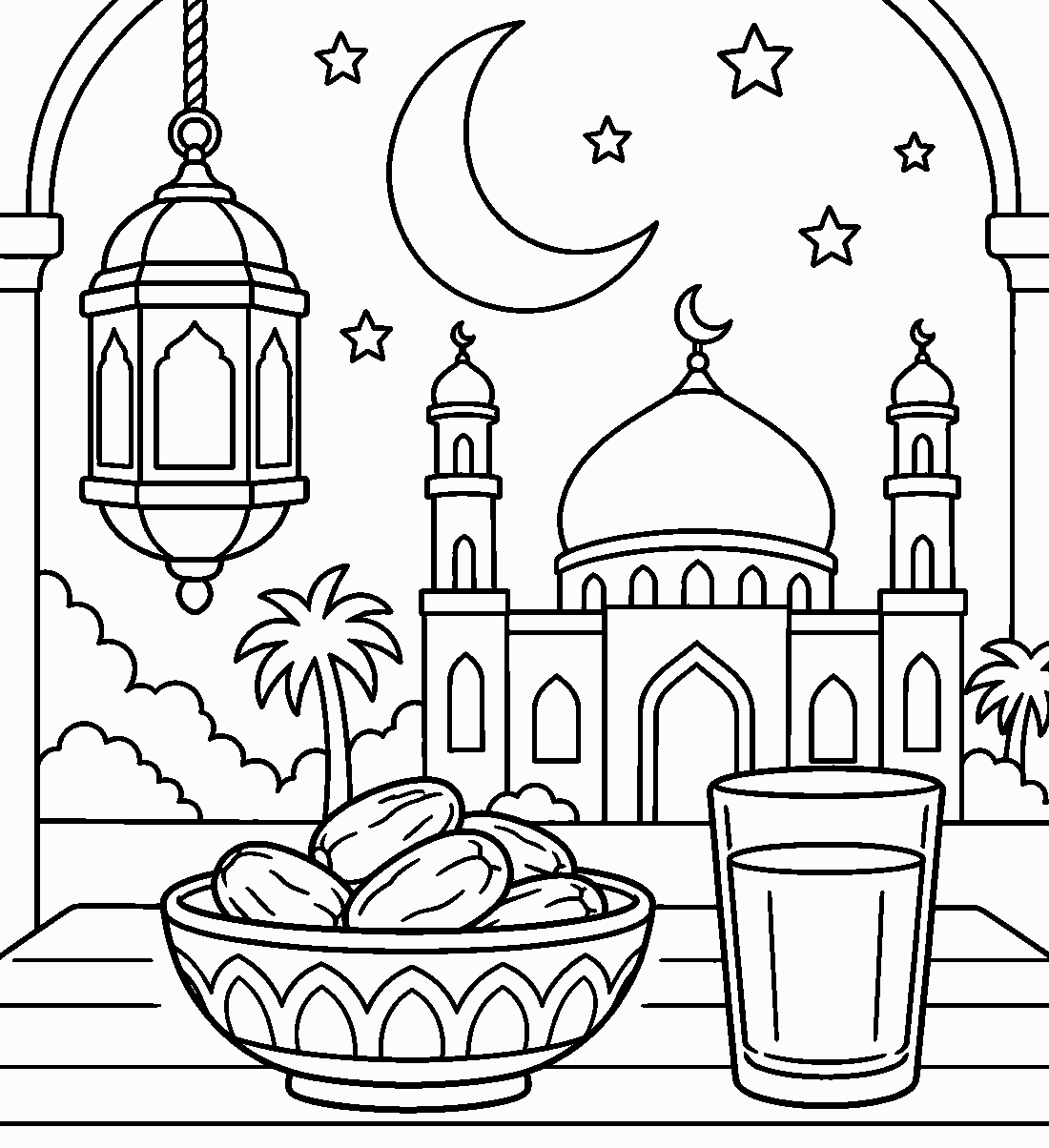
1It is three o'clock in the morning in Cairo, Egypt. A man walks down a dark street and beats a small drum. He is waking people up for an early breakfast. It is the month of Ramadan.
2Ramadan is the ninth month of the Islamic calendar. Muslims believe that the first words of the Quran, their holy book, came to the Prophet Muhammad in this month. So for about 30 days, many Muslims fast from dawn to sunset. They do not eat or drink anything during the day, not even water.
3Before the sun comes up, families eat a meal called suhoor. After the sun goes down, they break the fast with a meal called iftar. Many people eat a few dates and drink some water first, just like the Prophet did. Then they share a big dinner with family and friends. During Ramadan, people also pray more and give food and money to people in need.
4Not everyone has to fast. Children, sick people, and travelers do not need to. The Islamic calendar follows the moon, so Ramadan comes about 11 days earlier every year. Some years it is in cold winter, and some years it is in hot summer.
5At the end of the month, people look for a thin new moon in the evening sky. When they see it, Ramadan is over. The next day is Eid al-Fitr, the festival of breaking the fast. People wear new clothes, pray together in the morning, and visit their relatives. Children often get money or gifts, and everyone says, Eid Mubarak!
- fast 断食する
- holy 神聖な、聖なる
- Muslim イスラム教徒、ムスリム
- dawn 夜明け
- sunset 日没、夕日
- pray 祈る
- calendar 暦、カレンダー
- relative 親せき
- in need 困っている、生活に苦しい
- festival 祭り
- moon 月
- share 分け合う、いっしょに食べる