Omisoka (New Year's Eve in Japan)
大晦日の英語の授業アイデアとワークシート
印刷してすぐ使えるワークシート(PDF・Word・解答つき)と、授業の手順書。
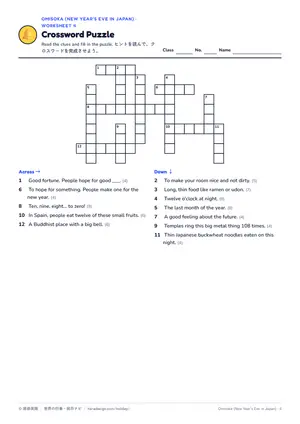
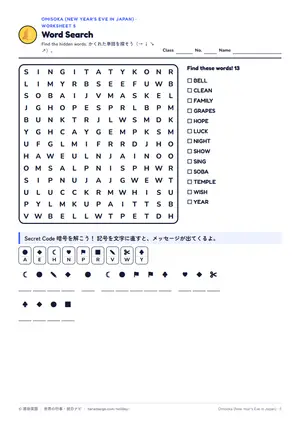
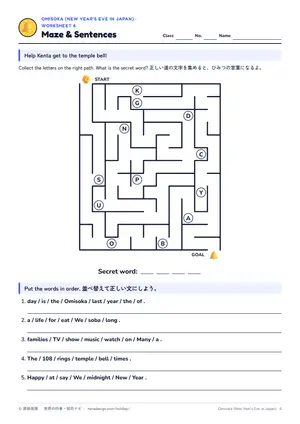
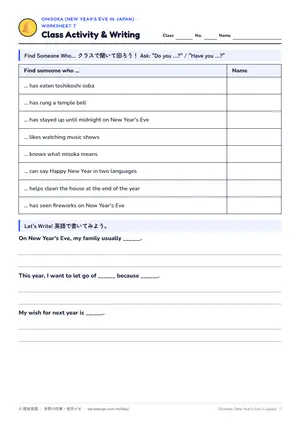
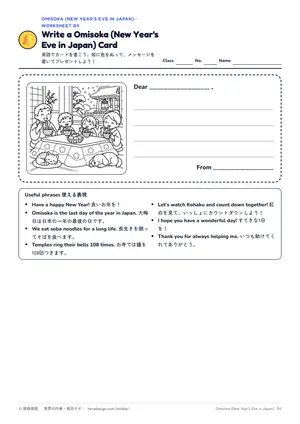
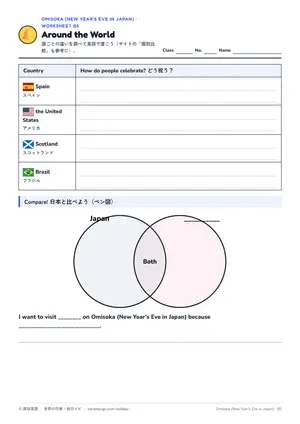
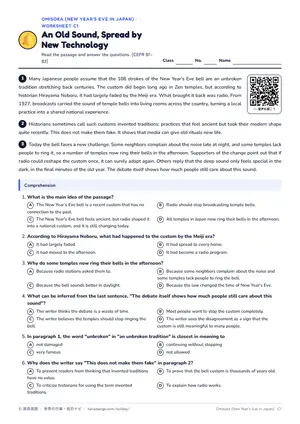
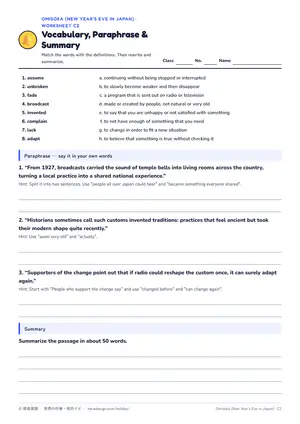
🖨️Worksheetsワークシート(無料・A4)
① 「中身を見る・印刷」で全ページを確認 → ② そのページ上の 🖨️ 印刷する でそのまま印刷できます。A4・無料。
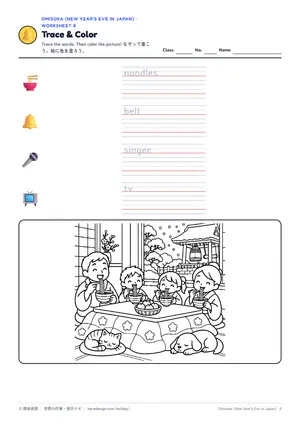
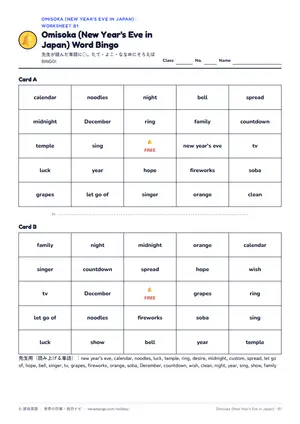
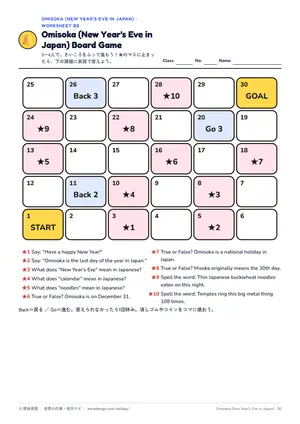
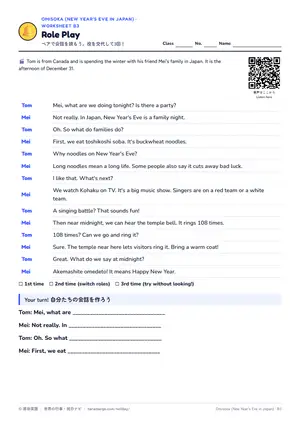
🍎Lesson Ideas大晦日を使った英語の授業アイデア
年越しそばの由来を英語で説明しよう
🎯 諸説ある由来を、Some say ~. Others say ~. の形で説明できるようにする。
- 本文第2段落の Some say / Others say の文を確認する。
- 年越しそばの4つの説(断ち切る・長生き・金運・そばにいる)をカードで配る。
- ペアで一つずつ英語にして、Some say soba ... の文を作る。
- どの説がいちばん好きか、理由をつけて発表する。
詳細版を開く(時間配分・Teacher Talk・板書)
年越しそばの写真を見せ、「大みそかにそばを食べるのはなぜ?」と聞く。何人かに日本語で予想を言わせ、「実は答えは1つではない」と伝える。
🗣️ What is this? Yes, toshikoshi soba. / Why do people eat soba on New Year's Eve? / Any ideas? Japanese is OK. / In fact, there is more than one answer.
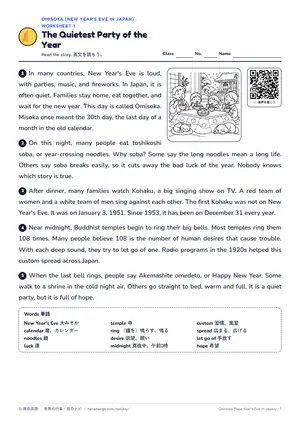
英語ページ第2段落の音声を聞かせ、Some say the long noodles mean a long life. Others say soba breaks easily, so it cuts away the bad luck of the year. の2文に線を引かせる。Some say ___. Others say ___. が「〜という人もいれば、〜という人もいる」という意味で、説が複数あるときに使えることを確認する。Nobody knows which story is true. の文も押さえる。
🗣️ Listen to paragraph 2. / Some say the long noodles mean a long life. / Others say soba breaks easily, so it cuts away bad luck. / Nobody knows which story is true.
4つの説のカードをペアに配る。本文にある①②に加えて、③金粉の説と④「側」の説を、ヒントカードを使って英語にさせる(Some say soba helps you collect money, because gold workers used soba dough to pick up gold dust. / Others say soba means you can stay by your family's side.)。④は日本語のしゃれなので、英語では side に言いかえて説明するとよいと伝える。
🗣️ Here are four stories. Make an English sentence for each one. / Some say soba helps you collect money. / Story 4 is a Japanese pun. Soba also means by your side. / So, others say soba means your family will stay by your side.
どの説がいちばん好きか、I like the ___ story because ___. の形で数人に発表させる。最後に「どれも『〜という説』で、どれが本当かは決まっていない」ことを確認する。
🗣️ Which story do you like best? / I like the long life story because I want to live long. / Remember, these are all stories. Nobody knows which is true.
Why do we eat soba on New Year's Eve?

① Some say soba breaks easily, so it cuts away bad luck.
② Some say long noodles mean a long life.
③ Others say soba helps you collect money.(金粉を集めた)
④ Others say your family will stay by your side.(そば=側)

Nobody knows which story is true.
I like the __ story because __.
世界の大みそかツアーガイド
🎯 国別比べの情報を使い、英語でツアーを紹介する。
- compare の表から、グループで1か国を担当する。
- その国の大みそかを In ~, people ~. の形で3文にまとめる。
- ツアーガイドになりきって1分で紹介する。
- 聞き手は行ってみたい国に投票し、理由を一文で書く。
詳細版を開く(時間配分・Teacher Talk・板書)
英語ページ本文第1段落の In many countries, New Year's Eve is loud ... In Japan, it is often quiet. を読み、「にぎやかな国の大みそかツアーを作ろう」と伝える。グループに1か国ずつカードを配り、地図で位置を確認する。
🗣️ In many countries, New Year's Eve is loud. In Japan, it is often quiet. / Today, you are tour guides. / Each group has one country. Find it on the map.
カードの情報を In ___, people ___. の形で英語3文にまとめさせる(In Spain, people eat 12 grapes at midnight.)。そのあと、ツアーガイドの台本(Welcome to ___! / On this tour, you will ___. / Don't forget to ___!)を作らせる。カードにある数字や年(タイムズスクエアのボール・ドロップは1907年に始まった、など)を1つ入れるよう指示する。
🗣️ Write three sentences. In Spain, people eat 12 grapes at midnight. / Now make a tour script. Welcome to Spain! / Add one number or year. It makes your tour more real. / End with Don't forget to ___!
各グループが1分でツアーを紹介する。ガイド役以外のメンバーは、写真や身ぶりで盛り上げてよい。聞き手は B5 の表に国名と特徴をメモする。
🗣️ Group 1, you have one minute. Welcome us to your country! / Listeners, take notes in the table. / Great tour! Next group.
聞き手に、行ってみたい国のツアーに投票させ、理由を英語1文で書かせる(I want to join the Denmark tour because I want to jump into the new year.)。いくつかの理由を読み上げ、最後に日本の静かな大みそかと比べて感想を聞く。
🗣️ Which tour do you want to join? Vote and write one reason. / I want to join the Denmark tour because I want to jump into the new year. / Now think about Japan. Is a quiet New Year's Eve good too?
World New Year's Eve Tours 🌍

Spain:12 grapes at midnight
USA:Ball Drop in Times Square(1907〜)
Scotland:Hogmanay, first-foot
Brazil:white clothes, fireworks on the beach
Denmark:jump off a chair at midnight
Philippines:long noodles for a long life
Korea:the bell rings 33 times in Seoul

In __, people __.
Welcome to __! / On this tour, you will __. / Don't forget to __!
Vote:I want to join the __ tour because __.
108の煩悩、英語で何を手放す?
🎯 今年の反省と来年の目標を英語で話す。
- 除夜の鐘の意味を英語で確認する(let go of desires)。
- This year, I want to let go of ~. の文で、手放したい習慣を言う。
- Next year, I will ~. で来年の目標を言う。
- 全員の発表の後、一人1回ずつ鐘の音(手をたたく)で締めくくる。
詳細版を開く(時間配分・Teacher Talk・板書)
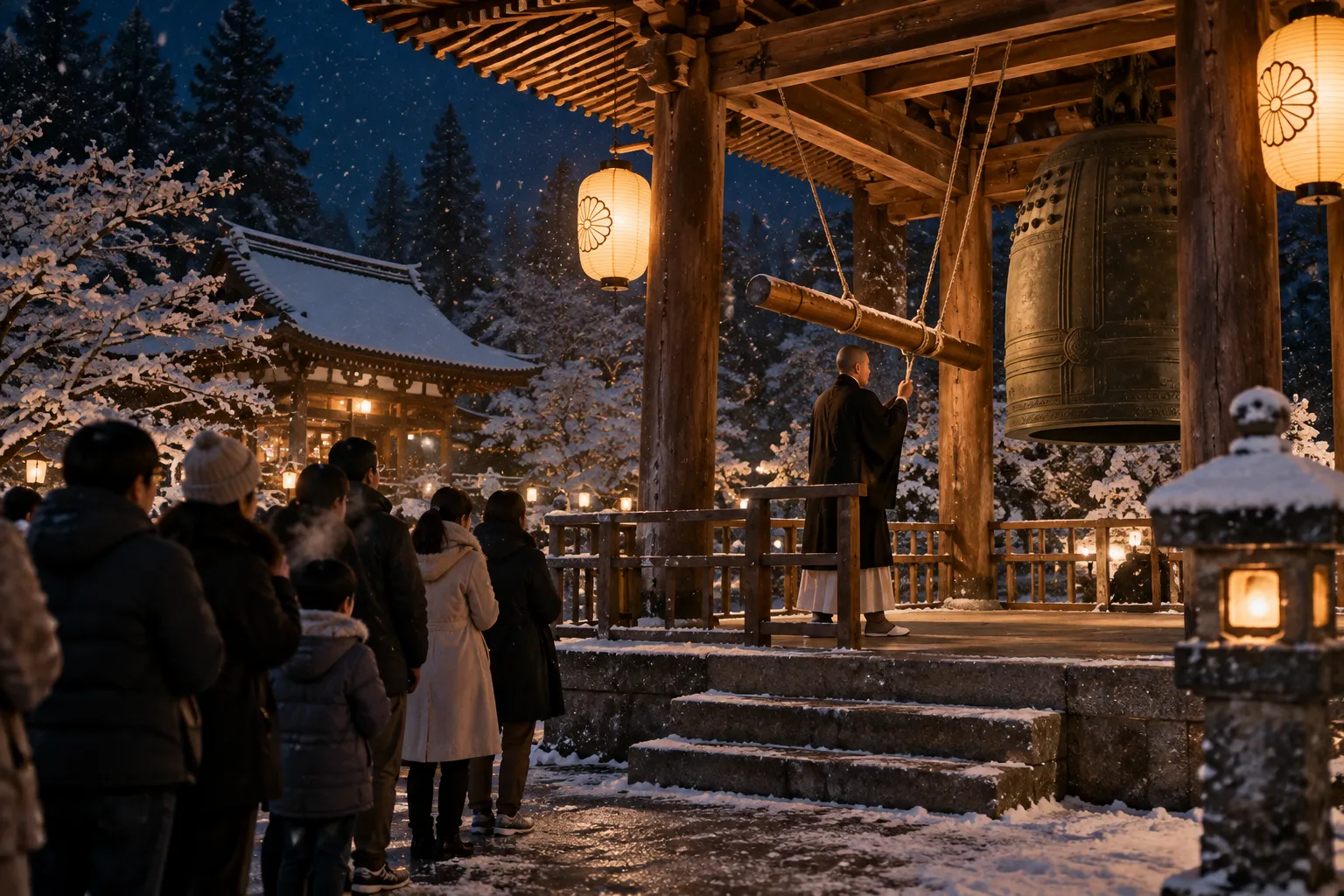
除夜の鐘の写真を見せ、英語ページ第4段落の音声を聞かせる。多くの寺で108回つくこと、108は人を悩ませる心の数(煩悩)だという説が有名で、一回ごとに1つずつ手放す(let go of)と考えられていることを確認する。ほかにも説があり、どれが正しいかは決まっていないことも添える。
🗣️ Listen. How many times do temples ring the bell? / Yes, 108 times. Many people believe 108 is the number of human desires. / With each sound, they try to let go of one. / Let go of means 手放す.
習慣の語句カードを見せ、This year, I want to let go of ___. の文を練習する。let go of のあとは名詞か ing の形になることを示す(let go of staying up late)。ペアで、自分が手放したい習慣を1つ言い合う。重すぎる話題は避け、軽い習慣を選べばよいと伝える。
🗣️ This year, I want to let go of staying up late. / After let go of, use a noun or an ing word. / Tell your partner one small habit. / Keep it light. Snacks and games are fine!
目標の語句カードを見せ、Next year, I will ___. の文を練習する。手放したい習慣とつながる目標にするとよいと伝える(let go of staying up late → I will go to bed at eleven.)。ペアで2文続けて言い合う。
🗣️ Next year, I will ___. / Connect it to your habit. I will go to bed at eleven. / Say both sentences to your partner.
全員が順に2文を発表する。1人の発表が終わるごとに、全員で1回手をたたいて鐘の音にする。最後に先生が Goodbye, old year. Hello, new year! と言って締めくくる。
🗣️ Let's share. After each person, clap once like a temple bell. / This year, I want to let go of being late. Next year, I will get up early. / Goodbye, old year. Hello, new year!
Joya no Kane: 108 rings 🔔
108 = human desires(煩悩)← 有名な説
With each sound, let go of one.

This year, I want to let go of __.
  (staying up late / eating too many snacks / being late)
Next year, I will __.
  (go to bed at eleven / read more books / get up early)
カウントダウンで数字マスター
🎯 英語の数字を楽しく覚える。
- Ten, nine, eight... とカウントダウンを練習する。
- スペインのブドウ12粒にちなんで、1から12まで英語で数えながら紙のブドウをはる。
- 最後に Happy New Year! と全員で言う。
詳細版を開く(時間配分・Teacher Talk・板書)
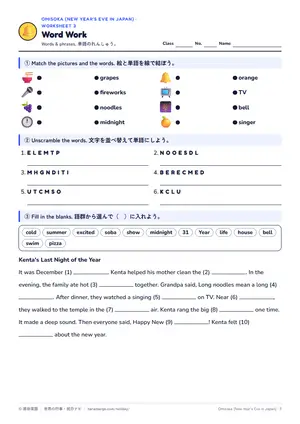
時計の絵を見せ、「新しい年になる前、世界ではみんなで数を数える」と伝える。指を立てながら Ten, nine, eight... one! とカウントダウンを全員で練習する(2回)。
🗣️ It's almost midnight. Let's count down! / Ten, nine, eight, seven, six, five, four, three, two, one! / One more time, louder!
スペインの写真を見せ、真夜中の鐘に合わせてブドウを12粒食べる習わしがあることを伝える。台紙と紙のブドウを配り、先生と一緒に One, two, three... と1から12まで英語で数えながら、1粒ずつはらせる。数え終わったら、隣の子のブドウを英語で数えて確かめ合う。
🗣️ In Spain, people eat 12 grapes at midnight. / Let's make our grapes. Count with me. One, two, three... / Eleven, twelve! Twelve grapes! / Count your friend's grapes. How many?
全員で立ち、もう一度 ten から one までカウントダウンをして、最後に Happy New Year! と言う。ブドウの台紙を掲示する。
🗣️ Stand up. Let's count down together. / Three, two, one... Happy New Year! / Let's put your grapes on the wall.
Countdown! 🕛 10 ten 9 nine 8 eight 7 seven 6 six 5 five 4 four 3 three 2 two 1 one → Happy New Year! Spain:12 grapes at midnight 🍇 1 one 2 two 3 three … 11 eleven 12 twelve
「創られた伝統」を考える
🎯 除夜の鐘や紅白の歴史から、伝統とメディアの関係を論じる。
- advanced の英文を読み、ラジオと除夜の鐘の関係を要約する。
- 紅白歌合戦が正月番組から大晦日の番組になった経緯を調べる。
- 「伝統は古くなければ価値がないか」を英語で討論する。
- 身近な「意外に新しい伝統」の例を一つ挙げ、短いレポートにまとめる。
詳細版を開く(時間配分・Teacher Talk・板書)
発展セットの英文を読ませ、ラジオと除夜の鐘の関係を英語3文で要約させる(禅寺に始まったが明治時代にはほとんど忘れられていた/1927年からのラジオ放送が全国の家庭に鐘の音を届けた/地域の習わしが全国共通の体験になった)。invented traditions という語の意味を確認する。
🗣️ Read the passage. Summarize the link between radio and the bell in three sentences. / When did the custom almost disappear? / What happened in 1927? / What does invented tradition mean?
紅白歌合戦の資料を読ませ、正月番組から大晦日の番組になった経緯をペアで時系列にまとめさせる。端末で1つ以上の資料を確かめさせ、出典を書かせる。除夜の鐘と紅白の共通点(どちらも放送によって「全国の大晦日」の形になった)を考えさせる。
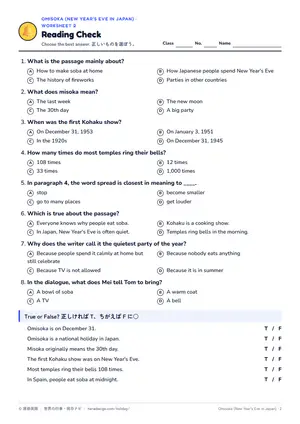
🗣️ Make a timeline of Kohaku with your partner. / The first Kohaku was on January 3, 1951. When did it move to December 31? / Check one more source and write it down. / What do the bell and Kohaku have in common?
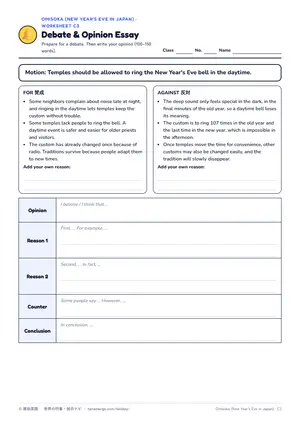
論題 A tradition must be old to be valuable. で、賛成・反対に分かれて英語で討論させる(作戦5分、立論各3分、反論各2分、自由討論5分)。発展セットの This does not make them fake. や、騒音の苦情や人手不足で昼間に鐘をつく寺が出てきたことも論点として使ってよい。
🗣️ The motion is: A tradition must be old to be valuable. / Take five minutes to prepare. / Opening speeches, three minutes each. Then rebuttals. / Think about the daytime bell, too. Is it still a tradition?
身近な「意外に新しい伝統」の例を1つ挙げ、いつ・どのように広まったかを調べて約200語の英語のレポートにまとめさせる(例:七五三が今の形で全国に広まったのは戦後、など)。広まった理由(メディア・企業・交通など)と、それでも価値があると思うかを書かせる。出典を必ず示させる。最後の3分で数人に例を紹介させる。
🗣️ Find one tradition that is newer than people think. / When and how did it spread? Who helped it spread? / Do you still think it is valuable? Why? / Write about 200 words. Show your sources.
Invented Traditions

Joya no Kane
  Zen temples(long ago)→ almost forgotten by Meiji → 1927 radio → national custom
Kohaku
  1945 radio『紅白音楽試合』→ 1951.1.3 first Kohaku(New Year show)→ 1953.12.31 → New Year's Eve

"This does not make them fake."
Today:daytime bells?(noise / not enough people)

Motion:A tradition must be old to be valuable.
Report:a tradition newer than we think(200 words + sources)