Omisoka (New Year's Eve in Japan)

大晦日を英語で:読む・聞く・話す・遊ぶ

やさしい英語(CEFR A2)の読み物に音声つき。会話・単語カード・クイズ8問・ゲームで、大晦日の英語をまるごと。

🔊Read in English大晦日を英語で読もう(CEFR A2・音声つき)

大晦日を、やさしい英語で紹介する読み物です。▶で英文をタイトルから通して聞けます(アメリカ英語)。「和訳」ボタンで日本語訳の表示・非表示を切りかえられます。下線の語は下の単語カードにあります。

The Quietest Party of the Year

CEFR A2
0:00
239 words

In many countries, New Year's Eve is loud, with parties, music, and fireworks. In Japan, it is often quiet. Families stay home, eat together, and wait for the new year. This day is called Omisoka. Misoka once meant the 30th day, the last day of a month in the old calendar.

多くの国で、大みそかはパーティーや音楽、花火でにぎやかです。日本では、静かなことが多いのです。家族は家で過ごし、いっしょに食事をし、新しい年を待ちます。この日は大晦日と呼ばれます。「みそか」はもともと30日目、つまり昔の暦で月の最後の日のことでした。

On this night, many people eat toshikoshi soba, or year-crossing noodles. Why soba? Some say the long noodles mean a long life. Others say soba breaks easily, so it cuts away the bad luck of the year. Nobody knows which story is true.

この夜、多くの人が年越しそば、つまり「年を越すそば」を食べます。なぜそばなのでしょう。長い麺は長生きを意味する、と言う人がいます。そばは切れやすいので、一年の悪運を断ち切る、と言う人もいます。どの話が本当なのか、だれにもわかりません。

After dinner, many families watch Kohaku, a big singing show on TV. A red team of women and a white team of men sing against each other. The first Kohaku was not on New Year's Eve. It was on January 3, 1951. Since 1953, it has been on December 31 every year.

夕食のあと、多くの家族が紅白というテレビの大きな歌番組を見ます。女性の紅組と男性の白組が、歌で対決するのです。最初の紅白は大みそかではありませんでした。1951年1月3日だったのです。1953年からは、毎年12月31日に放送されています。

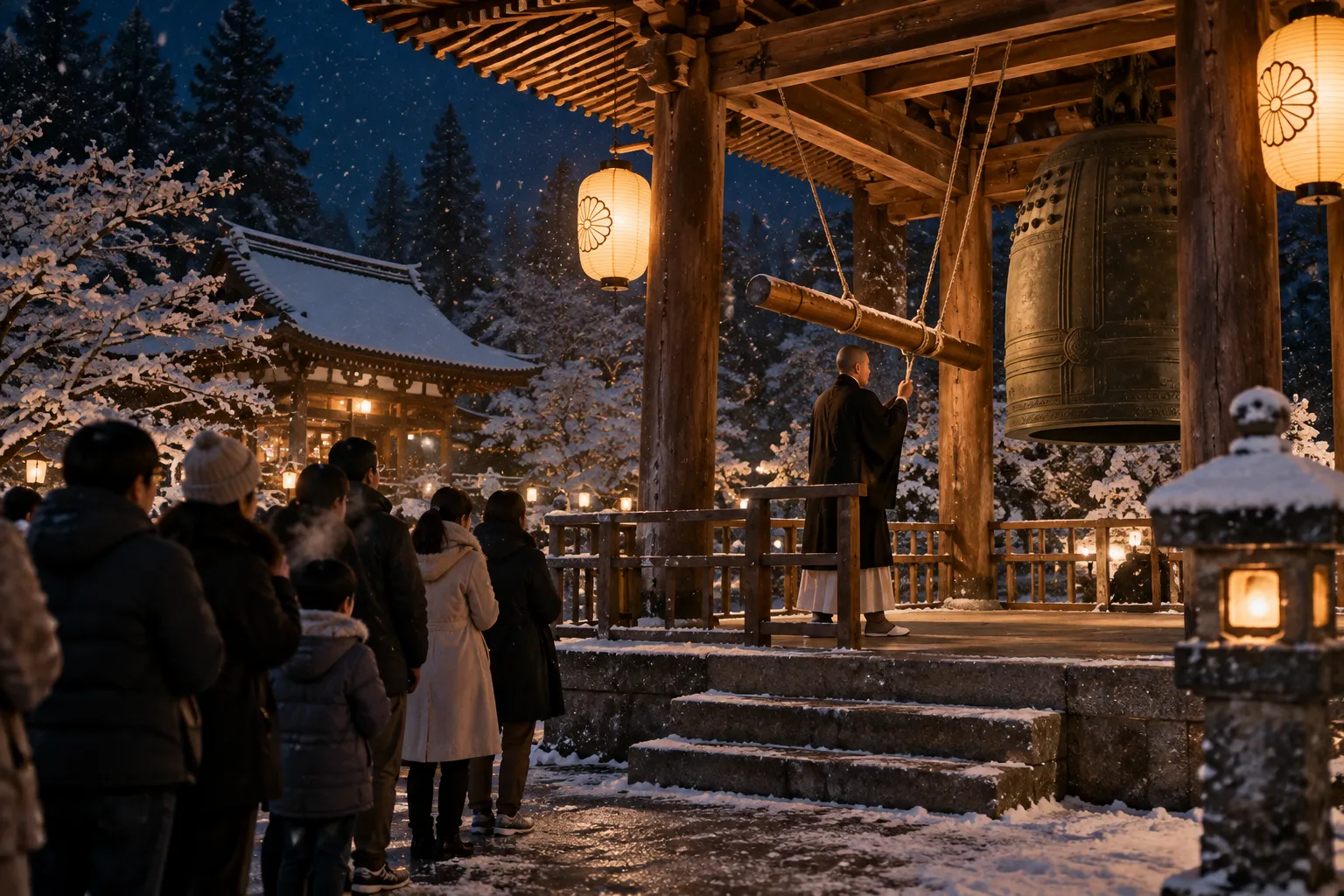
Near midnight, Buddhist temples begin to ring their big bells. Most temples ring them 108 times. Many people believe 108 is the number of human desires that cause trouble. With each deep sound, they try to let go of one. Radio programs in the 1920s helped this custom spread across Japan.

真夜中が近づくと、仏教のお寺が大きな鐘をつき始めます。たいていのお寺は108回つきます。多くの人は、108は悩みのもとになる人間の欲の数だと考えています。低く深い音が鳴るたびに、その一つを手放そうとするのです。1920年代のラジオ番組が、この習慣を日本中に広めるのを助けました。

When the last bell rings, people say Akemashite omedeto, or Happy New Year. Some walk to a shrine in the cold night air. Others go straight to bed, warm and full. It is a quiet party, but it is full of hope.

最後の鐘が鳴ると、人々は「あけましておめでとう」と言います。冷たい夜の空気の中、神社へ歩いて行く人もいます。温かく、おなかいっぱいで、そのまま眠る人もいます。静かなパーティーですが、希望でいっぱいなのです。

💬Dialogue英語の会話で大晦日

🎬 トムはカナダ出身で、日本の友人・芽衣の家族と冬を過ごしています。12月31日の午後です。

0:00
Tom

Mei, what are we doing tonight? Is there a party?

芽衣、今夜は何をするの?パーティーはある?

Mei

Not really. In Japan, New Year's Eve is a family night.

あんまり。日本では、大晦日は家族の夜なんだ。

Tom

Oh. So what do families do?

へえ。じゃあ家族は何をするの?

Mei

First, we eat toshikoshi soba. It's buckwheat noodles.

まず、年越しそばを食べるの。そば粉の麺だよ。

Tom

Why noodles on New Year's Eve?

どうして大晦日に麺なの?

Mei

Long noodles mean a long life. Some people also say it cuts away bad luck.

長い麺は長生きの意味。悪運を断ち切るって言う人もいるよ。

Tom

I like that. What's next?

いいね。次は?

Mei

We watch Kohaku on TV. It's a big music show. Singers are on a red team or a white team.

テレビで紅白を見るの。大きな音楽番組で、歌手が紅組と白組に分かれるんだ。

Tom

A singing battle? That sounds fun!

歌の対決?楽しそう!

Mei

Then near midnight, we can hear the temple bell. It rings 108 times.

それから真夜中近くに、お寺の鐘が聞こえるよ。108回鳴るの。

Tom

108 times? Can we go and ring it?

108回?行ってついてもいい?

Mei

Sure. The temple near here lets visitors ring it. Bring a warm coat!

もちろん。近くのお寺は参拝者もつかせてくれるよ。あったかいコートを持ってきてね!

Tom

Great. What do we say at midnight?

最高。真夜中には何て言うの?

Mei

Akemashite omedeto! It means Happy New Year.

「あけましておめでとう!」。ハッピーニューイヤーって意味だよ。

🃏Word Cards大晦日の英単語カード(12語)

カードをタップすると裏返って、意味と例文が出ます。

New Year's Eve名詞
大みそかWe eat soba on New Year's Eve.大みそかにそばを食べる。💡 eve は「前夜」。Christmas Eve と同じ。
calendar名詞
暦、カレンダーThe old calendar was different.昔の暦は違っていた。💡 the lunar calendar は太陰暦。
noodles名詞
麺Soba noodles are thin and long.そばは細くて長い。💡 普通複数形で使う。buckwheat noodles はそば。
luck名詞
運Soba cuts away bad luck.そばは悪運を断ち切る。💡 good luck 幸運、bad luck 不運。形容詞は lucky。
temple名詞
寺The temple rings its bell at midnight.その寺は真夜中に鐘をつく。💡 神社は shrine。寺は Buddhist temple。
ring動詞
(鐘を)鳴らす、鳴るThe bell rings 108 times.鐘は108回鳴る。💡 過去形 rang、過去分詞 rung。名詞で「指輪」。
desire名詞
欲望、願いWe have many desires.私たちにはたくさんの欲がある。💡 煩悩は earthly desires と訳されることが多い。
midnight名詞
真夜中、午前0時The bell rings near midnight.鐘は真夜中ごろに鳴る。💡 mid(真ん中)+ night。正午は noon。
custom名詞
習慣、風習Eating soba is a Japanese custom.そばを食べるのは日本の習慣だ。💡 customs と複数で「税関」の意味にもなる。
spread動詞
広まる、広げるThe custom spread across Japan.その習慣は日本中に広まった。💡 過去形も spread。形が変わらない動詞。
let go of動詞(句)
手放すLet go of your worries.心配ごとを手放そう。💡 let go で「放す」。映画の歌で有名。
hope名詞
希望The new year is full of hope.新しい年は希望でいっぱいだ。💡 動詞としても使う。I hope ~. で「~だといいな」。

✅Quiz大晦日の英語クイズ(8問)

上の英文を読んでから答えてみよう。答えを選ぶとすぐに解説が出ます。全問正解でスタンプが金色に!

Q1. What is the passage mainly about?

この文章は主に何について書かれていますか。

そば・紅白・除夜の鐘・新年のあいさつと、日本の大みそかの夜の流れを順に紹介しています。

Q2. What does misoka mean?

「みそか」はどういう意味ですか。

第1段落に Misoka once meant the 30th day とあります。

Q3. When was the first Kohaku show?

最初の紅白はいつでしたか。

第3段落に It was on January 3, 1951 とあります。1953年からは12月31日の放送です。

Q4. How many times do most temples ring their bells?

たいていのお寺は鐘を何回つきますか。

第4段落に Most temples ring them 108 times とあります。

Q5. In paragraph 4, the word spread is closest in meaning to ____.

第4段落の spread に最も意味が近いのはどれですか。

spread across Japan は「日本中に広がる」。ラジオのおかげで各地に伝わった、という文脈です。

Q6. Which is true about the passage?

本文の内容に合うものはどれですか。

第1段落に In Japan, it is often quiet とあります。そばの理由は Nobody knows、紅白は歌番組、鐘は真夜中です。

Q7. Why does the writer call it the quietest party of the year?

筆者がこの夜を「いちばん静かなパーティー」と呼ぶのはなぜですか。

家族で家にいて静かに過ごすが、最後に It is a quiet party, but it is full of hope とあり、静かなお祝いであることがわかります。

Q8. In the dialogue, what does Mei tell Tom to bring?

会話で、芽衣はトムに何を持ってくるように言っていますか。

芽衣は Bring a warm coat! と言っています。夜のお寺は寒いからです。

🎮Games大晦日の英語ゲーム

タブを切りかえて遊べます。授業ではプロジェクターに映して、クラス対抗戦にしても盛り上がります。

📖Read Moreもっと読む:An Old Sound, Spread by New Technology

少し難しめ(B1〜B2)の英文で、大晦日を違う角度から。

An Old Sound, Spread by New Technology

B1–B2
0:00
195 words

Many Japanese people assume that the 108 strokes of the New Year's Eve bell are an unbroken tradition stretching back centuries. The custom did begin long ago in Zen temples, but according to historian Hirayama Noboru, it had largely faded by the Meiji era. What brought it back was radio. From 1927, broadcasts carried the sound of temple bells into living rooms across the country, turning a local practice into a shared national experience.

多くの日本人は、大みそかの108回の鐘が何百年も途切れずに続く伝統だと思っています。たしかにこの習慣は昔の禅寺で始まりましたが、歴史研究者の平山昇によれば、明治時代にはほとんどすたれていました。それをよみがえらせたのは、ラジオでした。1927年から、放送が寺の鐘の音を全国の茶の間に届け、地域の習慣を国民共通の体験に変えたのです。

Historians sometimes call such customs invented traditions: practices that feel ancient but took their modern shape quite recently. This does not make them fake. It shows that media can give old rituals new life.

歴史家は、こうした習慣を「創られた伝統」と呼ぶことがあります。古くからあるように感じられても、今の形になったのは意外に最近だという習慣です。だからといって、それが偽物になるわけではありません。メディアが古い儀式に新しい命を吹き込めることを示しているのです。

Today the bell faces a new challenge. Some neighbors complain about the noise late at night, and some temples lack people to ring it, so a number of temples now ring their bells in the afternoon. Supporters of the change point out that if radio could reshape the custom once, it can surely adapt again. Others reply that the deep sound only feels special in the dark, in the final minutes of the old year. The debate itself shows how much people still care about this sound.

今、鐘は新しい問題に直面しています。夜遅くの音に苦情を言う近所の人がいたり、鐘をつく人が足りなかったりして、昼間に鐘をつく寺も出てきました。この変化を支持する人たちは、ラジオが一度この習慣を作り変えたのなら、もう一度変わることもできるはずだと指摘します。それに対して、あの深い音が特別に感じられるのは、古い年の最後の数分間の暗闇の中だけだ、と反論する人もいます。この議論そのものが、人々が今もこの音をどれほど大切に思っているかを示しています。

👋Useful Phrases大晦日に使える英語フレーズ

Have a happy New Year!良いお年を!「良いお年を」は年が明ける前のあいさつ。英語では Have a great New Year! なども。
Omisoka is the last day of the year in Japan.大晦日は日本の一年の最後の日です。外国の人にはまずこの一言。New Year's Eve と言いかえてもよい。
We eat soba noodles for a long life.長生きを願ってそばを食べます。年越しそばの説明。「災いを断ち切る」は to cut off the bad luck of the year。
Temples ring their bells 108 times.お寺では鐘を108回つきます。煩悩は earthly desires と説明できる。
Let's watch Kohaku and count down together!紅白を見て、いっしょにカウントダウンしよう!Kohaku は a big New Year's Eve music show と説明するとわかりやすい。

🗣️ 話し合ってみよう(Discussion)

  1. How does your family spend New Year's Eve?

    あなたの家族は大みそかをどう過ごしますか。
  2. Which New Year's Eve custom from another country do you want to try? Why?

    外国の大みそかの習慣で、やってみたいものはどれですか。なぜですか。
  3. If you could let go of one bad habit at the end of the year, what would it be?

    年の終わりに悪い習慣を一つ手放せるとしたら、何を手放しますか。
  4. Is it okay for temples to ring the New Year's bell in the daytime? Why or why not?

    お寺が除夜の鐘を昼間につくのはよいことだと思いますか。理由も答えましょう。
  5. Many traditions are newer than we think. Does that make them less valuable?

    多くの伝統は思ったより新しいものです。それによって価値は下がるでしょうか。

🗾Explain Japan in English大晦日を海外の人に英語で説明するなら

姉妹サイト「日本文化ナビ」に、英語でかんたんに説明する例文(ひと言・30秒・スピーチ)と、外国の人によく聞かれる質問がまとまっています。日本語のページと、英語だけのページ(そのまま海外の人に見せられます)があります。

大晦日を英語で説明する(omisoka)大晦日(omisoka)を英語で説明するには。一言/30秒/スピーチの3段階の英文と和訳、外国人によく聞かれる質問と答え、そのまま使えるフレーズ、音声つき。JP 日本語で読むGB English page
除夜の鐘を英語で説明する(joya no kane)除夜の鐘(joya no kane)を英語で説明するには。一言/30秒/スピーチの3段階の英文と和訳、外国人によく聞かれる質問と答え、そのまま使えるフレーズ、音声つき。JP 日本語で読むGB English page
年越しそばを英語で説明する(toshikoshi soba)年越しそば(toshikoshi soba)を英語で説明するには。一言/30秒/スピーチの3段階の英文と和訳、外国人によく聞かれる質問と答え、そのまま使えるフレーズ、音声つき。JP 日本語で読むGB English page
紅白歌合戦を英語で説明する(Kohaku Uta Gassen)紅白歌合戦(Kohaku Uta Gassen)を英語で説明するには。一言/30秒/スピーチの3段階の英文と和訳、外国人によく聞かれる質問と答え、そのまま使えるフレーズ、音声つき。JP 日本語で読むGB English page
🔔
Omisoka (New Year'
スタンプ帳に大晦日のスタンプを押しました!
クイズで全問正解すると金のスタンプに。世界一周めざして集めよう。 スタンプ帳を見る →

授業アイデアとワークシートを見る →