Kohaku Uta Gassen
the New Year's Eve song contest on public television
紅白歌合戦(こうはくうたがっせん)
In one line
The shortest answer that works
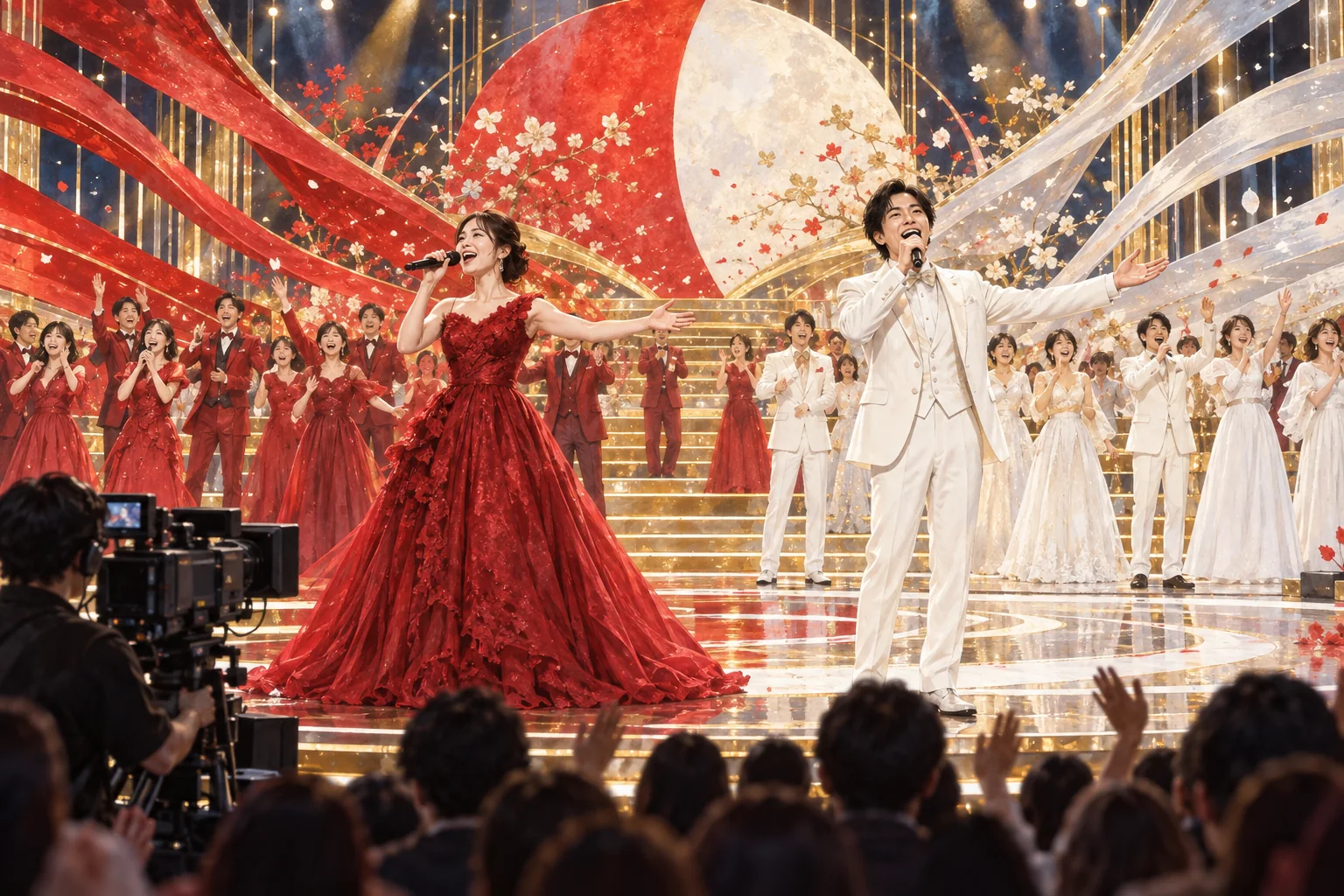
Kohaku Uta Gassen, the red-and-white song contest, is a New Year's Eve music show split into two teams.
紅白歌合戦とは、大晦日の夜、歌手を紅組と白組に分けて競わせる音楽番組です。
In 30 seconds
The standard explanation
On New Year's Eve, public television broadcasts a four-hour music program in which invited singers are divided into a women's red team and a men's white team, and the audience and judges vote for a winner. Being invited has long counted as official recognition of a career. Ratings were once above eighty percent and are now around thirty percent.
大晦日の夜、公共放送が四時間あまりの音楽番組を流します。招かれた歌手が、女性の紅組と男性の白組に分かれて歌い、観客と審査員が勝ちを決めます。出場することは長く、歌手としての公の認定と受け取られてきました。視聴率はかつて八割を超え、今は三割ほどです。
As a short speech
A full paragraph you can read aloud
Ask a Japanese family what is on at eleven o'clock on the thirty-first of December and the answer will probably be the same program their grandparents watched. Kohaku Uta Gassen began on radio in 1951 and moved to television in 1953.
Singers invited for the year are divided into a red team of women and a white team of men, they perform in turn, and at the end votes decide which side wins, which few people take very seriously. What has mattered is the invitation. For decades, appearing on it was the mark that a singer had arrived, and not being invited back was news in itself.
The audience share once passed eighty percent, in an era when there was almost nothing else to watch; it now runs at around thirty percent. Younger households often have it on in the background while they cook, and when it ends the channel goes straight to the temple bells being rung a hundred and eight times.
十二月三十一日の夜十一時に何を見ているかと日本の家庭にたずねれば、たいてい、祖父母が見ていたのと同じ番組の名が返ってきます。紅白歌合戦は1951年にラジオで始まり、1953年にテレビに移りました。
その年に招かれた歌手が、女性の紅組と男性の白組に分かれて交互に歌い、最後に投票で勝敗が決まります。勝敗を本気にしている人はあまりいません。意味を持ってきたのは、招かれること自体です。何十年ものあいだ、この番組に出ることは歌手として認められた印であり、翌年呼ばれないこと自体が記事になりました。
視聴率はかつて八割を超えました。ほかに見るものがほとんどなかった時代です。今は三割台の水準です。若い世代の家では、台所仕事をしながら流していることも多く、番組が終わると、画面はそのまま百八回の除夜の鐘に移ります。
Questions people actually ask
And how to answer them.
Is it still a big deal?
Less than it was, but it is still the most watched entertainment program of the year and still a career marker. The argument every December is about whether the line-up reflects what people actually listen to.
かつてほどではありませんが、今も年間で最も見られる娯楽番組であり、出場は経歴の節目です。毎年十二月に交わされる議論は、出場者が実際に聴かれている音楽を映しているかどうかです。
Can foreign acts appear?
Yes, and they have for many years, including Korean groups and occasional Western guests. The teams are nominally by gender, so mixed foreign groups get placed on one side or the other.
出られますし、長く出ています。韓国のグループや、欧米からの出演もあります。組分けは建前として性別によるので、男女混成の海外のグループはどちらかに振り分けられます。
What do families do while it is on?
Cleaning up from the year-end, making or eating buckwheat noodles, and half-watching. It is background to the evening as much as an event, and when it ends people either go to bed or head to a shrine.
年末の片づけの続き、年越しそばを作るか食べるか、そして半分だけ見ています。行事であると同時に、その晩の背景でもあります。終わると、寝るか、初詣に出かけるかです。
Phrases you can use
- It is on every New Year's Eve.毎年大晦日にやっています。
- The women are the red team.女性が紅組です。
- Being invited is an honor.出場は名誉とされています。
- We have it on while we cook.料理をしながら流しています。
- The temple bells come on right after.そのあとすぐ除夜の鐘です。
Words you need
- song contest歌合戦
- red team紅組
- white team白組
- line-up of performers出場者
- audience share視聴率
Watch
From YouTubeBackground (Japanese)
紅白歌合戦は1951年にラジオ番組として始まり、1953年からテレビで放送されています。女性による紅組と男性による白組に分かれて歌い、最後に審査で勝敗を決めます。視聴率は1960年代に八割を超えた年があり、近年は三割台で推移しています。出場者の発表は毎年十一月に行われ、選考の基準をめぐる議論が恒例になっています。番組が終わると、同じ放送局がそのまま除夜の鐘の中継に移るのも長く続いている形です。