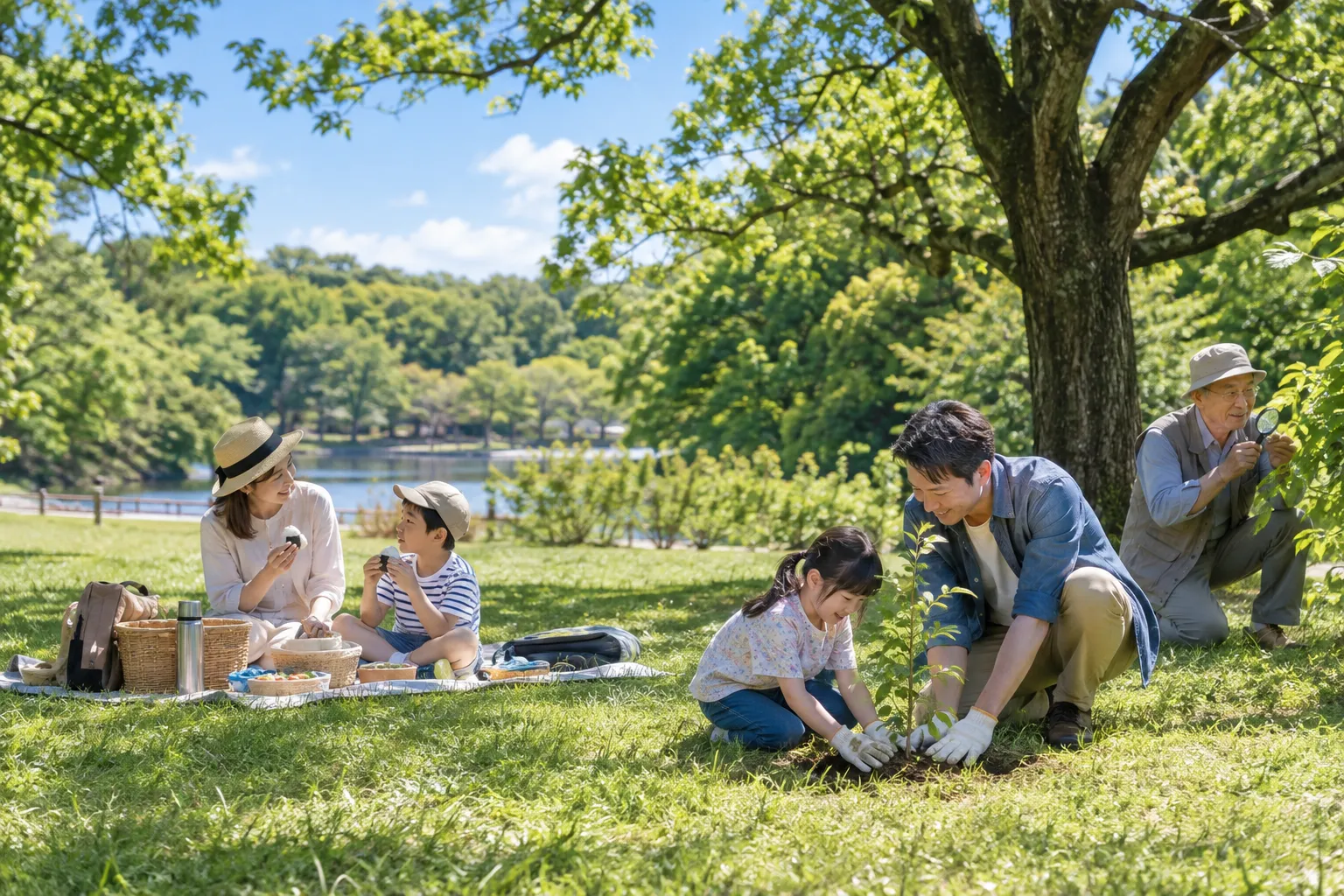
Greenery Day
みどりの日の英語の授業アイデアとワークシート
印刷してすぐ使えるワークシート(PDF・Word・解答つき)と、授業の手順書。
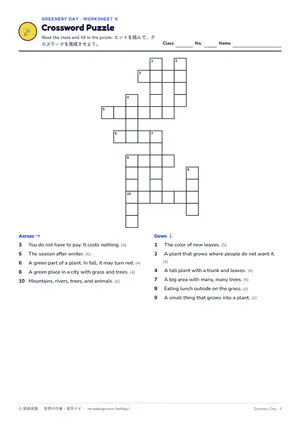
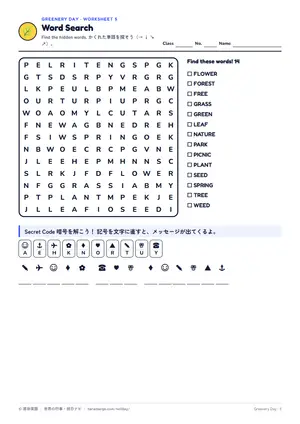
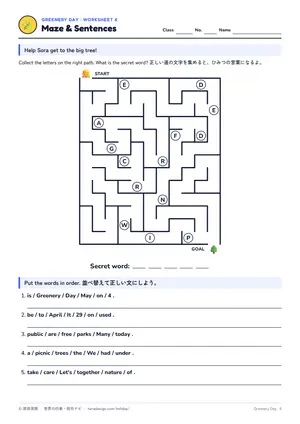
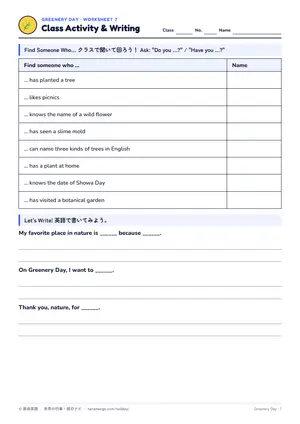
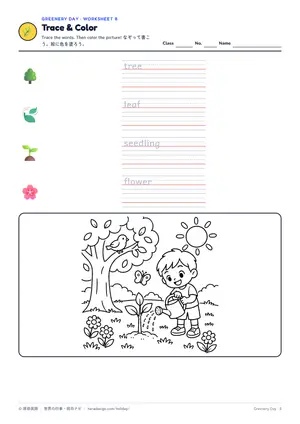
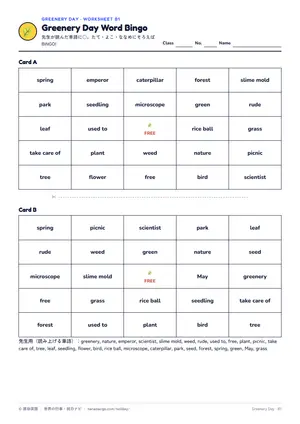
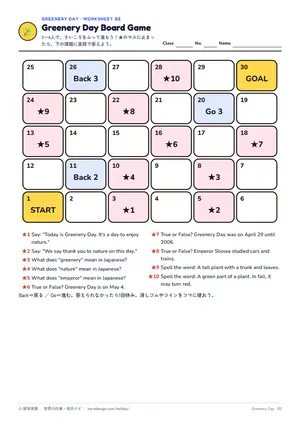
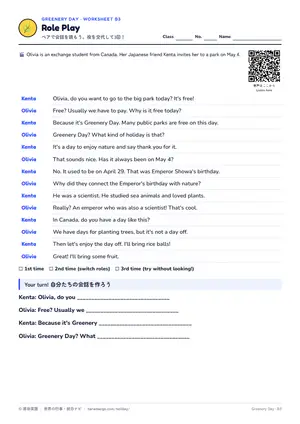
🖨️Worksheetsワークシート(無料・A4)
① 「中身を見る・印刷」で全ページを確認 → ② そのページ上の 🖨️ 印刷する でそのまま印刷できます。A4・無料。
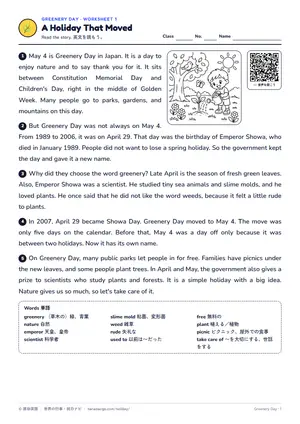
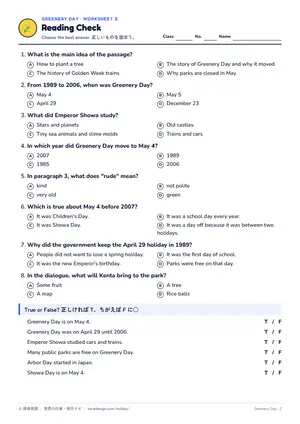
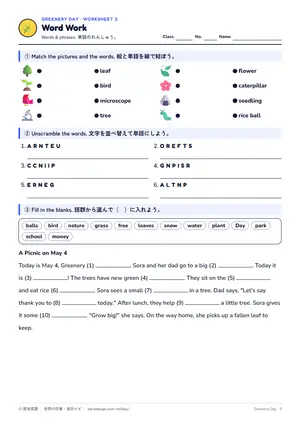
🍎Lesson Ideasみどりの日を使った英語の授業アイデア
「雑草」の名前調べ:No plant is a weed!
🎯 身近な草の英語名・和名を調べ、This is ... It has ... で紹介する。
- 昭和天皇が「雑草」という呼び方を好まなかった話を紹介する。
- 校庭で草花を1つずつ選び、写真をとるか絵にかく。
- 図鑑やアプリで名前を調べ、英語の名前もさがす。
- This is a dandelion. It has yellow flowers. のように1人30秒で紹介する。
詳細版を開く(時間配分・Teacher Talk・板書)
英語ページ本文の第3段落を聞かせ、昭和天皇が生物学者で、「雑草」という呼び方を好まなかった話を紹介する。he did not like the word weeds, because it felt a little rude to plants. の文を板書し、「どの草にも名前がある」と伝える。
🗣️ Emperor Showa was a scientist. / He did not like the word "weeds." / Every plant has a name. Let's find some names today.
校庭に出て、1人1つ草花を選ばせ、写真をとるか紹介カードに絵をかかせる。花の色・葉の形・高さなどをよく見るよう声をかける。抜かずに観察することを約束にする。
🗣️ Choose one plant. / Take a photo or draw a picture. / Look at the color and the shape of the leaves. / Please don't pull it out.
教室にもどり、図鑑やアプリで和名を調べ、英語名もさがさせる。英語名が見つからない場合は、和名をローマ字で書いてよいとする。This is a ~. It has ~. の形で紹介文を2〜3文書かせる。
🗣️ Find the name of your plant. / Can you find the English name too? / Write: This is a dandelion. It has yellow flowers.
4人グループで、1人30秒ずつ写真か絵を見せながら紹介する。聞き手は名前を1つメモする。最後に「今日、名前を知った草」を何人かに聞いて終える。
🗣️ Show your plant and talk for 30 seconds. / Listeners, write down the name. / Which plant was new to you?
No plant is a weed!
Emperor Showa did not like the word "weeds."

This is a ___.(dandelion / clover / ...)
It has ___ flowers.
It has ___ leaves.(round / long / small)
It is ___ cm tall.
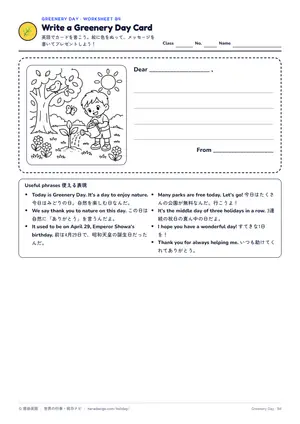
My Tree Card:1本の木を英語で紹介
🎯 色・形・大きさの英語で、身近な木を紹介する。
- leaf, tall, big, green など木を説明する言葉を練習する。
- 学校の木を1本選び、葉っぱの形をカードにかく。
- It is tall. The leaves are green. とカードに書き、友だちに見せる。
詳細版を開く(時間配分・Teacher Talk・板書)
木や葉の写真を見せ、tree, leaf, tall, big, small, green, round を絵と一緒に練習する。tall は背のびの動き、big は両手を広げる動きをつける。
🗣️ This is a tree. This is a leaf. / This tree is tall. Stretch up! / The leaves are green.
校庭か窓から見える木を1本選ばせ、葉っぱの形をカードにかかせる(落ち葉を拾ってなぞってもよい)。色をぬらせる。
🗣️ Choose one tree. / Draw a leaf on your card. / What color is it?
It is tall. The leaves are green. の2文を、見本を見ながらカードに書かせる。tall / small、green / red などは自分の木に合わせて選ばせる。
🗣️ Write: It is tall. The leaves are green. / Is your tree tall or small? / Choose the right word.
友だちとカードを見せ合い、カードの英文を読んで紹介させる。聞いた子は Nice tree! と返す。5月4日はみどりの日で、自然に感謝する日だと伝えて終える。
🗣️ Show your card to your friend. / Read your sentences. / May 4 is Greenery Day. Let's say thank you to nature.
🌳 My Tree Card
It is tall. / It is small.
It is big.
The leaves are green. / red. / yellow.
The leaves are round. / long.

May 4 = Greenery Day
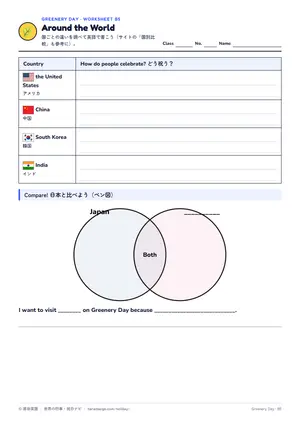
世界の植樹の日比べ
🎯 国ごとの植樹の日を調べ、日付の理由と取り組みを英語で比較する。
- compare の表からアメリカ・中国・韓国・インド・イスラエルを班に割り当てる。
- いつ・なぜその日か・どんな活動をするかをまとめる。
- Japan asks people to ..., while China asks people to ... のように比べる文を書く。
- クラスで「日本の植樹の日を作るならいつがいいか」を投票する。
詳細版を開く(時間配分・Teacher Talk・板書)
英語ページ本文の第5段落を読み、日本のみどりの日の過ごし方(公園の無料開放、ピクニック、植樹)を確認する。「植樹の日はほかの国にもある」と伝え、班に1か国ずつ割り当てる。
🗣️ What do people do on Greenery Day in Japan? / Parks are free, and some people plant trees. / Other countries have tree days too. Let's compare.
国比べ表と端末で、担当の国の植樹の日について、いつ・なぜその日か・どんな活動をするかをまとめさせる。例:中国の植樹節は3月12日で孫文の命日にちなむ。インドのヴァン・マホトサヴは雨季に合わせて7月。
🗣️ When is the tree day in your country? / Why that date? / What do people do?
Japan asks people to ~, while China asks people to ~. の形で、日本と比べる文を2つ書かせる。発展英文の第3段落の Its holiday asks people not to plant a certain number of trees, but simply to enjoy nature を日本側の根拠として示す。
🗣️ Japan asks people to enjoy nature, while China asks people to plant trees. / Write two sentences like this. / Read them to your group.
各班1分で発表させる。そのあと「日本に植樹の日を作るならいつがいいか」を、季節や気候の理由をそえて英語で提案させ、クラスで投票する。
🗣️ Each group has one minute. / If Japan had a tree planting day, when should it be? / Give a reason. Then let's vote.
Tree days around the world
USA:Arbor Day(1872, Nebraska)last Friday of April
China:March 12(since 1979)3–5 trees a year(ages about 11–60)
South Korea:April 5(began 1949)
India:Van Mahotsav(first week of July, rainy season)
Israel:Tu BiShvat(New Year of the Trees)
Japan:Greenery Day(May 4)enjoy nature / free parks

Japan asks people to ___, while ___ asks people to ___.
祝日の引っ越しタイムライン
🎯 年号と used to / now を使って、みどりの日の変化を説明する。
- 1985年・1988年・1989年・2007年のカードを配る。
- ペアで正しい順に並べ、何が起きたかを日本語で確認する。
- Greenery Day used to be on April 29. Now it is on May 4. を言えるようにする。
詳細版を開く(時間配分・Teacher Talk・板書)
4月・5月のカレンダーを貼り、「みどりの日はいつ?」と聞く。5月4日であることを確認したあと、「昔は4月29日だった」と伝え、英語ページ本文の第2段落を聞かせる。
🗣️ When is Greenery Day? / Yes, May 4. But it was not always on May 4. / Listen. From 1989 to 2006, it was on April 29.
ペアに年号カードと出来事カードを配り、正しい順に並べさせる(1985年 祝日法改正で祝日にはさまれた日が国民の休日に/1988年 5月4日が初めて休みに/1989年 4月29日がみどりの日に/2007年 4月29日は昭和の日、みどりの日は5月4日へ)。日本語で何が起きたかを確認する。
🗣️ Match the years and the events. / Put them in order. / What happened in 1988?
Greenery Day used to be on April 29. Now it is on May 4. を板書し、used to が「以前は〜だった」を表すことを確認する。全員で言ったあと、ペアで1人1文ずつ言い合う。
🗣️ Greenery Day used to be on April 29. / Now it is on May 4. / Say it to your partner.
本文の第4段落 Before that, May 4 was a day off only because it was between two holidays. Now it has its own name. を読み、5月4日が「名前のない休み」から「名前のある祝日」になったことを確認する。used to / now の文をもう1つ自分で書かせる。
🗣️ May 4 used to be a day off with no name. / Now it has its own name. / Write one more sentence with used to and now.
Greenery Day:A Holiday That Moved
1985 祝日にはさまれた日 → 国民の休日
1988 May 4:first day off(no name)
1989 April 29 → Greenery Day
2007 April 29 → Showa Day / Greenery Day → May 4

Greenery Day used to be on April 29.
Now it is on May 4.
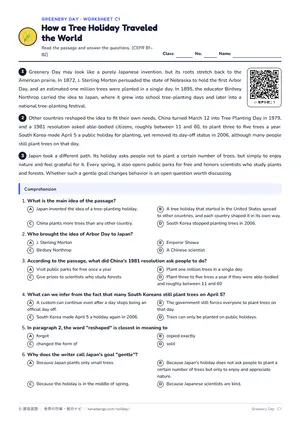
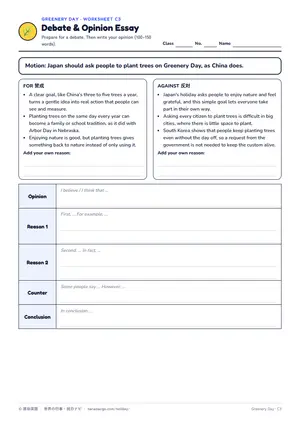
ミニ・ディスカッション:祝日で行動は変わる?
🎯 advanced の本文を読み、祝日と環境行動の関係について根拠を示して議論する。
- advanced を読み、各国のやり方を表にまとめる。
- 「祝日で人の行動は変わる」に賛成・反対の立場を決める。
- 具体例(公園無料・植樹義務など)を挙げて5分ずつ意見を述べる。
- 議論をふまえて100語の意見文を書く。
詳細版を開く(時間配分・Teacher Talk・板書)
「祝日があると、人は本当に何かをするようになるか」と問い、自分の経験で考えさせる。発展英文の最後の文 Whether such a gentle goal changes behavior is an open question worth discussing. を示し、今日の問いにする。
🗣️ Does a holiday really change what people do? / Think about your own experience. / This is the question in the last sentence.
発展英文を読ませ、アメリカ(1872年ネブラスカ、初日に推定100万本)、中国(3月12日、11〜60歳ごろの人に年3〜5本)、韓国(4月5日、2006年に休日でなくなったが植樹は続く)、日本(本数を求めず、自然を楽しみ感謝する。公園の無料開放と研究者の表彰)を表にまとめさせる。
🗣️ Read the passage and fill in the table. / What does China ask people to do? / What happened to South Korea's holiday in 2006? / How is Japan different?
「祝日で人の行動は変わる」に賛成か反対かを決めさせ、同じ立場の学生で集まって根拠を2つ以上準備させる。表の具体例(公園無料・植樹の義務・休日でなくなっても続く植樹など)を使うよう伝える。
🗣️ Choose your side: agree or disagree. / Prepare at least two reasons. / Use examples from the table.
賛成側・反対側が5分ずつ意見を述べ、残りの3分で互いに質問する。先生は「休日であること」と「行動を求めること」を分けて考えているかに注目して問い返す。
🗣️ The agree side, you have five minutes. / Now the disagree side. / Is it the day off, or the request to plant trees, that changes behavior?
議論をふまえ、100語の意見文を書かせる。立場・理由2つ・本文の具体例を1つ入れるよう指示する。
🗣️ Write about 100 words. / Include your position, two reasons, and one example from the text. / You have ten minutes.
How a Tree Holiday Traveled the World
USA:1872 Arbor Day(Nebraska)about 1 million trees in a day
→ 1895 Northrop brought the idea to Japan
China:March 12(1979)/ 1981:3–5 trees a year
South Korea:April 5 → no longer a day off(2006)but people still plant
Japan:enjoy nature and feel grateful / free parks / prize for scientists

Q. Can a holiday change behavior?