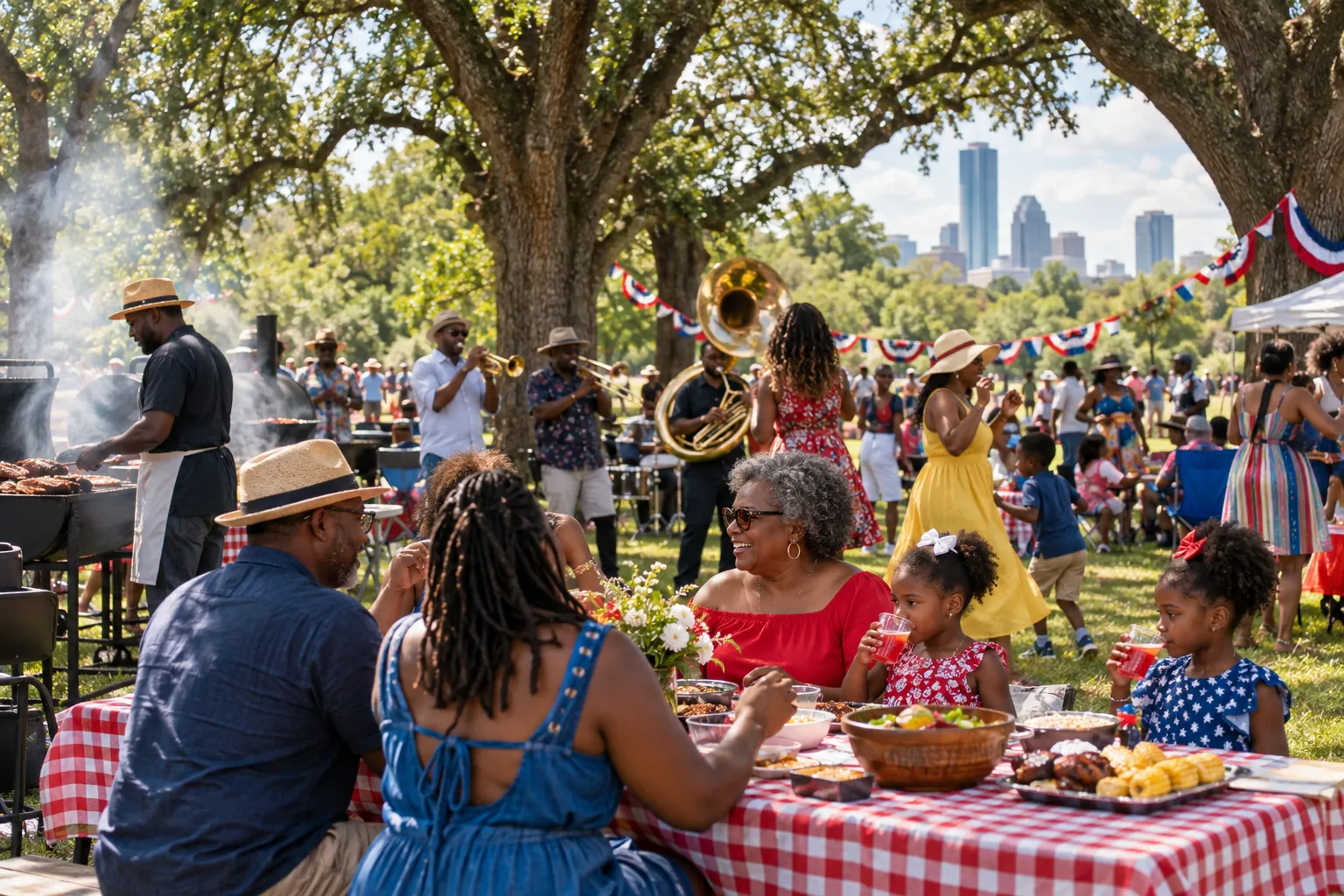
Juneteenth
ジューンティーンス(奴隷解放記念日)の英語の授業アイデアとワークシート
印刷してすぐ使えるワークシート(PDF・Word・解答つき)と、授業の手順書。
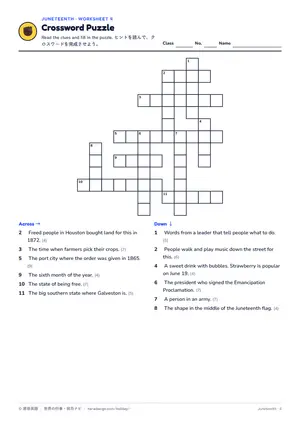
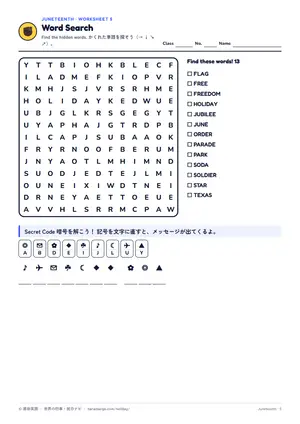
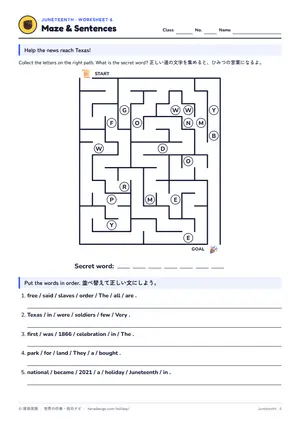
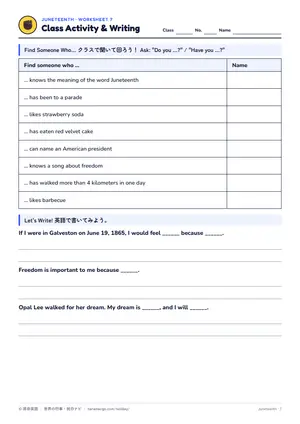
🖨️Worksheetsワークシート(無料・A4)
① 「中身を見る・印刷」で全ページを確認 → ② そのページ上の 🖨️ 印刷する でそのまま印刷できます。A4・無料。
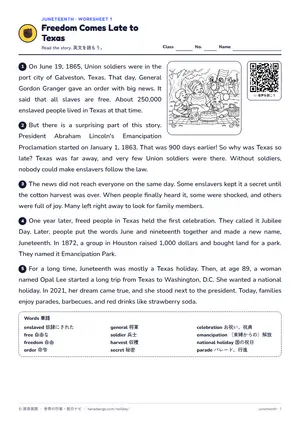
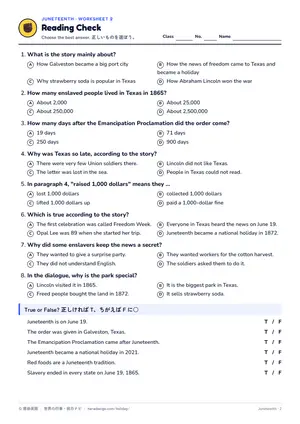
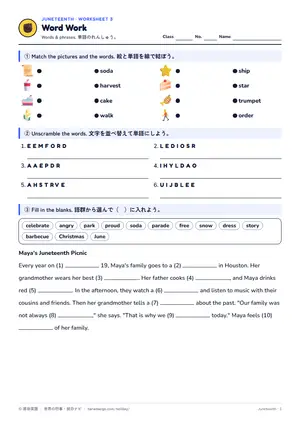
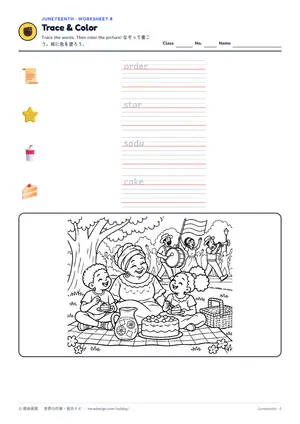
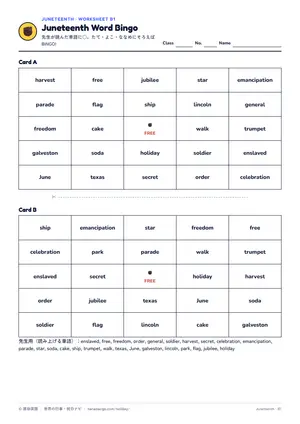
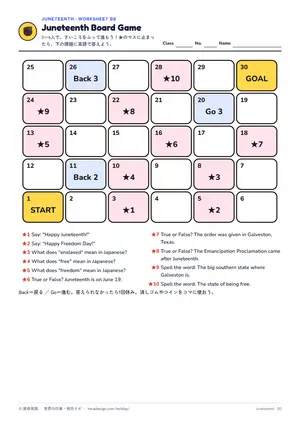
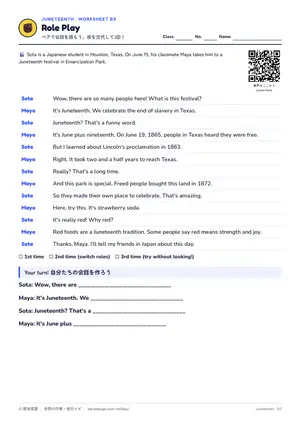
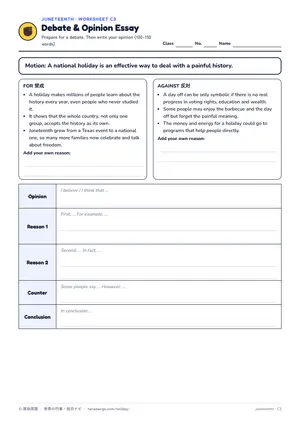
🍎Lesson Ideasジューンティーンス(奴隷解放記念日)を使った英語の授業アイデア
900日のタイムライン・リレー
🎯 年号と出来事を英語で言い、なぜ知らせが遅れたかを順序立てて説明する。
- 1863年1月1日から2021年までの出来事カード(英語)をグループに配る。
- カードを年の順に並べ、1人1枚ずつ In 1863, … のように読み上げてリレーする。
- 1863年と1865年のあいだに「900 days」の矢印を書き、なぜ遅れたのかを英語1文で書く。
- 各グループの文を黒板に貼って比べる。
詳細版を開く(時間配分・Teacher Talk・板書)
黒板に Juneteenth と書き、June と nineteenth に分けて見せる。「6月19日に何があったのか」と問い、1863年と1865年の2つの年だけ黒板の両端に書く。「この間は900日。何かが遅れた」とだけ伝えて興味を持たせる。
🗣️ Look at this word. June plus nineteenth. Juneteenth! / Something happened on June 19, 1865. / From 1863 to 1865, 900 days passed. What was late? Let's find out.
出来事カードを班に配り、年の古い順に並べさせる。月までわかるカード(June 2 と June 19)の順番に注意させる。並べ終えた班から台紙に貼らせ、先生が答えを板書して確かめる。
🗣️ Put the cards in order. Start with the oldest. / Look at 1865. There are three cards. June 2, June 19, and December. / Finished? Let's check together.
班の中で1人1枚ずつ担当を決め、古い順にリレーで読み上げさせる。読み終えた班は、1863年と1865年6月19日の間に 900 days の矢印を書く。英語ページ本文の第2段落の音声を聞かせ、Very few Union soldiers were there. の文に気づかせる。
🗣️ Read your card one by one. Start with 1863. / Draw an arrow. Write 900 days on it. / Now listen. Why was Texas so late? / Very few soldiers were there. Without soldiers, nobody could make enslavers follow the law.
Texas was late because ... の型で、遅れた理由を各班1文で書かせ、黒板に貼って比べる。soldiers や law が入っている文をほめ、「法律ができても、守らせる人がいなければ届かない」ことを確認して終わる。
🗣️ Write one sentence. Texas was late because ... / Let's compare. This group says very few soldiers were there. / A law needs people to make it work.
Juneteenth = June + nineteenth

1863.1.1 Emancipation Proclamation
   ↓ 900 days
1865.6.19 Galveston, Texas:all slaves are free
1865.12 13th Amendment(国全体で奴隷制禁止)
1866 Jubilee Day(最初のお祝い)
1872 Emancipation Park
2021 national holiday

Texas was late because very few soldiers were there.
一般命令第3号を読み解く
🎯 一次資料の英語を読み、書かれていることと書かれていないことを区別する。
- 一般命令第3号の英文(国立公文書館の記事)を配り、語彙を確認する。
- 「解放された人にとって良いこと」「制限していること」に線を引き分ける。
- advanced の英文と合わせて、自由の知らせなのに制限がある理由を話し合う。
- 解放された人の立場で、この命令への返事を60語の英文で書く。
詳細版を開く(時間配分・Teacher Talk・板書)
1865年6月19日、ガルヴェストンの町に張り出された紙がある、と伝える。グレンジャー将軍がバルコニーで読み上げたという話は有名だが、記録はなく、わかっているのは写しが張り出されたことだ、と補足する。「今日はその紙そのものを読む」と目的を示す。
🗣️ On June 19, 1865, this paper was posted in Galveston, Texas. / Some people say a general read it from a balcony. There is no record of that. / Today, we will read the real words.
語彙リストを確認してから、全文を2回黙読させる。1回目は全体の流れ、2回目は1文ずつ意味を取らせる。former masters and slaves や employer and hired labor の関係が「主人と奴隷」から「雇い主と雇われた労働者」に変わる、という部分は板書で図にして説明する。
🗣️ Check the words first. Hired labor means workers who get paid. / Read it once quickly. Then read it again, sentence by sentence. / Master and slave becomes employer and worker. What changes?
解放された人にとって良いこと(all slaves are free / absolute equality of personal rights)に青、制限していること(remain quietly at their present homes / not be allowed to collect at military posts / not be supported in idleness)に赤で線を引かせる。ペアで比べ、どちらが多いかを話させる。
🗣️ Blue for good news. Red for limits. / Compare with your partner. Did you choose the same parts? / Which color is longer?
advanced の第2段落を読ませ、命令が「平等」を約束しながら移動や集まりを制限していたことを確かめる。「自由の知らせなのに、なぜ制限があるのか」を班で話し合わせる。軍が混乱を避けたかった、働き手を農場に残したかった、など複数の見方を出させ、本文で確かめられることと推測を分けさせる。
🗣️ Read paragraph 2 of the advanced text. / Why did an order about freedom have limits? / Is that in the text, or is it your guess?
解放されたばかりの人の立場で、この命令への返事を60語の英文で書かせる。I am glad that ... / But I cannot accept ... / I want ... の型を示す。数人に読ませて終わる。
🗣️ You were freed today. Write a reply to General Granger. / About 60 words. Use I am glad that ... and But ... / Who can read theirs?
General Order No. 3(1865.6.19 Galveston)

青=約束
all slaves are free
absolute equality of personal rights
master ⇒ employer / slave ⇒ hired labor

赤=制限
remain quietly at their present homes
work for wages
not be allowed to collect at military posts

記録にあるのは「張り出された」こと(読み上げの証拠はない)
誤解を正すファクトチェック・ゲーム
🎯 よく言われる話と資料にもとづく事実を見分け、英語で理由を言う。
- 「アシュトン・ヴィラで読み上げた」「6月19日に奴隷制が全部終わった」など5つの文をスライドで見せる。
- ペアで Fact / Myth / Not sure を判断する。
- 本文や myth の節を根拠に、This is a myth because … と説明する。
- 最後に「なぜ俗説は広まるのか」をクラスで考える。
詳細版を開く(時間配分・Teacher Talk・板書)
「歴史の話には、有名だけど証拠のない話がある」と伝え、Fact / Myth / Not sure の3つの札の意味を説明する。Not sure は「確かな記録がない」という意味で、逃げではないことを強調する。
🗣️ Some famous stories are not true. Some have no proof. / Fact means it is true. Myth means it is not true. / Not sure means there is no good record. That is an honest answer.
スライドを1枚ずつ見せ、ペアで30秒話し合って札を上げさせる。答えはまだ言わず、各文の札の数を黒板に記録していく。
🗣️ Read sentence one. Talk with your partner for 30 seconds. / Fact, myth, or not sure? Show your card. / OK. I will not tell you the answer yet.
記事の「よくある誤解とホント」の節と英語ページ本文を配り、ペアで根拠を探させる。2・4は Myth、1・3は確かな記録がないので Not sure、5は Fact。This is a myth because ... の形で、根拠となる年や事実を入れて発表させる。2は12月6日の憲法修正第13条とデラウェア・ケンタッキー、4は1866年から祝われてきたこと、が根拠になる。1は読み上げの証拠がなく、わかっているのは写しが張り出されたことだけ、と確認する。
🗣️ Now find proof in the article. / Sentence two. This is a myth because the 13th Amendment came in December 1865. / What about sentence four? When was the first celebration? / Sentence three has no good record. So the answer is not sure.
「なぜ俗説は広まるのか」をクラス全体で考える。わかりやすい、場面が目に浮かぶ、くり返し語られる、などの意見を板書する。最後に、この授業で一番意外だった事実を英語1文で書かせる。
🗣️ Why do myths spread so easily? / A balcony story is easy to imagine. That is one reason. / Write one sentence. The most surprising fact was ...
Fact / Myth / Not sure

1 Ashton Villa のバルコニーで読み上げ → Not sure(記録なし。わかっているのは写しが張り出されたこと)
2 6/19に全米で奴隷制が終わった → Myth(1865.12.6 修正第13条)
3 使者が殺された → Not sure(確かな記録なし。本当の理由は兵士不足)
4 2021年にできた新しい記念日 → Myth(1866年から祝われてきた)
5 1891年の新聞に Juneteenth → Fact

This is a myth because ...
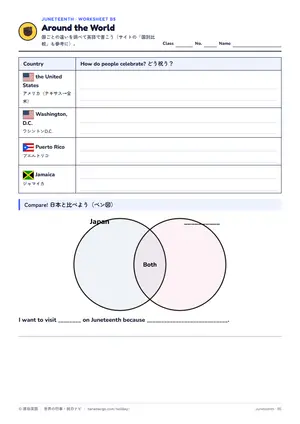
世界の解放記念日マップ
🎯 国別比べをもとに、奴隷制廃止の年と記念のしかたを比較し、英語で発表する。
- 国別比べの8地域を分担し、廃止の年・記念日・祝日かどうかを英語で調べる。
- 世界地図にまとめ、年代順の傾向を読み取る。
- 日本のマリア・ルス号事件も加え、Japan's role in 1872 について一言ずつ述べる。
- 各自3分で発表し、質疑応答をする。
詳細版を開く(時間配分・Teacher Talk・板書)
「奴隷制の廃止を記念する日は、アメリカだけにあるのか」と問いかける。スリナムのケティ・コティが現地の言葉で「鎖が切れた」という意味であることを紹介し、国ごとに名前も日付もちがうことに興味を持たせる。
🗣️ Is Juneteenth the only day like this in the world? / In Suriname, people celebrate Keti Koti on July 1. / It means the chain is broken. Let's look at more places.
8地域を班で分担し、廃止の年・記念日・祝日かどうか・記念のしかたを表に英語でまとめさせる。カナダは2021年に下院が認めた日、メキシコはコアウイラ州のマスコゴの人々が6月19日を祝う、など「国の祝日」とはかぎらない例があることに注意させる。
🗣️ Each person takes two places. / Find the year, the date, and how people remember it. / Is it a public holiday? Be careful. Not all of them are.
白地図に付せんを貼り、年代の古い順に番号をふらせる。1834年のジャマイカ(イギリス領)から1888年のブラジルまでの流れを見て、どんな傾向があるかを班で英語で話し合わせる。ワシントンD.C.の解放(1862年)が奴隷解放宣言より早かったことにも気づかせる。
🗣️ Put the places on the map and number them by year. / What pattern do you see? / Brazil was the last in the Americas, in 1888.
1872年、横浜港のペルー船マリア・ルス号から清国の労働者231人が解放された事件を紹介する。同じ年にヒューストンの人々がエマンシペーション・パークの土地を買ったことも伝え、Japan's role in 1872 について一人一言、英語で述べさせる。
🗣️ In 1872, a Peruvian ship was in Yokohama. / Japan freed 231 workers from China on that ship. / What does this tell us about Japan in 1872? One sentence each.
4人ずつの小グループに組みかえ、1人3分で担当地域と全体の傾向を発表させる。聞き手は1つ質問する。最後に、各グループで最も印象に残った発表を全体に紹介させる。
🗣️ You have three minutes each. / Listeners, ask one question after each talk. / Which talk was the most interesting? Tell the class.
Emancipation days around the world

1834 Jamaica(British colonies)8/1
1862 Washington, D.C. 4/16
1863 Suriname 7/1 Keti Koti=chain is broken
1865 Texas → USA 6/19
1873 Puerto Rico 3/22
1888 Brazil 5/13(南北アメリカで最後)
Canada 8/1(2021年に下院が認める)
Mexico:Mascogo の人々が 6/19

Japan 1872 Maria Luz(231人を解放)