Hinamatsuri (Girls' Day)
ひな祭り(桃の節句)の英語の授業アイデアとワークシート
印刷してすぐ使えるワークシート(PDF・Word・解答つき)と、授業の手順書。
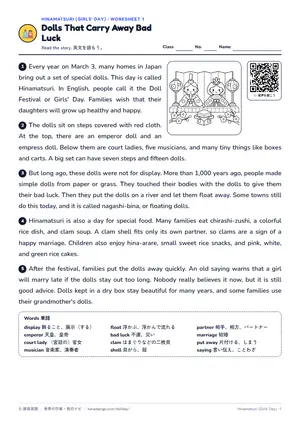
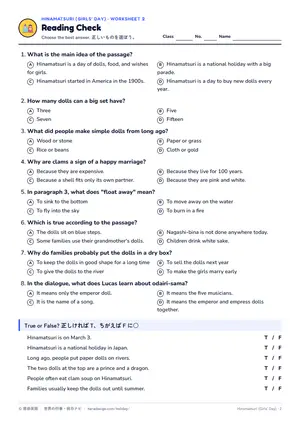
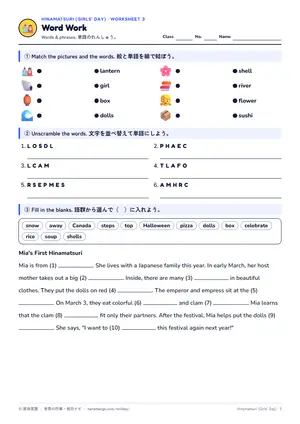
🖨️Worksheetsワークシート(無料・A4)
① 「中身を見る・印刷」で全ページを確認 → ② そのページ上の 🖨️ 印刷する でそのまま印刷できます。A4・無料。
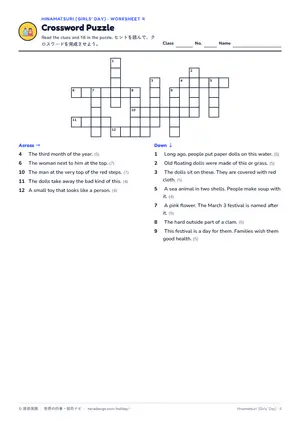
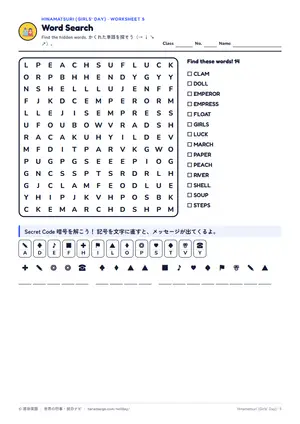
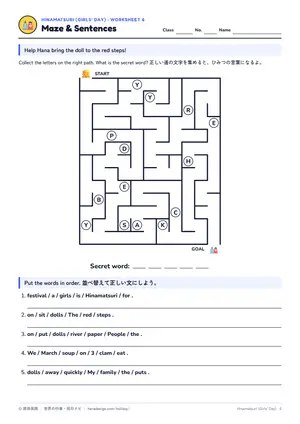
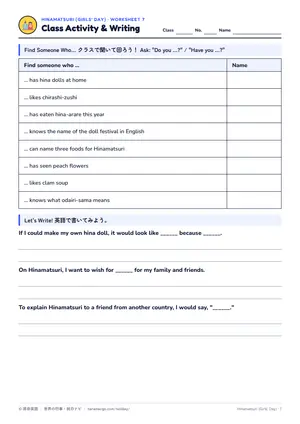
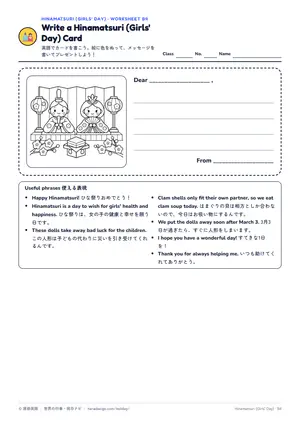
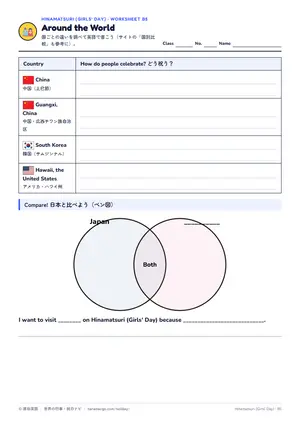
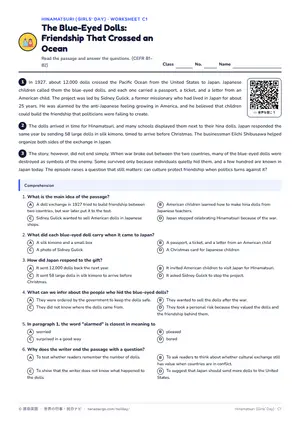
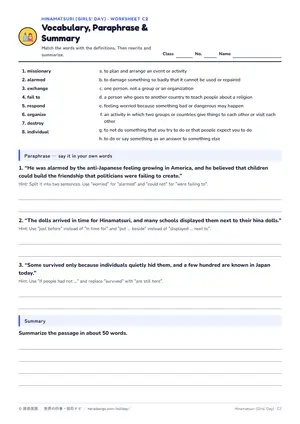
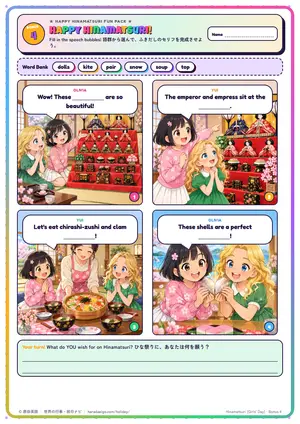
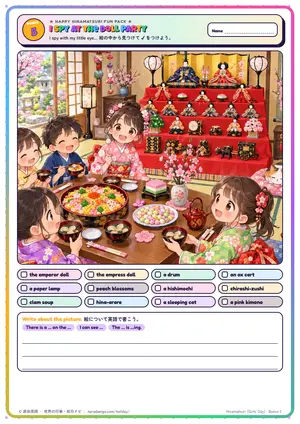
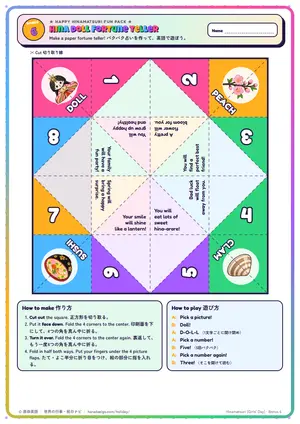
🍎Lesson Ideasひな祭り(桃の節句)を使った英語の授業アイデア
ひな壇を英語で説明しよう(Show and Tell)
🎯 位置を表す前置詞(at the top / below / next to)を使って、ひな壇の人形を英語で説明できる。
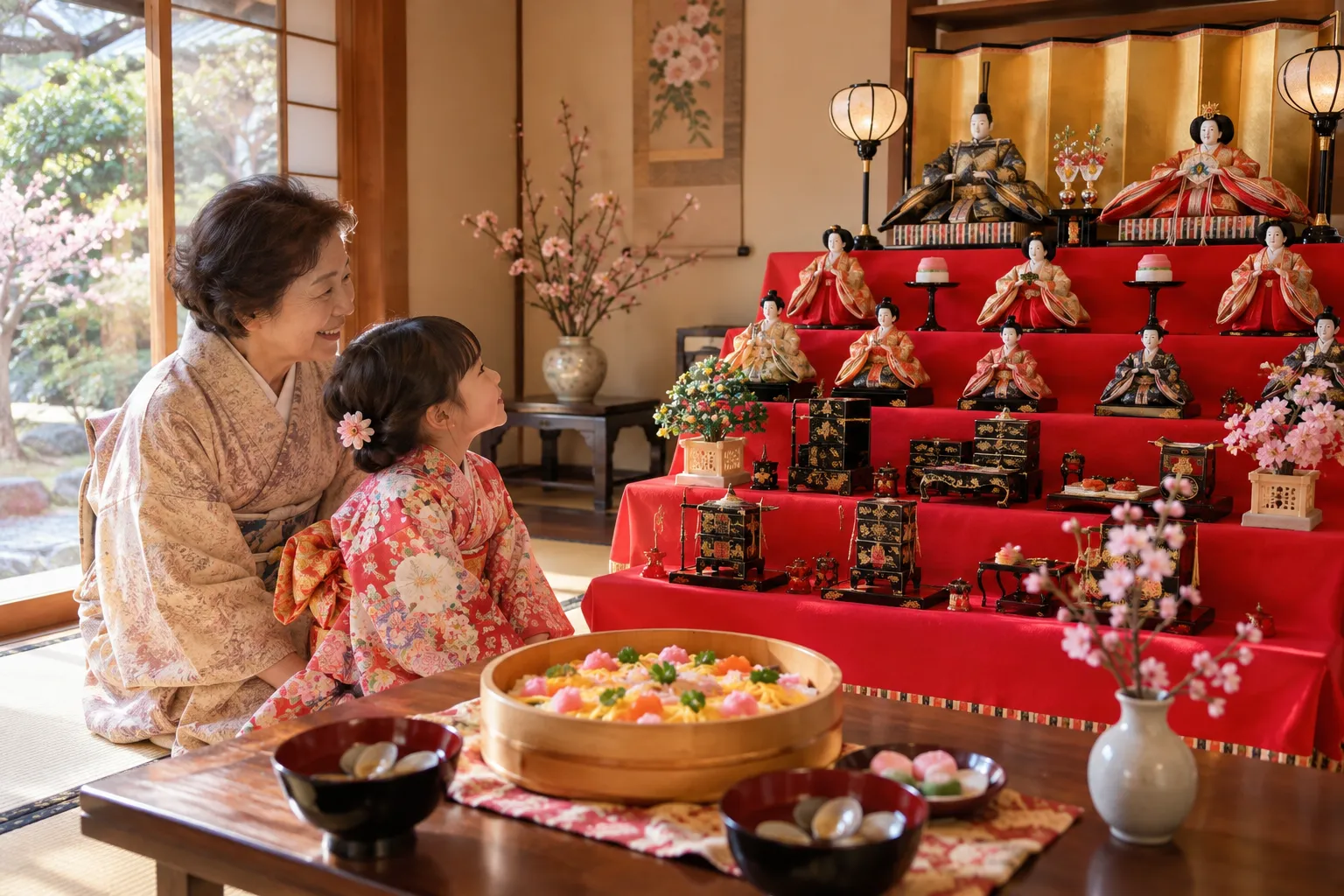
- ひな壇の写真かイラストを配り、人形の名前を英語で確認する(emperor, empress, court ladies, musicians)。
- 教師が The emperor doll sits at the top. のように例文を示す。
- ペアで1人がひな壇の説明をし、もう1人は白紙に人形の位置を描く。
- 描いた絵と元の写真を比べ、言い方を直してから役割を交代する。
詳細版を開く(時間配分・Teacher Talk・板書)
ひな壇の写真を黒板に貼り、英語ページ本文の第2段落の音声を流す。The dolls sit on steps covered with red cloth. の文で写真の赤い段を指さす。人形の名前カードを写真の人形の横に貼りながら、全員で発音する。
🗣️ Look at this picture. These are hina dolls. / Listen. Where do the dolls sit? Yes, on red steps. / This is the emperor. This is the empress. / Repeat after me. Court ladies. Musicians.
The emperor doll sits at the top. / The court ladies are below the emperor and the empress. / The empress sits next to the emperor. の3文を板書し、写真を指しながら読む。at the top・below・next to に色チョークで線を引く。次に先生が文を言い、生徒が写真のどの人形かを指で示すクイズを3問出す。
🗣️ The emperor doll sits at the top. / The court ladies are below the emperor and the empress. / Listen and point. They are on the third step. Who are they? / Good. They are the five musicians.
ペアを組み、説明役は写真を相手に見せずに英語で人形の位置を説明する。聞き役は白紙に人形の位置を描く(棒人間でよい)。3分たったら描いた絵と写真を比べ、ずれたところの言い方を一緒に直す。役割を交代して同じように行う。
🗣️ Don't show the picture to your partner. / Explain the steps in English. Your partner will draw. / Stop. Check your drawing with the picture. / Now change roles.
絵がいちばん写真に近かったペアの説明役に、使った英文を発表してもらう。うまく伝わった表現を板書に足す。宿題として基本セット p.6 の並べかえ(The dolls sit on red steps. など)を配る。
🗣️ Your drawing is very close. What did your partner say? / Let's write this sentence on the board. / For homework, do page 6 of the worksheet.
Hina dolls on red steps

The emperor doll sits at the top.(いちばん上)
The empress sits next to the emperor.(となり)
The court ladies are below them.(下)

emperor 天皇 / empress 皇后
court ladies 官女 / musicians 五人囃子(ごにんばやし)
流し雛から考える「お守り」比べ
🎯 人形に厄を移して流す考え方を、世界のお守り・厄よけと比べて英語で発表できる。
- 本文の第3段落を読み、流し雛の考え方を英語で要約する。
- グループで世界の厄よけ(ドリームキャッチャー、ナザール・ボンジュウ、てるてる坊主など)を1つ選んで調べる。
- Both ... and ... / But ... を使って、流し雛との共通点と違いを3文で書く。
- 1グループ1分で発表し、ほかのグループは質問を1つする。
詳細版を開く(時間配分・Teacher Talk・板書)
第3段落の音声を聞かせ、But long ago, these dolls were not for display. の意味を確認する。「飾るものではなかったら、何のための人形だった?」と問い、本文から答えを探させる。
🗣️ Long ago, the dolls were not for display. What were they for? / Find the answer in the paragraph. / Right. People gave their bad luck to the dolls.
ペアで第3段落を英語2文に要約させる。キーワードとして paper or grass / bad luck / float away を板書する。2〜3組に読ませ、よい要約を板書する。
🗣️ Summarize the paragraph in two sentences. / Use these words: bad luck and float away. / Can you read your summary? / Good. That is short and clear.
グループで厄よけを1つ選ばせ、端末で何のためのものか、どう使うかを調べさせる。そのうえで Both ... and ... で共通点を1文、But ... で違いを2文書かせる。机間巡視で、事実が確かめられた内容だけを書くよう声をかける。
🗣️ Choose one charm. Find out what it is for. / Write one sentence with both ... and .... / Then write two sentences with but. / Where did you find this information?
1グループ1分で3文を発表させる。聞いているグループは質問を1つする。全体を通して「悪いものを物に移す」「物が守ってくれる」の2種類があることに気づかせて終わる。
🗣️ You have one minute. Please start. / Any questions for this group? / Some charms take bad luck away. Others protect you. Which type is nagashi-bina?
nagashi-bina(流し雛)
Long ago, the dolls were not for display.
paper or grass → touch your body → bad luck → float away

Both nagashi-bina and ___ are used to ___.
But nagashi-bina ___, while ___ ___.

① 悪いものを移す(take bad luck away)
② 守ってもらう(protect)
はまぐりペア探しゲーム
🎯 貝合わせの遊びを体験しながら、英単語と絵を結びつける。
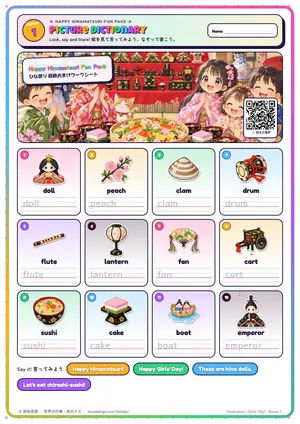
- 貝の形のカードを作り、片方に英単語、もう片方に絵を書く(doll, peach, clam など)。
- カードを伏せて並べ、神経衰弱の要領で2枚ずつめくる。
- めくったら単語を声に出して読む。ペアがそろったら Match! と言う。
- 最後に「はまぐりは相方としか合わない」という話を英語で紹介する。
詳細版を開く(時間配分・Teacher Talk・板書)
絵カードを1枚ずつ見せて英語で言い、子どもにくり返させる。はまぐりの貝がらがあれば、2枚を見せて「この貝は何?」と聞き、clam という言葉を教える。
🗣️ What's this? It's a doll. / Say it with me. Peach. / This is a clam. Clam!
先生が代表の子と1回やって見せる。カードを2枚めくり、それぞれ英語で読む。単語と絵が合ったら Match! と言ってもらえる、合わなければ元に戻す、というルールを見せる。
🗣️ Turn over two cards. / Say the words. Doll. Peach. / Not the same. Turn them back. / Doll and a doll picture. Match!
4人グループでゲームをする。めくったカードは必ず声に出して読むことだけを約束にする。先生は回りながら、読めていない単語を一緒に言う。
🗣️ Your turn. Say the word. / Great! Match! / Who has the most cards?
はまぐりの貝がらを見せ、違う貝の片方とは合わないことを実際に試して見せる。「はまぐりは自分の相方としか合わない」と英語で短く伝える。時間があれば p.8 のぬりえを配る。
🗣️ Look. These two shells fit. / This shell does not fit. Only its own partner fits. / So clams mean a happy pair.
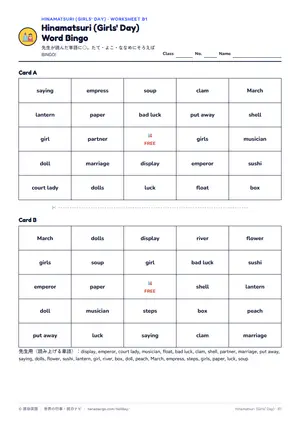
🎎 doll 🍑 peach 🐚 clam
🌊 river 📦 box 👧 girl

Match! (そろった!)

A clam shell fits only its own partner.
はまぐりは自分の相方としか合わない
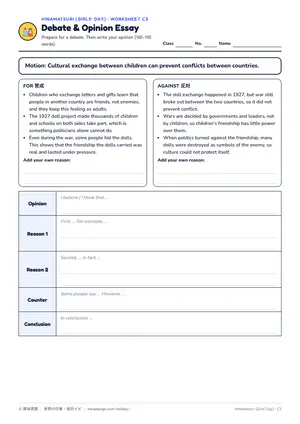
青い目の人形:手紙を書こう
🎯 1927年の人形交流を知り、人形に持たせる手紙を英語で書くことで、文化交流の意味を考える。
- advanced の英文を読み、人形が何を持って来たかを確認する。
- なぜギューリックが子どもに期待したのかを、ペアで話し合う。
- 自分が海外の子どもに人形を贈るとしたら、どんな手紙を持たせるかを英語で8〜10文で書く。
- 手紙をグループで回し読みし、心に残った表現を1つずつ紹介する。
詳細版を開く(時間配分・Teacher Talk・板書)
地図を見せ、「1927年、約1万2千体の人形が太平洋を渡った」とだけ伝える。人形が旅をするなら何を持っていくと思うか、ペアで1分予想させる。
🗣️ In 1927, about 12,000 dolls crossed this ocean. / They traveled like people. What did they carry? / Make a guess with your partner.
発展英文の第1・第2段落を黙読させ、人形が持ってきた物(passport, ticket, letter)、計画を率いた人、日本が贈り返した人形の数を表にまとめさせる。答え合わせのあと、第3段落を読み、戦争で人形がどうなったかを確認する。
🗣️ Read paragraphs 1 and 2. Fill in the table. / What did each doll carry? / How many dolls did Japan send back? / Now read paragraph 3. What happened to the dolls during the war?
ペアで「なぜギューリックは政治家ではなく子どもに期待したのか」を話し合わせる。本文の he believed that children could build the friendship that politicians were failing to create. を根拠として示す。2〜3組の考えを板書する。
🗣️ Why did Gulick trust children, not politicians? / Find a sentence that supports your idea. / Share your idea with the class.
「自分が海外の子どもに人形を贈るなら」という設定で、人形に持たせる手紙を8〜10文で書かせる。自己紹介・人形の説明・相手への願いの3つを入れるよう指示する。書き出しと結びの例を板書しておく。
🗣️ Imagine you send a doll to a child in another country. / Write a letter for the doll. Eight to ten sentences. / Introduce yourself, explain the doll, and write your wish. / You can start with "Dear friend."
4人グループで手紙を回し読みし、心に残った表現に付せんを貼らせる。各グループ1つずつ全体に紹介させる。最後に本文の最後の問い can culture protect friendship when politics turns against it? を読み、次の時間までの考える課題にする。
🗣️ Pass your letter to the left. Read it. / Put a sticky note on your favorite sentence. / Which sentence did your group choose? / Think about this question for next time.
The Blue-Eyed Dolls(1927)
USA → Japan:about 12,000 dolls
each doll: a passport, a ticket, a letter
leader: Sidney Gulick
Japan → USA:58 dolls in silk kimono

War → many dolls destroyed / some hidden → a few hundred today

Q. Why children, not politicians?

Letter: Dear friend, / My name is ___. / This doll ___. / I hope ___. / Your friend, ___
ひな祭り vs. 世界の「女の子の日」ミニ調べ学習
🎯 ひな祭りと国際ガールズ・デーなどを比べ、祝う行事と考える行事の違いを英語で議論する。
- compare の表を読み、それぞれの日の目的を英語で整理する。
- 「祝う日(celebration)」と「考える日(awareness day)」に分類する。
- ひな祭りに awareness の要素を加えるなら何ができるか、グループで提案をまとめる。
- 提案を2分で発表し、ほかのグループと意見を交わす。
詳細版を開く(時間配分・Teacher Talk・板書)
「女の子のための日は世界にいくつあると思う?」と問い、思いつくものを挙げさせる。国比べ表の中から、国連の国際ガールズ・デー(10月11日、2012年から)を紹介し、ひな祭りとの目的の違いに目を向けさせる。
🗣️ Are there other days for girls around the world? / The UN started the International Day of the Girl in 2012. / Is it a party, or is it a day to think?
グループに国比べ表を配り、各行の行事の目的を英語1文で書かせる(例:Samjinnal welcomes spring.)。ハワイの Girls' Day のように、表に書かれている事実だけを使うよう伝える。
🗣️ Read the table in your group. / Write the purpose of each day in one English sentence. / Use only the facts in the table.
まとめた行事を celebration と awareness day の2列に分類させる。どちらにも入る、どちらにも入らないという意見が出たら、その理由を英語で書き添えさせる。
🗣️ Put each day into one of two groups. / Celebration or awareness day? / If you are not sure, write your reason.
「ひな祭りに awareness の要素を加えるなら何ができるか」をグループで考えさせる。提案には、何をするか・誰が参加するか・なぜそれがよいかの3点を入れるよう指示する。
🗣️ How can Hinamatsuri also be a day to think? / Tell us what to do, who joins, and why. / Prepare a two-minute presentation.
各グループ2分で発表し、ほかのグループが質問や反論を1つずつする。最後に、行事を変えることの良い点と、伝統として残すことの意味の両方を短く振り返る。
🗣️ Please start your presentation. / Do you agree with their idea? Why or why not? / Should a tradition change, or stay the same?
Days for girls
Hinamatsuri(Japan, March 3)→ wish for health and happiness
International Day of the Girl(UN, October 11, since 2012)→ education and rights

celebration(祝う日) | awareness day(考える日)

Proposal: What? / Who? / Why?