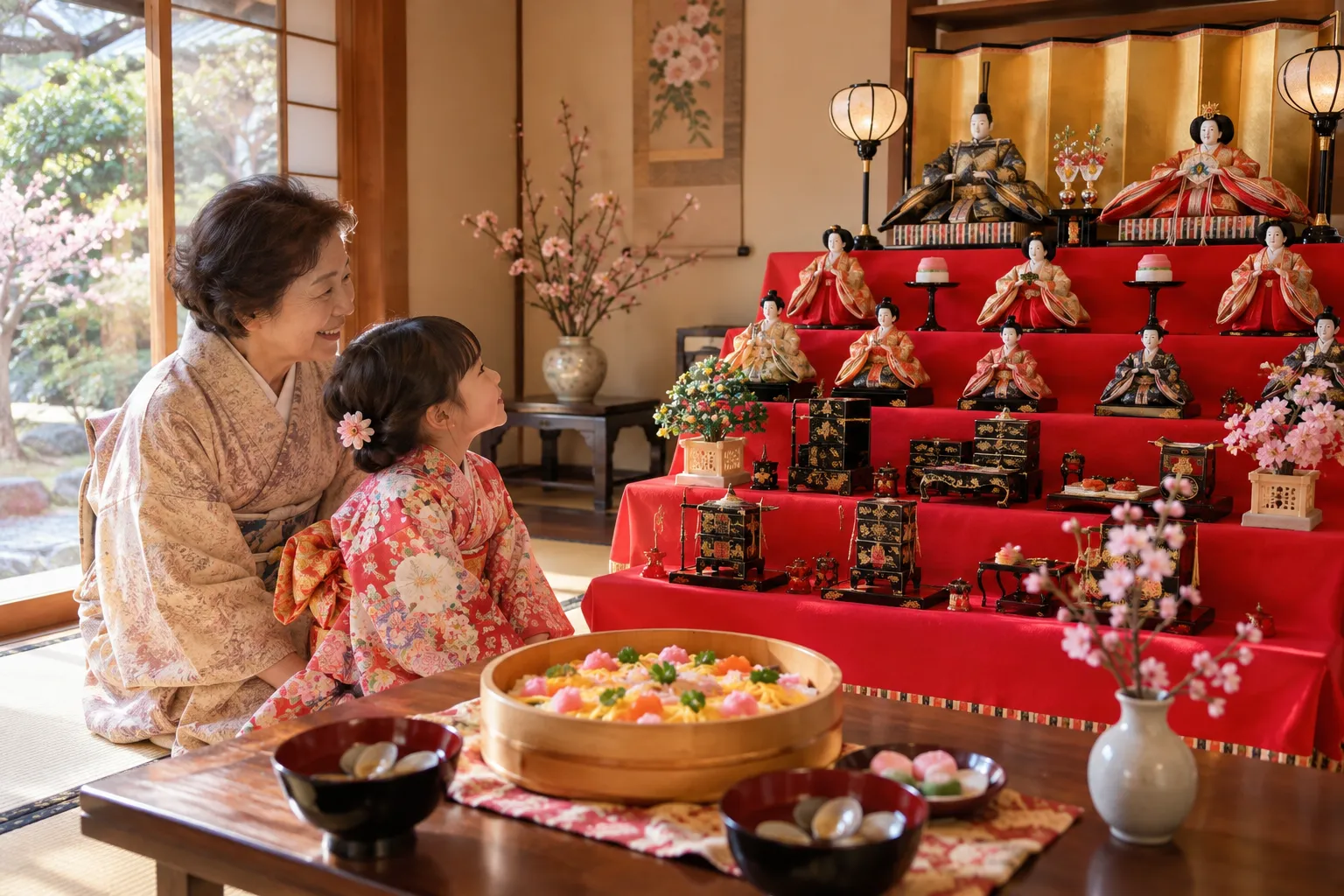
Hinamatsuri (Girls' Day)

ひな祭り(桃の節句)を英語で:読む・聞く・話す・遊ぶ

やさしい英語(CEFR A2)の読み物に音声つき。会話・単語カード・クイズ8問・ゲームで、ひな祭り(桃の節句)の英語をまるごと。

🔊Read in Englishひな祭り(桃の節句)を英語で読もう(CEFR A2・音声つき)

ひな祭り(桃の節句)を、やさしい英語で紹介する読み物です。▶で英文をタイトルから通して聞けます(アメリカ英語)。「和訳」ボタンで日本語訳の表示・非表示を切りかえられます。下線の語は下の単語カードにあります。

Dolls That Carry Away Bad Luck

CEFR A2
0:00
257 words

Every year on March 3, many homes in Japan bring out a set of special dolls. This day is called Hinamatsuri. In English, people call it the Doll Festival or Girls' Day. Families wish that their daughters will grow up healthy and happy.

毎年3月3日になると、日本の多くの家で特別な人形が飾られます。この日を「ひな祭り」と言います。英語では Doll Festival(人形の祭り)や Girls' Day(女の子の日)と呼ばれます。家族は、娘が健康で幸せに育つように願います。

The dolls sit on steps covered with red cloth. At the top, there are an emperor doll and an empress doll. Below them are court ladies, five musicians, and many tiny things like boxes and carts. A big set can have seven steps and fifteen dolls.

人形は赤い布をかけた段の上に座ります。いちばん上には、天皇と皇后の姿をした人形がいます。その下には官女や5人の音楽隊、そして箱や車などのたくさんの小さな道具が並びます。大きなセットは7段で、人形は15体にもなります。

But long ago, these dolls were not for display. More than 1,000 years ago, people made simple dolls from paper or grass. They touched their bodies with the dolls to give them their bad luck. Then they put the dolls on a river and let them float away. Some towns still do this today, and it is called nagashi-bina, or floating dolls.

でも昔、こうした人形は飾るためのものではありませんでした。1000年以上前、人々は紙や草で簡単な人形を作りました。人形で体をなでて、自分の悪いものを人形に移したのです。それから人形を川に置き、流していきました。今もこれを続けている町があり、「流し雛」と呼ばれています。

Hinamatsuri is also a day for special food. Many families eat chirashi-zushi, a colorful rice dish, and clam soup. A clam shell fits only its own partner, so clams are a sign of a happy marriage. Children also enjoy hina-arare, small sweet rice snacks, and pink, white, and green rice cakes.

ひな祭りは、特別な料理の日でもあります。多くの家庭で、色あざやかなご飯料理のちらし寿司と、はまぐりのお吸い物を食べます。はまぐりの貝は自分の相方としか合わないので、幸せな結婚のしるしなのです。子どもたちは、小さくて甘い米菓子のひなあられや、ピンク・白・緑の餅も楽しみます。

After the festival, families put the dolls away quickly. An old saying warns that a girl will marry late if the dolls stay out too long. Nobody really believes it now, but it is still good advice. Dolls kept in a dry box stay beautiful for many years, and some families use their grandmother's dolls.

祭りが終わると、家族はすぐに人形を片付けます。人形を長く出しておくと女の子の結婚が遅れる、という古い言い伝えがあります。今では本気で信じる人はほとんどいませんが、それでも良いアドバイスです。乾いた箱にしまった人形は何年も美しいままで、おばあちゃんの人形を使っている家族もいます。

💬Dialogue英語の会話でひな祭り(桃の節句)

🎬 アメリカからの留学生ルーカスが、3月はじめにホストファミリーの家へ。ホストシスターのユイが雛人形(ひなにんぎょう)を見せます。

0:00
Lucas

Wow, what are all these dolls on the red steps?

わあ、この赤い段の上の人形たちは何?

Yui

They're hina dolls. We put them out for Hinamatsuri on March 3.

雛人形よ。3月3日のひな祭りのために出すの。

Lucas

Hinamatsuri? Is it a holiday?

ひな祭り?祝日なの?

Yui

No, we still go to school. It's a day to wish for girls' health and happiness.

ううん、学校はあるよ。女の子の健康と幸せを願う日なの。

Lucas

Who are the two dolls at the top?

いちばん上の2体は誰?

Yui

An emperor and an empress. Together they're called odairi-sama.

天皇と皇后よ。2人あわせて「お内裏様」って言うの。

Lucas

Together? So it's not just the man?

あわせて?男の人だけのことじゃないの?

Yui

Right. Even many Japanese people get that wrong because of a famous song.

そう。有名な歌のせいで、日本人でもよく間違えるのよ。

Lucas

Ha! And why do people have these dolls?

ははは!で、どうしてこの人形を飾るの?

Yui

Long ago, people put paper dolls on rivers to carry bad luck away.

昔はね、紙の人形を川に流して悪いものを持っていってもらったの。

Lucas

Really? That's a cool idea. What do you eat on that day?

本当?いい考えだね。その日は何を食べるの?

Yui

Chirashi-zushi and clam soup. My mom makes them every year.

ちらし寿司とはまぐりのお吸い物。お母さんが毎年作ってくれるの。

Lucas

Can I help put the dolls away after the festival?

お祭りのあと、人形を片付けるのを手伝ってもいい?

Yui

Sure! But we have to do it quickly. There's an old saying about that.

もちろん!でも早くしなきゃ。それにまつわる言い伝えがあるの。

🃏Word Cardsひな祭り(桃の節句)の英単語カード(12語)

カードをタップすると裏返って、意味と例文が出ます。

display名詞・動詞
飾ること、展示(する)The dolls are on display until March 3.人形は3月3日まで飾られています。💡 on display=飾られて、展示中で。dis(はなれて)+play(折る→広げる)が語源。
emperor名詞
天皇、皇帝The emperor doll sits at the top.天皇の人形はいちばん上に座ります。💡 女性形は empress(皇后、女帝)。
court lady名詞
(宮廷の)官女Three court ladies sit on the second step.2段目には三人官女が座ります。💡 court=宮廷。テニスコートの court と同じ語。
musician名詞
音楽家、演奏者The five musicians play drums and a flute.五人囃子(ごにんばやし)は太鼓と笛を演奏します。💡 music+-ian(〜する人)。
float動詞
浮かぶ、浮かんで流れるThe paper dolls float down the river.紙の人形は川を流れていきます。💡 float away=流れ去る。
bad luck名詞
不運、災いThe dolls take away bad luck.人形が災いを持っていってくれます。💡 反対は good luck。Good luck! は「がんばって」。
clam名詞
はまぐりなどの二枚貝We eat clam soup on Hinamatsuri.ひな祭りにはまぐりのお吸い物を食べます。💡 あさりもはまぐりも英語ではふつう clam。
shell名詞
貝がら、殻This shell fits only its partner.この貝がらは相方としか合いません。💡 卵の殻も shell。
partner名詞
相手、相方、パートナーEach shell has one partner.それぞれの貝がらには1つだけ相方がいます。💡 夫婦・ダンス・仕事の相手などに広く使う。
marriage名詞
結婚Clams are a sign of a happy marriage.はまぐりは幸せな結婚のしるしです。💡 動詞は marry。marry late=結婚が遅れる。
put away句動詞
片付ける、しまうLet's put the dolls away on a sunny day.晴れた日に人形をしまいましょう。💡 put out(出す)とセットで覚える。
saying名詞
言い伝え、ことわざThere is an old saying about the dolls.人形にまつわる古い言い伝えがあります。💡 say の名詞形。an old saying で「昔からの言い伝え」。

✅Quizひな祭り(桃の節句)の英語クイズ(8問)

上の英文を読んでから答えてみよう。答えを選ぶとすぐに解説が出ます。全問正解でスタンプが金色に!

Q1. What is the main idea of the passage?

本文の主旨は何ですか。

第1段落で日付と願い、第2〜4段落で人形・歴史・料理を紹介しています。祝日やパレードの話はなく、アメリカ起源でもありません。毎年買うという記述もありません。

Q2. How many dolls can a big set have?

大きなセットには人形が何体ありますか。

第2段落に seven steps and fifteen dolls とあります。7は段の数、Cと5は官女と音楽隊の人数なので間違いです。

Q3. What did people make simple dolls from long ago?

昔の人々は簡単な人形を何で作りましたか。

第3段落に made simple dolls from paper or grass とあります。ほかの材料は本文に出てきません。

Q4. Why are clams a sign of a happy marriage?

なぜはまぐりは幸せな結婚のしるしなのですか。

第4段落に A clam shell fits only its own partner, so ... とあり、so の前が理由です。値段や寿命、色の話はありません。

Q5. In paragraph 3, what does "float away" mean?

第3段落の float away の意味は何ですか。

人形を川に置いて float away させる、という流れから「水に浮かんで流れていく」とわかります。沈む・飛ぶ・燃えるは文脈に合いません。

Q6. Which is true according to the passage?

本文の内容と合うものはどれですか。

第5段落の最後に some families use their grandmother's dolls とあります。段は red cloth、流し雛は Some towns still do this today なので誤り。白酒は本文にありません。

Q7. Why do families probably put the dolls in a dry box?

家族が人形を乾いた箱にしまうのはおそらくなぜですか。

第5段落の Dolls kept in a dry box stay beautiful for many years から、長持ちさせるためだと推測できます。売る・流す話はなく、結婚の言い伝えは本気で信じられていないと書かれています。

Q8. In the dialogue, what does Lucas learn about odairi-sama?

会話で、ルーカスはお内裏様について何を知りましたか。

ユイが Together they're called odairi-sama と言い、ルーカスの So it's not just the man? に Right. と答えています。歌は間違いの原因として出てくるだけです。

🎮Gamesひな祭り(桃の節句)の英語ゲーム

タブを切りかえて遊べます。授業ではプロジェクターに映して、クラス対抗戦にしても盛り上がります。

📖Read Moreもっと読む:The Blue-Eyed Dolls: Friendship That Crossed an Ocean

少し難しめ(B1〜B2)の英文で、ひな祭り(桃の節句)を違う角度から。

The Blue-Eyed Dolls: Friendship That Crossed an Ocean

B1–B2
0:00
190 words

In 1927, about 12,000 dolls crossed the Pacific Ocean from the United States to Japan. Japanese children called them the blue-eyed dolls, and each one carried a passport, a ticket, and a letter from an American child. The project was led by Sidney Gulick, a former missionary who had lived in Japan for about 25 years. He was alarmed by the anti-Japanese feeling growing in America, and he believed that children could build the friendship that politicians were failing to create.

1927年、約1万2千体の人形がアメリカから太平洋を渡って日本へやって来ました。日本の子どもたちはそれを「青い目の人形」と呼びました。どの人形も、パスポートと切符、アメリカの子どもからの手紙を持っていました。この計画を率いたのは、日本で約25年暮らした元宣教師のシドニー・ギューリックでした。彼はアメリカで高まる反日感情に危機感を抱き、政治家が作れずにいる友情を子どもたちなら築けると信じていました。

The dolls arrived in time for Hinamatsuri, and many schools displayed them next to their hina dolls. Japan responded the same year by sending 58 large dolls in silk kimono, timed to arrive before Christmas. The businessman Eiichi Shibusawa helped organize both sides of the exchange in Japan.

人形はひな祭りに間に合うように到着し、多くの学校で雛人形の隣に飾られました。日本も同じ年、絹の着物を着た大きな人形58体をクリスマス前に届くように贈り返しました。実業家の渋沢栄一が、日本側で受け入れと答礼の両方をまとめる役を担いました。

The story, however, did not end simply. When war broke out between the two countries, many of the blue-eyed dolls were destroyed as symbols of the enemy. Some survived only because individuals quietly hid them, and a few hundred are known in Japan today. The episode raises a question that still matters: can culture protect friendship when politics turns against it?

しかし、物語は単純には終わりませんでした。両国の間で戦争が始まると、多くの青い目の人形が敵のシンボルとして壊されました。一部の人形は、人々がひそかに隠したおかげで生き残り、今では日本で数百体が確認されています。この出来事は今も大切な問いを投げかけます。政治が友情に背を向けたとき、文化はそれを守れるのでしょうか。

👋Useful Phrasesひな祭り(桃の節句)に使える英語フレーズ

Happy Hinamatsuri!ひな祭りおめでとう!英語圏の日系コミュニティでもそのまま使われる。Happy Girls' Day! でもよい。
Hinamatsuri is a day to wish for girls' health and happiness.ひな祭りは、女の子の健康と幸せを願う日です。外国の人に一言で説明するときの基本フレーズ。
These dolls take away bad luck for the children.この人形は子どもの代わりに災いを引き受けてくれるんです。雛人形の意味を伝える一言。take away bad luck が便利。
Clam shells only fit their own partner, so we eat clam soup today.はまぐりの貝は相方としか合わないので、今日はお吸い物にするんです。料理の意味を聞かれたときに。
We put the dolls away soon after March 3.3月3日が過ぎたら、すぐに人形をしまいます。put away=片付ける。言い伝えも一緒に話すと盛り上がる。

🗣️ 話し合ってみよう(Discussion)

  1. Did your family display hina dolls or other seasonal decorations? What do you remember?

    あなたの家では雛人形や季節の飾りを出しましたか。どんなことを覚えていますか。
  2. Hinamatsuri is for girls and Children's Day was once for boys. Should these festivals be for all children now? Why?

    ひな祭りは女の子、こどもの日はかつて男の子の行事でした。今はどちらもすべての子どものための行事にすべきだと思いますか。なぜですか。
  3. How would you explain the idea of a doll that takes away bad luck to someone from another culture?

    「災いを引き受けてくれる人形」という考え方を、ほかの文化の人にどう説明しますか。
  4. Many Japanese homes are small now. How do you think Hinamatsuri will change in the future?

    今の日本の家は小さいことが多いです。ひな祭りはこれからどう変わっていくと思いますか。
  5. The friendship dolls of 1927 could not stop a war. Do cultural exchanges still have value? Give examples.

    1927年の友情人形は戦争を止められませんでした。それでも文化交流には価値があると思いますか。例をあげて話しましょう。

🗾Explain Japan in Englishひな祭り(桃の節句)を海外の人に英語で説明するなら

姉妹サイト「日本文化ナビ」に、英語でかんたんに説明する例文(ひと言・30秒・スピーチ)と、外国の人によく聞かれる質問がまとまっています。日本語のページと、英語だけのページ(そのまま海外の人に見せられます)があります。

雛祭りを英語で説明する(hinamatsuri)雛祭り(hinamatsuri)を英語で説明するには。一言/30秒/スピーチの3段階の英文と和訳、外国人によく聞かれる質問と答え、そのまま使えるフレーズ、音声つき。JP 日本語で読むGB English page
🎎
Hinamatsuri (Girls
スタンプ帳にひな祭り(桃の節句)のスタンプを押しました!
クイズで全問正解すると金のスタンプに。世界一周めざして集めよう。 スタンプ帳を見る →

授業アイデアとワークシートを見る →