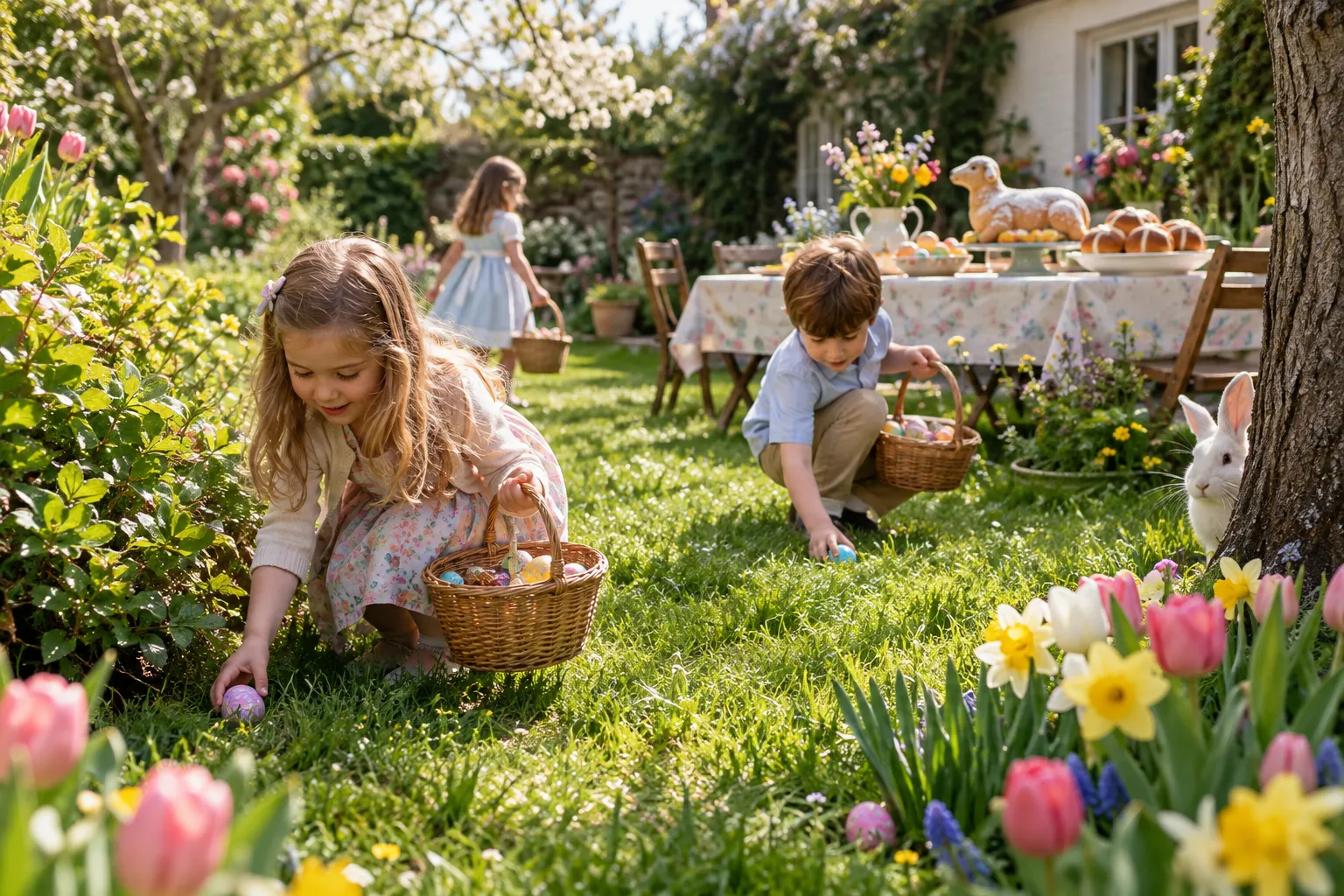
Easter
イースター(復活祭)の英語の授業アイデアとワークシート
印刷してすぐ使えるワークシート(PDF・Word・解答つき)と、授業の手順書。
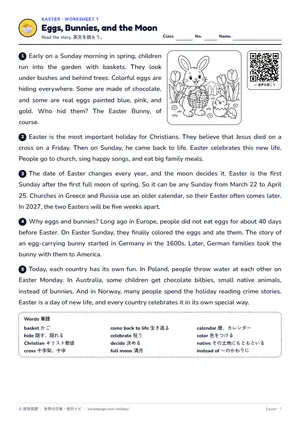
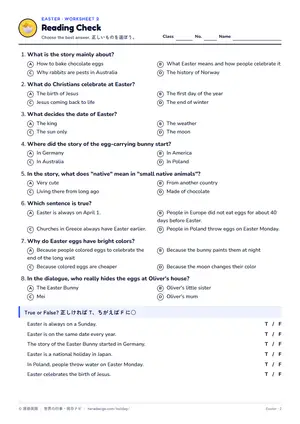
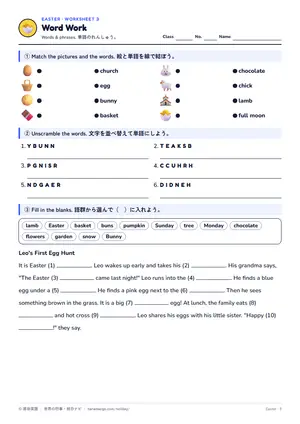
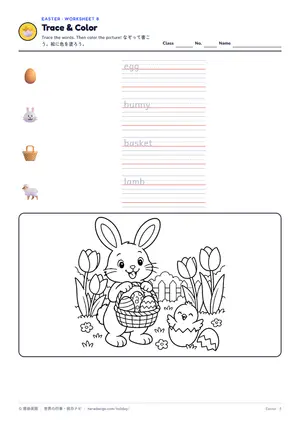
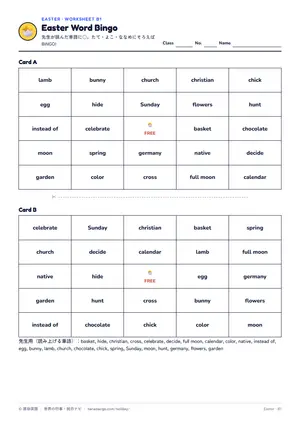
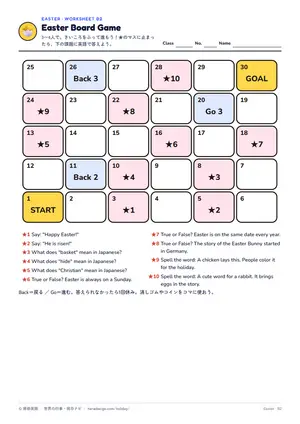
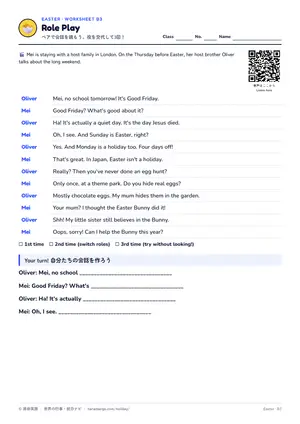
🖨️Worksheetsワークシート(無料・A4)
① 「中身を見る・印刷」で全ページを確認 → ② そのページ上の 🖨️ 印刷する でそのまま印刷できます。A4・無料。
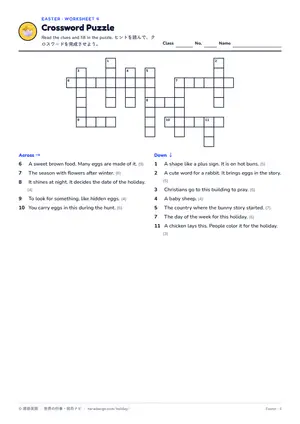
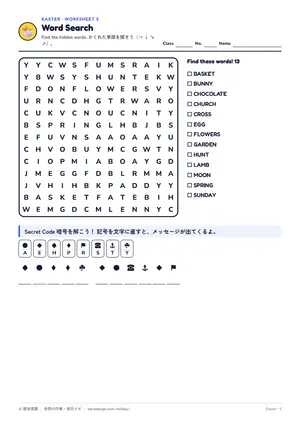
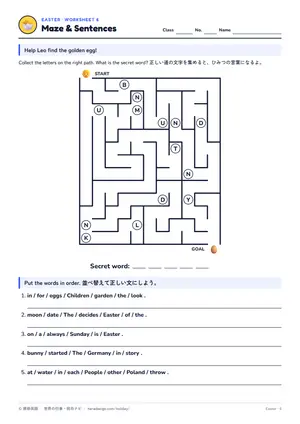
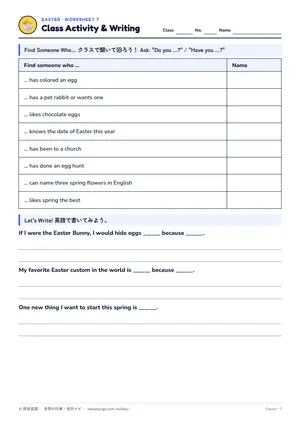
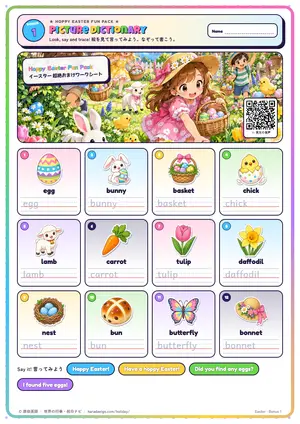
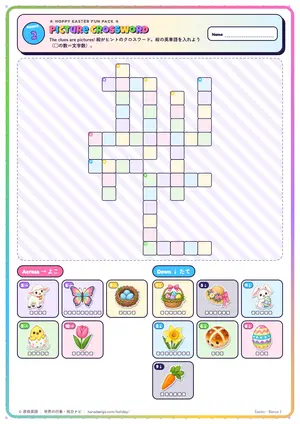
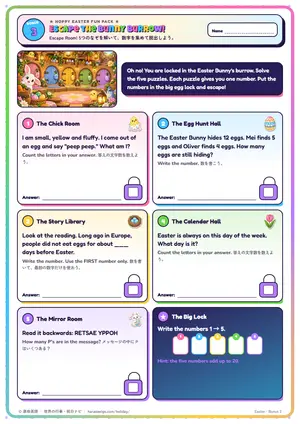
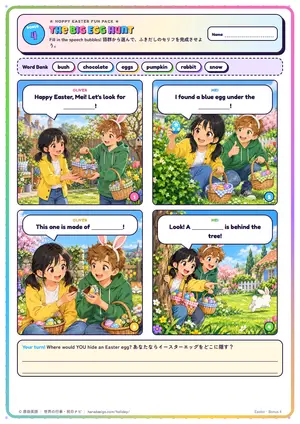
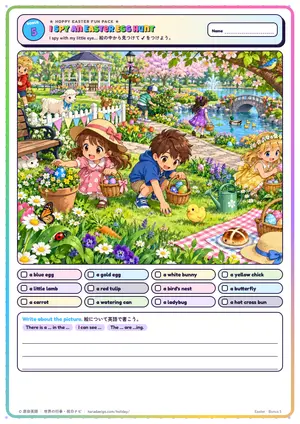
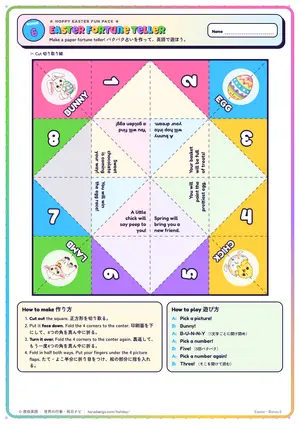
🍎Lesson Ideasイースター(復活祭)を使った英語の授業アイデア
英語ヒントでエッグハント
🎯 場所を表す前置詞(under / behind / next to / on)を体で覚える。
- 紙の卵10個に番号をつけ、教室のあちこちに隠す。
- It's under a desk. / It's behind the door. などの英語ヒントカードを配る。
- ペアでヒントを読んで卵をさがし、見つけたら場所を英語で言う。
- いちばん多く見つけたペアに「Easter Bunny 賞」をあげる。
詳細版を開く(時間配分・Teacher Talk・板書)
うさぎと卵の絵を見せ、海外では春のイースターに子どもが卵をさがす遊びをすることを伝える。消しゴムと箱を使い、under / behind / next to / on を動きで見せる。
🗣️ This is the Easter Bunny. He hides eggs! / Look. The eraser is on the box. / Now it's under the box. Now it's behind the box. / And now it's next to the box. Say it with me.
先生が Put your pencil under your desk. などと言い、全員に筆箱やえんぴつを動かさせる。テンポよく6〜8回くり返す。
🗣️ Put your pencil on your desk. / Put your pencil case under your chair. / Put your eraser next to your notebook. / Good! Where is your pencil? It's ...
ペアにヒントカードを配り、カードを読んで卵をさがさせる。見つけたら卵とカードを先生のところに持ってきて、卵があった場所を英語で言えたら次のカードをもらえるルールにする。走らないことを先に約束させる。
🗣️ Read the card with your partner. / Walk. Don't run! / You found it? Where is it? Tell me in English. / Great! Here's your next card.
見つけた数を数えさせ、いちばん多いペアに「Easter Bunny 賞」をわたす。最後に4つの前置詞をもう一度全員で言う。
🗣️ How many eggs did you find? Let's count. / The Easter Bunny prize goes to ...! / One more time. On, under, behind, next to. / Happy Easter, everyone!
Where is the egg?
It's on ___. 🥚 ⬆
It's under ___. 🥚 ⬇
It's behind ___.
It's next to ___.

desk / chair / door / clock / bookshelf
今年のイースターは何日?カレンダー探偵
🎯 日付の英語表現と、月の満ち欠けで決まる暦のしくみを理解する。
- 「春分(3月21日)のあとの最初の満月の次の日曜日」というルールを英語で示す。
- 2026〜2028年の満月の日付表を配り、班でイースターの日付を予想する。
- 答え合わせをし、Easter is on April 5 in 2026. のように英語で言う。
- 正教会の日付がずれる理由を図で確認する。
詳細版を開く(時間配分・Teacher Talk・板書)
クリスマスは毎年12月25日なのに、イースターは毎年日付が変わることを示す。ルールのカードを読み、3つのステップ(3月21日→満月→次の日曜日)に分けて板書する。
🗣️ Christmas is always on December 25. What about Easter? / Easter moves every year. Why? / Here's the rule. First, find March 21. / Then find the next full moon. Then find the next Sunday.
班にカレンダーと満月表を配り、2026・2027・2028年のイースターの日付を予想させる。2028年は満月が日曜日(4月9日)なので、イースターはその日ではなく次の日曜日(4月16日)になる点に気づかせる。
🗣️ In 2026, the full moon is on April 2. What's the next Sunday? / Find the dates for 2027 and 2028, too. / Look at 2028. The full moon is on a Sunday. Is Easter on that day? / No! It's the next Sunday.
答え合わせをし、Easter is on April 5 in 2026. の型で全員に言わせる。2026年4月5日、2027年3月28日、2028年4月16日。序数(fifth, twenty-eighth, sixteenth)の読み方も確認する。
🗣️ Easter is on April 5 in 2026. April fifth. / In 2027, it's on March twenty-eighth. / In 2028, it's on April sixteenth. / Ask your partner. When is Easter in 2027?
ギリシャやロシアなどの正教会は古いユリウス暦で計算するため、2026年は4月12日、2027年は5月2日と遅れることを図で見せる。同じルールでも暦がちがうと答えがずれることを確認する。
🗣️ Some churches use an old calendar. / In 2027, their Easter is on May 2. / How many weeks apart are the two Easters? / Five weeks! Same rule, different calendar.
Easter = the first Sunday after the first full moon on or after March 21
① March 21 → ② full moon 🌕 → ③ next Sunday

2026:🌕 April 2(Thu)→ Easter April 5
2027:🌕 March 22(Mon)→ Easter March 28
2028:🌕 April 9(Sun!)→ Easter April 16

Easter is on ___ in ___.
正教会:2026 April 12 / 2027 May 2(5週間ずれる)
本当?ウソ?イースター由来ファクトチェック
🎯 ネットでよく見る由来の話を、資料にもとづいて確かめる。
- 「Easter はイシュタルから」「ウサギは女神の使い」「卵は古代の女神の習慣」などのカードを配る。
- 本文と参考リンクを読み、班ごとに True / False / Not sure を判定する。
- 判定の根拠を英語で1〜2文書く(There is no record that ...)。
- なぜそうした俗説が広まるのか、クラスで話し合う。
詳細版を開く(時間配分・Teacher Talk・板書)
「イースターは女神イシュタルの祭り」という画像つきの投稿がSNSで広まったことを紹介し、今日は資料で確かめる日だと伝える。判定は3種類(True / False / Not sure)あることを示す。
🗣️ You may see posts like this on social media. / Is it true? Today you are fact-checkers. / You have three choices: true, false, or not sure. / First, guess. Then check.
班で資料を読み、4枚を判定させる。答えの目安:①は False(1853年の本が言い出した説で、言葉のつながりはない)、②は False(エオストレを記録したベーダはウサギにふれていない)、③は True(エオストレは「夜明け」の古い言葉にさかのぼり、east と同じ根)、④は True(1678年または1682年のドイツの本)。
🗣️ Find the part of the text that answers the question. / Underline your evidence. / Who wrote about Eostre? Did he mention a hare? / If the text doesn't say, choose not sure.
判定の根拠を英語で1〜2文書かせる。There is no record that ... / The first record is from ... / According to ... の3つの型を板書して使わせる。
🗣️ Write one or two sentences for each card. / Use 'There is no record that ...' / Or 'The first record is from ...' / Say where you found the information.
なぜ根拠のない話が広まるのかをクラスで話し合わせる。「発音が似ている」「画像つきで共有しやすい」「話としておもしろい」などの意見を板書し、ネットの情報を確かめる習慣につなげる。
🗣️ Why do stories like this spread so fast? / Is it because they sound good? / What can you do before you share a post? / Check the source first.
Fact-check:True / False / Not sure
① Ishtar → False(1853年の本の説。音が似ているだけ)
② Eostre's hare → False(Bede はウサギにふれていない)
③ Easter ↔ east → True('dawn' の古い言葉)
④ hare + eggs in a German book → True(1678 or 1682)

There is no record that ___.
The first record is from ___.
According to ___, ___.
世界のイースター・ミニプレゼン
🎯 国ごとの習慣を調べ、英語で1分間の紹介をする。
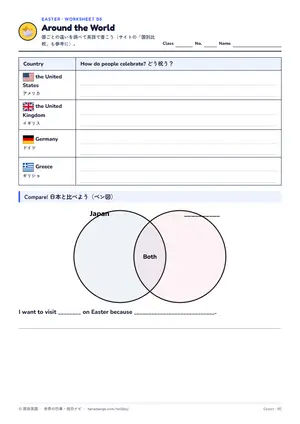
- 国別比べの表から1か国を選ぶ(ポーランド、ノルウェー、イタリアなど)。
- その習慣の写真と、いつ・どこで・何をするかを英語でまとめる。
- 1分間で発表し、聞き手は質問を1つする。
- クラスで「いちばんやってみたい習慣」に投票する。
詳細版を開く(時間配分・Teacher Talk・板書)
ポーランドの水かけ、ノルウェーの推理小説、オーストラリアのビルビーのチョコレートの3つを英語のクイズで出し、国ごとに習慣がまったくちがうことに気づかせる。
🗣️ Quiz time. In which country do people read crime stories at Easter? / Norway! Even milk cartons have mystery puzzles. / In which country do people throw water on Easter Monday? / In Australia, people buy chocolate bilbies, not bunnies. Why?
1人1か国を選ばせ、国別比べの表と記事をもとに、When / Where / What / Why の4点をメモさせる。写真が見つかれば1枚選ばせる。
🗣️ Choose one country. / When do people do it? Where? What do they do? / Why do they do it? Find a reason if you can. / Write short notes, not full sentences.
4人班の中で1人1分ずつ発表させる。聞き手は1人1つ質問をする。先生はタイマーで時間を管理し、Can you tell me more about ...? などの質問の型を示す。
🗣️ You have one minute. Start now. / Listeners, ask one question. / Can you tell me more about ...? / Why do people do that?
各班でいちばんおもしろかった習慣を1つ全体に紹介させ、クラスで「いちばんやってみたい習慣」に投票させる。理由を英語で一言言わせる。
🗣️ Which custom would you like to try? / Vote for one. / Why? Tell us in one sentence. / Easter is very different around the world, isn't it?
My country:___
When:on Easter Monday / at midnight / ...
Where:___
What:people ___
Why:because ___

Can you tell me more about ___?
Why do people ___?
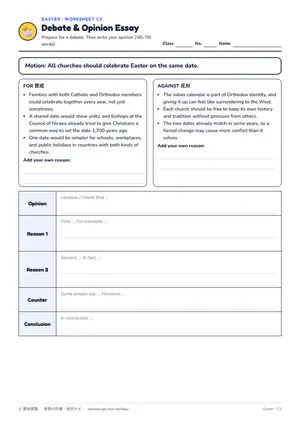
1つの日付をめぐる議論:教会の暦統一ディベート
🎯 宗教・歴史・アイデンティティが絡む問題を多面的に議論する。
- advanced の英文を読み、西方教会と正教会の暦のちがいを確認する。
- 論題「All churches should celebrate Easter on the same date.」で賛否に分かれる。
- 日本の元号や旧暦の行事など、暦とアイデンティティの関係の例を探して根拠にする。
- ディベートのあと、自分の意見を英語で150語にまとめる。
詳細版を開く(時間配分・Teacher Talk・板書)
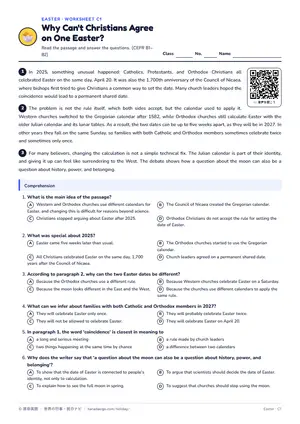
2025年に西方教会と正教会のイースターが4月20日に重なり、ニカイア公会議から1700年の年だったことを紹介する。2027年には5週間ずれることを示し、論題を板書する。
🗣️ In 2025, all Christians celebrated Easter on the same day. / But in 2027, the two dates will be five weeks apart. / Here is today's motion. / Who agrees right now? Who disagrees?
advanced の英文を読ませ、quiz で内容を確認する。第2段落の「ルールは同じで、暦がちがう」という点と、第3段落の「暦はアイデンティティの一部」という点を表に整理させる。
🗣️ Read the passage and answer the quiz. / Is the problem the rule or the calendar? / Why is changing the calendar not a simple fix? / Write one sentence for each question.
賛成・反対のチームに分け、根拠を3つずつ準備させる。日本の元号や旧暦で行う行事など、暦とアイデンティティが結びつく例を1つ調べて加えさせる。
🗣️ Prepare three reasons for your side. / Add one example from Japan. / Think about the Japanese era names or the old lunar calendar. / What will the other team say? Prepare for it.
進行表にそってディベートを行う。先生は時間を管理し、終わったら両チームのいちばん強かった論点を1つずつ板書する。
🗣️ The affirmative team, you have two minutes. / Now one minute to prepare your rebuttal. / Please respond to their second point. / Time's up. What was the strongest point on each side?
チームをはなれて、自分の考えを英語150語で書かせる。本文の最後の文(a question about the moon can also be a question about history, power, and belonging)にふれるよう指示する。授業内で書き出し、残りは提出課題にする。
🗣️ Now write your own opinion. / About 150 words. / Use the last sentence of the passage in your answer. / Finish it by next class.
Motion:All churches should celebrate Easter on the same date.
Same rule ≠ same calendar
Western:Gregorian(after 1582)/Orthodox:Julian
2025:same day(April 20, 1,700 years after Nicaea)
2027:five weeks apart(March 28 / May 2)

For:family, unity, ...
Against:identity, history, ...
日本の例:元号、旧暦の行事