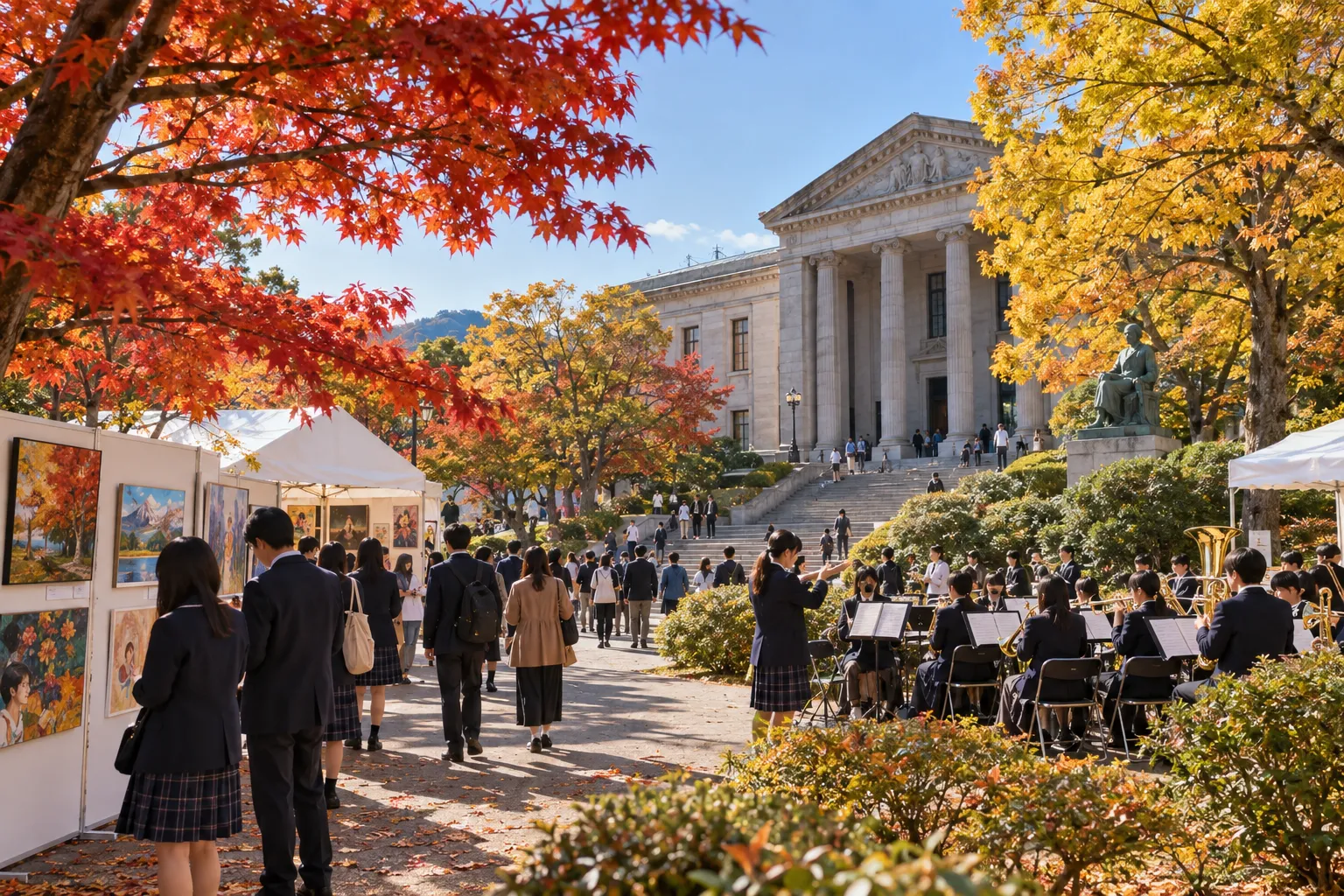
Culture Day
文化の日の英語の授業アイデアとワークシート
印刷してすぐ使えるワークシート(PDF・Word・解答つき)と、授業の手順書。
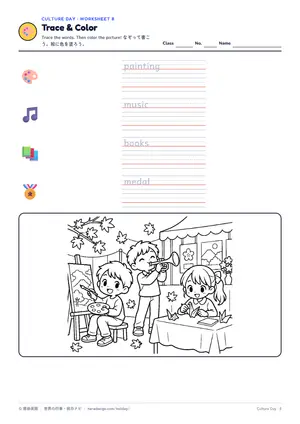
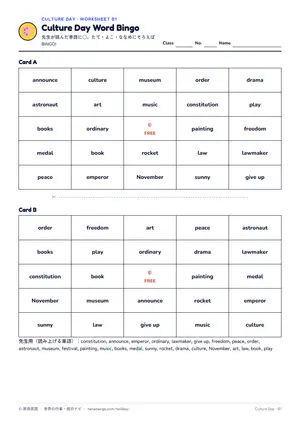
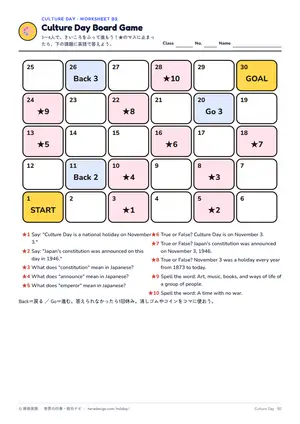
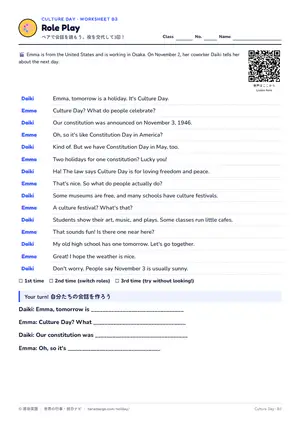
🖨️Worksheetsワークシート(無料・A4)
① 「中身を見る・印刷」で全ページを確認 → ② そのページ上の 🖨️ 印刷する でそのまま印刷できます。A4・無料。
🍎Lesson Ideas文化の日を使った英語の授業アイデア
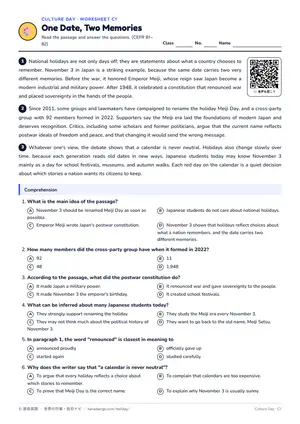
11月3日タイムトラベル年表づくり
🎯 英文から年と出来事を読み取り、時系列で説明できるようにする。
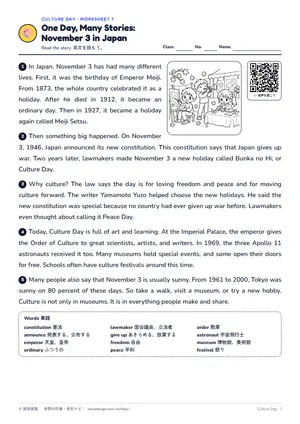
- 英文の第1・2段落から、1873・1912・1927・1946・1948の年を探す。
- グループで英語の年表カードを作り、正しい順に並べる。
- In 1927, November 3 became Meiji Setsu. のように、1枚ずつ英文で読み上げる。
- 「どの時代の11月3日に行ってみたいか」を一文で発表する。
詳細版を開く(時間配分・Teacher Talk・板書)
黒板に November 3 と書き、「この日は昔からずっと文化の日だった?」と聞く。英語ページ第1・2段落の音声を聞かせ、「11月3日はいくつもの顔を持っている」ことを予告する。
🗣️ Today is our time travel class. Our date is November 3. / Was it always Culture Day? / Listen to paragraphs 1 and 2. / November 3 has had many different lives.
第1・2段落を黙読させ、年を探して丸で囲ませる(1873・1912・1927・1946)。1948年は本文に数字では出てこず、Two years later から1946+2で求めることに気づかせる。それぞれの年に何が起きたかを、ペアで本文の語句に線を引いて確かめさせる。
🗣️ Find the years in the text. Circle them. / How many did you find? Four? / Look at this: Two years later. Which year is it? / Yes, 1948. Now underline what happened in each year.
4〜5人のグループに5枚の紙を配り、1枚に1つずつ英語の年表カードを書かせる(1873: The whole country celebrated the emperor's birthday. / 1912: It became an ordinary day. / 1927: It became Meiji Setsu. / 1946: Japan announced its new constitution. / 1948: It became Culture Day.)。書けたらカードをばらばらにし、別のグループと交換して正しい順に並べさせる。
🗣️ Write one year and one event on each card. / 1912. It became an ordinary day. / Now mix your cards and give them to another group. / Put their cards in the right order.
並べた年表を、1人1枚ずつ順に英文で読み上げさせる(In 1927, November 3 became Meiji Setsu.)。In ___, の形で年を先に言うことと、年号は2けたずつ読むこと(nineteen twenty-seven)を確認する。
🗣️ Read your timeline. One card each. / Start with In and the year. In 1927, ... / Remember: nineteen twenty-seven. / Great. Now the next card.
「タイムマシンで、どの年の11月3日に行ってみたい?」と聞き、I want to go to November 3, ___ because ___. の文で数人に発表させる。
🗣️ If you had a time machine, which November 3 would you visit? / I want to go to November 3, 1946, because I want to see the new constitution. / Tell us your choice.
November 3: Time Travel

1873  The whole country celebrated Emperor Meiji's birthday.
1912  It became an ordinary day.
1927  It became a holiday again: Meiji Setsu.
1946  Japan announced its new constitution.
1948  It became Culture Day.(Two years later → 1946 + 2)

In __, November 3 became __.
I want to go to November 3, __ because __.
わたしの文化勲章:推薦スピーチ
🎯 人物の功績を英語で説明し、理由を述べて推薦する。
- 文化勲章が科学・芸術・学問の功績に贈られることを確認する。
- 身近な人や好きな作家・研究者を一人選ぶ。
- Who / What / Why の3点で英語の推薦文を書く。
- 1分スピーチをして、クラスで投票する。
詳細版を開く(時間配分・Teacher Talk・板書)
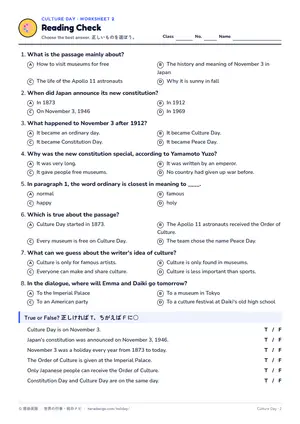
文化勲章の写真を見せ、「この勲章をもらった外国人の第1号はだれ?」とクイズを出す。答えは1969年のアポロ11号の3人の宇宙飛行士。英語ページ第4段落の音声を聞かせ、文化勲章が科学・芸術・学問などで特にすぐれた働きをした人に贈られることを確認する。
🗣️ This is the Order of Culture. Who was the first foreigner to get it? / The Apollo 11 astronauts, in 1969! / The emperor gives it to great scientists, artists, and writers. / Today, you will choose your own winner.
推薦したい人を1人選ばせる。有名な作家・研究者・アーティストのほか、家族や地域の人、部活の先輩など身近な人でもよいと伝える。選んだ人の功績を日本語で3つメモさせる。
🗣️ Choose one person. It can be a famous writer or someone you know. / Your grandmother? Your club coach? That's fine. / Write three things this person has done.
ワークシートに沿って英語の推薦文を書かせる。Who(I would like to give the Order of Culture to ___. He / She is ___.)、What(He / She has ___.)、Why(I think he / she deserves it because ___.)。現在完了形で功績を表すと伝わりやすいことを示す。最後に聞き手への呼びかけ(Please vote for ___!)を入れる。
🗣️ Start with this: I would like to give the Order of Culture to ___. / Next, what has this person done? She has written twenty books. / Then, why? I think she deserves it because her books give people hope. / End with Please vote for ___!
5〜6人のグループで1人1分ずつスピーチをさせる。聞き手は、いちばん説得力のあった推薦に投票用紙で投票する(自分以外)。各グループで最も票を集めた人を、全体の前でもう一度スピーチさせる。
🗣️ One minute each. Look at your listeners, not your paper. / Listeners, vote for the most convincing speech. / The winner of each group, please come to the front. / Let's give them a big hand!
選ばれたスピーチのよかった点(具体的な功績・数字・理由のわかりやすさ)を全体で確かめる。「文化はどこにでもある」という本文の最後の考え方に触れて終わる。
🗣️ Why were these speeches so convincing? / They gave clear examples and strong reasons. / Culture is in everything people make and share.
My Order of Culture 🏅

Who:I would like to give the Order of Culture to __.
     He / She is __.
What:He / She has __.(現在完了で功績)
Why:I think he / she deserves it because __.
Please vote for __!

1969:Apollo 11 astronauts(first foreigners)
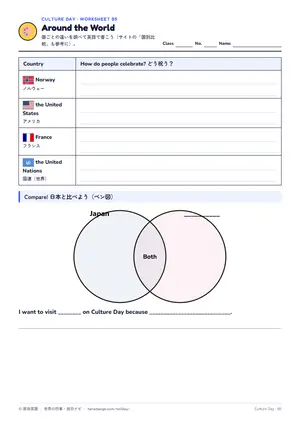
世界の憲法の日比べ
🎯 国ごとの記念日の違いを比べ、英語で要約する。
- ノルウェー・アメリカ・日本の憲法に関わる日を compare の表で確認する。
- 日付・できた年・祝い方を英語で表にまとめる。
- ペアで違いを2つ、共通点を1つ英語で話す。
- 「日本の文化の日にノルウェー式のパレードがあったら?」を自由に話し合う。
詳細版を開く(時間配分・Teacher Talk・板書)
英語ページの会話で、エマが Oh, so it's like Constitution Day in America? と聞き、ダイキが Kind of. But we have Constitution Day in May, too. と答える部分を聞かせる。日本には憲法に関わる祝日が2つある(11月3日の公布、5月3日の施行)ことを確認する。
🗣️ Listen to Emma and Daiki. / Japan has two holidays for one constitution. Why? / November 3 is when it was announced. May 3 is when it started. / Let's compare Japan with other countries.
国別比べの表を読み、B5 の表に英語でまとめさせる。ノルウェー(May 17 / 1814 / children's parades with flags / a holiday)、アメリカ(September 17 / 1787 / students learn about the Constitution / not a day off)、日本(November 3 / announced in 1946 / museums and culture festivals / a holiday)。
🗣️ Read the table and fill in the chart. / Write the date, the year, and how people celebrate. / Is it a day off? Check that too. / Norway's constitution was signed in 1814.
ペアで、表を見ながら違いを2つ、共通点を1つ英語で話させる。型を板書する(In Norway, ___, but in Japan, ___. / Both Norway and Japan ___.)。話した内容をワークシートに書かせる。
🗣️ Find two differences and one similarity. / In Norway, children walk in parades, but in Japan, many schools have culture festivals. / Both Norway and Japan make it a day off. / Talk first, then write.
ノルウェーのパレードの写真を見せ、「日本の文化の日にノルウェー式のパレードがあったら?」と自由に話し合わせる。I think it would be ___ because ___. の型を示し、賛成・反対どちらの意見もよいと伝える。
🗣️ Look at Norway's parade. Children carry flags. / What if Japan had a parade like this on Culture Day? / I think it would be fun because ___. / Or maybe not. Why?
数人に意見を言わせ、国によって憲法を記念する日の祝い方が大きく違うことを確認する。
🗣️ Let's hear two or three ideas. / Every country remembers its constitution in its own way.
Constitution Days around the World

           Date      Year   How people celebrate        Day off?
Norway     May 17    1814   children's parades, flags    yes
USA        Sept 17   1787   learn about the Constitution no
Japan      Nov 3     1946(announced)museums, culture festivals  yes
           May 3     1947(started)

In __, __, but in Japan, __.
Both __ and Japan __.
I think it would be __ because __.
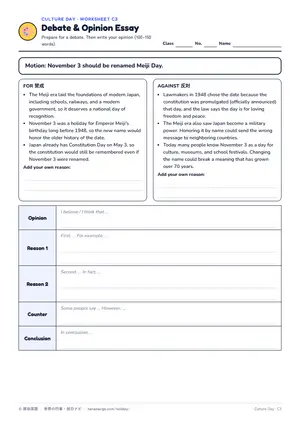
ディベート:祝日の名前は変えるべきか
🎯 史料にもとづき、立場の違う意見を公平に整理して議論する。
- 1948年の国会での説明、入江俊郎の回想、明治節の歴史を資料として読む。
- 「明治の日」への改称に賛成・反対の両方の論点をリストにする。
- 英語で立論と反論を行う。
- 最後に、相手の立場で最も説得力のあった点を英語で述べる。
詳細版を開く(時間配分・Teacher Talk・板書)
3つの資料と発展セットの英文を読ませる。日付が明治節と同じになった理由について、「明治節だったためでもある」とする百科事典の見方と、「公布日の決め方の結果として重なった」とする回想の両方があり、資料によって見方が分かれることを確認する。論題 November 3 should be renamed Meiji Day. を示し、どちらの立場も尊重して議論することを最初に約束する。
🗣️ Read the three sources and the passage. / Why did the constitution come out on November 3? The sources do not agree. / Today's motion is: November 3 should be renamed Meiji Day. / Please respect both sides. We are testing arguments, not people.
賛成・反対のチームに分け、両方の論点をリストにさせる(自分のチームの論点だけでなく、相手の論点も予想する)。賛成の例:明治時代が近代日本の土台を築いた。反対の例:今の名前は自由と平和という戦後の理想を表している。各論点に、どの資料が根拠になるかを書きこませる。
🗣️ List arguments for both sides, not only your own. / Supporters say the Meiji era laid the foundations of modern Japan. / Critics say the current name reflects postwar ideals of freedom and peace. / Which source supports each point?
英語で立論(各4分)・作戦タイム(3分)・反論(各3分)・作戦タイム(2分)・まとめ(各2分)を行い、残りの時間で聞き手が講評する。先生は、主張が資料に裏づけられているか、相手の論点に直接答えているかを見る。感情的な言葉や人への批判には、その場でやわらかく注意する。
🗣️ Opening speeches. Four minutes each. / Please name your source when you give a fact. / Rebuttal. Answer their strongest point, not the weakest one. / Summaries. Two minutes each.
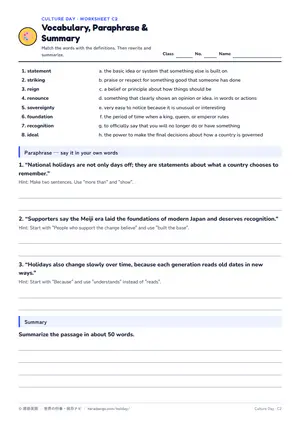
立場を離れ、一人ずつ「相手の立場で最も説得力のあった点」を英語で述べさせる(The strongest point from the other side was ___ because ___.)。最後に、発展セットの a calendar is never neutral の一文を読み、「祝日は何を記憶するかの選択」という視点で各自が3〜4文の振り返りを書く。
🗣️ Now step out of your role. / The strongest point from the other side was ___ because ___. / The passage says a calendar is never neutral. What does that mean to you? / Write three or four sentences.
Motion: November 3 should be renamed Meiji Day.

November 3 = two memories
  before the war:Meiji Setsu(Emperor Meiji's birthday)
  after 1948:Culture Day(constitution announced 1946)

資料1 1948 Diet:because the constitution was announced
資料2 入江俊郎:May 1・May 5 を避けて May 3 施行 → 半年前の Nov 3 公布
資料3 2011 group / 2022 cross-party group(92 members)

Opening 4 → Rebuttal 3 → Summary 2
The strongest point from the other side was __ because __.
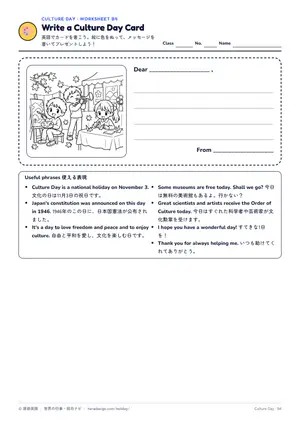
日本の文化をALTに紹介しよう
🎯 身近な文化を、絵と短い英語で紹介する。
- 折り紙・書道・けん玉など、紹介したい文化を一つ選ぶ。
- This is origami. It is fun. のような2文を練習する。
- 実物や絵を見せながら、ALTや先生に紹介する。
詳細版を開く(時間配分・Teacher Talk・板書)
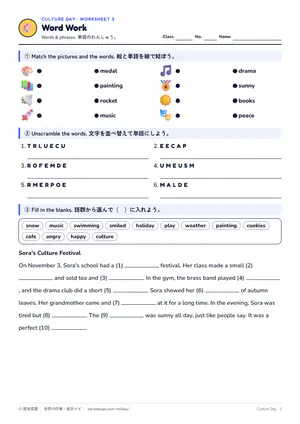
11月3日は文化の日で、絵や音楽、本など人が作って伝えてきたものを大切にする日だと伝える。先生が実物の折り紙を見せ、This is origami. It is fun. と見本を見せる。
🗣️ November 3 is Culture Day. / Look. This is origami. It is fun. / What Japanese culture do you like?
文化の絵カードを1枚ずつ見せ、英語での言い方を発音させる(origami / calligraphy / kendama)。紹介したい文化を1つ選ばせ、実物があれば手に持たせるか、絵カードを1枚取らせる。
🗣️ This is calligraphy. Say it with me. / This is kendama. / Choose one. Which one do you want to show the ALT?
形容詞カードを見せ、fun / beautiful / cool の意味を表情やジェスチャーで確認する。This is ___. It is ___. の2文をペアで練習させる。けん玉なら実際に1回やってみせながら言うなど、動作をつけてよいと伝える。
🗣️ Fun, beautiful, cool. Which word fits? / This is kendama. It is cool. / Practice with your partner. Show it and say it.
ALT や先生の前で、実物や絵を見せながら紹介させる。ALT は Wow! Can you show me? などと一言返す。時間に応じて数人ずつ、または班ごとに行う。
🗣️ Show the ALT your culture. / This is origami. It is beautiful. / Wow! Thank you for sharing your culture!
Culture Day(November 3)

This is __.
It is __.

🦢 origami 🖌️ calligraphy 🎯 kendama 🥁 taiko
fun / beautiful / cool / interesting