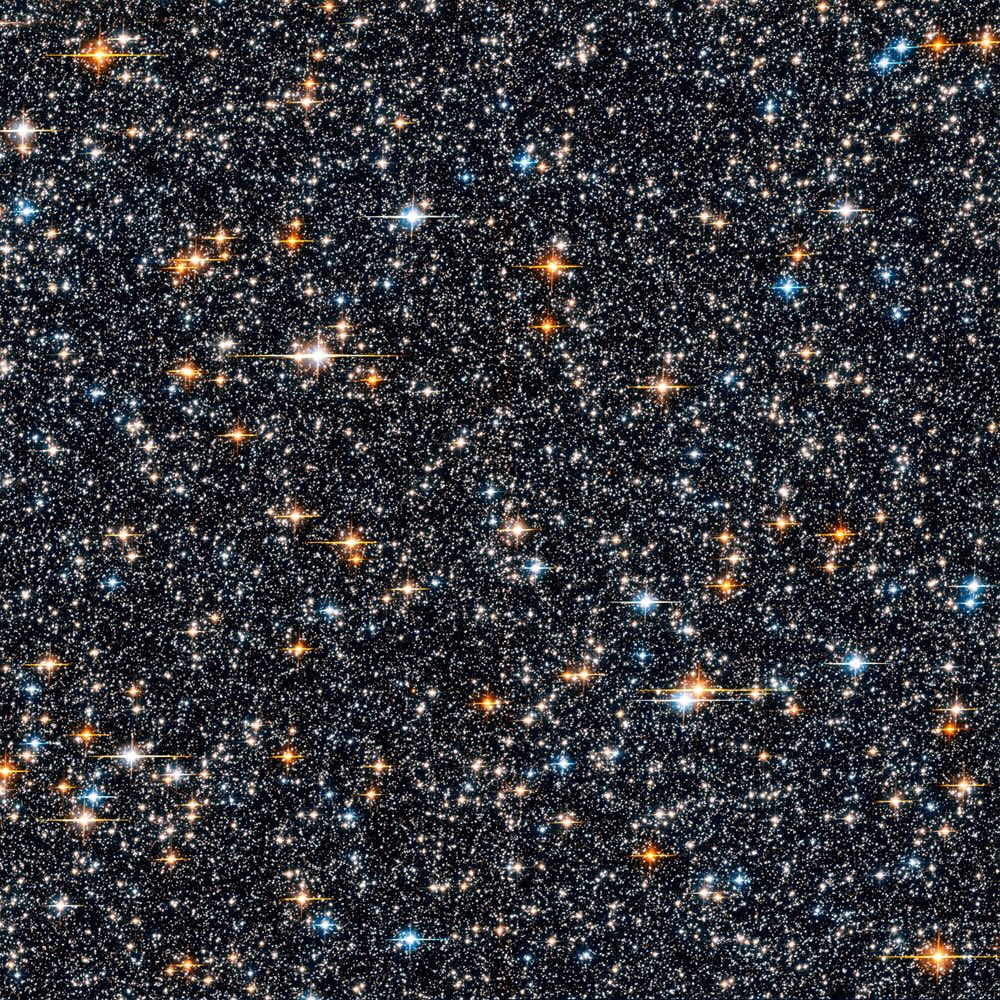
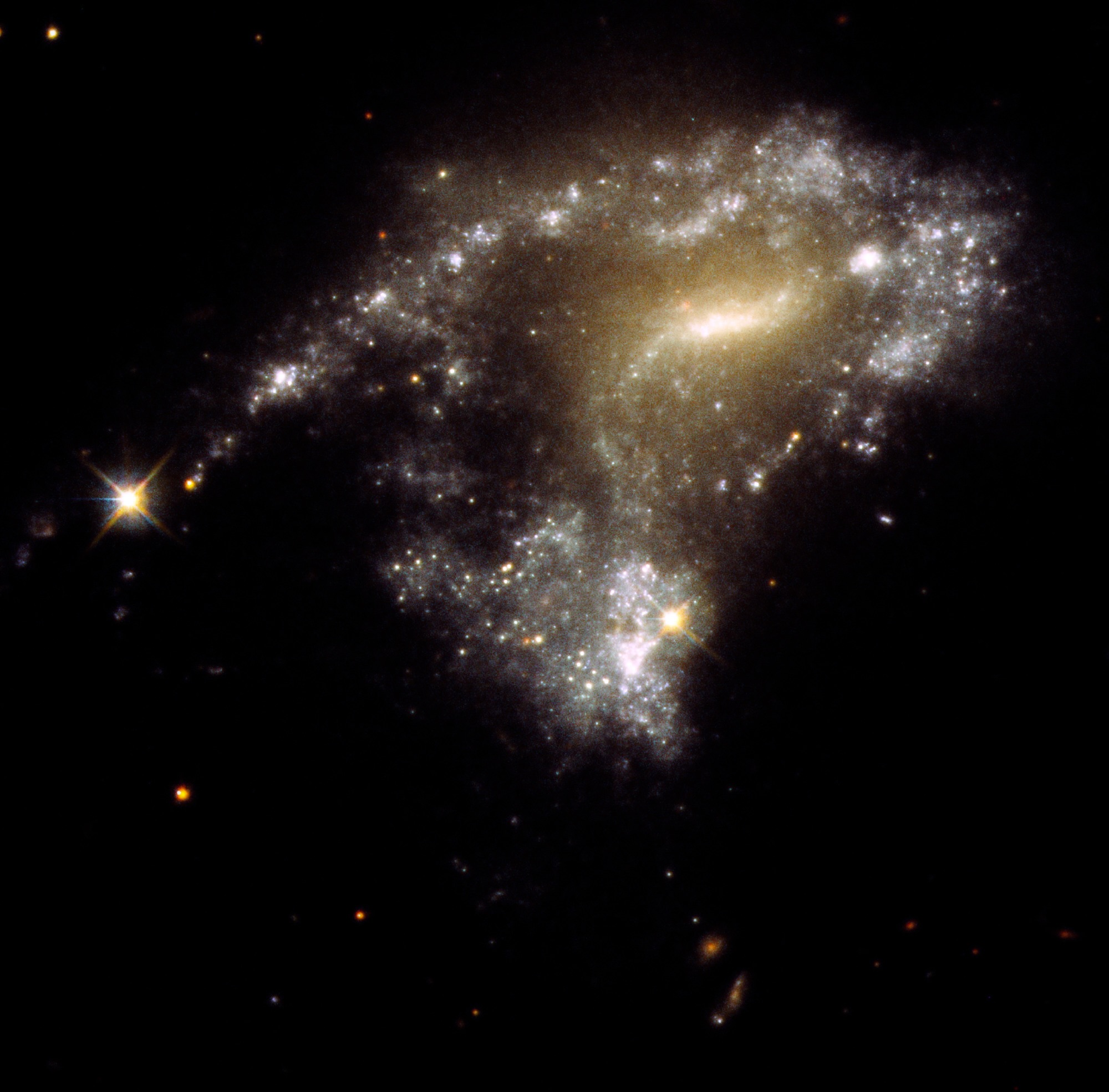
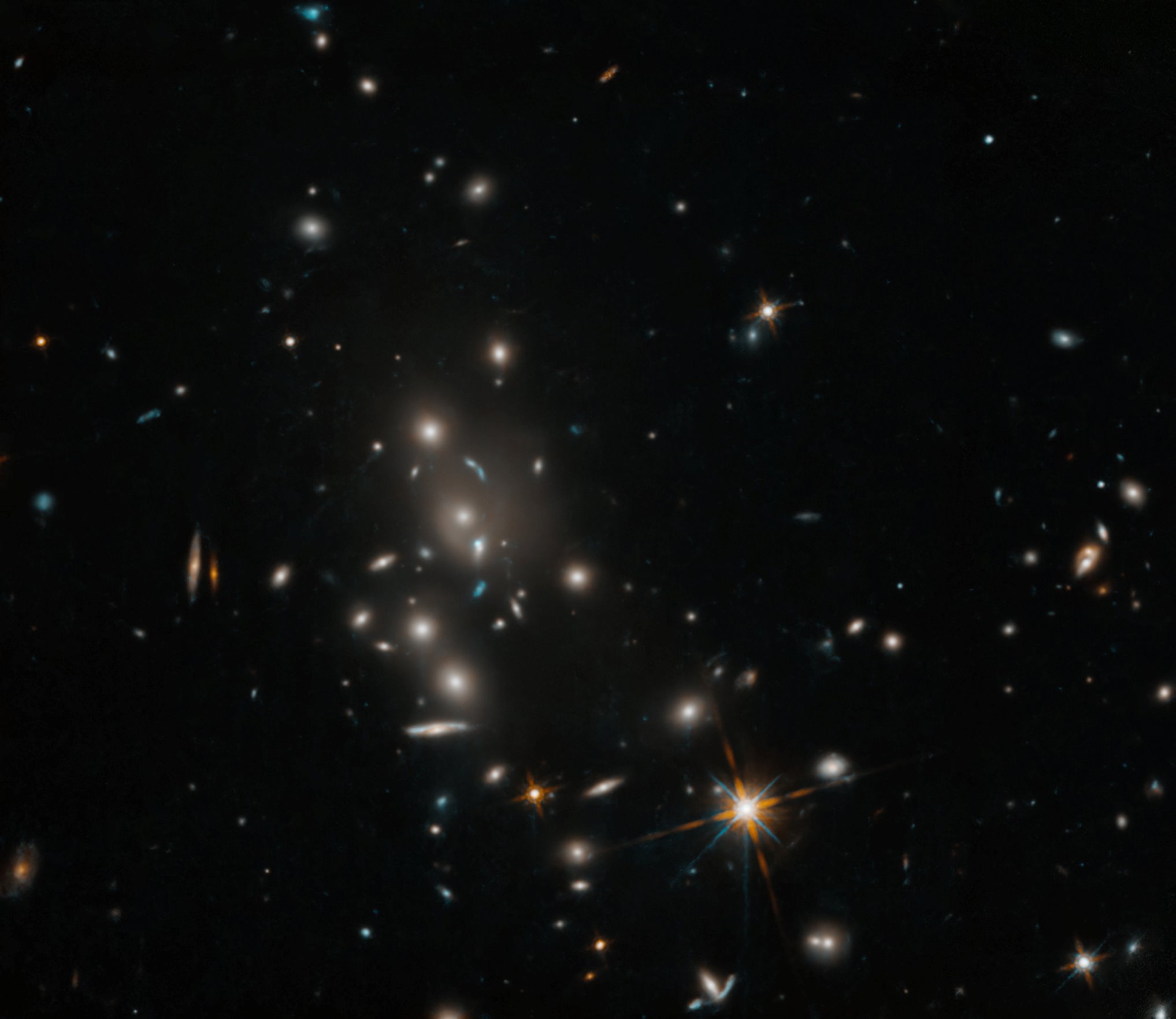
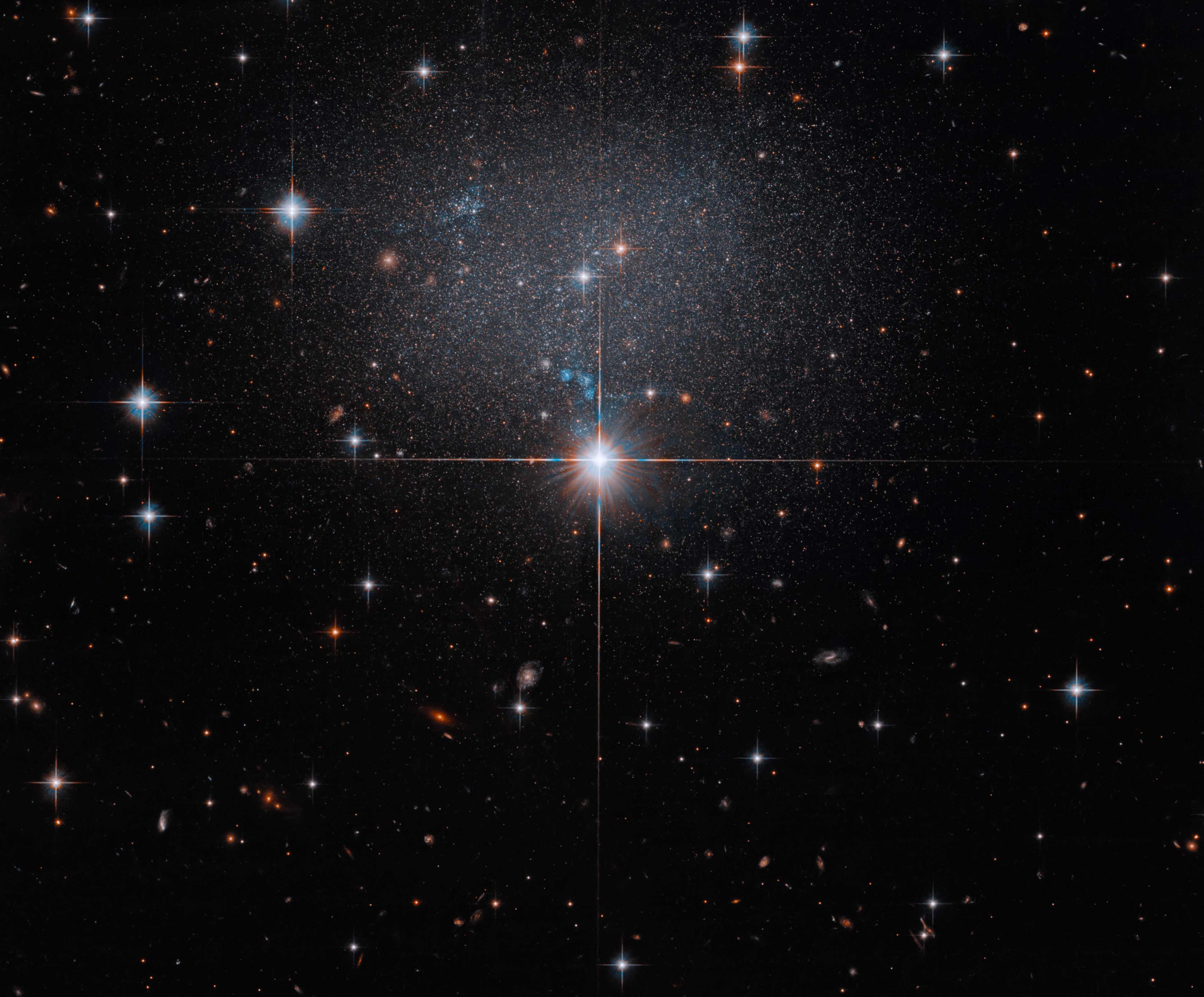
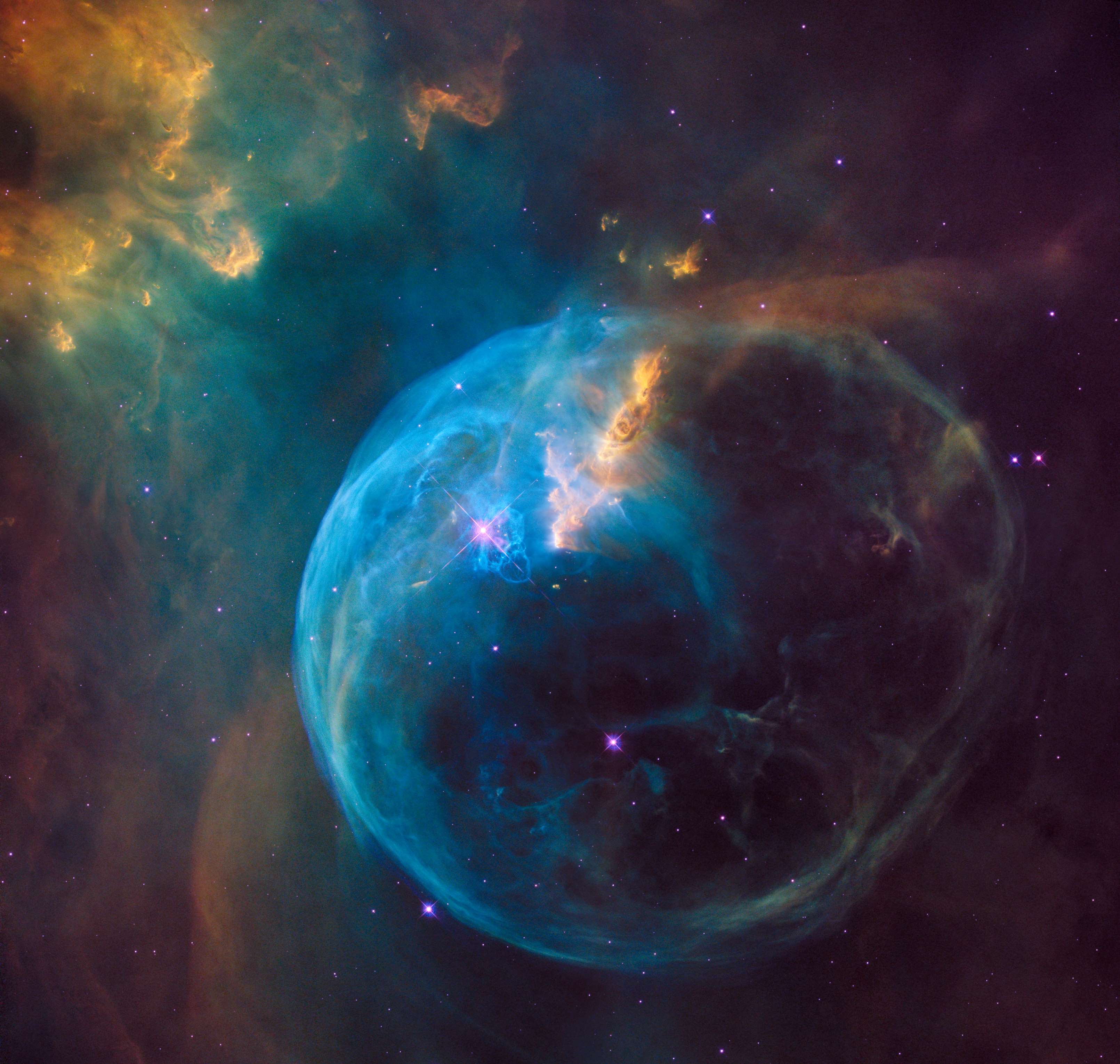
SWEEPS星野2004Hubble peered into the crowded central bulge of our galaxy 26,000 light-years away and collected information for 180,000 stars as part of a survey called the Sagittarius Window Eclipsing Extrasolar Planet Search (SWEEPS).ハッブル宇宙望遠鏡は、「いて座ウィンドウ食系外惑星探査(SWEEPS)」と呼ばれる調査の一環として、2万6,000光年先にある天の川銀河の星が密集した中央バルジを観測し、18万個の星について情報を集めました。画像:NASA, ESA, STScI(ハッブル宇宙望遠鏡)相互作用銀河AM 1054-3252008Galaxy AM 1054-325 has been distorted into an S-shape by the gravitational pull of a neighboring galaxy. Newborn clusters of stars form along a stretched-out tidal tail for thousands of light-years.銀河AM 1054-325は、近くの銀河の重力によってS字形にゆがめられています。数千光年にわたって引き伸ばされた潮汐の尾に沿って、生まれたばかりの星団が形成されています。画像:NASA, ESA, STScI(ハッブル宇宙望遠鏡)銀河団MACS J1141.6-19052008Hubble observed MACS J1141.6-1905 as part of a survey that looked at massive clusters of galaxies. The cluster shines brightly in x-rays, but Hubble captured this scene in visible and infrared light.ハッブル宇宙望遠鏡は、大質量銀河団を調べる観測の一環として、MACS J1141.6-1905を観測しました。この銀河団はX線で明るく輝きますが、この画像は可視光と赤外線で撮影されています。画像:NASA, ESA, STScI(ハッブル宇宙望遠鏡)矮小不規則銀河ESO 490-0172012This dwarf irregular galaxy lies some 23 million light-years away. Its low surface brightness makes it appear as a faint, starry swarm behind brighter foreground stars.この矮小不規則銀河は、約2,300万光年先にあります。表面輝度が低いため、手前の明るい星々の背後にある、淡い星の群れのように見えます。画像:NASA, ESA, STScI(ハッブル宇宙望遠鏡)バブル星雲2016An enormous bubble, also known as NGC 7635, is being blown into space by a super-hot, massive star. Stellar winds from a massive star sweep up the cold gas in front of it, forming the outer edge of the bubble.NGC 7635とも呼ばれる巨大な泡が、非常に高温の大質量星によって宇宙空間に膨らんでいます。大質量星から吹く恒星風が前方の冷たいガスを集め、泡の外縁を作っています。画像:NASA, ESA, STScI(ハッブル宇宙望遠鏡)