トカゲがしっぽを切るわざは恐竜の時代から 9900万年前の琥珀に証拠
Amber Shows Lizards Dropped Their Tails 99 Million Years Ago
びっくり度 中学生 169語 / 高校生 297語トカゲ化石恐竜の時代
3行でわかる!このニュース
- トカゲが敵から逃げるときに自分でしっぽを切るわざは、恐竜がいた時代からあった
- 約9900万年前の琥珀(木のやにが固まった石)の中に、トカゲのしっぽが入っていた
- X線で中を見ると、切れた所に、今のトカゲが自分でしっぽを切ったときとよく似た輪があった
なぜ話題?テルアビブ大学のチームが学術誌 Palaeontologia Electronica で発表。10月25〜26日にイスラエルや海外の科学ニュースで紹介された
中学生レベル(英検3級〜準2級・CEFR A1〜A2)・169語・約2分
A Lizard Tail From the Age of Dinosaurs
語彙レベル(CEFR-J)
A172.8%A210.7%B14.1%B25.9%外6.5%
0:00 / --:--
この記事の声:アメリカ英語・男性声は日によって、アメリカ・イギリス・オーストラリア英語、男性・女性が入れかわります
MP3をダウンロード(中学生版・タイトルから本文まで)
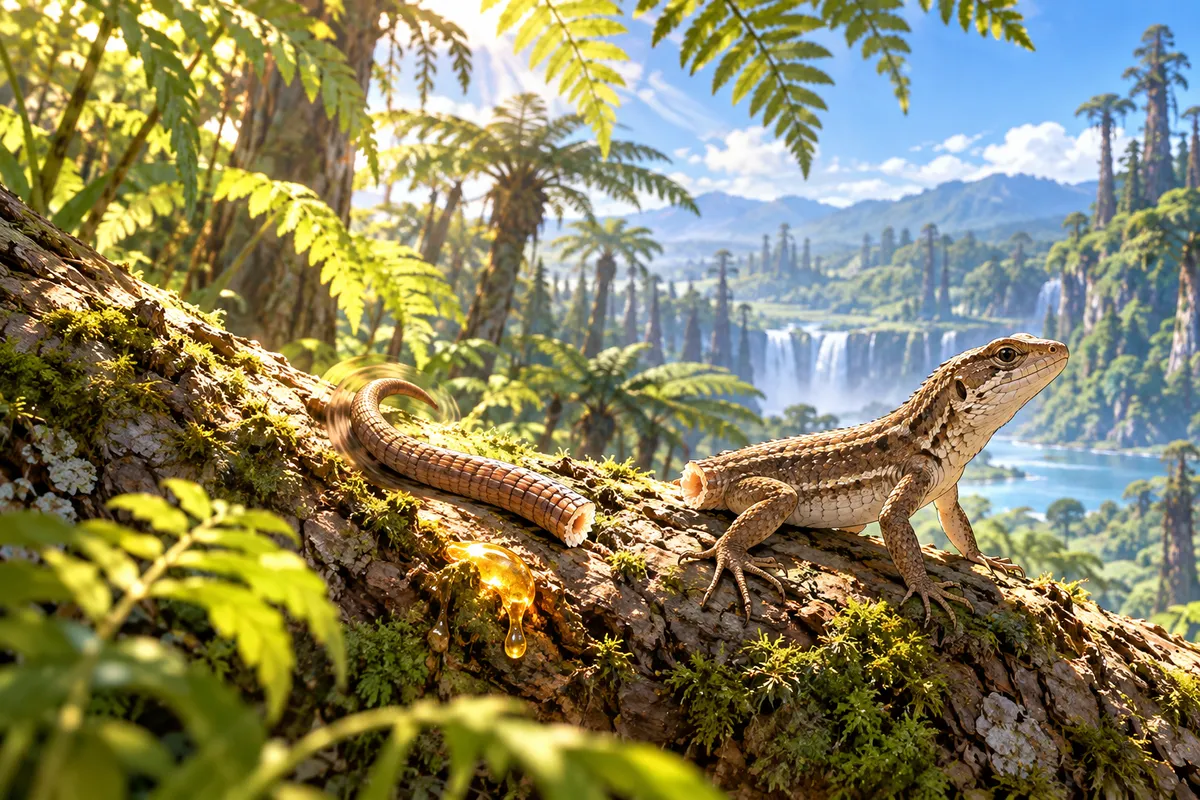
Scientists in Israel have found a lizard tail inside a piece of amber. The amber is about 99 million years old. The tail shows that lizards could drop their tails when dinosaurs were still alive.
イスラエルの科学者たちが、琥珀のかけらの中にトカゲのしっぽを見つけました。その琥珀は、約9900万年前のものです。このしっぽから、恐竜がまだ生きていたころから、トカゲがしっぽを切ることができたとわかります。
The piece is only about 18 millimeters across, so it can sit on a fingertip. At first, researchers thought the dark thing inside was a tiny stick or part of an insect. Then a student at Tel Aviv University saw scales on it.
琥珀の大きさは約18ミリしかなく、指先にのるほどです。はじめ、研究者たちは、中にある黒っぽいものを、小さな枝か虫のかけらだと思っていました。そのあと、テルアビブ大学の学生が、その黒っぽいものにうろこがあることに気づきました。
The team used X-rays to look inside without cutting the amber. They found a ring-shaped part at the end of the tail. Lizards today have a similar ring when they drop their tails. The break was also clean, so it did not look like an accident.
チームは、琥珀を切らずに、X線を使って中を見ました。すると、しっぽの端に、輪の形をした組織が見つかりました。今のトカゲも、しっぽを切るとき、よく似た輪ができます。切れ口もきれいだったので、事故で切れたようには見えませんでした。
Many lizards today drop their tails to get away from enemies. But nobody knows why this lizard lost its tail. It may have been caught in sticky tree resin, or an enemy may have attacked it. The study was published in the journal Palaeontologia Electronica.
今のトカゲの多くは、敵から逃げるためにしっぽを切ります。でも、このトカゲがなぜしっぽをなくしたのかは、だれにもわかりません。ねばねばした木のやにに、くっついてしまったのかもしれませんし、敵におそわれたのかもしれません。この研究は、学術誌「パレオントロジア・エレクトロニカ」に発表されました。
WORDSこの記事の単語(8語)
- amber外名琥珀(こはく)hard yellow material made from very old tree resinThere was a small bug inside the amber.その琥珀の中には小さな虫が入っていた。
- dropA1動落とす、(しっぽを)切りはなすto let something fall or come offBe careful not to drop your phone.スマホを落とさないように気をつけて。
- aliveA2形生きているliving, not deadThe fish in the bucket is still alive.バケツの中の魚はまだ生きている。
- insectA2名昆虫、虫a small animal with six legsAnts and bees are insects.アリやハチは昆虫だ。
- scalesA2名うろこsmall flat pieces that cover a fish or snakeThis fish has silver scales.この魚には銀色のうろこがある。
- accidentA2名事故、思いがけないできごとsomething bad that happens by chanceHe broke his arm in an accident.彼は事故で腕の骨を折った。
- enemiesB1名敵(enemy の複数形)animals or people that want to hurt youBirds are enemies of small lizards.鳥は小さなトカゲの敵だ。
- stickyB1形ねばねばしたable to hold on to things that touch itMy hands got sticky after eating candy.あめを食べたら手がべたべたになった。
単語の横の A1A2B1B2 は、その単語のむずかしさです(A1 がいちばんやさしく、B2 がいちばん難しい。外 はリストにない語)。ほかの単語のレベルも調べる
レベルの出典:『CEFR-J Wordlist Version 1.6』 東京外国語大学投野由紀夫研究室. (URL: https://www.cefr-j.org/download.html より 2026年8月ダウンロード)
GRAMMAR文法ポイント:受け身(be動詞 + 過去分詞)
「~される・~された」を表す。本文の The study was published in the journal Palaeontologia Electronica.(その研究は学術誌に発表された)がその例。だれがしたかより、何がされたかを言いたいときに使う。
- This book was written in 1950.この本は1950年に書かれた。
- English is spoken in many countries.英語は多くの国で話されている。
GAMESゲームで復習しよう
THINK考えてみよう・話してみよう
日本語訳はぼかしてあります。タップすると見えます。
- If you found a piece of amber, what would you want to see inside it?もし琥珀を見つけたら、その中に何が入っていてほしいですか?
- Have you ever seen a lizard or a gecko? Where did you see it?トカゲやヤモリを見たことがありますか?どこで見ましたか?
PRINT中学生版ワークシート(無料)
本文・単語・クイズ・並べかえ・穴うめ・英作文と解答つき。授業・宿題・自習にどうぞ。
高校生レベル(英検2級〜準1級・CEFR B1〜B2)・297語・約3分
A 99-Million-Year-Old Tail Shows an Ancient Escape Trick
語彙レベル(CEFR-J)
A164.7%A212.8%B18.3%B26.2%外8%
0:00 / --:--
この記事の声:アメリカ英語・男性声は日によって、アメリカ・イギリス・オーストラリア英語、男性・女性が入れかわります
MP3をダウンロード(高校生版・タイトルから本文まで)
Researchers in Israel have found a lizard tail that was trapped in amber about 99 million years ago. They say the lizard most likely shed the tail on purpose. The fossil confirms that lizards could drop their tails in the Late Cretaceous, when dinosaurs still lived on Earth. Scientists call the behavior autotomy.
イスラエルの研究者たちが、約9900万年前に琥珀に閉じこめられたトカゲのしっぽを見つけました。研究者たちは、トカゲがおそらく自分でわざとしっぽを切ったのだと言っています。この化石によって、恐竜がまだ地球にいた白亜紀の後期に、トカゲがしっぽを切れたことが確かめられました。科学者は、この行動を「自切(じせつ)」と呼んでいます。
The amber comes from northern Myanmar and is about 18 millimeters across. It is part of the collection of the Steinhardt Museum of Natural History at Tel Aviv University. Researchers first thought the dark shape inside was a little stick or a bit of an insect. Then Dolev Fabrikant, a doctoral student, looked at it under magnification and noticed tiny overlapping scales.
その琥珀はミャンマー北部のもので、大きさは約18ミリです。テルアビブ大学のスタインハルト自然史博物館のコレクションの1つです。研究者たちは、はじめ、中の黒っぽい形を小さな枝か虫のかけらだと思っていました。そのあと、博士課程の学生のドレブ・ファブリカントさんが拡大して見て、小さなうろこが重なっていることに気づきました。
Because the amber is cloudy, an ordinary microscope was unable to show the fine details. The team also did not want to cut open the rare specimen. Instead, scientists at Israel's Volcani Institute used micro-CT scanning, which builds a 3D model from X-ray pictures shot from many directions.
琥珀がにごっているため、ふつうの顕微鏡では細かいところが見えませんでした。チームは、めずらしい標本を切って開くこともしたくありませんでした。そのかわりに、イスラエルのボルカニ研究所の科学者たちがマイクロCTを使いました。これは、いろいろな角度からとったX線の画像をもとに、3Dの模型を作る方法です。
The scans revealed that the spot where the tail came off had a ring of tissue. Its flower-like pattern of muscle looks like the pattern in tails shed by living lizards. The break was clean and symmetrical, without the crushing or twisting marks that an accident would leave. Earlier fossils showed weak lines in tail bones, but they did not prove that tails actually broke off as a defense.
スキャンの画像から、しっぽが取れた所に、輪の形の組織があることがわかりました。その花のような筋肉の並びは、今生きているトカゲが自分で切ったしっぽの並びとよく似ています。切れ口はきれいで左右対称で、事故なら残るはずの、つぶれた跡やねじれた跡がありませんでした。これまでの化石では、しっぽの骨に割れやすい線があることはわかっていましたが、身を守るために本当にしっぽが切れたことの証明にはなっていませんでした。
Some questions remain open. The tail alone cannot tell scientists which kind of lizard it belonged to. The lizard may have been related to modern wall lizards, or to slow worms and monitor lizards. The team also does not know whether it dropped the tail to escape a predator or to break free from sticky resin. The study was published in the journal Palaeontologia Electronica.
まだわからないこともあります。しっぽだけでは、どの種類のトカゲのものなのか、科学者にもわかりません。そのトカゲは、今のカナヘビの仲間か、アシナシトカゲやオオトカゲの仲間に近かったのかもしれません。また、敵から逃げるためにしっぽを切ったのか、ねばねばしたやにからぬけ出すためだったのかも、チームにはわかっていません。この研究は、学術誌「パレオントロジア・エレクトロニカ」に発表されました。
WORDSこの記事の単語(10語)
- trappedA2形閉じこめられたkept inside something and not able to get outA bee was trapped inside the window.ハチが1匹、窓の内側に閉じこめられていた。
- on purposeA2熟わざとbecause you want to, not by chanceI didn't break the cup on purpose.わざとカップを割ったわけじゃないよ。
- confirmsB1動確かめる、裏づけるshows that something is really trueThe test result confirms the doctor's idea.検査の結果は、医者の考えを裏づけている。
- defenseB1名身を守ること、防御a way to keep yourself safe from attackA turtle's shell is its main defense.カメのこうらは、いちばんの身の守りだ。
- noticedA2動気づいたsaw or found something for the first timeShe noticed a small hole in her bag.彼女はかばんに小さな穴があるのに気づいた。
- ordinaryB1形ふつうのnormal and not specialIt was just an ordinary school day.それは、ただのふつうの学校の日だった。
- specimen外名標本an example of an animal or plant kept for studyThe museum has many insect specimens.その博物館には昆虫の標本がたくさんある。
- revealedA2動明らかにしたshowed something that was hidden beforeThe photo revealed a cat behind the tree.その写真で、木の後ろにネコがいたことがわかった。
- predator外名捕食者(ほかの動物を食べる動物)an animal that hunts and eats other animalsThe owl is a predator of mice.フクロウはネズミを食べる動物だ。
- relatedB2形(生き物が)近い仲間の、関係のあるcoming from the same family or groupLions and tigers are closely related.ライオンとトラは近い仲間だ。
単語の横の A1A2B1B2 は、その単語のむずかしさです(A1 がいちばんやさしく、B2 がいちばん難しい。外 はリストにない語)。ほかの単語のレベルも調べる
レベルの出典:『CEFR-J Wordlist Version 1.6』 東京外国語大学投野由紀夫研究室. (URL: https://www.cefr-j.org/download.html より 2026年8月ダウンロード)
GRAMMAR文法ポイント:関係代名詞 which の非制限用法(, which ~)
前の名詞に「それは~」と説明を足す形。本文の micro-CT scanning, which builds a 3D model from X-ray pictures shot from many directions では、which が micro-CT scanning を指し、どんな方法かを説明している。コンマのあとの which は that に言いかえられない。
- We visited Nara, which has many old temples.私たちは奈良に行った。そこには古いお寺がたくさんある。
- He gave me this book, which was very useful.彼がこの本をくれたのだが、それはとても役に立った。
GAMESゲームで復習しよう
THINK考えてみよう・話してみよう
日本語訳はぼかしてあります。タップすると見えます。
- Dropping a tail helps a lizard escape, but it also has costs. What problems could a lizard have without its tail?しっぽを切ると逃げやすくなりますが、損もあります。しっぽが無いと、トカゲにはどんな困りごとがありそうですか?
- Do you think museums should let scientists cut rare fossils to study them? Why or why not?研究のためなら、博物館はめずらしい化石を切ることを科学者に許すべきだと思いますか?その理由は?
PRINT高校生版ワークシート(無料)
本文・単語・クイズ・並べかえ・穴うめ・英作文と解答つき。授業・宿題・自習にどうぞ。
PICK UP WORD
autotomy
自切(じせつ)
動物が身を守るために、自分の体の一部を切りはなすこと。トカゲのしっぽが代表的な例。auto-(自分で)+ -tomy(切ること)からできた語。
原田英語のサイトでもっと
出典・参考にした情報
この記事は、下の報道・発表で事実を確かめたうえで、原田英語が中学生・高校生向けに英語と日本語で書きおろしたオリジナル記事です(文章の転載・翻訳ではありません)。くわしく知りたい人は元の情報も読んでみよう。著作権と出典の考え方
- Lizards have been shedding tails to stay safe for 99 million years, Israeli research findsThe Times of Israel(2026-10-25)
- Lizard tail preserved in amber sheds light on a 100-million-year-old defense mechanismテルアビブ大学(Phys.org)(2026-10-26)
- Trapped in amber for 99 million years: Tiny lizard tail reveals prehistoric defense mechanismYnetnews(2026-10-25)