おならが臭い原因は?においのもとは、ほんの少しのガスだった
Why Farts Smell: Just a Little Sulfur Gas
びっくり度 中学生 158語 / 高校生 295語体のしくみにおい雑学
3行でわかる!このニュース
- おならのガスのほとんどは、においのない気体。臭いのは、ほんの少しまじる硫黄(いおう)をふくむガス
- アメリカの大学の微生物学者が、おならができるしくみと臭くなる理由を解説した
- 肉や卵、キャベツなどを食べると臭くなりやすい。音が大きいおならが、いちばん臭いとはかぎらない
なぜ話題?11月18日、アメリカの大学の微生物学者が「おならはなぜ臭いのか」を解説した記事が、科学ニュースサイトで紹介された
中学生レベル(英検3級〜準2級・CEFR A1〜A2)・158語・約1分
What Makes Farts Stinky?
語彙レベル(CEFR-J)
A167.3%A212.8%B15.8%B23.2%外10.9%
0:00 / --:--
この記事の声:アメリカ英語・男性声は日によって、アメリカ・イギリス・オーストラリア英語、男性・女性が入れかわります
MP3をダウンロード(中学生版・タイトルから本文まで)
A scientist has explained what gives farts their bad smell. Brenda Wilson studies tiny living things at the University of Illinois in the United States. She wrote about farts in a recent article.
おならのいやなにおいのもとは何かを、ある科学者が説明しました。ブレンダ・ウィルソンさんは、アメリカのイリノイ大学で、目に見えないほど小さな生き物を研究しています。ウィルソンさんは、最近の記事でおならについて書きました。
Bacteria in our bodies make many of the gases in farts. The bacteria eat food that our stomachs cannot fully break down. When they eat it, they make gas.
おならのガスの多くは、私たちの体の中にいる細菌が作っています。細菌は、胃ではすっかり分解できない食べ物を食べます。それを食べるときに、ガスを作るのです。
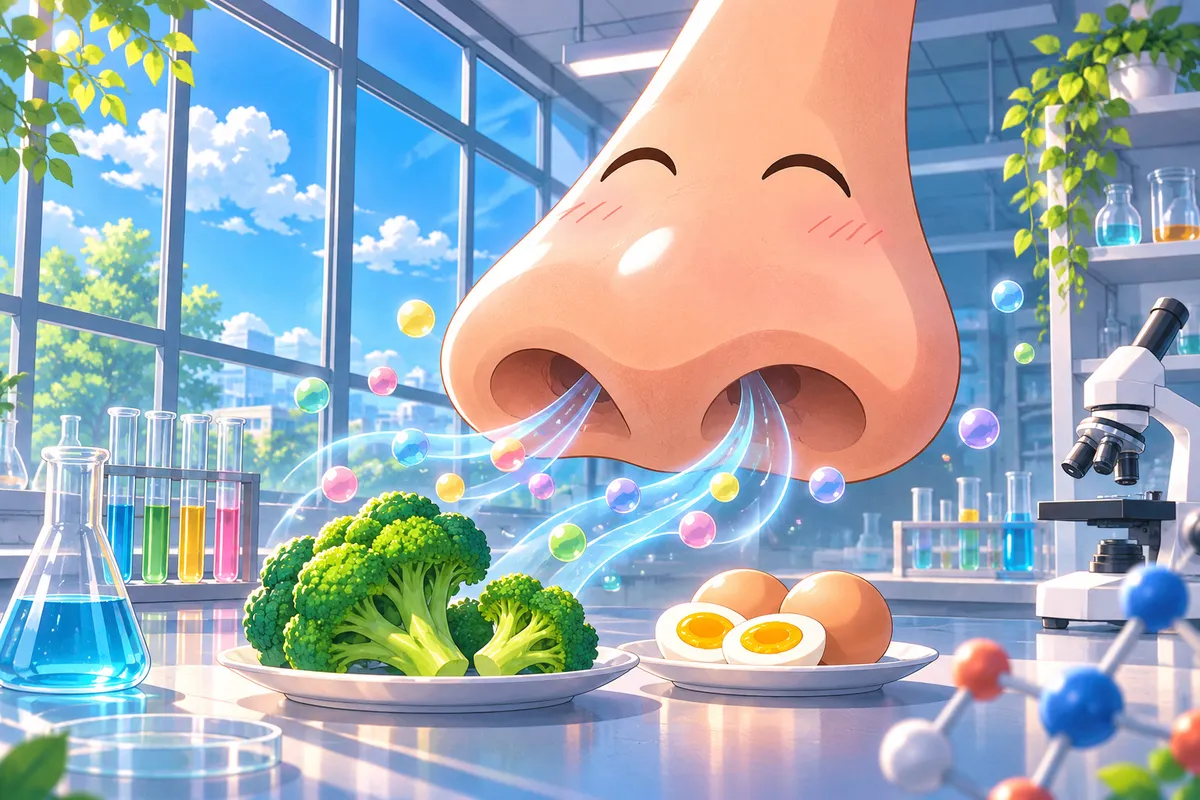
These gases include carbon dioxide, hydrogen and methane. Farts also have nitrogen, the main gas in the air. These gases have no smell. The smell comes from very small amounts of gases with sulfur in them. One of them smells like rotten eggs.
そのガスには、二酸化炭素、水素、メタンなどがあります。おならには、空気のほとんどをしめる窒素も入っています。これらのガスには、においがありません。においは、硫黄(いおう)をふくむガスがほんの少しまじっていることから来ます。そのうちの1つは、くさった卵のようなにおいがします。
Eating certain foods can make farts stinkier. Meat, eggs and vegetables like cabbage and broccoli have a lot of sulfur. Beans can make more gas and louder farts, but the loudest farts are not always the smelliest.
おならをもっと臭くする食べ物もあります。肉や卵、キャベツやブロッコリーのような野菜には、硫黄が多くふくまれています。豆を食べるとガスが多くなり、音も大きくなることがありますが、音がいちばん大きいおならが、いちばん臭いとはかぎりません。
U.S. health officials say people pass gas about 8 to 14 times a day on average.
アメリカの保健の専門機関によると、人は1日に平均8〜14回くらいおならをします。
WORDSこの記事の単語(8語)
- smellA1名においwhat you notice with your noseI love the smell of fresh bread.私は焼きたてのパンのにおいが大好きだ。
- tinyB1形とても小さいvery, very smallThe baby has tiny hands.その赤ちゃんはとても小さな手をしている。
- bacteria外名細菌、バクテリアvery small living things you cannot seeWash your hands to remove bacteria.細菌を落とすために手を洗おう。
- stomachsA2名胃(stomach の複数形)the part of the body that holds food and starts to digest itMy stomach hurts after lunch.昼ごはんのあと、おなかが痛い。
- break downA1熟分解する、細かくするto change something into smaller partsOur bodies break down food for energy.私たちの体は、エネルギーのために食べ物を分解する。
- amountsB1名量how much there is of somethingDrink small amounts of water often.少しの量の水をこまめに飲もう。
- rottenB1形くさったold and bad, so you cannot eat itThrow away that rotten banana.そのくさったバナナを捨てて。
- officialsA2名(国や組織の)担当者、当局people with important jobs in a governmentCity officials closed the park.市の担当者が公園を閉めた。
単語の横の A1A2B1B2 は、その単語のむずかしさです(A1 がいちばんやさしく、B2 がいちばん難しい。外 はリストにない語)。ほかの単語のレベルも調べる
レベルの出典:『CEFR-J Wordlist Version 1.6』 東京外国語大学投野由紀夫研究室. (URL: https://www.cefr-j.org/download.html より 2026年8月ダウンロード)
GRAMMAR文法ポイント:比較の最上級(the + -est)と not always
「いちばん~な」は the +形容詞の -est。本文の the loudest farts are not always the smelliest は「いちばん音の大きいおならが、いつもいちばん臭いとはかぎらない」という意味。not always は「いつも~とはかぎらない」で、全部を打ち消すのではない(部分否定)。
- The tallest boy is not always the fastest runner.いちばん背の高い男の子が、いつもいちばん足が速いとはかぎらない。
- This is the oldest tree in our town.これは私たちの町でいちばん古い木だ。
GAMESゲームで復習しよう
THINK考えてみよう・話してみよう
日本語訳はぼかしてあります。タップすると見えます。
- Which smell do you hate the most? Why?あなたがいちばんきらいなにおいは何ですか?なぜですか?
- Why do you think people laugh when someone farts?だれかがおならをすると、みんなが笑うのはなぜだと思いますか?
PRINT中学生版ワークシート(無料)
本文・単語・クイズ・並べかえ・穴うめ・英作文と解答つき。授業・宿題・自習にどうぞ。
高校生レベル(英検2級〜準1級・CEFR B1〜B2)・295語・約3分
A Microbiologist Explains What Makes Farts Stink
語彙レベル(CEFR-J)
A164.8%A211.4%B19.3%B23.8%外10.7%
0:00 / --:--
この記事の声:アメリカ英語・男性声は日によって、アメリカ・イギリス・オーストラリア英語、男性・女性が入れかわります
MP3をダウンロード(高校生版・タイトルから本文まで)
Almost all of the gas in a fart has no smell, and the stink comes from tiny amounts of gases that contain sulfur, a microbiologist has explained. Brenda Wilson, a professor at the University of Illinois Urbana-Champaign, wrote the article for The Conversation, and it was shared by the science site ScienceDaily on November 18.
おならのガスのほとんどはにおいがなく、臭さは硫黄をふくむガスのごく少しの量から来ていると、ある微生物学者が説明しました。イリノイ大学アーバナ・シャンペーン校の教授ブレンダ・ウィルソンさんが、ザ・カンバセーションにこの記事を書き、11月18日に科学サイトのサイエンスデイリーでも紹介されました。
In farts, the carbon dioxide, hydrogen and methane come mostly from tiny living things in the gut, and most of these are bacteria. The bacteria feed on parts of food that the stomach and small intestine cannot fully digest, such as some sugars, starches and fiber, and they release gas as they work. Nitrogen is another main gas. The amount of each gas can vary widely. For example, nitrogen can make up 20 to 90 percent of a fart.
おならの二酸化炭素、水素、メタンは、主に腸の中の小さな生き物から来ていて、その多くは細菌です。細菌は、一部の糖やでんぷん、食物繊維のように、胃や小腸ではすっかり消化できない食べ物の部分をえさにし、そのはたらきの中でガスを出します。窒素も主なガスの1つです。それぞれのガスの量は、大きくちがうことがあります。たとえば、窒素はおならの20〜90%をしめることがあります。
None of those main gases has an odor. The smell comes from sulfur compounds such as hydrogen sulfide, which smells like rotten eggs, and methanethiol, which can smell like cabbage. Wilson wrote that people can notice hydrogen sulfide even when it makes up only about one in a million molecules of the gas. She also wrote that our noses developed to warn us about rotting things and other dangers.
それらの主なガスには、どれもにおいがありません。においのもとは、くさった卵のようなにおいの硫化水素や、キャベツのようなにおいがすることもあるメタンチオールなど、硫黄をふくむ物質です。ウィルソンさんは、硫化水素がガスの分子100万個のうち1個くらいしかなくても、人はそれに気づくことができると書いています。また、私たちの鼻は、くさったものなどの危険を知らせるように発達したとも書いています。
Foods rich in sulfur, including meat, eggs, dairy products, cabbage and broccoli, can make gas smell stronger. Beans and other foods with a lot of fiber can increase the amount of gas, but Wilson noted that the loudest farts are not always the smelliest.
肉、卵、乳製品、キャベツ、ブロッコリーなど、硫黄を多くふくむ食べ物は、ガスのにおいを強くしやすいです。豆など食物繊維の多い食べ物はガスの量をふやすことがありますが、いちばん音の大きいおならがいちばん臭いとはかぎらないと、ウィルソンさんは書いています。
Researchers have designed seat cushions with activated charcoal to trap the smelly gases on planes. But Wilson wrote that no airline uses them yet. In a 1999 study of five healthy volunteers, swallowing activated charcoal four times daily for a week did not clearly reduce the sulfur gases.
飛行機で臭いガスを吸いとるために、活性炭の入った座席クッションも考え出されました。でも、まだ使っている航空会社はないと、ウィルソンさんは書いています。健康な5人のボランティアを調べた1999年の研究では、活性炭を1日4回、1週間飲んでも、硫黄をふくむガスははっきりとは減りませんでした。
WORDSこの記事の単語(10語)
- microbiologist外名微生物学者a scientist who studies very small living thingsThe microbiologist looked at the water under a microscope.その微生物学者は顕微鏡で水を調べた。
- containB1動ふくむto have something insideThese snacks contain a lot of salt.これらのおかしには塩がたくさん入っている。
- gut外名腸、おなかの中the long tube in your body that food passes throughSome bacteria in your gut help you stay healthy.腸の中のいくつかの細菌は、健康を保つ助けになる。
- digestB2動消化するto change food in your body so it can be usedBabies cannot digest some kinds of food.赤ちゃんは、ある種の食べ物を消化できない。
- releaseA2動出す、放出するto let something go outTrees release oxygen into the air.木は空気中に酸素を出す。
- odor外名におい(とくにいやなにおい)a smell, often a bad oneThere was a strange odor in the kitchen.台所で変なにおいがした。
- compoundsB1名化合物things made of two or more kinds of atomsWater and salt are both compounds.水も塩もどちらも化合物だ。
- moleculesB1名分子the smallest parts of something like water or airWater molecules move faster when they are hot.水の分子は熱いと速く動く。
- dairy productsA2名乳製品foods made from milk, like cheeseI try to eat dairy products every day.私は毎日乳製品を食べるようにしている。
- volunteersB1名ボランティア、(研究に)自分から参加した人people who choose to help without being paidTen volunteers cleaned the beach.10人のボランティアが浜辺をそうじした。
単語の横の A1A2B1B2 は、その単語のむずかしさです(A1 がいちばんやさしく、B2 がいちばん難しい。外 はリストにない語)。ほかの単語のレベルも調べる
レベルの出典:『CEFR-J Wordlist Version 1.6』 東京外国語大学投野由紀夫研究室. (URL: https://www.cefr-j.org/download.html より 2026年8月ダウンロード)
GRAMMAR文法ポイント:関係代名詞の非制限用法(, which ~)
コンマのあとの which は、直前の名詞に説明を足す。本文の hydrogen sulfide, which smells like rotten eggs は「硫化水素、それはくさった卵のようなにおいがする」と、硫化水素の説明をつけ加えている。methanethiol, which can smell like cabbage も同じ形。
- We visited Nara, which has many deer in its park.私たちは奈良を訪れた。奈良の公園にはシカがたくさんいる。
- He gave me a lemon, which was very sour.彼はレモンをくれたが、それはとてもすっぱかった。
GAMESゲームで復習しよう
THINK考えてみよう・話してみよう
日本語訳はぼかしてあります。タップすると見えます。
- Airlines could use charcoal seat cushions, but none of them do yet. Do you think they should? Why or why not?航空会社は活性炭のクッションを使うこともできますが、まだどこも使っていません。使うべきだと思いますか?その理由は?
- Our noses warn us about dangers. What other ways does your body protect you?鼻は危険を知らせてくれます。体はほかにどんな方法であなたを守っていると思いますか?
PRINT高校生版ワークシート(無料)
本文・単語・クイズ・並べかえ・穴うめ・英作文と解答つき。授業・宿題・自習にどうぞ。
PICK UP WORD
pass gas
おならをする
fart は「おなら(をする)」のくだけた言い方。ていねいに言うときや、健康の説明では pass gas を使う(アメリカの保健の専門機関のページでも pass gas と書いている)。
原田英語のサイトでもっと
出典・参考にした情報
この記事は、下の報道・発表で事実を確かめたうえで、原田英語が中学生・高校生向けに英語と日本語で書きおろしたオリジナル記事です(文章の転載・翻訳ではありません)。くわしく知りたい人は元の情報も読んでみよう。著作権と出典の考え方
- Why do farts smell so bad? The secret is brewing in your gutScienceDaily(The Conversation の記事の転載)(2026-11-18)
- Symptoms & Causes of Gas in the Digestive TractNIDDK(アメリカ国立糖尿病・消化器・腎疾病研究所)
- Failure of activated charcoal to reduce the release of gases produced by the colonic floraThe American Journal of Gastroenterology(PubMed)(1999-01)