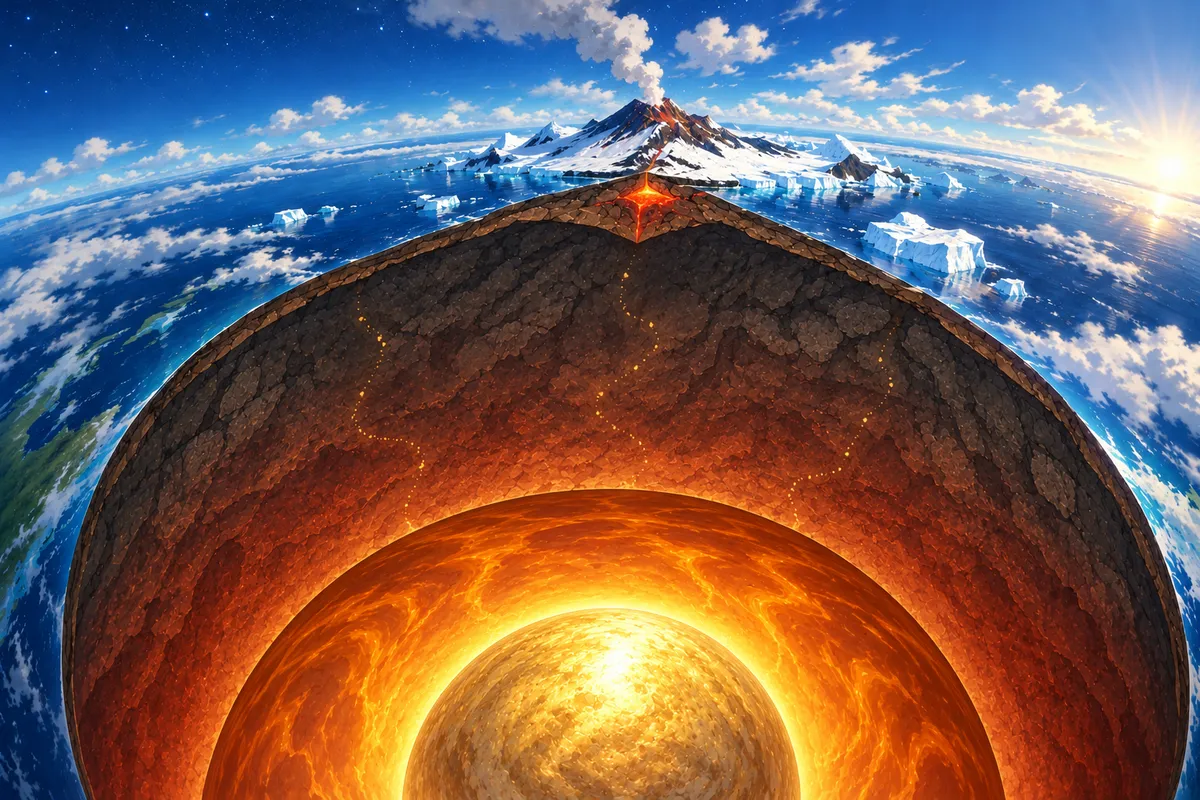
地球の核(中心の金属)から水素がもれている?火山の溶岩に残る手がかり
Earth's Core May Be Leaking Hydrogen, Study Suggests
びっくり度 中学生 167語 / 高校生 323語地球火山科学
3行でわかる!このニュース
- 地球の中心にある金属のかたまり「核」の水素が、地上に出た溶岩にとどいているかもしれない
- 中国の研究チームが、アイスランドなどの溶岩に「重い水素」が少ないわけをコンピューターで調べた
- 大昔の地球にあった、とけた岩の海では説明できず、核からもれ出たと考えるほうが合うという
なぜ話題?中国科学技術大学のチームが10月9日に学術誌『サイエンス・アドバンシズ』で発表し、10月18〜19日に ScienceAlert などが「地球の核がもれている」と報じた
中学生レベル(英検3級〜準2級・CEFR A1〜A2)・167語・約2分
Is Hydrogen Escaping From Earth's Core?
語彙レベル(CEFR-J)
A169.5%A213.2%B15.4%B26%外6%
0:00 / --:--
この記事の声:オーストラリア英語・男性声は日によって、アメリカ・イギリス・オーストラリア英語、男性・女性が入れかわります
MP3をダウンロード(中学生版・タイトルから本文まで)
Hydrogen from Earth's center may be reaching the surface in lava, a study says. Scientists in China studied clues about the core, the metal ball at Earth's center. They think hydrogen may have moved out of the core during most of Earth's history.
地球の中心の水素が、溶岩にまじって地上までとどいているかもしれないと、ある研究が発表しました。中国の科学者たちが、地球の中心にある金属のかたまり「核」の手がかりを調べました。地球の歴史のほとんどのあいだ、核から水素が外へ出てきたのかもしれないと、科学者たちは考えています。
The core starts about 2,900 kilometers below the surface. It is made mostly of iron and nickel. No one can go there or study it directly. Above the core is a thick layer of hot rock called the mantle.
核は、地面から約2,900キロメートル下から始まります。核はおもに鉄とニッケルでできています。だれもそこへ行けず、直接調べることもできません。核の上には、マントルとよばれる、熱い岩の厚い層があります。
Some lava from Iceland and Baffin Island in Canada has very little heavy hydrogen. Heavy hydrogen weighs more than normal hydrogen. Scientists have argued about the reason for this.
アイスランドとカナダのバフィン島の溶岩の中には、重い水素がとても少ないものがあります。重い水素は、ふつうの水素より重さがあります。そのわけについて、科学者たちは議論してきました。
The team used computers to study early Earth and its ocean of melted rock. The results showed that this ocean could not make lava with so little heavy hydrogen. So the team says the hydrogen more likely came from the core. Some of this lava also has a higher share of rare helium-3 than most rocks.
研究チームはコンピューターを使って、大昔の地球と、そのころのとけた岩の海について調べました。その結果、この海では、重い水素がこんなに少ない溶岩はできないことがわかりました。そこでチームは、その水素は核から来たと考えるほうが合うと言っています。この溶岩の中には、めずらしい「ヘリウム3」の割合が、ほかの多くの岩より高いものもあります。
WORDSこの記事の単語(8語)
- surfaceB1名表面、地面the top or outside part of somethingThe surface of the lake was calm.湖の表面はおだやかだった。
- metalA2名金属a hard material like iron or goldThis spoon is made of metal.このスプーンは金属でできている。
- directlyB1副直接にwith nothing or no one in betweenYou can ask the teacher directly.先生に直接聞いていいよ。
- layerB1名層one flat part lying on top of anotherThe cake has three layers.そのケーキは3段になっている。
- arguedA2動議論した、言い争ったtalked about something with different ideasWe argued about the best movie.いちばんいい映画について言い合った。
- resultsA1名結果what you find out at the endThe test results came back today.テストの結果がきょう返ってきた。
- likelyA2副たぶん、おそらくprobably, with a good chanceIt will likely rain tomorrow.あしたはたぶん雨だろう。
- rareB1形めずらしいnot seen or found very oftenThis bird is very rare.この鳥はとてもめずらしい。
単語の横の A1A2B1B2 は、その単語のむずかしさです(A1 がいちばんやさしく、B2 がいちばん難しい。外 はリストにない語)。ほかの単語のレベルも調べる
レベルの出典:『CEFR-J Wordlist Version 1.6』 東京外国語大学投野由紀夫研究室. (URL: https://www.cefr-j.org/download.html より 2026年8月ダウンロード)
GRAMMAR文法ポイント:受け身 be made of ~(~でできている)
be動詞 + made of ~で「~でできている」。本文の It is made mostly of iron and nickel. は「核はおもに鉄とニッケルでできている」。mostly(おもに)が間に入っている。
- This desk is made of wood.この机は木でできている。
- The bag is made of paper.そのふくろは紙でできている。
GAMESゲームで復習しよう
THINK考えてみよう・話してみよう
日本語訳はぼかしてあります。タップすると見えます。
- If you could travel to the center of Earth, what would you want to see?もし地球の中心まで旅ができたら、何を見てみたいですか。
- Why do you think scientists use computers to study places they cannot visit?科学者が、行けない場所を調べるのにコンピューターを使うのはなぜだと思いますか。
PRINT中学生版ワークシート(無料)
本文・単語・クイズ・並べかえ・穴うめ・英作文と解答つき。授業・宿題・自習にどうぞ。
高校生レベル(英検2級〜準1級・CEFR B1〜B2)・323語・約3分
Clues From Lava Point to a Leaky Core
語彙レベル(CEFR-J)
A165.7%A213.4%B17.8%B24.4%外8.7%
0:00 / --:--
この記事の声:オーストラリア英語・男性声は日によって、アメリカ・イギリス・オーストラリア英語、男性・女性が入れかわります
MP3をダウンロード(高校生版・タイトルから本文まで)
Earth's metal core may have been releasing hydrogen into the rock above it through much of the planet's history, researchers in China have reported. The team, from the University of Science and Technology of China in Hefei, published the study in the journal Science Advances on October 9. The researchers did not reach the core itself. Instead, they used computer simulations.
地球の金属の核は、地球の歴史の長いあいだ、その上の岩に水素を出しつづけてきたのかもしれないと、中国の研究者たちが発表しました。合肥にある中国科学技術大学のチームが、10月9日に学術誌『サイエンス・アドバンシズ』でこの研究を発表しました。研究者たちが核そのものにたどり着いたわけではありません。かわりに、コンピューターのシミュレーション(計算で起きることを再現する方法)を使いました。
The core begins about 2,900 kilometers below the surface and is made mostly of iron and nickel. Because no one can sample the core directly, scientists look for traces of it in lava.
核は地面から約2,900キロメートル下から始まり、おもに鉄とニッケルでできています。だれも核の試料を直接とれないので、科学者たちは溶岩の中に核の手がかりをさがします。
Some lavas from Iceland and Baffin Island, in northern Canada, contain unusually little deuterium, a heavier form of hydrogen. Scientists have debated where this pattern came from. One idea is that it formed as an ocean of magma on the young Earth cooled and hardened. The other is that the hydrogen escaped from the core.
アイスランドとカナダ北部のバフィン島の溶岩の中には、重い水素である重水素がふつうよりずっと少ないものがあります。この特徴がどこから来たのか、科学者たちは議論してきました。1つの考えは、若い地球にあったマグマの海が冷えて固まるときにできた、というものです。もう1つは、その水素が核からもれ出た、というものです。
The team calculated how normal hydrogen and deuterium would be shared between melted rock and three minerals found deep in the mantle in conditions like those of the magma ocean. The two kinds of hydrogen turned out to be shared almost evenly, so the cooling magma would have left a similar mix of hydrogen across the early mantle. The researchers said the magma ocean therefore cannot explain the very low deuterium in those lavas.
チームは、マグマの海と同じ条件で、ふつうの水素と重水素が、とけた岩と、マントルの深いところにある3つの鉱物のあいだでどう分かれるかを計算しました。2種類の水素は、ほぼ同じように分かれることがわかりました。そのため、冷えていくマグマは、初めのころのマントルのどこでもほとんど同じ水素のまじり方を残したはずです。だから、マグマの海では、それらの溶岩の重水素がとても少ないことは説明できないと、研究者たちは言っています。
They said a transfer of material from the core is a more likely source. In some of the same lavas, the share of helium-3 compared with ordinary helium is also higher than in most other rocks. Helium-3 is an ancient type of helium that may have been stored in the core since Earth formed. Earlier research has also linked changes in tungsten in mantle rocks to the core.
核から物質が移ってきたと考えるほうがありそうだと、研究者たちは言っています。同じ溶岩の中には、ふつうのヘリウムにくらべたヘリウム3の割合が、ほかの多くの岩より高いものもあります。ヘリウム3は古い種類のヘリウムで、地球ができたころから核にたくわえられていたのかもしれません。前の研究でも、マントルの岩にふくまれるタングステンの変化が、核と結びつけられています。
Not all scientists agree on what these clues mean. Quanta Magazine reported in 2025 that some researchers think helium-3 could come from a stable area at the bottom of the mantle instead.
これらの手がかりが何を意味するのか、すべての科学者の意見が一致しているわけではありません。クアンタ・マガジンは2025年に、ヘリウム3は核ではなく、マントルのいちばん下にある安定した場所から来ているのかもしれないと考える研究者もいると伝えました。
WORDSこの記事の単語(10語)
- releasingA2動放出する、出すletting something go outThe factory is releasing smoke into the air.その工場は空気中にけむりを出している。
- ancientA2形とても古い、大昔のfrom a very long time agoWe visited an ancient temple.私たちは古いお寺をたずねた。
- transferB1名移動、移ることmoving something from one place to anotherThe transfer of data took an hour.データを移すのに1時間かかった。
- tracesB1名あと、痕跡small signs that something was thereThe police found traces of mud on the floor.警察は床に泥のあとを見つけた。
- containB1動ふくむto have something insideThese cookies contain nuts.このクッキーにはナッツが入っている。
- debatedA2動議論したtalked about something people disagree onThe class debated school uniforms.クラスで制服について議論した。
- calculatedB1動計算したfound an answer by using numbersHe calculated the cost of the trip.彼は旅行の費用を計算した。
- mineralsB1名鉱物natural solid materials found in rocksSalt and quartz are minerals.塩や石英は鉱物だ。
- conditionsA2名条件、状態the situation around something, like heat or pressureThe plants grew well in warm conditions.植物はあたたかい条件でよく育った。
- stableB1形安定したnot changing or moving muchThe bridge is very stable.その橋はとても安定している。
単語の横の A1A2B1B2 は、その単語のむずかしさです(A1 がいちばんやさしく、B2 がいちばん難しい。外 はリストにない語)。ほかの単語のレベルも調べる
レベルの出典:『CEFR-J Wordlist Version 1.6』 東京外国語大学投野由紀夫研究室. (URL: https://www.cefr-j.org/download.html より 2026年8月ダウンロード)
GRAMMAR文法ポイント:may have been ~ing(~しつづけてきたのかもしれない)
may have + 過去分詞は「~したかもしれない」と過去のことを推量する形。been ~ing をつなげると「(ずっと)~しつづけてきたのかもしれない」。本文の Earth's metal core may have been releasing hydrogen into the rock above it は「核はその上の岩に水素を出しつづけてきたのかもしれない」。入試では must have / can't have との区別がよく問われる。
- She may have been waiting for us for an hour.彼女は1時間も私たちを待っていたのかもしれない。
- He may have forgotten the meeting.彼は会議を忘れたのかもしれない。
GAMESゲームで復習しよう
THINK考えてみよう・話してみよう
日本語訳はぼかしてあります。タップすると見えます。
- Do you think computer simulations can be as useful as real samples in science? Why or why not?科学で、コンピューターのシミュレーションは本物の試料と同じくらい役に立つと思いますか。理由も答えましょう。
- Scientists still disagree about these clues. Why is it important for scientists to question new findings?これらの手がかりについて、科学者の意見はまだ分かれています。新しい発見を科学者が疑ってみることが大切なのはなぜだと思いますか。
PRINT高校生版ワークシート(無料)
本文・単語・クイズ・並べかえ・穴うめ・英作文と解答つき。授業・宿題・自習にどうぞ。
PICK UP WORD
core
(地球の)核、コア
地球の中心にある、おもに鉄とニッケルでできた部分。地面に近いほうから crust(地殻)→ mantle(マントル)→ core(核)。core にはリンゴの「しん」や「中心部分」という意味もある。
原田英語のサイトでもっと
VIDEO動画でも見てみよう
出典・参考にした情報
この記事は、下の報道・発表で事実を確かめたうえで、原田英語が中学生・高校生向けに英語と日本語で書きおろしたオリジナル記事です(文章の転載・翻訳ではありません)。くわしく知りたい人は元の情報も読んでみよう。著作権と出典の考え方
- Hydrogen isotopes reveal water leakage from the coreScience Advances(Crossref の論文情報)(2026-10-09)
- Earth's Core Is Leaking All Sorts of Materials That Have Been Trapped Since Our Planet's BirthScienceAlert(2026-10-18)
- CoreNational Geographic Education
- Inside the Earth [This Dynamic Earth, USGS]USGS(アメリカ地質調査所)
- Earth's Core Appears To Be Leaking Up and Out of Earth's SurfaceQuanta Magazine(2025-08-04)
- Earth's core is leakingCarleton University(The Conversation より)
- Volcanic Rock Hints at Source of Earth's WaterScientific American(2015-11-13)