原田英語の時事英語ジュニア|英語ニュース ワークシート(高校生レベル)
Class ____ No. ____ Name ____________________
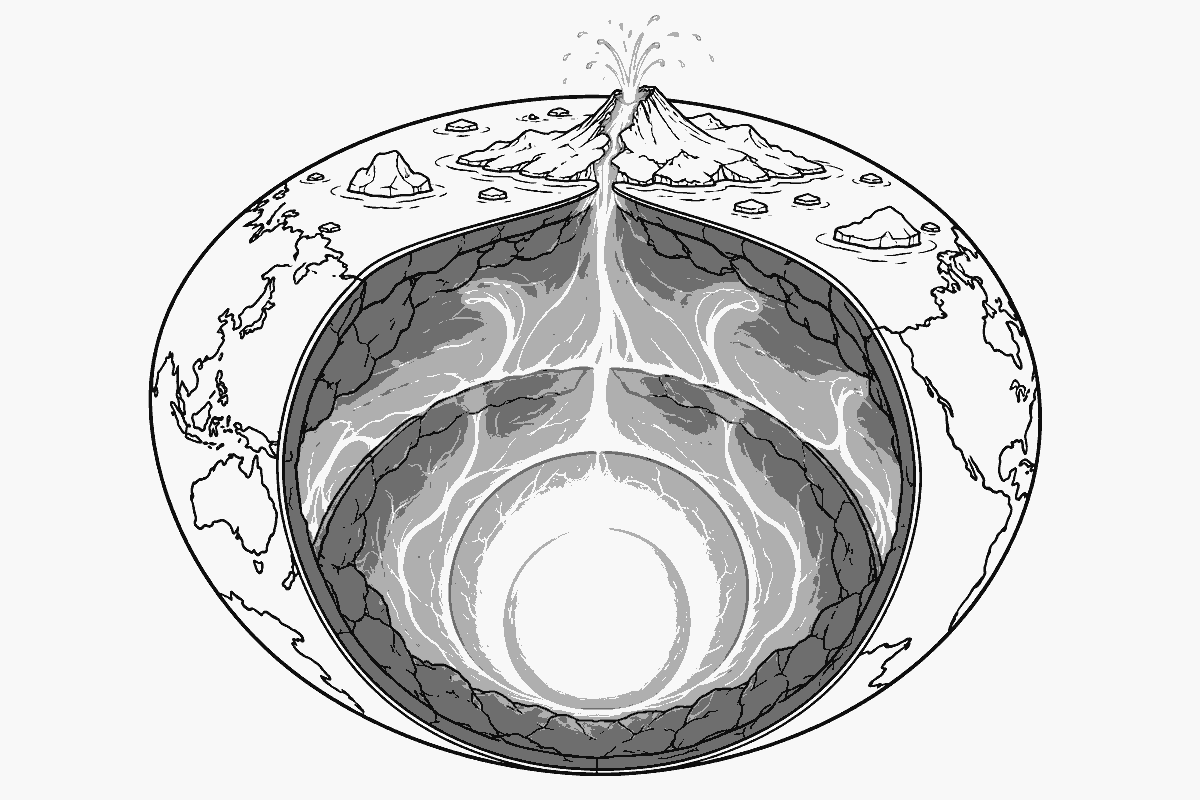
地球の核(中心の金属)から水素がもれている?火山の溶岩に残る手がかり
Clues From Lava Point to a Leaky Core
1Earth's metal core may have been releasing hydrogen into the rock above it through much of the planet's history, researchers in China have reported. The team, from the University of Science and Technology of China in Hefei, published the study in the journal Science Advances on October 9. The researchers did not reach the core itself. Instead, they used computer simulations.
2The core begins about 2,900 kilometers below the surface and is made mostly of iron and nickel. Because no one can sample the core directly, scientists look for traces of it in lava.
3Some lavas from Iceland and Baffin Island, in northern Canada, contain unusually little deuterium, a heavier form of hydrogen. Scientists have debated where this pattern came from. One idea is that it formed as an ocean of magma on the young Earth cooled and hardened. The other is that the hydrogen escaped from the core.
4The team calculated how normal hydrogen and deuterium would be shared between melted rock and three minerals found deep in the mantle in conditions like those of the magma ocean. The two kinds of hydrogen turned out to be shared almost evenly, so the cooling magma would have left a similar mix of hydrogen across the early mantle. The researchers said the magma ocean therefore cannot explain the very low deuterium in those lavas.
5They said a transfer of material from the core is a more likely source. In some of the same lavas, the share of helium-3 compared with ordinary helium is also higher than in most other rocks. Helium-3 is an ancient type of helium that may have been stored in the core since Earth formed. Earlier research has also linked changes in tungsten in mantle rocks to the core.
6Not all scientists agree on what these clues mean. Quanta Magazine reported in 2025 that some researchers think helium-3 could come from a stable area at the bottom of the mantle instead.
Words 単語
| releasingA2 | 動 | 放出する、出すletting something go out |
| ancientA2 | 形 | とても古い、大昔のfrom a very long time ago |
| transferB1 | 名 | 移動、移ることmoving something from one place to another |
| tracesB1 | 名 | あと、痕跡small signs that something was there |
| containB1 | 動 | ふくむto have something inside |
| debatedA2 | 動 | 議論したtalked about something people disagree on |
| calculatedB1 | 動 | 計算したfound an answer by using numbers |
| mineralsB1 | 名 | 鉱物natural solid materials found in rocks |
| conditionsA2 | 名 | 条件、状態the situation around something, like heat or pressure |
| stableB1 | 形 | 安定したnot changing or moving much |
単語のレベル:CEFR-J(『CEFR-J Wordlist Version 1.6』 東京外国語大学投野由紀夫研究室. (URL: https://www.cefr-j.org/download.html より 2026年8月ダウンロード))
1. Reading Quiz 本文の内容に合うものを選ぼう
Where was the study published?
A. In a newspaperB. In the journal Science AdvancesC. On a TV showD. In a school textbook
Why do scientists look for traces of the core in lava?
A. Lava is easy to cook.B. Lava is very cold.C. Lava is made of iron.D. No one can sample the core directly.
What did the team's calculations show?
A. Normal hydrogen and deuterium were shared almost evenly between melted rock and the minerals.B. The core is made of rock.C. The mantle has no hydrogen.D. Helium-3 comes from the sun today.
What is helium-3, according to the article?
A. A new metalB. A kind of lavaC. An ancient type of heliumD. A mineral in the crust
What do some researchers think about helium-3?
A. It could come from the bottom of the mantle.B. It comes only from space rocks.C. It cannot be found in lava.D. It is made in the air.
2. True or False 正しければ T、違っていれば F
( ) The researchers reached the core itself.
( ) The core begins about 2,900 kilometers below the surface.
( ) The team said the magma ocean explains the low deuterium in the lavas.
( ) Not all scientists agree on what the clues mean.
3. Fill in the Blanks 下の語から選んで空らんをうめよう(形を変えずに)
tracesancientdebatedcontaintransferreleasing
Scientists have _____ where this pattern came from.
Some lavas from Iceland and Baffin Island, in northern Canada, _____ unusually little deuterium, a heavier form of hydrogen.
Helium-3 is an _____ type of helium that may have been stored in the core since Earth formed.
Because no one can sample the core directly, scientists look for _____ of it in lava.
They said a _____ of material from the core is a more likely source.
Earth's metal core may have been _____ hydrogen into the rock above it through much of the planet's history, researchers in China have reported.
4. Word Order 語を並べかえて正しい文にしよう
( itself / reach / The / not / did / researchers / core / the ) .
( Scientists / this / pattern / from / came / where / have / debated ) .
( hydrogen / other / escaped / the / the / is / core / from / that / The ) .
5. Think and Write 英語で答えてみよう
Do you think computer simulations can be as useful as real samples in science? Why or why not?(科学で、コンピューターのシミュレーションは本物の試料と同じくらい役に立つと思いますか。理由も答えましょう。)
Scientists still disagree about these clues. Why is it important for scientists to question new findings?(これらの手がかりについて、科学者の意見はまだ分かれています。新しい発見を科学者が疑ってみることが大切なのはなぜだと思いますか。)
Answers 解答
1. (1) B (2) D (3) A (4) C (5) A
2. (1) F (2) T (3) F (4) T
3. (1) debated (2) contain (3) ancient (4) traces (5) transfer (6) releasing
4.
- The researchers did not reach the core itself.
- Scientists have debated where this pattern came from.
- The other is that the hydrogen escaped from the core.
全文訳
1地球の金属の核は、地球の歴史の長いあいだ、その上の岩に水素を出しつづけてきたのかもしれないと、中国の研究者たちが発表しました。合肥にある中国科学技術大学のチームが、10月9日に学術誌『サイエンス・アドバンシズ』でこの研究を発表しました。研究者たちが核そのものにたどり着いたわけではありません。かわりに、コンピューターのシミュレーション(計算で起きることを再現する方法)を使いました。
2核は地面から約2,900キロメートル下から始まり、おもに鉄とニッケルでできています。だれも核の試料を直接とれないので、科学者たちは溶岩の中に核の手がかりをさがします。
3アイスランドとカナダ北部のバフィン島の溶岩の中には、重い水素である重水素がふつうよりずっと少ないものがあります。この特徴がどこから来たのか、科学者たちは議論してきました。1つの考えは、若い地球にあったマグマの海が冷えて固まるときにできた、というものです。もう1つは、その水素が核からもれ出た、というものです。
4チームは、マグマの海と同じ条件で、ふつうの水素と重水素が、とけた岩と、マントルの深いところにある3つの鉱物のあいだでどう分かれるかを計算しました。2種類の水素は、ほぼ同じように分かれることがわかりました。そのため、冷えていくマグマは、初めのころのマントルのどこでもほとんど同じ水素のまじり方を残したはずです。だから、マグマの海では、それらの溶岩の重水素がとても少ないことは説明できないと、研究者たちは言っています。
5核から物質が移ってきたと考えるほうがありそうだと、研究者たちは言っています。同じ溶岩の中には、ふつうのヘリウムにくらべたヘリウム3の割合が、ほかの多くの岩より高いものもあります。ヘリウム3は古い種類のヘリウムで、地球ができたころから核にたくわえられていたのかもしれません。前の研究でも、マントルの岩にふくまれるタングステンの変化が、核と結びつけられています。
6これらの手がかりが何を意味するのか、すべての科学者の意見が一致しているわけではありません。クアンタ・マガジンは2025年に、ヘリウム3は核ではなく、マントルのいちばん下にある安定した場所から来ているのかもしれないと考える研究者もいると伝えました。
文法ポイント:may have been ~ing(~しつづけてきたのかもしれない)
may have + 過去分詞は「~したかもしれない」と過去のことを推量する形。been ~ing をつなげると「(ずっと)~しつづけてきたのかもしれない」。本文の Earth's metal core may have been releasing hydrogen into the rock above it は「核はその上の岩に水素を出しつづけてきたのかもしれない」。入試では must have / can't have との区別がよく問われる。
出典:Science Advances(Crossref の論文情報)、ScienceAlert、National Geographic Education、USGS(アメリカ地質調査所)、Quanta Magazine、Carleton University(The Conversation より)、Scientific American ほか(記事は原田英語の時事英語ジュニアのオリジナル)|https://www.haradaeigo.com/jijieigo-junior/news/2026-10-20-earth-core-leaking-gases/