オルガノイドとは?脳の細胞の小さなかたまりで点字を読み取る実験、最高83%正解
Tiny Clusters of Brain Cells Help Read Braille
びっくり度 中学生 161語 / 高校生 313語脳AIコンピューター点字
3行でわかる!このニュース
- 人の脳の細胞でできた、1ミリより小さいかたまりを使って点字を読む実験があった
- 点字の手ざわりを電気の信号にして送り、かたまりの反応からコンピューターが文字を当てた
- かたまり1つだと約61%、3つ合わせると約83%の確率で正しい文字がわかった
なぜ話題?イギリスのブリストル大学の研究チームが10月16日に学術誌で発表
中学生レベル(英検3級〜準2級・CEFR A1〜A2)・161語・約1分
Brain Cells Help Read Braille
語彙レベル(CEFR-J)
A175.9%A24.4%B110.1%B22.5%外7%
0:00 / --:--
この記事の声:アメリカ英語・女性声は日によって、アメリカ・イギリス・オーストラリア英語、男性・女性が入れかわります
MP3をダウンロード(中学生版・タイトルから本文まで)
Scientists in Britain have used tiny balls of human brain cells to help read braille. Braille is a writing system of raised dots that people read with their fingers. The study came out on Oct. 16.
イギリスの科学者が、人の脳の細胞でできた小さなかたまりを使って、点字を読み取る実験をしました。点字は、もり上がった点でできた文字で、指でさわって読みます。この研究は10月16日に発表されました。
The tiny balls are called organoids. Each one is smaller than one millimeter. It has about 10,000 brain cells called neurons. The organoids were grown in a lab.
この小さなかたまりは「オルガノイド」とよばれます。1つの大きさは1ミリより小さいです。その中に、ニューロンとよばれる脳の細胞が約1万個あります。オルガノイドは研究室で育てられました。
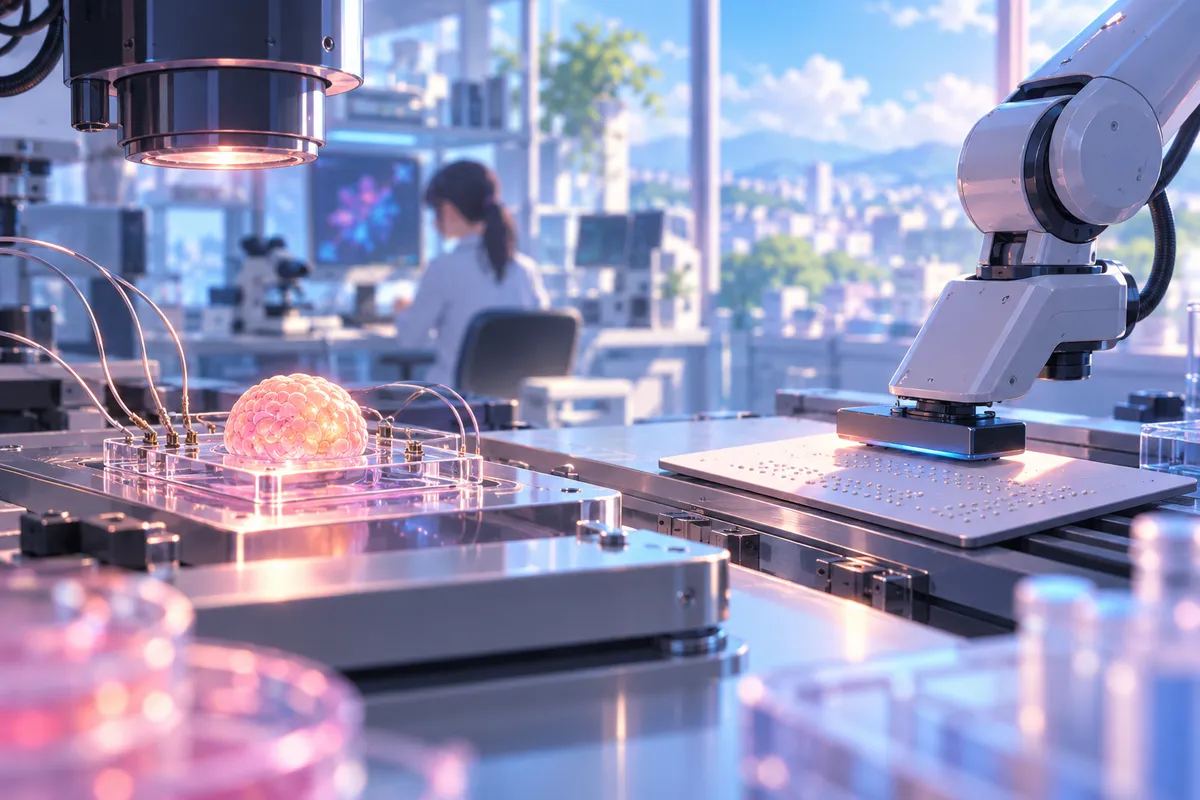
First, a robot arm moved a touch sensor over all 26 braille letters. The team changed this touch data into electrical signals. They sent the signals to the organoids. Then a computer program studied how the organoids reacted and guessed each letter.
まず、ロボットのうでが、さわったことを感じるセンサーを、点字の26文字すべての上で動かしました。チームは、この手ざわりのデータを電気の信号に変えました。そして、その信号をオルガノイドに送りました。次に、コンピューターのプログラムがオルガノイドの反応を調べて、どの文字かを当てました。
With one organoid, the program was right about 61 percent of the time. With three organoids together, it was right about 83 percent of the time. The human brain uses very little energy for the work it does. The researchers see this kind of work as one way to build computers that use less energy.
オルガノイドが1つのとき、プログラムが正しく当てたのは約61%でした。オルガノイド3つをいっしょに使うと、約83%で正しく当てました。人の脳は、たくさんの仕事をするのに、とても少ないエネルギーしか使いません。研究者たちは、こうした研究を、エネルギーをあまり使わないコンピューターを作る方法の1つと考えています。
WORDSこの記事の単語(8語)
- tinyB1形とても小さいvery, very smallThe baby has tiny hands.その赤ちゃんの手はとても小さい。
- cellsB1名細胞the very small parts that make up living thingsYour body is made of many cells.体はたくさんの細胞でできている。
- raisedA2形もり上がったhigher than the flat part around itThe card has raised letters.そのカードには、もり上がった文字がある。
- sensor外名センサーa device that notices touch, light or heatThe door has a sensor, so it opens by itself.そのドアにはセンサーがあるので、自動で開く。
- electricalB1形電気のusing the power that runs lights and machinesThe robot sends electrical signals to its arm.そのロボットは、うでに電気の信号を送る。
- reactedB1動反応したdid something because something else happenedThe cat reacted to the loud noise.ネコは大きな音に反応した。
- percentB1名パーセントa part of one hundredFifty percent of the class has a dog.クラスの50%が犬を飼っている。
- energyB2名エネルギーpower that makes machines workLED lights use less energy.LEDの明かりは使うエネルギーが少ない。
単語の横の A1A2B1B2 は、その単語のむずかしさです(A1 がいちばんやさしく、B2 がいちばん難しい。外 はリストにない語)。ほかの単語のレベルも調べる
レベルの出典:『CEFR-J Wordlist Version 1.6』 東京外国語大学投野由紀夫研究室. (URL: https://www.cefr-j.org/download.html より 2026年8月ダウンロード)
GRAMMAR文法ポイント:受け身(be動詞 + 過去分詞)
「~される」を表す。本文の The organoids were grown in a lab.(オルガノイドは研究室で育てられた)や The tiny balls are called organoids.(その小さなかたまりはオルガノイドとよばれる)がその例。grow の過去分詞は grown。
- This song is sung by many students.この歌はたくさんの生徒に歌われている。
- The bridge was built 100 years ago.その橋は100年前に建てられた。
GAMESゲームで復習しよう
THINK考えてみよう・話してみよう
日本語訳はぼかしてあります。タップすると見えます。
- What would you like a computer made with brain cells to do?脳の細胞を使ったコンピューターに、何をしてほしいですか。
- How do you use your sense of touch every day?あなたは毎日、さわる感覚をどんなふうに使っていますか。
PRINT中学生版ワークシート(無料)
本文・単語・クイズ・並べかえ・穴うめ・英作文と解答つき。授業・宿題・自習にどうぞ。
高校生レベル(英検2級〜準1級・CEFR B1〜B2)・313語・約3分
Lab-Grown Brain Cells Help a Computer Read Braille
語彙レベル(CEFR-J)
A167.5%A210.4%B111%B22.6%外8.4%
0:00 / --:--
この記事の声:アメリカ英語・女性声は日によって、アメリカ・イギリス・オーストラリア英語、男性・女性が入れかわります
MP3をダウンロード(高校生版・タイトルから本文まで)
Researchers at the University of Bristol in Britain have used lab-grown clusters of human brain cells to help identify braille letters. Their best setup got the right letter about 83 percent of the time. The study was published on Oct. 16 in the journal Frontiers in Artificial Intelligence.
イギリスのブリストル大学の研究者たちが、研究室で育てた人の脳の細胞のかたまりを使って、点字の文字を見分ける実験をしました。いちばんよいやり方では、約83%の確率で正しい文字がわかりました。この研究は10月16日、学術誌『フロンティアーズ・イン・アーティフィシャル・インテリジェンス』に発表されました。
The clusters, known as brain organoids, are smaller than a millimeter. Each one contains about 10,000 neurons, along with cells that support them. The organoids were provided by FinalSpark, a company that offers them for research.
このかたまりは「脳オルガノイド」とよばれ、大きさは1ミリより小さいです。1つに約1万個のニューロン(神経細胞)と、それを支える細胞がふくまれています。オルガノイドは、研究用にそれを提供している会社「ファイナルスパーク」から提供されました。
To create the signals, a robot arm slid a touch sensor across braille letters made with a 3D printer. The sensor recorded data for all 26 letters of the braille alphabet. The researchers turned the data into patterns of electrical pulses, which they delivered to each organoid through eight tiny electrodes. A basic program that learns from data then analyzed the electrical activity of the organoids and tried to tell which letter they had received.
信号を作るために、ロボットのうでが、3Dプリンターで作った点字の文字の上で、さわった感じをはかるセンサーをすべらせました。センサーは、点字のアルファベット26文字すべてのデータを記録しました。研究者たちはそのデータを電気のパルス(短い電気の波)のパターンに変え、8本の小さな電極を通して、それぞれのオルガノイドに送りました。次に、データから学ぶかんたんなプログラムがオルガノイドの電気の活動を分析し、どの文字を受け取ったのかを当てようとしました。
A single organoid gave a signal that the program decoded correctly about 61 percent of the time. When the responses of three organoids were combined, the accuracy rose to about 83 percent. The team also tested the system with added noise. In those tests, the three organoids held up better than a method that read the noisy signals directly, without organoids.
オルガノイド1つの場合、プログラムが信号を正しく読み解けたのは約61%でした。3つのオルガノイドの反応を合わせると、正答率は約83%に上がりました。チームは、信号にノイズ(じゃまな雑音)を加えたテストも行いました。そのテストでは、3つのオルガノイドを使ったほうが、オルガノイドなしでノイズ入りの信号をそのまま読む方法よりも、正答率が下がりにくくなりました。
Without noise, however, that direct method was about as accurate, at 82 percent. The researchers said they do not yet know why three organoids did better than one. They also said the study did not show that the organoids learned or changed over time.
ただし、ノイズがないときは、その「そのまま読む」方法も82%と、ほぼ同じくらい正確でした。研究者たちは、なぜ3つのほうが1つよりよい結果になったのかは、まだわからないと話しています。また、この研究では、オルガノイドが学習したり、時間とともに変化したりすることは示されていないとも話しています。
The human brain uses very little power for the amount of work it does. The researchers see biohybrid computing, which combines living cells with machines, as a possible way to build computers that use less power. Next, the researchers plan to test textures, edges and other kinds of touch.
人の脳は、こなす仕事の量にくらべて、とても少ない電力しか使いません。研究者たちは、生きた細胞と機械を組み合わせる「バイオハイブリッド・コンピューティング」を、電力をあまり使わないコンピューターを作る方法の1つになりうると考えています。次に研究者たちは、表面の手ざわりやふち(かど)など、ほかの種類の「さわる感覚」を試す予定です。
WORDSこの記事の単語(10語)
- identifyB2動見分ける、特定するto find out what something isCan you identify this bird?この鳥が何か見分けられる?
- clusters外名かたまり、集まりsmall groups of things close togetherThere were clusters of flowers in the garden.庭には花のかたまりがいくつもあった。
- containsB1動ふくむhas something inside itThis box contains old letters.この箱には古い手紙が入っている。
- recordedA2動記録したkept information so it can be used laterShe recorded the temperature every hour.彼女は1時間ごとに気温を記録した。
- deliveredB1動届けた、送ったtook something to a person or placeThe shop delivered the desk to our house.店は机を家に届けてくれた。
- analyzedB1動分析したlooked at something carefully to understand itThe coach analyzed the video of the game.コーチは試合の動画を分析した。
- accuracyB1名正確さ、正答率how often something is correctThe new app improved the accuracy of the weather report.新しいアプリで天気予報の正確さが上がった。
- noiseA1名ノイズ、じゃまな雑音unwanted sound or signals that make things unclearThere was too much noise on the phone line.電話の線に雑音が多すぎた。
- textures外名手ざわり、質感how the top of something feels when you touch itI like the soft texture of this sweater.このセーターのやわらかい手ざわりが好きだ。
- combinesB1動組み合わせるputs two or more things togetherThis dish combines rice and fish.この料理はご飯と魚を組み合わせている。
単語の横の A1A2B1B2 は、その単語のむずかしさです(A1 がいちばんやさしく、B2 がいちばん難しい。外 はリストにない語)。ほかの単語のレベルも調べる
レベルの出典:『CEFR-J Wordlist Version 1.6』 東京外国語大学投野由紀夫研究室. (URL: https://www.cefr-j.org/download.html より 2026年8月ダウンロード)
GRAMMAR文法ポイント:関係代名詞の非制限用法(, which ~)
コンマのあとの which が、前の名詞に説明を足す。本文の patterns of electrical pulses, which they delivered to each organoid は「電気のパルスのパターン、そしてそれをそれぞれのオルガノイドに送った」。biohybrid computing, which combines living cells with machines も同じ形。入試の長文で頻出。
- I bought a new phone, which I use every day.私は新しいスマホを買い、それを毎日使っている。
- We visited Nara, which is famous for its deer.私たちは奈良を訪れた。奈良はシカで有名だ。
GAMESゲームで復習しよう
THINK考えてみよう・話してみよう
日本語訳はぼかしてあります。タップすると見えます。
- Do you think it is a good idea to build computers with living human cells? Why or why not?生きた人の細胞を使ってコンピューターを作るのはよい考えだと思いますか。理由も答えましょう。
- Computers and AI use a lot of electricity. How could we make them use less energy?コンピューターやAIはたくさんの電気を使います。どうすれば使うエネルギーを減らせると思いますか。
PRINT高校生版ワークシート(無料)
本文・単語・クイズ・並べかえ・穴うめ・英作文と解答つき。授業・宿題・自習にどうぞ。
PICK UP WORD
organoid
オルガノイド(ミニ臓器)
organ(臓器)+ -oid(~のようなもの)。研究室で細胞から育てた、臓器の小さなミニ版のこと。brain organoid は「脳オルガノイド」。
原田英語のサイトでもっと
出典・参考にした情報
この記事は、下の報道・発表で事実を確かめたうえで、原田英語が中学生・高校生向けに英語と日本語で書きおろしたオリジナル記事です(文章の転載・翻訳ではありません)。くわしく知りたい人は元の情報も読んでみよう。著作権と出典の考え方
- Encoding tactile stimuli for Braille recognition with organoidsFrontiers in Artificial Intelligence(2026-10-16)
- Mini brain organoids 'reading' Braille marks key step towards biohybrid computingFrontiers(学術誌の出版社)(2026-10-16)
- Mini brain organoids 'read' braille in key step toward biohybrid computingTech Xplore(2026-10-16)