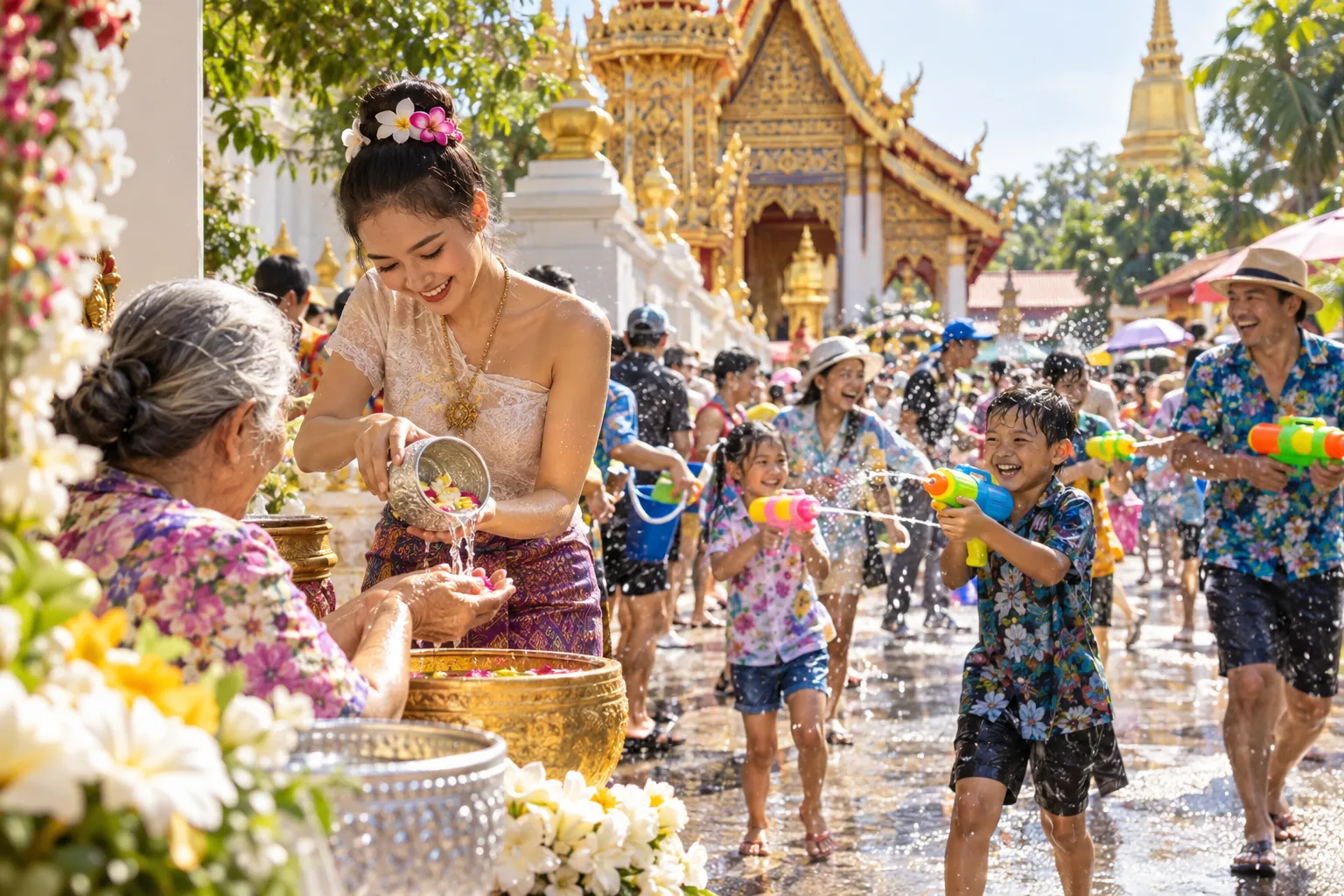
Songkran
ソンクラーン(タイの水かけ祭り)の英語の授業アイデアとワークシート
印刷してすぐ使えるワークシート(PDF・Word・解答つき)と、授業の手順書。
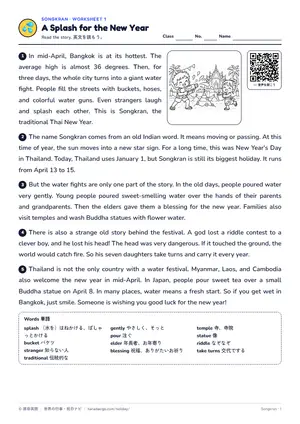
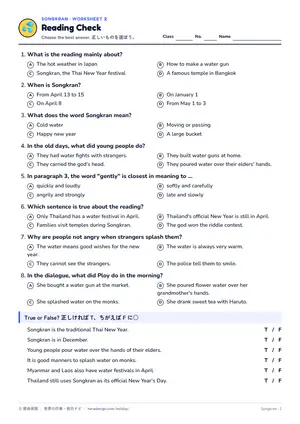
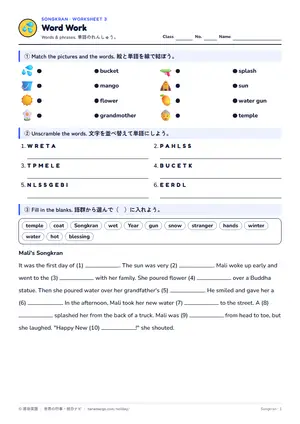
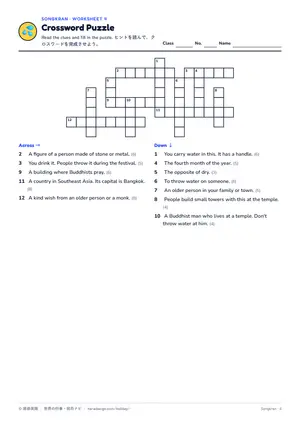
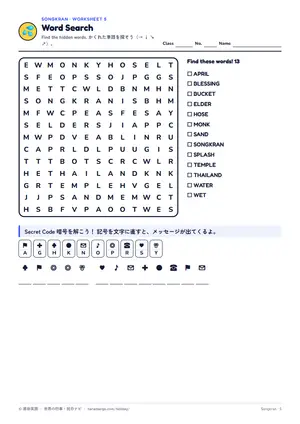
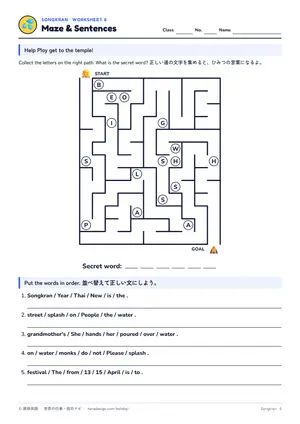
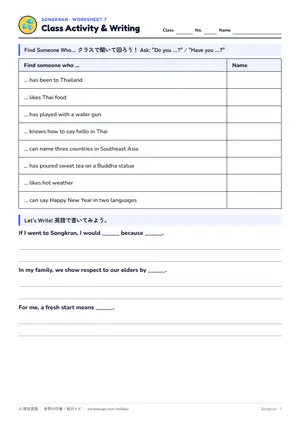
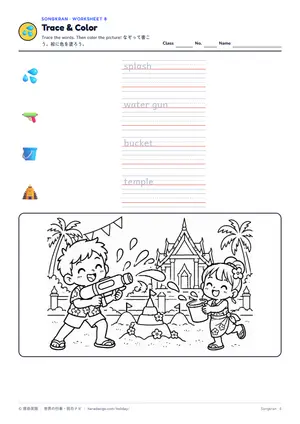
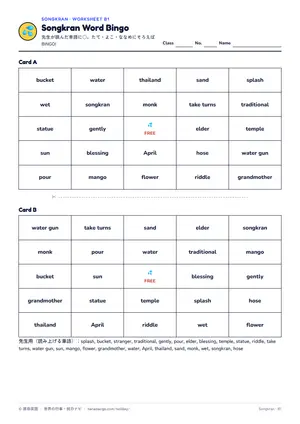
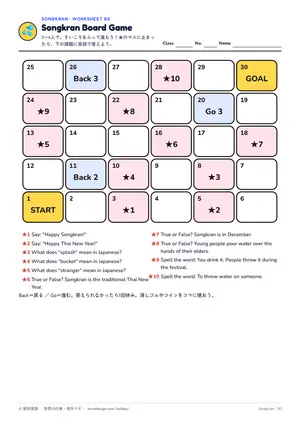
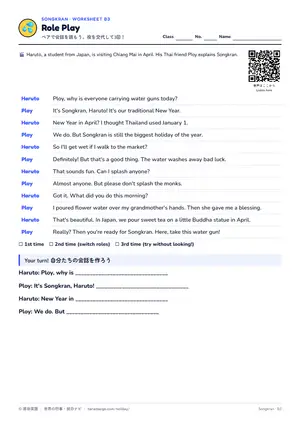
🖨️Worksheetsワークシート(無料・A4)
① 「中身を見る・印刷」で全ページを確認 → ② そのページ上の 🖨️ 印刷する でそのまま印刷できます。A4・無料。
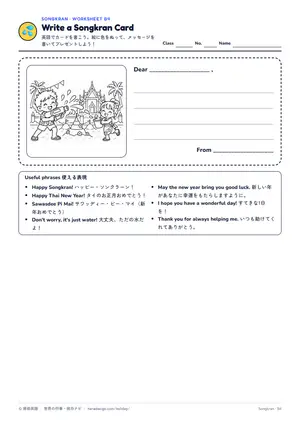
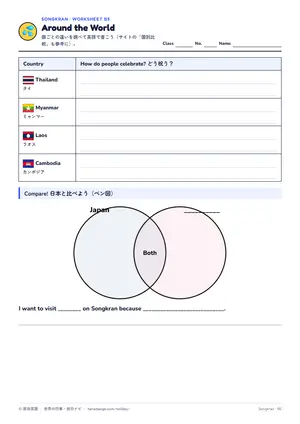
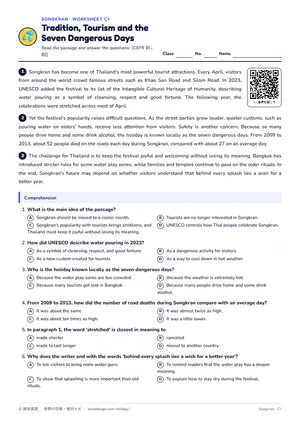
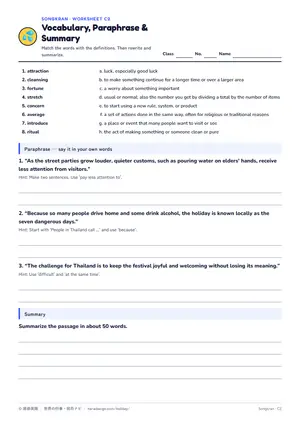
🍎Lesson Ideasソンクラーン(タイの水かけ祭り)を使った英語の授業アイデア
なぞなぞ伝説を英語で演じよう
🎯 ソンクラーンの伝説を短い英語劇にし、なぞなぞのやりとり(Where is ...?)を楽しむ。
- 神さま・少年・2羽のワシ・7人の娘の役を決める。
- なぞなぞ Where is a person's glory in the morning? と答え It is on the face. などのせりふを練習する。
- 班ごとに2分の劇にして発表する。
- 最後に、カンボジアで今も朝は顔・夕方は足を洗う習わしがあることを紹介する。
詳細版を開く(時間配分・Teacher Talk・板書)
バンコクのワット・ポーに伝わる伝説を、絵を見せながらやさしい英語で語る。神さまが少年になぞなぞを出し、負けた方が首を差し出す勝負だったことを伝える。glory は「輝き」と説明する。
🗣️ Long ago, there was a very smart boy. / A god asked him a riddle. Where is a person's glory in the morning? / Glory means shine. What do you think? / The boy could not answer for six days.
台本を配り、全員でせりふをリピートさせる。特に Where is ...? の上がり下がりと、It is on the face / chest / feet. の on を強調して練習する。班で役を決めさせる。
🗣️ Repeat after me. Where is a person's glory in the morning? / It is on the face. / In the afternoon, it is on the chest. / Decide your roles in your group.
班で通し練習をさせる。ワシが話す場面では、少年がこっそり聞いている動きを入れるよう助言する。2分以内に収めさせる。
🗣️ Practice from the beginning. / The boy is hiding. He is listening to the eagles. / Speak loudly and clearly. / Can you finish in two minutes?
2〜3班に発表させる。見ている生徒には、いちばん聞きやすかった役を1人選ばせる。残りの班は次の授業の最初に発表させる。
🗣️ Group one, please start. / Everyone, listen carefully. / Who spoke the most clearly? / Great acting!
カンボジアでは今も、お正月の初日に朝は顔、昼は胸、夕方は足を聖なる水で洗う習わしがあることを紹介し、伝説と今の習慣のつながりを確認する。
🗣️ In Cambodia, people still do this on New Year's Day. / They wash their faces in the morning. / The chest at noon, and the feet in the evening. / Just like the riddle!
Riddle:Where is a person's glory?(glory = 輝き)
in the morning → It is on the face.
in the afternoon → It is on the chest.
in the evening → It is on the feet.

神さま / 少年 / ワシ2羽 / 7人の娘
Cambodia:face → chest → feet(今も洗う)
アジアの4月のお正月マップ
🎯 タイ・ミャンマー・ラオス・カンボジア・スリランカ・中国のタイ族の新年を調べ、共通点とちがいを英語で発表する。
- 班ごとに1つの国・地域を担当し、名前・日付・水の使い方・食べ物を調べる。
- 地図に英語のカードを貼っていく。
- 共通点(4月なかば・水・お寺・年長者)を英語で3つまとめる。
- なぜ同じ時期なのか(太陽がおひつじ座に入る)を確認する。
詳細版を開く(時間配分・Teacher Talk・板書)
4月のバンコクは1年でいちばん暑い月(平均最高気温35.7度)で、その時期にタイでは新年を祝うことを紹介する。「水かけ祭りはタイだけ?」と問いかけ、白地図を見せる。
🗣️ April is the hottest month in Bangkok. / Thai people celebrate New Year with water. / Is Thailand the only country with a water festival? / Let's find out and make a map.
班に1つずつ国・地域を担当させ、名前・日付・水の使い方・食べ物や特別な習慣の4点を調べさせる。記事の表を基本の資料にし、足りない分は英語版ウィキペディアで補わせる。
🗣️ Each group has one country. / Find four things: the name, the date, how people use water, and one special custom. / Start with the table in the article. / Write short notes in English.
4点を付せんに英語で書かせ、白地図の国の上に貼らせる。各班1分で全体に紹介させる。
🗣️ Put your notes on the map. / Now tell the class in one minute. / In Myanmar, the New Year festival is called Thingyan. / Listen and find things in common.
地図を見ながら、共通点を英語で3つまとめさせる(4月なかば・水・お寺・年長者への敬意など)。違いも1つ見つけさせる。
🗣️ What do these festivals have in common? / Write three sentences. They all ... / What is one difference? / Only in Sri Lanka, people ...
どの国も同じ時期になる理由を確認する。古代インドの天文学で、太陽がおひつじ座に入る時を1年の始まりとし、それが東南アジアに伝わったこと、ソンクラーンという名前がサンスクリット語の「移ること」から来ていることを伝える。
🗣️ Why do they all come in mid-April? / In old Indian astronomy, the year started when the sun moved into Aries. / Songkran comes from a Sanskrit word. It means 'to move.' / So the festivals come at the same time.
April New Year in Asia
Thailand:Songkran(April 13–15)
Myanmar:Thingyan
Laos:Pi Mai
Cambodia:Choul Chnam Thmey
Sri Lanka:Aluth Avurudda
China(Dai people):water-splashing festival

They all ___.(mid-April / water / temples / elders)
Why April? → the sun moves into Aries(おひつじ座)
Songkran ← Sanskrit 'to move'
やさしい水の儀式ロールプレイ
🎯 年長者の手に水を注ぐ「ロット・ナーム・ダム・フア」を、紙の花びらを使って体験し、あいさつの英語を覚える。
- 水の代わりに紙の花びらを用意する。
- 子ども役が Happy Songkran! と言って、先生や友だちの手に花びらをそっと落とす。
- 年長者役が May the new year bring you good luck. と祝福を返す。
- 日本の花まつりの甘茶の写真を見せ、似ているところを話し合う。
詳細版を開く(時間配分・Teacher Talk・板書)
タイの水かけ祭りの写真のあとに、静かな儀式の写真を見せる。ソンクラーンでいちばん大切なのは、年長者の手に水をそっと注いで祝福を受けることだと伝える。
🗣️ This is Songkran in Thailand. It's a water festival. / Look at this picture. It's very quiet. / Children pour water on their grandparents' hands. / They say thank you and get a blessing.
Happy Songkran! と May the new year bring you good luck. をリピートさせる。後者は長いので、May the new year / bring you / good luck の3つに区切って練習する。
🗣️ Repeat. Happy Songkran! / May the new year ... / bring you good luck. / Now say it all together.
ペアで子ども役と年長者役を決め、子ども役が Happy Songkran! と言って花びらを相手の手にそっと落とし、年長者役が祝福を返す。役を交代して2回行う。最後は先生にも花びらを注がせる。
🗣️ Gently. Slowly. Like this. / Children, say Happy Songkran! / Grandparents, say May the new year bring you good luck. / Now change roles.
日本の4月8日の花まつりの写真を見せ、お釈迦さまの像に甘茶をかけることを紹介する。水で清めて祈るところが似ていると気づかせる。
🗣️ This is Hanamatsuri in Japan. It's on April 8. / People pour sweet tea on a little Buddha. / Is it like Songkran? / Yes! Both use water to pray.
Happy Songkran!
May the new year bring you good luck.
(新しい年が幸運をもたらしますように)

👦 → 💧 → 👵(そっと注ぐ)
日本:花まつり(April 8)→ sweet tea
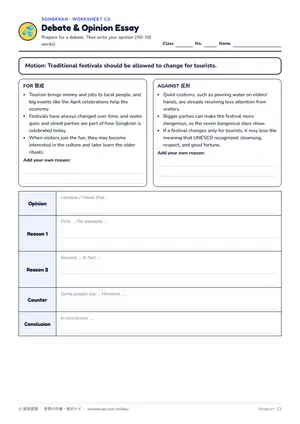
観光と伝統のディベート
🎯 advanced の英文をもとに、祭りの観光化と安全対策について英語で議論する。
- advanced を読み、ユネスコ登録・危険な7日間・新しいルールの要点をまとめる。
- 「伝統行事は観光客向けに変わってよい」で賛成・反対に分かれる。
- それぞれ英語で意見と反論を述べる。
- 安全で意味のある祭りにするための提案を3つ発表する。
詳細版を開く(時間配分・Teacher Talk・板書)
カオサン通りの水かけの写真と、年長者の手に水を注ぐ写真を並べて見せる。「どちらが本当のソンクラーンか」と問い、論題を示す。
🗣️ Here are two pictures of Songkran. / Which one is the real Songkran? / Maybe both. But they are very different. / Today's motion is about tourism and tradition.
advanced の英文を読ませ、quiz で確認したあと、要点整理の表を完成させる。交通事故の死者が祭りの期間に1日約52人、ふだんは約27人という数字(2009〜2013年)を確認する。
🗣️ Read the passage and answer the quiz. / What did UNESCO say about water pouring? / Why are they called the seven dangerous days? / Compare 52 and 27. What does that tell us?
賛成・反対に分かれ、立論を3点ずつ準備させる。日本の祭りの観光化の例(自分の地域の祭りなど)を1つ加えるよう指示する。
🗣️ Prepare three points for your side. / Use numbers from the passage. / Add one example from a Japanese festival. / What will the other side say?
賛成3分・反対3分の立論、2分の作戦時間、2分ずつの反論の順で討論させる。残りの時間で自由討論にする。先生は論点を板書する。
🗣️ The 'for' side, please begin. / Thank you. Now the 'against' side. / Two minutes to prepare. / Please answer their point about safety.
立場をはなれて、安全で意味のある祭りにするための提案を班で3つ英語で書かせ、発表させる。本文の最後の文(behind every splash lies a wish for a better year)にどう関係するかを一言そえさせる。
🗣️ Now work together. / Make three proposals for a safe and meaningful Songkran. / How can visitors learn the meaning behind the splash? / Present your ideas.
Motion:Traditional festivals should be allowed to change for tourists.
2023:UNESCO → water pouring = cleansing, respect, good fortune
2024:celebrations across most of April
Seven dangerous days:about 52 road deaths a day(normal:about 27)
Bangkok:stricter rules in some zones

Proposals:1. ___ 2. ___ 3. ___
'behind every splash lies a wish for a better year'
ソンクラーンのマナー会話
🎯 旅行先で使える英語で、祭りのマナーを質問したり説明したりできる。
- 本文の会話を役割を決めて読む。
- Can I ...? / Please don't ... の形で、祭りのマナーを質問し合う。
- 防水ケース・お坊さん・年長者など、場面カードを引いて会話を作る。
- ペアで1分の会話を発表する。
詳細版を開く(時間配分・Teacher Talk・板書)
会話の音声を聞かせ、役を決めて読ませる。Can I splash anyone? / Please don't splash the monks. の2文に下線を引かせる。
🗣️ Listen to Haruto and Ploy. / Now read it with your partner. / Find the question with 'Can I'. / And find the sentence with 'Please don't'.
Can I ...? と Please don't ... の型を使って、先生とのやりとりを練習する。ソンクラーンのマナー(お坊さんには水をかけない、年長者には手にそっと注ぐ)を英語で確認する。
🗣️ Can I splash my friend's grandmother? / Not with a bucket! Pour water gently on her hands. / Please don't splash the monks. / Now you ask me a question.
場面カードを引かせ、旅行者役と地元の人役で会話を作らせる。4〜6往復を目安にする。
🗣️ Pick a card. / One of you is a traveler. The other lives in Thailand. / Use 'Can I ...?' and 'Please don't ...'. / Try four or five turns.
ペアで1分の会話を発表させる。先生はよかった表現を1つずつほめる。
🗣️ Please show us your conversation. / Nice question! / That was very polite. / Now you're ready for Songkran.
Can I ___?
→ Sure! / Yes, but ___. / Sorry, you can't.
Please don't ___.

📱 waterproof case
🧘 Please don't splash the monks.
👵 Pour water gently on her hands.
😊 Smile! Sawasdee Pi Mai!